.308 Versus .270 for Whitetails
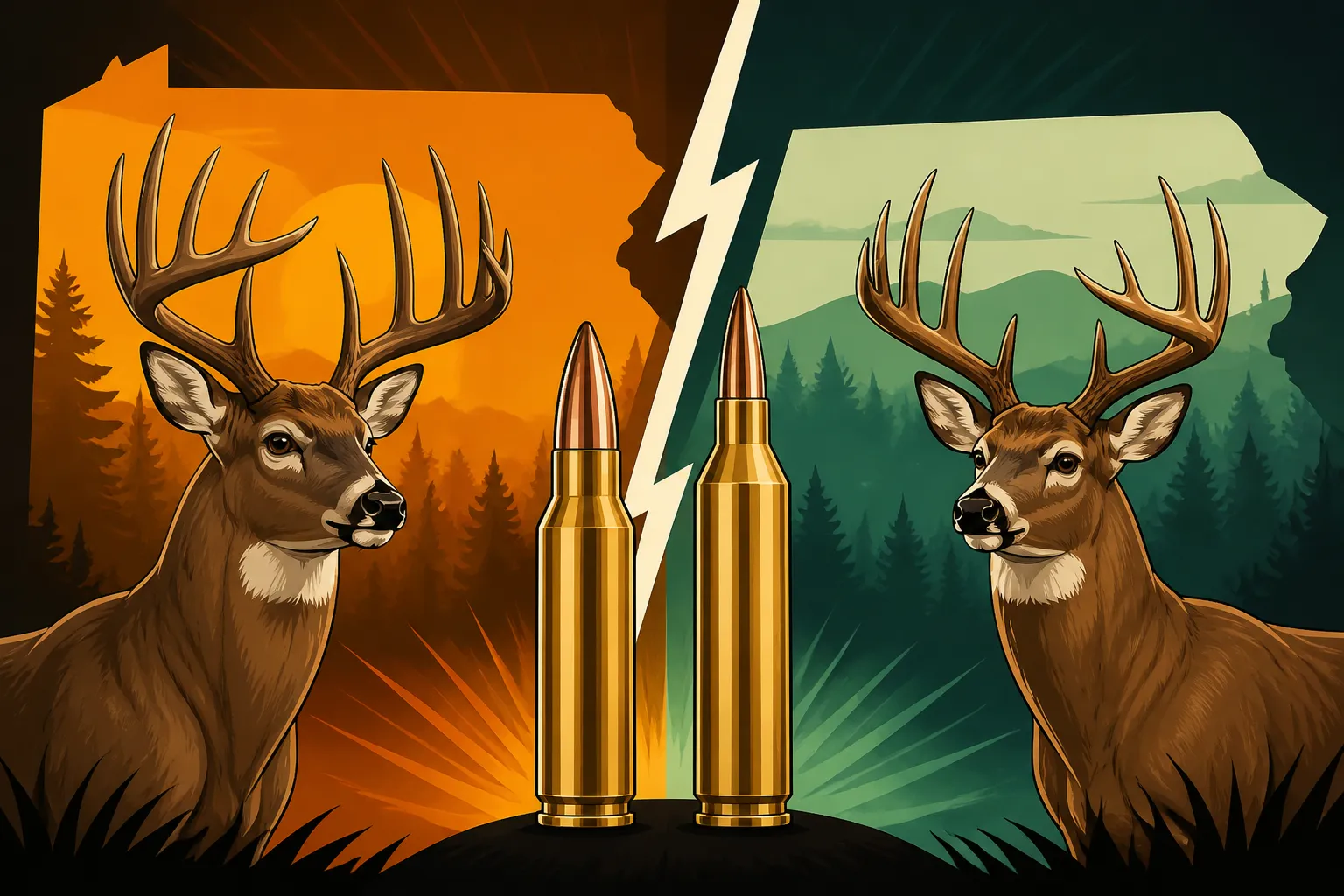
For many Pennsylvania deer hunters, the question of which rifle caliber to choose can feel like an endless debate. You've probably heard passionate arguments for every cartridge under the sun, but two stand out as perennial favorites with distinct reputations: the .308 Winchester and the .270 Winchester. This guide aims to cut through the noise, comparing these two iconic cartridges directly so you can make an informed decision for your specific hunting style and the diverse Pennsylvania landscape.
The .308 Winchester: A Pennsylvania Woods Workhorse
The .308 Winchester has earned its reputation as a rugged, reliable, and incredibly versatile cartridge. It's often praised for its compact size, making it suitable for short-action rifles, which can be a real benefit when maneuvering through thick Pennsylvania timber or climbing into a treestand. Many hunters find the .308 to be a fantastic all-around choice for deer, and even black bear, making it a staple in many a Pennsylvanian's gun cabinet.
Ballistics and Practical Range in Our Timber
When we talk about hunting in Pennsylvania, we're often talking about dense woods, rolling hills, and tight shooting lanes. This isn't the open plains of the West. In these conditions, shot distances for deer are frequently within 150 yards, and often much closer. The .308 Winchester truly shines in this environment. It delivers excellent energy transfer at these moderate ranges, and its bullet drop is minimal enough that most hunters can hold dead-on out to 200 yards with a good zero. For instance, if you're set up on a logging road in the Hunting Pennsylvania State Forests or still-hunting through a thick regrowth area, a shot might present itself at 75 yards through a break in the trees. The .308 hits hard and flat enough to make that shot confidently, ensuring a quick, ethical harvest. While some cartridges boast higher velocities, the practical effectiveness of the .308 within typical Pennsylvania hunting distances is undeniable. Its heavier bullet weights (commonly 150-180 grains) also tend to buck wind better than lighter, faster projectiles, which can be a factor on exposed ridges.
Recoil and Shooter Comfort in the Field
One of the biggest advantages of the .308 Winchester for many hunters is its manageable recoil. While recoil is subjective and depends on rifle weight, stock design, and individual sensitivity, the .308 is generally considered to have a very comfortable recoil impulse compared to many other deer cartridges. This translates directly to better shooting. A hunter who isn't flinching or anticipating a harsh kick is far more likely to place a shot accurately under pressure in the field. This can be especially important for younger hunters transitioning from smaller calibers or for anyone who simply wants to enjoy their shooting experience more. After all, the better you shoot at the range, the more confident you'll be when that buck steps out on opening day. This comfort also allows for more practice sessions without developing a flinch, which is crucial for honing those shooting skills. For long days trekking through the Big Woods, a rifle that's comfortable to carry and shoot contributes significantly to overall hunter satisfaction and effectiveness.
Ammunition Availability and Variety for the .308
Another feather in the cap for the .308 Winchester is its ubiquitous ammunition availability and wide variety of bullet types. You'll find .308 Winchester ammunition on virtually every sporting goods store shelf in Pennsylvania, from small-town hardware stores to major retailers. This means you're rarely left scrambling for ammo, even during peak hunting season. Furthermore, manufacturers offer a huge selection of bullet weights and designs, from reliable soft points for general deer hunting to bonded or monolithic bullets for deeper penetration on larger game like black bear or for pass-through shots in thick cover. This versatility allows hunters to fine-tune their ammunition choice to their specific needs, whether they're focused on rapid expansion for whitetails or a tougher bullet for a more robust animal. Many hunters find it easy to find a load that shoots exceptionally well out of their particular rifle, which is essential for accuracy.
The .270 Winchester: Flat-Shooting for Open Country and Clear-Cuts
The .270 Winchester, on the other hand, often conjures images of long-range precision and flat trajectories. Developed from the .30-06 Springfield case, it launches lighter, often 130-grain to 150-grain, bullets at impressive velocities. For hunters who find themselves in more open terrain, like expansive agricultural fields in southeastern Pennsylvania or large clear-cuts in the north, the .270 can feel like the perfect tool for the job.
Trajectory and Longer Shots in the Valleys
Where the .270 Winchester truly shines is its incredibly flat trajectory. This makes it a fantastic choice for hunters who anticipate longer shots, perhaps across a sprawling hayfield or down a power line cut. With a proper zero, a .270 can hold an impressively flat line out to 300 yards or even beyond, minimizing the need for complex holdovers. Imagine sitting on the edge of a large cornfield in Hunting a Standing Cornfield in Farm Country and a mature buck steps out at 250 yards. The .270's ballistic profile means you can aim with far greater confidence, knowing your bullet isn't going to drop significantly over that distance. This flat-shooting nature can be a real advantage in areas where deer might keep their distance, or when hunting in more open, agricultural areas where visibility extends for hundreds of yards. For those who spend time in the wide-open spaces of Pennsylvania, especially in farm country or massive clear-cuts, the .270’s ability to reach out and touch something with authority is a huge draw.
Recoil Considerations for the .270
While the .270 Winchester is undeniably effective, it does come with a bit more recoil than the .308, typically pushing a bit harder against the shoulder. For some hunters, this isn't an issue at all; they're used to it, or their rifle's weight and stock design mitigate it effectively. However, for others, especially those sensitive to recoil, it can be a factor. A heavier rifle will help absorb some of that energy, but in a lighter, more nimble hunting rifle, the kick can be noticeable. This can sometimes lead to a flinch or a less confident shot, particularly when adrenaline is pumping. It's crucial for any hunter considering a .270 to spend ample time at the range, practicing with their chosen rifle and load, to ensure they can shoot it accurately and comfortably. Remember, a cartridge is only as good as the shooter behind it, and consistent accuracy trumps raw power every time.
Ammunition Selection and Performance
The .270 Winchester boasts a solid selection of hunting ammunition, with bullet weights generally ranging from 130 to 150 grains. These lighter, faster bullets are designed to expand rapidly and deliver potent hydrostatic shock, making them extremely effective on whitetail deer. You'll find excellent hunting loads from all major manufacturers, optimized for deer-sized game. While not quite as universally available as .308, you'll still find .270 ammunition readily available in most Pennsylvania sporting goods stores. Performance on deer is exceptional, with many hunters attesting to its ability to drop whitetails cleanly and quickly. The fast, flat trajectory also means that even if a deer takes a few steps, the bullet arrives at its target with plenty of energy. For those who prioritize speed and a flat arc for those longer-range opportunities, the .270's bullet designs are specifically tailored to maximize this performance.
Making the Choice for Your Pennsylvania Hunting Style
Ultimately, the choice between a .308 Winchester and a .270 Winchester for hunting whitetails in Pennsylvania comes down to a few key personal and environmental factors. There isn't a universally "better" cartridge; only one that's better for you and your typical hunting scenarios. Many resources, including mapping tools like those referenced by GoHunt, can help you visualize your hunting area and understand shot distances, which can guide your decision.
Terrain and Shot Opportunities
Consider the specific type of terrain you primarily hunt in Pennsylvania.
-
Thick Woods and Mountain Laurel: If you spend most of your time in dense cover, navigating steep terrain, and expecting shots under 150 yards, the .308 Winchester might be your ideal companion. Its slightly more compact rifle platforms and manageable recoil make it excellent for quick, decisive shots in tight spots. This is often the case when hunting deep in the Pennsylvania's Two-Week Firearms Deer Season or Hunting the Early Archery WMUs in September, where quick target acquisition is paramount. A rifle chambered in .308 often feels more balanced and easier to swing when still-hunting or driving deer in heavy woods.
-
Open Fields and Clear-Cuts: If your hunting grounds include sprawling agricultural fields, expansive clear-cuts, or long power line cuts where 200-300 yard shots are common, the flat-shooting .270 Winchester truly shines. Its ability to maintain a flatter trajectory over longer distances can give you a significant advantage, reducing the guesswork involved in holdover. This is particularly relevant if you hunt in the more open areas of Farm Country Deer Hunting in Southern Pennsylvania. However, even in these areas, remember that most shots are still under 200 yards.
Here's a quick comparison of general characteristics:
| Feature | .308 Winchester | .270 Winchester |
|---|---|---|
| Typical Bullet Weight | 150-180 grains | 130-150 grains |
| Velocity (approx.) | Moderate to High (2600-2850 fps) | High (2900-3100 fps) |
| Trajectory | Very good to 250 yards, moderate drop beyond | Very flat, excellent to 300+ yards |
| Recoil | Manageable, often perceived as lighter | Noticeable, often perceived as heavier |
| Rifle Action | Short Action (more compact) | Long Action (longer overall rifle) |
| Availability | Excellent, widespread | Very Good, widely available |
| Versatility | Great for deer, good for black bear | Excellent for deer, adequate for black bear |
| Optimal Use (PA) | Dense timber, thick cover, shots under 200 yds | Open fields, clear-cuts, longer range shots |
Personal Preference and Shooting Skill
Your comfort level with a rifle and its recoil is paramount. An accurate hit with a slightly less powerful cartridge is always more effective than a marginal hit with a magnum. If you can shoot a .308 more accurately and confidently because of its milder recoil, then it's the better choice for you. Conversely, if you're accustomed to higher recoil and can consistently place shots with a .270 at extended ranges, its ballistic advantages might be appealing. Spending time at the shooting range is invaluable for developing proficiency with either cartridge. Regularly practicing from various field positions – not just a bench rest – will reveal which rifle and caliber you feel most confident with when the moment of truth arrives. Many hunters rely on detailed ballistic calculators, which GoHunt often integrates, to truly understand the flight path of their chosen bullet and build confidence in their setup.
Other Factors: Bear Hunting and Ammunition Costs
While our primary focus is whitetails, it's worth considering other game if you plan to pursue it with the same rifle. Both cartridges are capable of ethically harvesting black bear in Pennsylvania, but the .308, with its slightly heavier bullet options, is often favored for its increased bullet mass and penetration on tougher game. If you're looking for a true dual-purpose rifle for deer and bear, the .308 might edge out the .270, especially if you opt for premium, heavier-for-caliber bullets. You'll find discussions on Rifle Calibers for Pennsylvania Bear that elaborate on this.
Ammunition cost can also be a factor, especially for hunters who spend a lot of time at the range. Both calibers are popular, but the .308 might sometimes offer slightly more affordable practice ammunition due to its military lineage and widespread use. This can make a difference over a season of practice and can influence how much you're willing to shoot to master your chosen rifle. Regardless of your choice, ensuring you have enough quality ammunition for practice and hunting is key to success.
In conclusion, both the .308 Winchester and the .270 Winchester are superb choices for hunting whitetails in Pennsylvania. Neither will let you down if you do your part. The .308 offers a compact package with manageable recoil, making it a stellar choice for the dense timber and shorter shots common across much of the state. The .270, with its flat trajectory, excels in more open terrain where longer shots are a real possibility. Reflect on your typical hunting environment, your comfort with recoil, and your shooting proficiency, and you'll find the right cartridge to fill your Pennsylvania deer tag.
Disclaimer
This article is for general informational purposes only and does not constitute professional advice. Laws, prices and regulations vary by location and change over time. Consult a qualified professional for guidance on your specific situation.