Where Pennsylvania Requires Shotguns for Deer
It’s a common scenario for Pennsylvania hunters: you’re geared up, your license is in hand, and you've got your favorite deer rifle ready to go. But then a friend mentions "special regulations areas" and suddenly you’re scratching your head, wondering if your trusty rifle is even legal where you plan to hunt. Navigating the rules around legal firearms for deer hunting in Pennsylvania can be confusing, especially when certain highly populated areas have different requirements. This guide will clarify exactly where and why shotguns are required for deer hunting in Pennsylvania, helping you hunt confidently and legally.
The Special Regulations Areas: Where Shotguns Rule
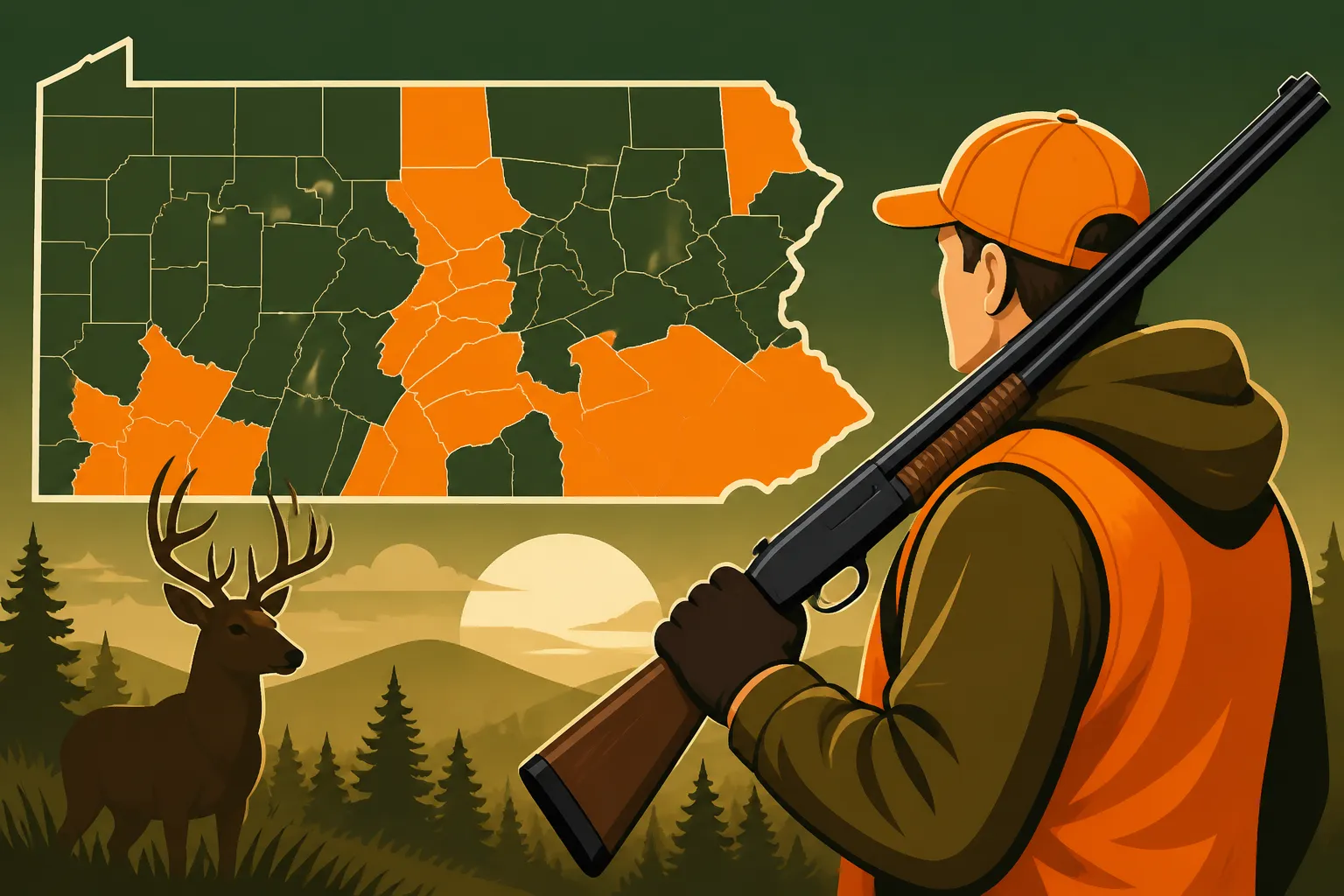
Pennsylvania is a state of incredible diversity, from the sprawling "big woods" of the northern tier to the rolling farmlands and dense suburban sprawl of the southeast. Because of this varied landscape and population density, not all hunting regulations are uniform across the entire state. The most significant departure from the general statewide firearms rules comes into play within what are known as "Special Regulations Areas" or "Special Regs Areas." These are designated Wildlife Management Units (WMUs) where the use of traditional centerfire rifles for deer hunting is restricted, and shotguns (with slugs), muzzleloaders, and certain handguns become the primary legal firearms.
Identifying the Special Regulation WMUs
Historically, these Special Regulations Areas were established to address safety concerns in more densely populated regions of the state. The idea is simple: a shotgun slug, while still powerful and deadly at appropriate ranges, generally has a shorter effective range and is less prone to over-penetration or long-distance ricochets compared to many common centerfire rifle cartridges. This becomes critical in areas where housing developments, roads, and other infrastructure are more prevalent.
Currently, the WMUs that fall under these Special Regulations are generally those surrounding the major metropolitan areas. For instance, WMUs such as 5C, 5D, 2B, and parts of 5B are frequently cited as Special Regulations Areas. If you're planning to hunt in or around cities like Philadelphia, Pittsburgh, or Allentown, it's highly likely you'll be operating under these specific rules. It's not just the immediate city limits; these zones often extend into the surrounding suburban and exurban counties, where open spaces and residential areas intermingle. You really need to know your WMU boundaries, which you can often find using mapping software or even through the excellent tools available on platforms like GoHunt that integrate PGC data. Always remember to check the current year’s digest, as boundaries or specific rules can be updated. Understanding Pennsylvania Deer Seasons and WMU Rules is crucial here.
The Rationale Behind Shotgun-Only Zones
The reasoning for these restrictions boils down to public safety and property protection. A high-velocity rifle round can travel for miles, and while hunters are always responsible for knowing their target and what lies beyond, the risk increases exponentially in areas with more people and buildings. Shotgun slugs, while still dangerous, lose their velocity and energy much quicker than rifle bullets, significantly reducing their maximum effective range and the distance they can travel.
Consider a typical scenario in a rural "big woods" WMU: a rifle shot might travel several hundred yards, and the primary concern is usually another hunter or perhaps a distant road. Now, picture that same shot in WMU 5C, where a private woodlot might back up directly to a housing development, or a cornfield borders a busy highway. The potential for a bullet to leave the hunting property and pose a risk to residents or infrastructure is much higher. This isn't about diminishing the responsibility of the hunter, but rather adding a layer of safety through equipment limitations that are appropriate for the landscape. It's a pragmatic approach to managing deer populations in areas where traditional rifle hunting poses an elevated risk to public safety.
Legal Firearm Options Within Special Regulations Areas
Once you understand where these rules apply, the next step is knowing what you can legally use. The term "shotgun-only" can sometimes be a bit misleading, as it usually refers to shotguns firing a single projectile (slugs), but also typically includes muzzleloaders and certain pistols. It's vital to know the specific definitions outlined by the Pennsylvania Game Commission (PGC) to ensure you're compliant.
Approved Shotgun Types and Ammunition
When hunting deer in a Special Regulations Area, your shotgun needs to be chambered for shotgun slugs. This typically means you'll be using either 12-gauge or 20-gauge shotguns, though other gauges might be legal if they fire a single slug. Smoothbore shotguns can use rifled slugs, which are designed to spin and stabilize from a smooth barrel. However, many hunters prefer a dedicated slug gun with a rifled barrel, which is designed to shoot sabot slugs. These sabot slugs are more aerodynamic and accurate, often performing much closer to a rifle out to 100-150 yards, which is plenty of range for most Pennsylvania woods hunting. When considering Slug Guns in Pennsylvania Special Areas, accuracy is key.
You cannot use buckshot or birdshot for deer hunting in Pennsylvania, even in Special Regulations Areas. The rule specifies "single projectile," which means slugs only. Modern slug ammunition, especially sabot slugs fired from a rifled barrel, is incredibly effective and offers significant stopping power for whitetails.
Muzzleloaders and Handguns: Expanding Your Options
Beyond shotguns, muzzleloaders are generally permitted in Special Regulations Areas during the regular firearms deer season. This includes both traditional flintlocks and modern inline muzzleloaders. Muzzleloaders offer a unique hunting experience and are often chosen for their historical appeal or for specific hunting challenges. If you’re considering a muzzleloader, be sure to check the specific PGC regulations on bullet type and size, but generally, large-caliber projectiles are allowed. Flintlock Season Tactics in Pennsylvania will give you a good idea of how these traditional firearms are employed.
Hunting with handguns for deer is also typically allowed in Special Regulations Areas, provided the handgun meets specific caliber, barrel length, and ammunition requirements. Most hunters choosing a handgun for deer will opt for powerful revolvers in calibers like .357 Magnum, .44 Magnum, or .45 Long Colt, or semi-automatic pistols chambered in similar powerful cartridges. Again, the rule of "single projectile" applies, meaning no shot shells. Handgun hunting adds another layer of challenge and requires significant practice to ensure ethical shot placement.
Comparing with General Statewide Regulations
It’s helpful to quickly contrast this with the general statewide regulations for deer, which permit a much wider range of firearms. Outside of Special Regulations Areas, hunters can typically use centerfire rifles, shotguns (with slugs), muzzleloaders, and handguns. This means that if you're hunting in a big woods WMU in the north-central part of the state, your .30-06 or .308 rifle is perfectly legal. The Special Regulations Areas are truly the exception, designed to address localized safety concerns rather than a blanket restriction. It’s important to know this distinction so you don't inadvertently carry an illegal firearm into a restricted zone. For a broader overview, check out Legal Firearms for Pennsylvania Deer.
Planning Your Hunt in Special Regulations Areas
Hunting in Special Regulations Areas requires a bit more foresight and planning, not just in terms of your firearm choice but also in understanding the unique challenges these environments present. From increased hunting pressure to navigating suburban landscapes, there's a lot to consider.
Confirming Current Regulations Annually
The absolute first step before heading afield is to consult the most current Pennsylvania Hunting & Trapping Digest. The PGC publishes this annually, and it is the definitive source for all hunting regulations, including precise WMU boundaries and legal firearms. While helpful resources like mapping apps or hunting websites can offer a great starting point, they are no substitute for the official digest. Rules can change, WMU boundaries can be adjusted, and you want to ensure you have the most up-to-date information. Pay close attention to the maps that delineate the Special Regulations Areas; these are often clearly marked. You can often pick up a digest where you buy your Pennsylvania Resident Hunting Licence Cost or even view it online.
One common mistake hunters make is assuming that because they've hunted a particular area before, the rules haven't changed. It's always best practice to review the digest each year, even for familiar hunting grounds. If you're using a digital mapping tool, ensure its data layers are updated for the current season. Platforms like GoHunt often strive to keep their regulatory information current, but a cross-reference is always a smart move.
Tactics for Hunting Pressured Areas
Special Regulations Areas, by their very nature, are often closer to population centers, which can mean more hunting pressure. If you're hunting public lands like State Game Lands within these WMUs, be prepared to encounter other hunters. This means adapting your tactics. Instead of walking the roads, focus on deep woods, difficult terrain, or areas that require more effort to reach. Deer in these areas are often quite wary and will quickly learn to avoid easy-to-access spots.
Consider still-hunting or setting up ambushes near bedding areas that are tucked away in thick cover. Hunting Pressure on Pennsylvania Game Lands is a real challenge here, so getting off the beaten path is crucial. You might find that deer move primarily during low-light hours or use very specific, hidden travel corridors. Utilizing a ground blind that's well-brushed in can be very effective, especially near field edges or pinch points that funnel deer movement. Also, don't overlook private land access; many landowners in these areas are dealing with deer damage and might be open to ethical hunting as a solution. Learning about Getting Private Land Permission in Pennsylvania can open up new opportunities.
Safety and Scent Control in Populated Zones
Beyond firearm choice, safety in Special Regulations Areas extends to every aspect of your hunt. Always be acutely aware of your surroundings, beyond just the immediate target. Know what lies in every direction, not just behind the deer. Pennsylvania Hunter Orange Rules are paramount here, ensuring maximum visibility to other hunters. Even in archery season, many hunters choose to wear some orange when moving to and from their stands, especially in high-pressure areas.
Scent control becomes even more critical in these areas, as deer are often pressured and have a heightened sense of caution. They've likely encountered humans frequently, whether hikers, dog walkers, or other hunters. Employing a strict scent control regimen—from washing hunting clothes in scent-free detergent to showering with scent-eliminating soaps and storing gear properly—can give you an edge. Many hunters also find that using rubber boots helps minimize human scent transfer to the ground. The more you can disappear into the environment, the better your chances of encountering a mature deer in these wary zones.
Below is a quick overview of firearm legality in different Pennsylvania hunting zones:
| Firearm Type | General Statewide Deer Seasons | Special Regulations Areas (WMUs 2B, 5C, 5D, etc.) | Notes |
|---|---|---|---|
| Centerfire Rifles | Legal | NOT Legal | Most common restriction in Special Regs. |
| Shotguns (with Slugs) | Legal | Legal | Must fire a single projectile (slug); no buckshot/birdshot. |
| Muzzleloaders (Flintlock/Inline) | Legal | Legal | Check specific caliber/projectile rules in digest. |
| Handguns (Centerfire) | Legal | Legal | Must meet specific caliber and barrel length rules. |
| Archery (Bows/Crossbows) | Legal | Legal | Legal statewide during archery seasons. |
Remember, the information in this table is a general guide. Always consult the current Pennsylvania Hunting & Trapping Digest for the most precise and up-to-date regulations before you hunt.
Disclaimer
This article is for general informational purposes only and does not constitute professional advice. Laws, prices and regulations vary by location and change over time. Consult a qualified professional for guidance on your specific situation.