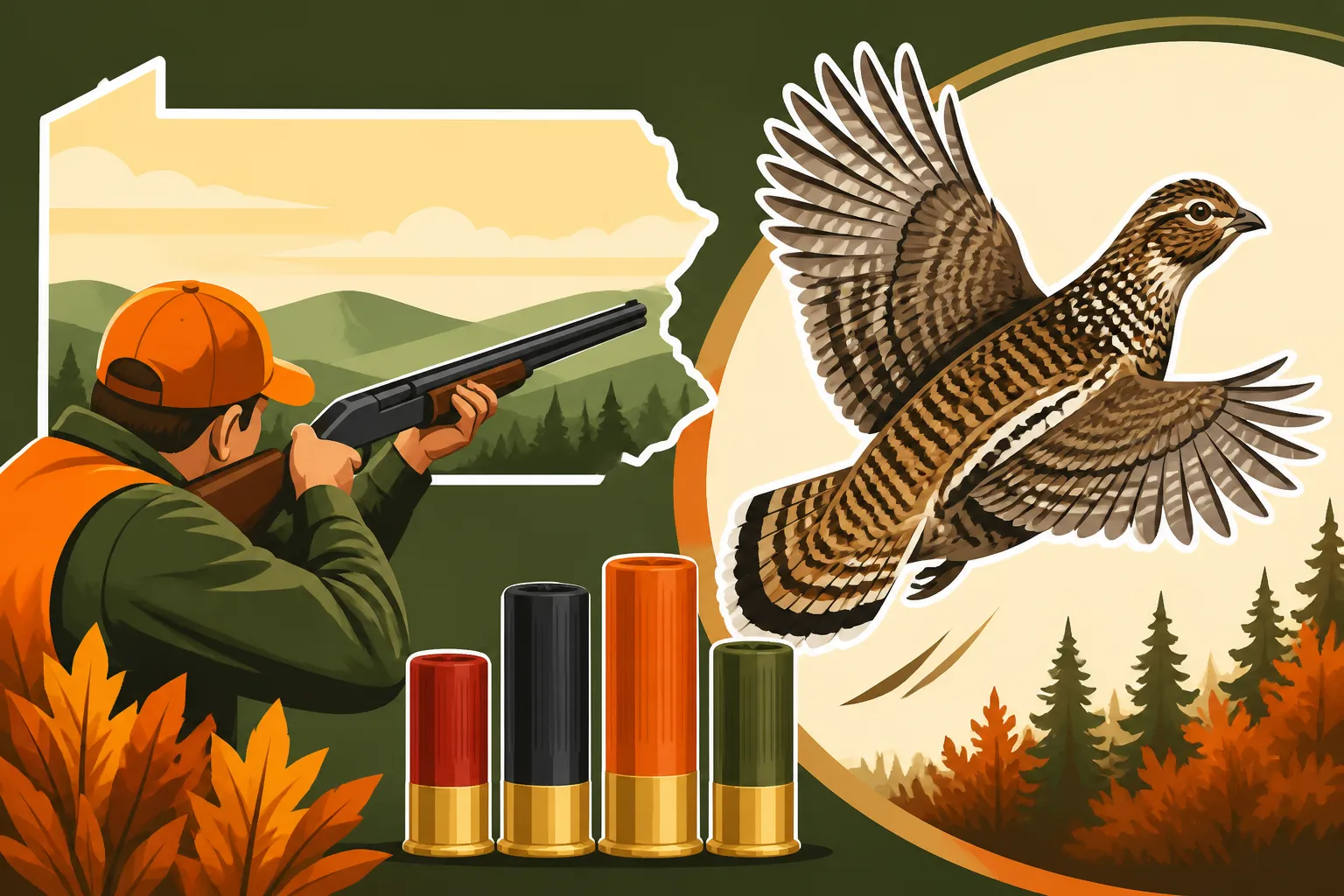
Best Shotgun Gauge for Pennsylvania Grouse
Ah, the Pennsylvania ruffed grouse. If you've spent any time at all chasing these feathered rockets through the thickets and clearcuts of our beloved Commonwealth, you know it's a game of blink-and-you-miss-it flushes and snap shooting. It’s a pursuit that often leaves you wondering if your shotgun is truly up to the task, or if the birds are just that much faster than you. This guide is all about helping you sort through the perennial debate of shotgun gauges, offering practical, real-world advice to make your next grouse hunt more successful and a lot less frustrating.
Understanding the Pennsylvania Ruffed Grouse Challenge
Chasing ruffed grouse in Pennsylvania isn't just a hunt; it's an immersive experience in some of the most rugged and beautiful country we have. But let's be honest, it's also incredibly demanding. These birds are masters of evasion, and their habitat provides them with every advantage. Before we even talk about shotguns, it's critical to understand what makes grouse hunting here such a unique challenge.
The Flashy Flush and Dense Cover
Imagine this: you've been working a dense stand of young timber, maybe a clearcut from a decade ago that's now a snarled mess of saplings, briars, and mountain laurel. Your dog, if you're lucky enough to have one, locks up, or maybe you're just still-hunting, slowly picking your way through the tangle. Suddenly, a whirring explosion of wings erupts from under your feet, or from a thicket just ahead. That grouse isn't flying in a straight line out in the open; it's instantly juking, diving, and weaving through a maze of branches, often putting a tree trunk between you and itself within a split second. This isn't like shooting pheasants over an open field or ducks cupping into decoys. This is a game of quick reflexes and even quicker shots, often at birds that are mostly obscured. The sheer speed of the flush, combined with the impenetrable nature of their preferred cover, is why so many seasoned hunters come home with an empty vest. It's exhilarating, yes, but also incredibly humbling. Grouse Hunting Pennsylvania Cover is often the name of the game, and that cover is dense.
Declining Numbers and the Need for Efficiency
It's no secret that the ruffed grouse population in Pennsylvania, and indeed across much of its range, has faced significant challenges over the past few decades. Factors like habitat loss, changes in forest management, and even diseases like West Nile Virus have contributed to a noticeable decline. This makes every ethical shot, and every attempt at a clean harvest, even more important. We're not just out there blasting away; we're trying to be responsible stewards of the resource. Because of this, selecting a shotgun gauge that allows you to consistently make clean kills without excessive crippling becomes paramount. There's nothing more disheartening than hitting a bird only to lose it in the thick stuff, especially when we know Ruffed Grouse Decline in Pennsylvania is a real concern. When you're Finding Grouse Cover on Game Lands, you're often finding pockets where birds still thrive, and you want to ensure you're doing your part to respect them.
Deconstructing Shotgun Gauges: Pros and Cons for Grouse
Now, let's get down to the brass tacks: what shotgun gauge truly gives you the best edge when those Pennsylvania grouse explode from cover? There's a lot of tradition and personal preference baked into this discussion, but we can look at the practical realities of each common gauge.
The Enduring Dominance of the 12 Gauge
The 12 gauge is, without a doubt, the king of the shotgun world. It's the most common, most versatile, and often the first choice for many hunters. For grouse, its primary advantage is the sheer volume of shot it can deliver. A typical 12-gauge shell can hold a substantial payload of pellets, creating a wider, denser pattern downrange. This can be a huge benefit when you have only a fraction of a second to get on a rapidly disappearing bird. That extra spread, even a small increase, can mean the difference between a clean miss and a few pellets finding their mark in that fleeting window.
However, the 12 gauge isn't without its drawbacks, especially in the context of grouse hunting. The guns themselves tend to be heavier, and often have longer barrels. This makes them slower to bring to shoulder and harder to swing quickly through dense cover. Imagine trying to pivot rapidly with a 7-pound shotgun when a bird flushes from your left in a thick stand of alders. It's manageable, but it's not effortless. The recoil can also be more significant, especially if you're doing a lot of shooting or just sensitive to it. For many, though, the peace of mind that comes with a potent payload outweighs these considerations. It's the workhorse for a reason, reliable and effective, though perhaps a bit cumbersome for the true "run and gun" style of grouse hunting.
The Nimble 20 Gauge: A Growing Favorite
If the 12 gauge is the workhorse, the 20 gauge is the nimble, athletic cousin. Over the past several years, the 20 gauge has surged in popularity among upland hunters, and for good reason. It offers a significant reduction in weight, both in the gun itself and the ammunition, making it far easier to carry all day through demanding terrain. More importantly for grouse, a lighter gun can be shouldered and swung much more quickly. That split-second you gain might be all you need to get ahead of that juking grouse. Many 20-gauge shotguns are built on smaller frames, resulting in a more compact and balanced firearm that feels like an extension of your body, rather than something you're wrestling with.
Of course, there's a trade-off. A 20 gauge generally throws a lighter payload of shot than a 12 gauge. This means your patterns will likely be a bit smaller and potentially less dense. This puts more emphasis on your shooting accuracy. You have a smaller margin for error. For a hunter who values quick handling and is confident in their snap-shooting ability, the 20 gauge can be incredibly effective. It's often seen as a fantastic compromise, offering enough power for clean kills while significantly improving the carrying and handling experience in the brutal grouse cover. You'll find many passionate grouse hunters, especially those who walk countless miles in a season, swear by their 20 gauge.
The Classic and Capable 28 Gauge
The 28 gauge occupies a niche, but very loyal, corner of the upland hunting world. It's often associated with elegant, lightweight shotguns and a certain classic aesthetic. For grouse hunting, the 28 gauge offers an even lighter platform than the 20, making it an absolute joy to carry all day. The recoil is minimal, and the guns are incredibly fast to handle. Many believe the 28 gauge, despite its smaller payload, throws surprisingly effective and consistent patterns, often outperforming what one might expect from its bore size. This is often attributed to the "shot column" effect, where the pellets deform less in the barrel, leading to tighter, more uniform patterns.
However, the 28 gauge definitely demands more from the shooter. Its payload is smaller than both the 12 and 20, meaning your patterns will be tighter and less forgiving. This gauge is really for the experienced wingshooter who is consistently able to get on birds quickly and precisely. Ammunition can also be a little harder to find and typically more expensive than 12 or 20 gauge shells, which is a practical consideration for high-volume shooters. If you appreciate tradition, refined handling, and are confident in your shooting prowess, the 28 gauge can be an absolutely devastating tool in the grouse woods, turning every successful shot into a deeply satisfying accomplishment. For some, the pure elegance of a lightweight 28 gauge makes the challenges worth it.
The .410: A Niche, Yet Skilled Choice
The .410 bore is, without a doubt, the most challenging of the gauges for grouse. It throws a very small payload of shot, meaning its patterns are quite small and have a limited effective range. This is a gun that demands absolute precision and discipline. When a grouse flushes, you have a postage stamp to hit.
So, why would anyone use a .410 for grouse? For some, it's the ultimate challenge, proving their skill and marksmanship. For others, it's the incredibly light weight and near-silent recoil, making it a joy to carry all day without fatigue. It can be a fantastic choice for a younger, smaller hunter, or someone just starting out who needs to manage recoil. However, for the average hunter, especially those learning the ropes of grouse hunting, the .410 can lead to a lot of frustration and missed opportunities. It's best reserved for the highly skilled hunter who truly understands its limitations and is willing to accept the increased difficulty. If you're looking for a serious challenge, or you hunt with a very close-working dog that puts birds up at spitting distance, the .410 can be effective, but it requires a very specific skill set.
Here's a quick comparison of the common gauges for grouse hunting:
| Gauge | Pros for Grouse Hunting | Cons for Grouse Hunting | Best Suited For |
|---|---|---|---|
| 12 Gauge | Large shot payload, dense patterns, wide range of ammo. | Heavier gun, slower handling, more recoil. | All-around hunter, less confident in snap shots, prefers wider patterns. |
| 20 Gauge | Lighter gun, faster handling, good balance of payload and portability. | Smaller payload than 12ga, less forgiving patterns. | Agile hunter, confident in snap shots, walks long distances. |
| 28 Gauge | Very light gun, exceptional handling, low recoil, often surprising patterns. | Smallest payload of common gauges, tight patterns, ammo less common/pricier. | Highly skilled shooter, values light weight and tradition, precision oriented. |
| .410 Bore | Extremely light, minimal recoil, ultimate challenge. | Very small payload, extremely tight patterns, short effective range, high skill required. | Expert shooters, youth/small frame hunters, close-working dogs. |
Factors Beyond Gauge: Chokes, Loads, and Personal Preference
While the shotgun gauge is a huge part of the discussion, it's only one piece of the puzzle. The choke you choose, the type of ammunition you load, and how well the gun actually fits you are equally, if not more, critical for success in the grouse woods.
Choke Selection for Tight Cover
This is where you can truly fine-tune your shotgun for the close-quarters combat of grouse hunting. Given that most grouse flushes happen at incredibly short distances – often under 25 yards, sometimes as close as 10-15 – a wide, open pattern is your friend.
- Cylinder (or Skeet 1): This is as open as it gets. It throws the widest pattern right out of the barrel, maximizing your chances of getting pellets on a bird at very close range. The trade-off is that beyond 20-25 yards, the pattern can become too dispersed to guarantee a clean kill.
- Improved Cylinder (IC): This is probably the most popular choice for grouse hunters. It's a slight constriction from cylinder, tightening the pattern just enough to give it a bit more density and reach, but still very open for those quick, close shots. It's a fantastic all-around choke for grouse.
- Modified: A bit tighter than IC, offering more range. Some hunters prefer this, especially if they anticipate slightly longer shots or hunt in more open cover. However, for truly dense Pennsylvania thickets, it might be too tight for the typical grouse encounter.
Many experienced hunters will even run an Improved Cylinder in their first barrel (if they have an over/under or side-by-side) for the initial close flush, and then a Modified in the second barrel for a follow-up shot on a bird that has put some distance between you. Knowing your patterns with different chokes and loads is key. Take your shotgun to the range and pattern it on paper at 20-25 yards with your chosen ammunition. You might be surprised at how quickly even an Improved Cylinder can spread. Choke Choice for Fast Flushes is critical, and for grouse, faster usually means wider.
Ammunition Choices: Shot Size and Velocity
When it comes to Shot Size for Grouse in Thick Cover, smaller is generally better. The goal is to put enough pellets on the bird for a clean kill, without excessive penetration that ruins meat.
- #7.5 or #8 Lead Shot: These are the bread and butter of grouse loads. They offer a high pellet count, creating a dense pattern, which is exactly what you need for small, fast-moving birds at close range. The energy of these smaller pellets is perfectly adequate for grouse.
- High-Velocity vs. Standard Velocity: Some hunters swear by high-velocity loads for that extra bit of speed. However, for grouse at typical ranges, standard velocity loads are often perfectly sufficient and can sometimes produce more consistent patterns with less pellet deformation. The extra recoil of high-velocity loads in a lighter gun might also throw you off your second shot. Experiment with both to see what your gun likes and what you shoot best.
Given the declining populations of ruffed grouse, being extremely efficient with your shot is a moral imperative. You want to incapacitate the bird quickly and cleanly. This means a dense pattern of small shot is typically preferred over sparse patterns of larger shot. Many will also check sites like GoHunt for discussions on the latest upland loads or even specific manufacturer recommendations for various game birds.
Gun Fit and Handling
This is arguably the most important factor, regardless of gauge. A shotgun that doesn't fit you well will always be harder to shoot accurately, no matter its gauge or choke.
- Length of Pull (LOP): This is the distance from the trigger to the middle of the buttstock. If it's too long, you'll be reaching and slow to shoulder. Too short, and you'll feel cramped. A proper LOP allows the gun to mount naturally to your shoulder pocket and your eye to align perfectly down the rib.
- Drop at Comb/Heel: This relates to how low or high your eye sits relative to the rib. If your eye is too low, you'll shoot low; too high, you'll shoot high. When you mount the gun, your eye should naturally look straight down the rib without having to crane your neck or lift your head.
- Weight and Balance: As we discussed with the different gauges, a lighter, well-balanced gun is a huge advantage for fast-moving targets in dense cover. A gun that feels "whippy" and easy to swing will allow you to get on a bird much faster than a heavy, front-heavy gun.
If your shotgun doesn't feel like an extension of yourself, it's worth having a reputable gunsmith check its fit. Small adjustments to the stock can make a world of difference in your ability to consistently hit moving targets. You can have the perfect gauge and choke, but if the gun fights you every time you mount it, your success will be limited. This is especially true for the dynamic, unpredictable nature of grouse hunting. The goal is an intuitive mount and swing, almost subconscious, so you can focus entirely on the bird.
Making Your Choice for Pennsylvania Grouse
So, after all that, what's the best shotgun gauge for Pennsylvania grouse? The honest truth is, there's no single "best" answer that fits everyone. It really boils down to balancing power, portability, and most importantly, your own shooting style and comfort.
Balancing Power and Portability
For many, the sweet spot lies with the 20 gauge. It offers a fantastic blend of sufficient knockdown power and a light, fast-handling platform. You can carry it all day without fatigue, and it allows for those quick, instinctive shots that grouse hunting demands. You'll have enough pellets to create a decent pattern, reducing the pressure to make an absolutely perfect shot every time, but without the bulk and slower handling of many 12-gauge setups. If you're consistently walking miles through Hunting Pennsylvania Clearcuts and Regrowth or dense mountain laurel, the weight difference between a 12 and 20 gauge becomes very noticeable by the end of the day.
However, if you're a big, strong hunter who handles a 12 gauge effortlessly, and you prioritize that extra shot payload, then stick with your 12. If you typically hunt with a dog that pins birds for you, allowing for more deliberate shots, a 12 gauge can be deadly. Conversely, if you're an extremely experienced wing shooter who thrives on precision and prefers the lightest gun possible, a 28 gauge might be your ideal companion, giving you the ultimate challenge and satisfaction. Keep in mind your Barrel Length for Walking Thick Cover as well; a shorter barrel (24-26 inches) will always be easier to maneuver in dense brush, regardless of gauge.
The Confidence Factor: Your Best Gauge is the One You Shoot Best
Ultimately, the best shotgun gauge for you for Pennsylvania grouse hunting is the one you shoot with the most confidence and consistency. No amount of theoretical advantage from one gauge or another will make up for a lack of practice or poor gun fit. If you've been consistently bagging grouse with your grandfather's old 16 gauge, there's no compelling reason to switch. Trust in your abilities and your equipment.
Spend time at the range, not just patterning, but practicing those quick, mounting shots on clays or a sporting clays course. Get comfortable with your gun. The more familiar and fluid you are with your shotgun, the better you'll perform when that explosive flush occurs. Whether you're using a 12, 20, or 28, a well-placed shot with the right choke and load will always be more effective than a panicked spray with the "optimal" setup. Check out resources like GoHunt for reviews on various upland shotguns, or even discussions on different shooting techniques for fast-flushing birds. Their forum discussions can offer unique insights from other hunters facing the same challenges. The key is to find what feels right in your hands and what allows you to be most effective and ethical in the demanding pursuit of the Pennsylvania ruffed grouse.
Disclaimer
This article is for general informational purposes only and does not constitute professional advice. Laws, prices and regulations vary by location and change over time. Consult a qualified professional for guidance on your specific situation.