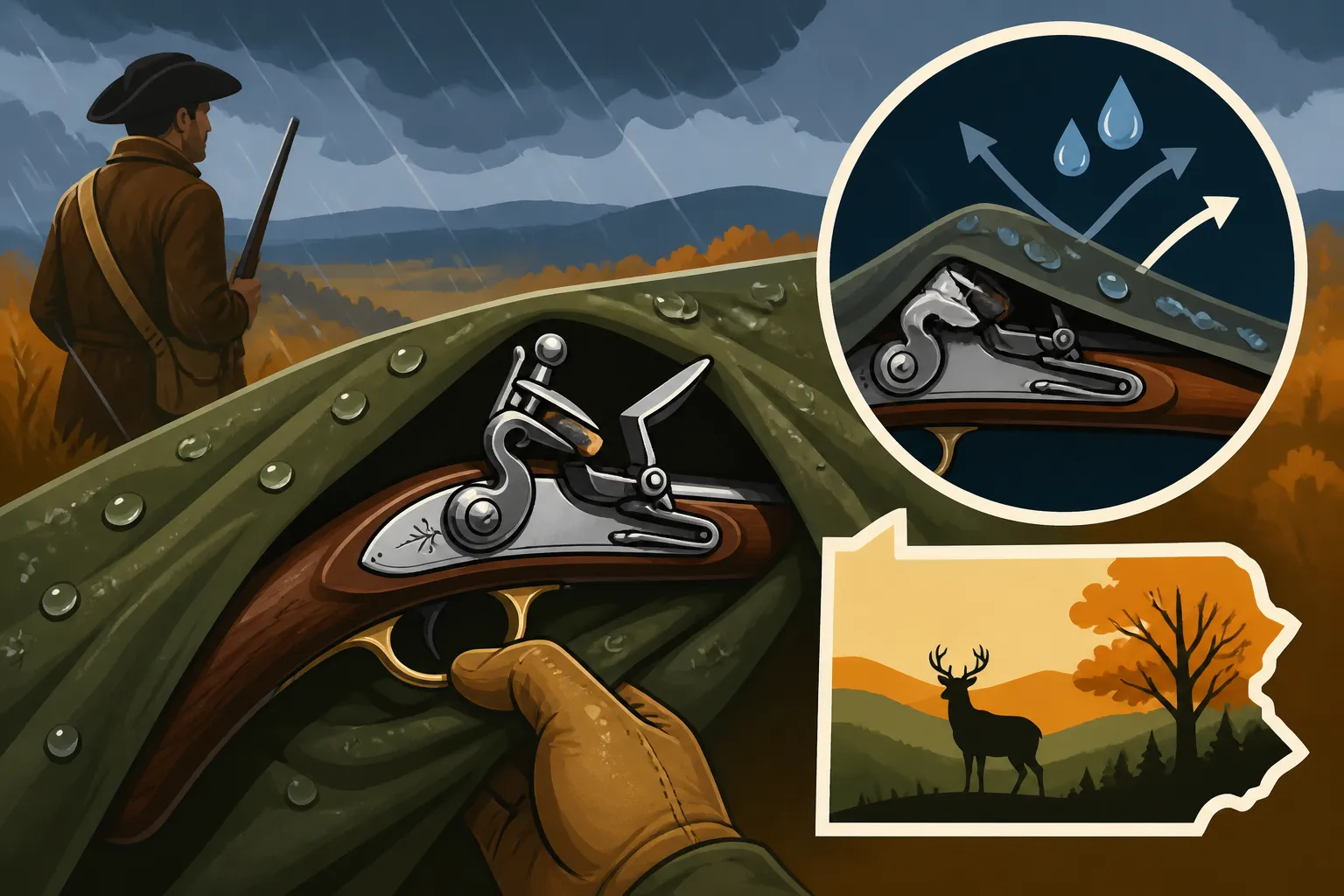
Keeping a Flintlock Dry in Wet Weather
There's nothing quite like the heartbreak of a flintlock misfire when that trophy buck or a plump fall turkey steps into view, especially after you've braved a nasty drizzle or persistent snowfall for hours. The unique challenge of keeping black powder dry in Pennsylvania's notoriously damp and unpredictable weather can feel like a constant battle. This guide is all about equipping you with the knowledge and practical tips to ensure your flintlock barks on demand, no matter what Mother Nature throws at you.
Understanding the Enemy: Moisture and Black Powder
Hunting with a flintlock rifle in Pennsylvania is a tradition steeped in history, but it also means embracing the inherent challenges of black powder. Unlike modern cartridges, black powder is extremely sensitive to moisture, and a little dampness can quickly turn a guaranteed shot into a frustrating "flash in the pan."
The Science of Misfires
At its heart, black powder is a mechanical mixture of charcoal, sulfur, and potassium nitrate. When the flint strikes the frizzen, it creates sparks that ignite the priming powder in the pan. This flash then travels through the touchhole to ignite the main charge in the barrel, propelling the projectile. The entire chain reaction relies on dry powder. If any part of this system gets wet – the priming powder, the main charge, or even moisture in the touchhole – that crucial ignition is compromised. Even microscopic amounts of water vapor can cause the powder grains to clump, reducing their surface area for ignition, or completely extinguishing the sparks before they can do their job. It's not just about direct rain; high humidity, dew, or condensation from temperature changes can be just as problematic.
Imagine hiking through a fog-laden Pennsylvanian forest during late archery season, or even the crack of dawn during the flintlock season itself. The air is thick, your clothes feel damp, and your breath hangs heavy. While you might feel just fine, your exposed priming pan is absorbing moisture, grain by grain. What starts as a slow burn might become a fizzle, and then nothing at all. This is why understanding the enemy – moisture – is the first step to conquering it. It’s a battle of vigilance, where every tiny precaution adds up.
Common Sources of Wetness
Moisture can sneak into your flintlock in more ways than you might think, and identifying these vulnerabilities is key to effective prevention. The most obvious culprit is direct precipitation – rain, snow, or sleet. A steady downpour can saturate everything in minutes if not properly protected. But often, it's the less obvious sources that lead to the most frustration.
High humidity is a silent killer for black powder. Walking through damp woods, especially during early morning hunts when dew is heavy, can lead to condensation forming on metal surfaces and seeping into your pan. Even your own body heat can create condensation under certain conditions. Then there's residual moisture from cleaning. If your barrel or lock parts aren't thoroughly dried after cleaning, that hidden moisture will quickly transfer to your powder. Lastly, improper storage at home can also lead to issues. Keeping your flintlock in a damp basement or garage where humidity fluctuates can cause the wood to swell and metal to corrode, but more importantly, it can precondition the internal components to absorb moisture faster when you do take it out hunting. Many a hunter has cleaned their gun thoroughly only to have it fail in the field because it wasn't bone dry to begin with.
Pre-Hunt Preparation: Your First Line of Defense
Effective moisture prevention for your flintlock begins long before you ever step foot into the woods. It's a systematic approach that ensures your rifle is as resistant to the elements as possible.
Seasoning Your Flintlock
"Seasoning" your flintlock goes beyond just cleaning; it's about treating the wood and metal to resist moisture. For the wooden stock, a good quality oil finish, like linseed oil, applied in thin coats over time, will penetrate the wood fibers and create a barrier against moisture absorption. This not only protects the wood from swelling and warping but also helps prevent moisture from seeping into the lock mortise and around the breech plug. A well-oiled stock will shed water rather than soak it up. This is particularly important for traditional wooden stocks which are much more susceptible to moisture than modern synthetic stocks.
For the metal components, particularly the barrel, lock plate, frizzen, and pan, a thin but comprehensive layer of a rust-preventative oil or wax is crucial. After a thorough cleaning and drying, apply a light coating of a product like Ballistol or a good quality gun grease. This protective layer acts as a barrier, preventing water from directly contacting the metal. Pay special attention to the interior of the barrel, the lock mechanisms, and the pan area. However, be careful not to get oil or grease inside the touchhole or in the pan where your priming powder will sit, as this will also cause a misfire. The goal is external protection, preventing water ingress, not internal contamination. Regularly inspect your rifle for any bare metal spots, especially after handling, and reapply protection as needed. This meticulous care is part of the tradition of Flintlock Rifles and Loads and ensures longevity and reliability.
The Right Powder and Priming
Your choice of powder and how you handle it are paramount to dry ignition. Always use a high-quality, fresh black powder. Older powder can absorb moisture over time, even in sealed containers. When you pour powder from its container into a flask or measure, do so in a dry environment. Exposure to humid air, even for a few minutes, can start the process of moisture absorption.
For the main charge, using a powder grain size appropriate for your rifle is important, but for priming, always opt for a finer granulation, typically FFFFg. This finer powder ignites more easily and reliably. Keep your priming powder in a separate, small, waterproof container until you're ready to load. Many hunters use a small, purpose-built priming horn or flask with a spring-loaded spout that minimizes exposure to the elements.
When it comes to the priming pan itself, don't overfill it. A light, even layer of FFFFg powder is all you need. Too much powder can hinder ignition, and it presents a larger surface area for moisture to settle. Before priming, ensure the pan is completely dry and free of any oil or residue. A small puff of air or a quick swipe with a dry patch can do wonders. Some hunters even wipe the pan clean with a bit of alcohol on a patch just before loading to ensure it's absolutely bone dry. For additional insurance, especially during long waits, a single corn kernel placed strategically over the touchhole inside the barrel, then removed with a wire just before priming, can help seal it against moisture from the inside. This might sound finicky, but when a deer is at 40 yards, you'll appreciate the extra effort.
Field Tactics: Protecting Your Investment on the Go
Once you're out in the field, actively protecting your flintlock from moisture becomes a constant, conscious effort. It's about proactive measures and smart handling.
Pouches and Protectors
This is where specialized gear really shines. The classic "cow's knee" or pan cover is an absolute essential for any flintlock hunter venturing into wet conditions. These are typically made of leather or oilskin, often lined with wool, and are designed to completely cover the lock and pan area. They attach securely with straps or elastic bands, creating a watertight seal around the most vulnerable part of your rifle. Some hunters even make their own out of sturdy canvas or treated leather, shaping them to fit their specific lock mechanism. When you're sitting on stand, especially if the weather turns from a light mist to a steady rain, this cover is your primary defense. It shields the priming powder from direct rainfall and helps regulate the pan's temperature, reducing condensation.
Beyond the pan cover, consider a rifle sleeve or case made from water-resistant material. While you won't hunt with your rifle in a full case, a lightweight, flexible sleeve can be invaluable when moving through thick brush or during non-shooting periods. Some hunters even use an improvised plastic bag, secured with a rubber band, over the muzzle end to keep rain and snow out of the barrel. Just remember to remove it before firing!
Think about your powder horn or flask, too. Ensure it’s waterproof and sealed. A leather bag might look traditional, but if it gets soaked, it could transfer moisture to your precious powder. Many experienced flintlock enthusiasts opt for modern plastic or brass flasks that offer superior waterproofing, even if they don't have the same old-world charm. When you're out in the challenging conditions of Hunting Pennsylvania's Big Woods for Deer, every layer of protection counts.
Strategic Carrying and Loading
How you carry your flintlock and approach the loading process in adverse weather can make a huge difference.
First, consider your carry position. When it's raining or snowing, carrying your rifle with the muzzle down helps prevent water from running into the barrel. If you carry it over your shoulder, ensure the lock is covered by your pan cover and, ideally, partially by your jacket or pack. Many hunters opt for a "trail carry" or "port arms" position that keeps the lock under their armpit, further shielding it.
When it's time to load, find the most sheltered spot possible. Duck under a thick pine, step behind a large tree, or use your body as a shield. Do not rush the process. Carefully pour your main charge, then seat your patched ball or conical projectile. When priming, take extra care. Open your pan cover, quickly prime the pan with a fresh, dry charge of FFFFg, ensure the touchhole is clear, and then snap the pan cover shut immediately. The less time the priming powder is exposed to the elements, the better.
If you've been sitting for a long period in damp conditions, it's a good practice to "refresh" your priming. This involves carefully opening your pan cover, dumping out the potentially damp priming powder, blowing out the pan to clear any remaining moisture, and then re-priming with fresh, dry powder. This is one of the most crucial Flintlock Season Tactics in Pennsylvania that can prevent a frustrating misfire. Some dedicated hunters might even carry a small, sealed vial of pre-measured priming charges for quick, dry re-priming on the go.
Here's a quick comparison of waterproofing strategies for your flintlock:
| Method | Description | Pros | Cons | Best Use Case |
|---|---|---|---|---|
| Pan Cover / Cow's Knee | Leather or oilskin cover for the lock and pan. | Essential, highly effective, traditional, quick to deploy. | Can be bulky, requires proper fit, still needs conscious handling. | Constant protection while on stand or moving slowly. |
| Rifle Sleeve | Lightweight, water-resistant sleeve for the entire rifle. | Protects entire rifle during non-shooting movement. | Must be removed to shoot, can be noisy. | Long hikes, inclement weather between shooting opportunities. |
| Wax/Oil Finish | Regular application of protective oils/waxes to wood and metal. | Long-lasting, integral protection, traditional. | Requires regular maintenance, can't fully seal pan. | Baseline protection for all conditions. |
| Muzzle Cap/Cover | Small, temporary cover for the barrel's muzzle. | Prevents water ingress into barrel, lightweight. | Must be removed before firing, can be forgotten. | Heavy rain/snow, preventing debris in barrel. |
| Waterproof Powder Flask | Modern, sealed container for black powder. | Keeps main charge dry, easy to dispense. | Less traditional aesthetic. | All weather conditions, reliable powder storage. |
| Refresh Priming | Regularly replacing damp priming powder with fresh, dry powder. | Immediate solution for damp priming, highly effective. | Requires carrying extra priming powder, time-consuming. | After long exposure to moisture, before a potential shot. |
After the Hunt: Post-Wet Weather Care
The battle against moisture doesn't end when you leave the woods. In fact, neglecting your flintlock after a wet hunt can lead to serious long-term damage and future misfires.
Immediate Field Care
As soon as you're back at the truck or camp, even before you start telling stories about the one that got away, give your flintlock some immediate attention. The first priority is to get any excess moisture off the exterior. Use a dry rag or paper towels to wipe down the stock, barrel, and especially the lock mechanism. Remove the pan cover and wipe down the pan and frizzen. If you can, remove the frizzen and clean beneath it, as moisture loves to hide in those nooks and crannies.
If the rifle has been exposed to heavy rain or snow, and you suspect water has entered the barrel, you might consider a quick "field swab." Use a couple of dry patches down the bore to soak up any obvious moisture. If you don't plan on cleaning the rifle thoroughly immediately, ensure the touchhole is clear and dry, and perhaps even put a tiny bit of powder in the pan to act as a desiccant, just to draw out any remaining humidity. However, this is a temporary fix; a proper cleaning is essential as soon as possible. Many hunters using scouting and mapping apps like GoHunt also track weather patterns, making it easier to anticipate and prepare for post-hunt care.
Deep Cleaning and Storage
Once you're home, a thorough cleaning is non-negotiable, especially after a wet weather hunt. Black powder residue is corrosive, and moisture accelerates that corrosion dramatically.
Disassemble your flintlock as much as you're comfortable with. Remove the barrel, lock, and ramrod. Clean the barrel using hot soapy water, followed by a thorough rinse and then immediately dry it with dry patches. Many hunters use a hair dryer or compressed air to ensure the bore is absolutely bone dry. For the lock, meticulously clean every part – the frizzen, hammer, mainspring, and tumbler – removing all powder residue and moisture. Use a small brush and clean patches.
Once clean and thoroughly dry, re-lubricate all metal parts with a good quality gun oil or rust preventative. Apply a thin layer to the outside of the barrel, the lock components, and inside the lock mortise. Re-oil the stock as needed. Then, reassemble your rifle.
For storage, a dry, climate-controlled environment is key. A gun safe with a desiccant or a dehumidifier rod is ideal. Avoid storing your flintlock in soft cases for extended periods, as these can trap moisture and accelerate rust. Instead, a well-oiled rifle stored in a breathable cabinet or a hard case with desiccant packs will serve you well. Before the next season, or even before your next hunt, re-familiarize yourself with Flints, Frizzens and Reliable Ignition and give your flintlock a quick check to ensure everything is still bone dry and functioning perfectly. Many Pennsylvania hunters use detailed platforms, such as GoHunt, not just for mapping but to keep comprehensive notes on gear maintenance and weather conditions for future reference. This dedicated approach to maintenance ensures your treasured flintlock will be ready for many more seasons.
Disclaimer
The information provided in this guide is for educational and informational purposes only and does not constitute professional advice. Always refer to the most current Pennsylvania Game Commission regulations and laws. Hunting can be dangerous; always prioritize safety and consult with experienced hunters or qualified instructors for proper training.