Goose Hunting Pennsylvania Cut Corn
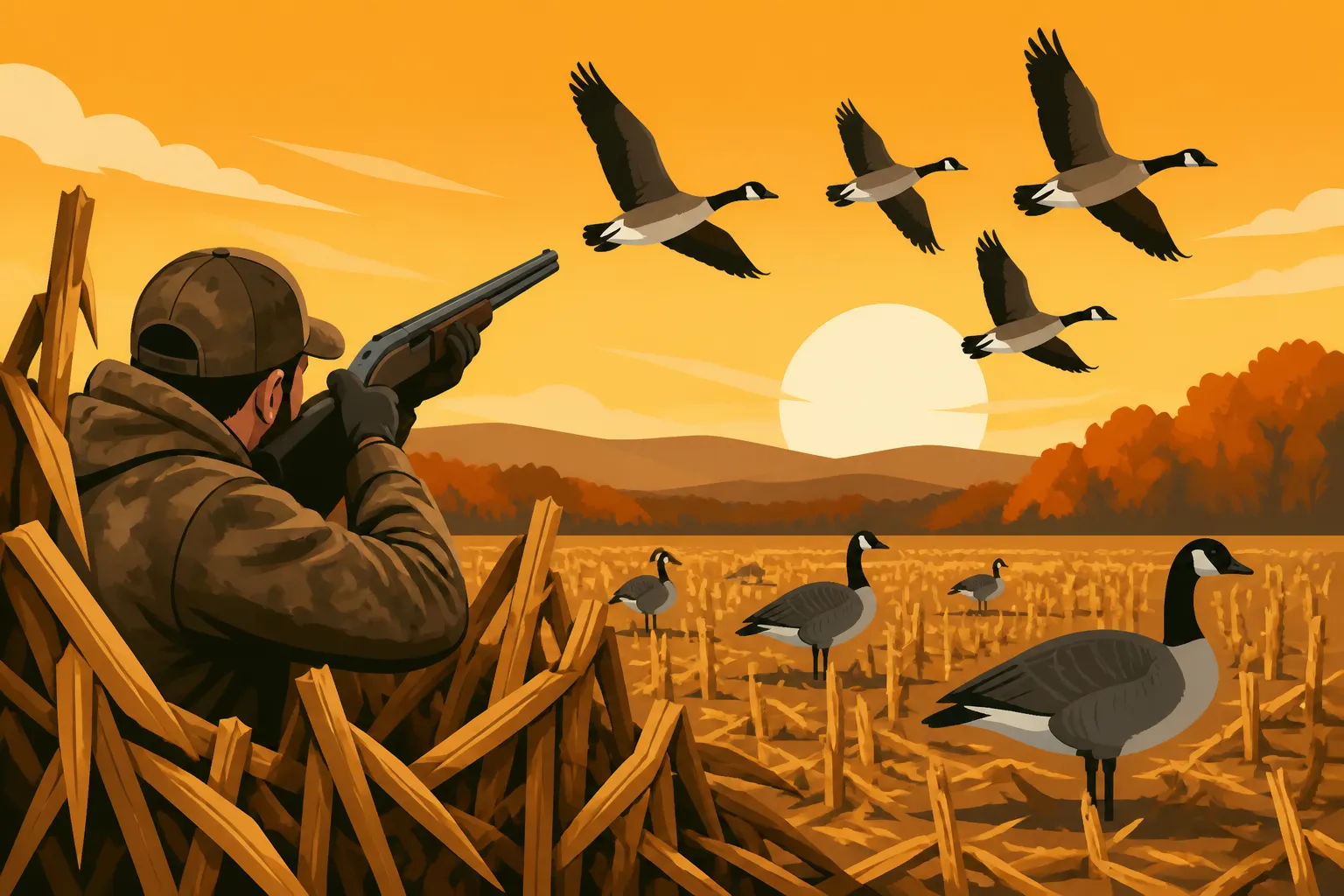
Watching a flock of majestic Canada geese sail directly over your spread, committed and cupped, is one of the most exhilarating moments a hunter can experience. But, let's be honest, there's nothing quite like the frustration of watching those same birds flare off at the last second, leaving you scratching your head in a cold, muddy Pennsylvania field. Goose hunting in the state's vast cut cornfields can be incredibly rewarding, but it presents unique challenges. This comprehensive guide is dedicated to helping you master the art of hunting Canada geese in these productive agricultural landscapes, from initial scouting to effective setups and calling, so you can turn those near misses into successful harvests.
Understanding Goose Behavior in Pennsylvania's Cut Corn
To consistently put geese in your spread, you first need to think like a goose. Their entire existence revolves around food, water, and safety, and understanding how they utilize cut cornfields is your first step to success. Pennsylvania offers incredible opportunities for goose hunting, especially with its robust population of Resident Canada Geese in Pennsylvania.
Why Geese Love Cut Corn
Cut cornfields are an absolute magnet for Canada geese, and for good reason. When the combines roll through, they invariably leave behind a significant amount of waste grain. For geese, this isn't just a snack; it's a calorie-dense feast they need to fuel their daily activities, sustain themselves through colder weather, and prepare for migration. These fields offer wide-open spaces, giving geese excellent visibility against predators, which contributes to their sense of security. The higher energy content of corn also helps them build fat reserves, crucial for survival. It's a prime stop on their daily itinerary, offering both sustenance and a relatively safe environment to feed.
Daily Flight Patterns and Roost-to-Field Dynamics
Geese are creatures of habit, typically adhering to predictable daily patterns. They'll spend their nights roosting on large, safe bodies of water – think major rivers like the Susquehanna, big lakes, or sometimes even sizable farm ponds. As dawn breaks, they'll leave these roosts in search of food. This is where the cut cornfields come in. They'll fly from their roosts directly to their preferred feeding grounds, often covering significant distances. As the day progresses, they might move between feeding fields or return to water to rest and digest. In the late afternoon, they'll head back to their roosts for the night. Learning to read these daily flight lines and understanding Reading Roost-to-Field Flight Lines is paramount. A good mapping app, like GoHunt, can be invaluable for identifying potential roosting areas and mapping out flight paths between them and nearby agricultural fields, helping you predict where birds will be. Knowing these routes means you can often intercept birds traveling between key locations.
Recognizing Feeding Sign and Identifying Hot Fields
Finding the "hot" field is perhaps the most critical step. Geese aren't just randomly landing in any cut cornfield; they prefer fields where they've previously found good food and felt secure. The best way to identify these fields is through diligent scouting. Look for visual signs: tracks in the mud, scattered feathers, and, most importantly, droppings. Fresh, moist droppings indicate recent activity, while dry, chalky ones mean the geese were there days ago. Pay attention to the quantity of droppings; a field covered in goose "chocolate chips" is a sure sign you've found a consistent feeding area. Don't be afraid to drive around, glassing fields from a distance with binoculars, especially in the mornings and evenings when geese are most active. You're looking for large congregations of birds actively feeding. Remember, even a small group feeding consistently can indicate a prime spot worth hunting. Often, the field they were in yesterday will be the field they're in today, provided they weren't pressured too heavily.
Essential Gear and Setup for Field Hunting
Once you've found a hot field, it's time to set the stage. The right gear and a well-executed setup are what bridge the gap between watching geese fly over and watching them land in your lap.
Decoy Selection and Effective Spreads
Decoys are your primary tool for convincing geese that your field is safe and inviting. The debate between full-body decoys, shells, and silhouettes is ongoing, but a mixed spread often yields the best results. Full-bodies offer the most realism, especially in clear conditions, but they are bulky and expensive. Shells are lighter and more economical, creating the illusion of a larger flock. Silhouettes are highly portable and effective, particularly for distant birds or creating a massive "numbers" look. Motion decoys, like flags or windsock flyers, can add crucial realism, especially on calm days when static decoys look lifeless.
When it comes to layout, variety is key. A common and effective spread is the "U" or "J" shape, with the open end facing into the prevailing wind (as geese land into the wind). Place your blinds at the closed end, or along one of the arms, slightly off-center. This creates a natural landing zone directly in front of and within comfortable shooting range of your blinds. You want enough decoys to look convincing – for Canada geese, a spread of 3 to 5 dozen is a good starting point, but more can be better, especially on heavily pressured birds. Remember, geese want to land with other geese, not on top of them, so leave plenty of open space in your kill hole.
Here’s a quick comparison of popular decoy types:
| Decoy Type | Pros | Cons | Ideal Use |
|---|---|---|---|
| Full-Body | Most realistic, excellent visibility | Bulky, heavy, expensive, time-consuming | Low-pressure areas, small groups, lead birds |
| Shell | More affordable, easier to transport | Less realistic from certain angles | Creating "bulk," larger spreads, mixed in |
| Silhouette | Extremely portable, quick setup, cheap | Least realistic, only 2D | High numbers, background fillers, distant fields |
| Motion | Adds realism, attracts attention | Can be finicky in wind, sometimes costly | Enhancing realism, calm days, active flocks |
For many, a good combination is a dozen or two realistic full-bodies as the core, surrounded by shells or silhouettes to create the impression of a larger, contented flock. Consider using a few sentry (upright) decoys on the edges of your spread to mimic watchful birds, adding to the illusion of safety.
Blind Choices and Concealment Techniques
Concealment is non-negotiable. Geese have incredible eyesight, and they will spot anything out of place. The most common choice for field hunting is the layout blind. These low-profile blinds allow you to lie flat, hidden from overhead birds, and pop up quickly for the shot. Popular brands like Rogers Sporting Goods and Avery Outdoors offer excellent layout blind options. When setting up, position your blinds to face into the expected flight path or downwind of your decoys. This ensures you're looking directly at the incoming birds, and they'll be landing just past you.
The key to effective concealment with any blind is brushing it in. Don't just toss your layout blind in the field; take the time to blend it into the natural surroundings. Use corn stalks, stubble, hay, or whatever natural vegetation is present in the specific field you're hunting. You want the blind to disappear completely. Carry a small bundle of zip ties or bungee cords to secure natural material to the blind's stubble straps. For larger groups, A-frame blinds can be effective, offering more space and comfort, but they require even more meticulous brushing-in to break up their larger profile. Remember, a poorly concealed blind is worse than no blind at all, as it will flair birds every time. Utilizing a Layout Blind for Pennsylvania Cut Corn requires careful attention to detail.
Calling and Other Sound Strategies
Calling is the art of communication, convincing geese to commit to your spread. It's not about being the loudest; it's about being the most convincing. Start with softer, contented feeding clucks and murmurs to signal safety. As birds approach, increase the volume and urgency with comeback calls or honks to grab their attention. If they start to turn away, a quick, sharp comeback call can sometimes pull them back.
Practice makes perfect. Listen to real geese in the field and try to mimic their cadence and tone. Many hunters find success with short-reed calls, which offer versatility in sound. Don't overcall; let the birds tell you what they want. Sometimes, less is more, especially with wary birds. If they're coming straight in, just a few contented clucks might be all you need. However, if they're circling high or hesitant, a more aggressive calling sequence might be necessary. Incorporate feeding gabble by shaking your call or using a separate feeder call to simulate a busy, happy flock. This auditory cue, combined with your visual spread, completes the illusion. While electronic calls are tempting, remember that in Pennsylvania, federal regulations typically prohibit the use of electronic calls for migratory game birds, so stick to traditional mouth-blown calls.
Tactics for Success in Varying Conditions
Even with the best scouting and setup, conditions can change, and geese can become educated. Adapting your tactics is crucial for consistent success.
Adapting to Weather and Pressure
Weather plays a huge role in goose behavior. Cold, blustery days often make geese more eager to feed, and they might fly lower, making them easier to decoy. Overcast conditions also help, as bright sun can make decoys look less natural and blinds more conspicuous. High winds can make calling difficult, but also provide excellent cover for hunter movement and can make motion decoys come alive. Conversely, calm, bluebird days make geese warier and harder to finish. On such days, smaller, more realistic spreads and minimal calling often work better.
Hunting pressure is another major factor. Pennsylvania's hunting lands, including private farms often hunted for geese, can see significant hunter activity. Geese quickly learn to associate certain fields with danger. If a field has been hunted hard, the geese might abandon it or become incredibly wary. This is where diligent scouting pays off; try to find fields that haven't seen as much recent pressure. When dealing with pressured birds, scale down your calling, ensure absolutely perfect concealment, and focus on realism in your spread. Sometimes, less is more, particularly if the birds have been shot at repeatedly. Understanding Hunting Pressure on Pennsylvania Game Lands can provide insights into how waterfowl in agricultural areas might react.
Approaching the Field and Final Adjustments
The approach to your chosen field needs to be executed with stealth. Geese have excellent eyesight, and seeing a truck drive right up to their feeding ground will often send them packing for days. If possible, park your vehicle out of sight, over a rise, or behind a hedgerow. Walk into the field, staying low and using any available cover. For the final setup, ensure all blinds are perfectly brushed in and camouflaged. Check for any shiny objects, exposed skin, or bright clothing. Even a glint of sunlight off a watch or a phone can flair a flock.
Once you're in your blinds, wait. Let the sun come up, and be patient. Geese typically start flying shortly after legal shooting hours. Pay attention to the wind direction; if it shifts, you might need to make minor adjustments to your blinds or decoys to ensure the landing zone remains optimal. Keep your head down and only peek out when you need to check on incoming birds. The slightest movement can spook a wary flock.
Shot Placement and Post-Shot Protocol
When the geese are committed and within range, the moment of truth arrives. Wait for the birds to "cup" their wings and start to set their feet for landing in the kill hole. Choose a single bird, swing through it, and make a clean shot. Aim for the head and neck for ethical, quick kills. The vital zone for geese is surprisingly small, located towards the front of their body, so leading them properly is essential. Using appropriate Waterfowl Loads for Pennsylvania Ducks and geese, typically larger shot sizes like BB, BBB, or T in non-toxic varieties, will help ensure clean kills.
After the shot, if birds go down, mark their location immediately. Retrieving birds promptly is not only ethical but also crucial to prevent cripples from escaping. If you have a dog, this is where they truly shine. If not, note landmarks to help you find the downed bird quickly. Be mindful of any unshot birds still circling; sometimes you can call them back for another pass, but usually, it's best to retrieve your game first. Always ensure your firearm is safe before leaving your blind to retrieve game.
Navigating Regulations and Ethical Considerations
Hunting is a privilege, and respecting the rules and the land is paramount. Pennsylvania has specific regulations for waterfowl hunting that every hunter must adhere to.
Pennsylvania Goose Season Dates and Bag Limits
Goose hunting seasons in Pennsylvania are divided into different zones and often have multiple segments throughout the fall and winter. These dates and bag limits are set annually by the Pennsylvania Game Commission (PGC) in coordination with federal guidelines, so they can change. It is critical to consult the most current PGC digest before heading afield. Generally, early resident goose seasons often run in September, followed by regular seasons that align with duck seasons, and sometimes a late-season opportunity in January and February. Bag limits vary by season and zone, typically ranging from 1 to 5 birds per day for Canada geese. Remember that you will need a valid Pennsylvania hunting license, a federal duck stamp, and a Pennsylvania Migratory Game Bird Licence in addition to registering with the Harvest Information Program (HIP). You can learn more about specific dates by checking Pennsylvania Waterfowl Seasons and Zones.
Legal Shooting Hours and Hunter Orange
For migratory birds like geese, legal shooting hours are typically one-half hour before sunrise to sunset. However, these hours can sometimes be extended or altered, so always double-check the current PGC regulations. Strict adherence to Legal Shooting Hours in Pennsylvania is crucial for ethical hunting and avoiding violations.
Regarding hunter orange, the rules for waterfowl hunting in fields are different from big game. Generally, hunter orange is not required when hunting waterfowl from a blind on land or water. However, if you are walking to or from your blind, or moving through fields where other hunting (like deer or pheasant) might be occurring, carrying or wearing some hunter orange is a good safety practice, especially during concurrent seasons. Always refer to the most recent PGC regulations for exact requirements, as Pennsylvania Hunter Orange Rules can vary by species and season. If you are hunting on a Sunday, remember that while deer, bear, and coyote hunting is now permitted on specific Sundays, migratory birds like geese generally remain closed on Sundays in Pennsylvania.
Respecting Landowners and Fellow Hunters
Most cut cornfields are on private property. Obtaining Getting Private Land Permission in Pennsylvania is not just a legal requirement but a demonstration of respect. Always ask for permission well in advance, and leave the property in better condition than you found it. Pick up your empty shell casings, retrieve all your decoys, and avoid driving vehicles through fields unnecessarily. Building a good relationship with landowners is key to securing future hunting opportunities.
Finally, show courtesy to your fellow hunters. If another group is already set up in a field, respect their space and find another spot. Don't crowd them or attempt to "jump" their birds. Share information and good will; we're all out there to enjoy the outdoors. Ethical hunting practices and good sportsmanship ensure a positive experience for everyone and help preserve our hunting heritage. Always remember to complete your Pennsylvania HIP Registration for Migratory Birds as required by federal law.
Disclaimer
Please be aware that hunting regulations, seasons, and bag limits are subject to change. Always consult the current Pennsylvania Game Commission (PGC) Hunting & Trapping Digest or their official website for the most up-to-date and accurate information before planning any hunting trip. This guide is for informational purposes only and should not replace official regulatory documents.