Bobcat Hunting in Pennsylvania
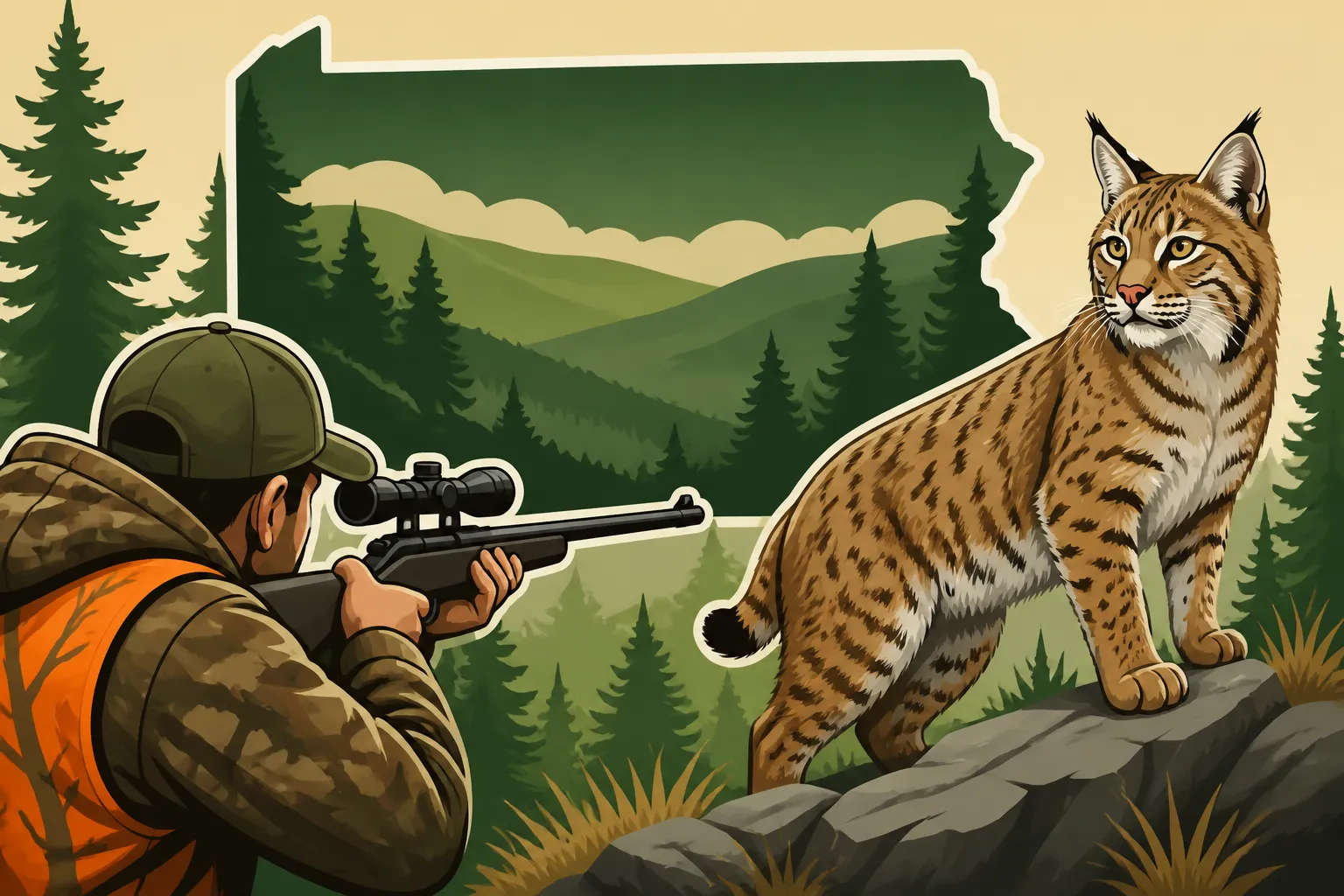
Bobcat hunting in Pennsylvania is one of those pursuits that can feel shrouded in a bit of mystery and a whole lot of challenge. Unlike deer or turkey, you don't hear as many folks swapping stories about calling in a bobcat around the campfire. It’s an elusive animal, demanding a unique blend of skill, patience, and a deep understanding of its habits. If you've ever felt that pull to pursue one of Pennsylvania's most beautiful and secretive predators, but weren't sure where to start, you're in the right place. This guide is going to walk you through everything you need to know to pursue bobcats in the Keystone State, from understanding their movements to navigating the special regulations, and hopefully, putting you on the path to success.
Understanding Pennsylvania Bobcats and Their World
Before you even think about hitting the woods, it’s crucial to understand the animal you’re pursuing. Bobcats are intelligent, wary, and primarily nocturnal creatures, which is a big part of what makes hunting them such a fascinating challenge. They aren't everywhere, and they certainly don't act like most other game animals you might be familiar with.
Bobcat Range and Population in Pennsylvania
Pennsylvania's bobcat population has made a remarkable comeback over the last few decades, a true testament to conservation efforts. Once nearly extirpated from much of the state, these elusive felines have expanded their range significantly. Today, they are found throughout much of Pennsylvania, though their distribution is far from uniform. Generally, you'll find higher concentrations in the northern tier and southwestern counties, particularly in areas with extensive forest cover and rugged terrain. Counties like Potter, Tioga, Lycoming, and McKean are often cited as prime bobcat country in the north, while areas of Fayette and Greene in the southwest also hold good numbers.
It's not like deer where you see them in every field; bobcats are masters of stealth. Their presence is usually indicated by subtle signs rather than direct sightings. The Pennsylvania Game Commission carefully monitors the bobcat population, using harvest data and various surveys to ensure sustainable management. This careful approach is what has allowed for hunting opportunities to exist today, something many of us never thought we’d see just a few generations ago. For a deeper dive into their presence across the state, consider reading up on Bobcat Range and Harvest in Pennsylvania.
Preferred Habitat and Prey
Bobcats are incredibly adaptable, but they certainly have their preferred haunts. You'll typically find them in areas with dense cover: think thick timber, regenerating clearcuts, rocky outcrops, and brushy swamps. They love places where they can move unseen, ambush prey, and find sheltered dens. Large tracts of unbroken forest, particularly those with a mosaic of mature timber and younger, regenerating areas, are ideal. The transition zones between different habitat types are also hotspots, as these areas often provide both cover and access to food.
Their diet is broad, but they primarily prey on small to medium-sized mammals. Cottontail rabbits and snowshoe hares are staples, along with various rodents like mice, voles, and squirrels. They also take birds, and occasionally, they'll target larger prey like wild turkeys or even deer fawns, especially in winter when other food sources are scarce. This reliance on smaller prey means that understanding the local rabbit or squirrel population can be a key indicator of bobcat presence. If you're hunting areas that are thick with small game, you're likely in good bobcat habitat.
Navigating Regulations and Licensing for Bobcat Hunting
Unlike general hunting licenses for deer or turkey, pursuing bobcats in Pennsylvania requires a special permit on top of your standard furtaker license. This is a crucial distinction and one that can catch new predator hunters off guard. The system is designed to manage the population carefully, reflecting the bobcat's status as a valuable furbearer.
Furtaker License Requirements
First things first: you absolutely need a Furtaker License to legally hunt or trap bobcats in Pennsylvania. This isn't your general hunting license. It's a separate permit issued by the Pennsylvania Game Commission, specifically for taking furbearing animals. This license covers other species like foxes, coyotes, raccoons, and skunks, but for bobcats, it's just the first step. You can obtain a Furtaker License through the PGC's website, at any license issuing agent, or through the mail. It's affordable, and a must-have before you even consider applying for a bobcat permit. If you're interested in pursuing other furbearers, getting this license is your gateway. For more details, check out Pennsylvania Furtaker Licence Requirements.
The Special Bobcat Permit System and Season Dates
This is where bobcat hunting gets specific. Pennsylvania operates a lottery system for bobcat harvest permits. The number of permits issued each year is limited and determined by the Game Commission based on population data and harvest objectives. To even have a chance at hunting a bobcat, you must apply for one of these permits.
The application period typically opens in the spring, often around the same time general hunting licenses go on sale, and runs through much of the summer. You usually apply online or through a license issuing agent. There's a small application fee, and if you're drawn, you'll receive a special bobcat permit that allows you to harvest one bobcat during the designated season. This permit will come with a tag that must be immediately affixed to the animal upon harvest, similar to a deer tag.
The bobcat season itself is usually a short window in the late fall or early winter, often concurrent with some other firearms seasons. It's typically a brief period, emphasizing the challenge and the limited opportunity. Always consult the current Pennsylvania Hunting & Trapping Digest for the exact application deadlines, season dates, and specific rules for the upcoming year. Missing a deadline means missing your chance entirely. All the critical information about this process is laid out clearly in Pennsylvania Bobcat Permit Rules.
Here’s a simplified breakdown of the bobcat permit process:
| Step | Description | Timing (Approx.) |
|---|---|---|
| 1. Purchase Furtaker License | Required to apply for a bobcat permit. | Annually, anytime |
| 2. Apply for Bobcat Permit | Enter the lottery for a limited harvest permit. Small application fee. | Spring/Summer |
| 3. Await Lottery Results | Successful applicants are notified and receive a physical permit/tag. | Late Summer/Early Fall |
| 4. Hunt During Season | Only hunt during specified season dates in authorized WMUs if you have a permit. | Late Fall/Early Winter |
| 5. Tag and Report Harvest | Immediately tag harvested bobcat and report it to the PGC within required timeframe. | Post-harvest |
Legal Harvest and Reporting Requirements
Once you are fortunate enough to harvest a bobcat, the process isn't over. Just like with deer, you have strict tagging and reporting requirements. The special bobcat permit you received will include a tag that must be attached to the animal immediately after harvest. This tag typically needs to be affixed to an ear or hind leg, as specified by the PGC. The exact location and method will be detailed on the permit itself, so read those instructions carefully.
Beyond tagging, you must also report your harvest to the Pennsylvania Game Commission within a specific timeframe, usually within 24 or 48 hours. This can often be done online through the PGC's harvest reporting system, or sometimes by phone. Reporting is vital for the PGC to collect accurate data on harvest numbers, which directly informs future permit allocations and management decisions. Failure to properly tag or report a bobcat can result in significant penalties, so don't cut corners here.
Effective Strategies and Tactics for Bobcat Hunting
Hunting bobcats requires a different mindset than hunting deer or turkeys. You're not looking for big numbers; you're looking for that single, rare opportunity. Success often hinges on meticulous scouting, understanding bobcat behavior, and employing the right calling and ambush techniques.
Scouting and Sign Identification
Scouting is paramount when pursuing bobcats. These animals leave subtle clues, and learning to read them is your first step. Look for tracks in snow, mud, or dusty logging roads. Bobcat tracks are typically rounder than a domestic cat's, and they usually don't show claw marks because their claws are retractable. Look for their distinct four toe pads. Scat (feces) can also be found, often containing hair and bone fragments of their prey. Bobcats also use "scratch posts"—logs or trees where they sharpen their claws, similar to a house cat on a scratching post. These are territorial markers and can indicate an active area.
Beyond physical signs, "e-scouting" is an invaluable tool. Using mapping software like those offered by GoHunt allows you to identify potential habitat features from home. Look for remote, rugged terrain with dense cover, clearcuts, creek bottoms, and rock outcroppings. Identify pinch points, saddles, and travel corridors where a bobcat might naturally funnel. Marking these potential spots on your app, then visiting them on foot to confirm sign, can save you countless hours. Knowing the lay of the land, especially public access points like State Game Lands or State Forests, is critical. You can also gain an edge by looking into Scouting Pennsylvania Public Land Before Season for general tips on finding hidden gems.
Calling and Ambush Techniques
Calling is arguably the most effective hunting method for bobcats. These felines are opportunistic predators, and distress calls mimicking their prey can be incredibly enticing.
- Prey Distress Calls: Rabbit-in-distress or fawn-in-distress calls are excellent choices. Bobcats primarily hunt small game, so these sounds are natural attractants. You can use mouth calls, electronic callers, or even app-based callers to generate these sounds. Vary the intensity and duration, mimicking a struggling animal.
- Bobcat Vocalizations: Less common, but sometimes effective, are bobcat specific calls like a "meow" or a "purr." These can sometimes pique the curiosity of a territorial tom or a searching female.
- Decoys: Motion decoys, such as a feathered stick spinning on a timer or a small fur-covered decoy, can add a visual element that further entices a bobcat to commit. They often key in on movement, so a decoy can make a huge difference, especially if the bobcat is hesitant.
When setting up, always play the wind. Bobcats have an excellent sense of smell. Set up in an area with good visibility but also ample cover for yourself. Choose a location where you can see for a good distance, perhaps overlooking a clearcut edge, a logging road, or a natural travel corridor. Be patient – a bobcat might not come charging in. They are cautious and often circle downwind to scent-check the source of the call. A stand can be useful for elevation and visibility, especially on uneven ground. Consider integrating knowledge from Coyote Calling in Pennsylvania Winter as many principles for predator calling overlap.
Trapping as a Method
While this guide focuses on hunting, it’s worth noting that trapping is also a highly effective and popular method for harvesting bobcats in Pennsylvania, often yielding higher success rates than hunting with calls alone. Many individuals who hold a furtaker license pursue bobcats through trapping. Trappers employ various sets, including cubby sets, dirt hole sets, and foot-hold traps, often baited with lures and urine to attract the bobcats. Trapping requires a completely different skill set, specific equipment, and an intimate knowledge of trap placement and animal behavior. If you’re serious about maximizing your chances of a bobcat harvest and are interested in learning about trapping, the Pennsylvania Trappers Association is an excellent resource, offering workshops and educational materials. Remember, trapping still falls under the special permit system, so having that bobcat permit is non-negotiable, regardless of whether you're hunting or trapping.
The Challenges and Rewards of Bobcat Hunting
Let's be real: bobcat hunting isn't for the faint of heart or the easily discouraged. It’s a pursuit that often tests your resolve, but the rewards are truly unforgettable.
Low Success Rates and Persistence
The very nature of the bobcat permit lottery system tells you something important about success rates: they are inherently low. Only a limited number of permits are issued, and even fewer hunters actually fill those tags. This isn't due to a lack of effort, but rather the extreme wariness and elusiveness of the animal. You might spend countless hours scouting, setting up, and calling, only to never even catch a glimpse of one. It's a game of persistence, where every outing is a lesson learned, and every piece of fresh sign is a small victory.
Don't let the low odds deter you, though. Embrace the challenge. Each time you head out, you're not just hunting for a bobcat; you're exploring wild Pennsylvania, honing your predator calling skills, and deepening your understanding of the state's most secretive furbearer. The pursuit itself often becomes the reward.
The Thrill of the Chase and a Unique Trophy
Despite the difficulty, the moment a bobcat responds to your call and appears silently out of the thick cover is an experience unlike any other. Their stealthy approach, intense focus, and striking beauty make for an adrenaline-pumping encounter. Successfully harvesting a bobcat represents the pinnacle of predator hunting skill and dedication. It's a trophy earned through hard work, meticulous planning, and unmatched patience.
Beyond the meat (which some choose to consume, though it's not a primary goal for most bobcat hunters), the hide is a beautiful memento of a truly challenging hunt. Many hunters opt to have their bobcat caped for taxidermy or tanned, preserving the memory of a unique and hard-won trophy. It’s a testament to your ability to adapt, learn, and persevere in the diverse and often demanding landscapes of Pennsylvania.
Disclaimer
Please note that hunting regulations, season dates, and permit requirements can change. Always consult the most current Pennsylvania Hunting & Trapping Digest or the Pennsylvania Game Commission's official website before planning any hunting trip. This information is provided for general guidance and educational purposes only.