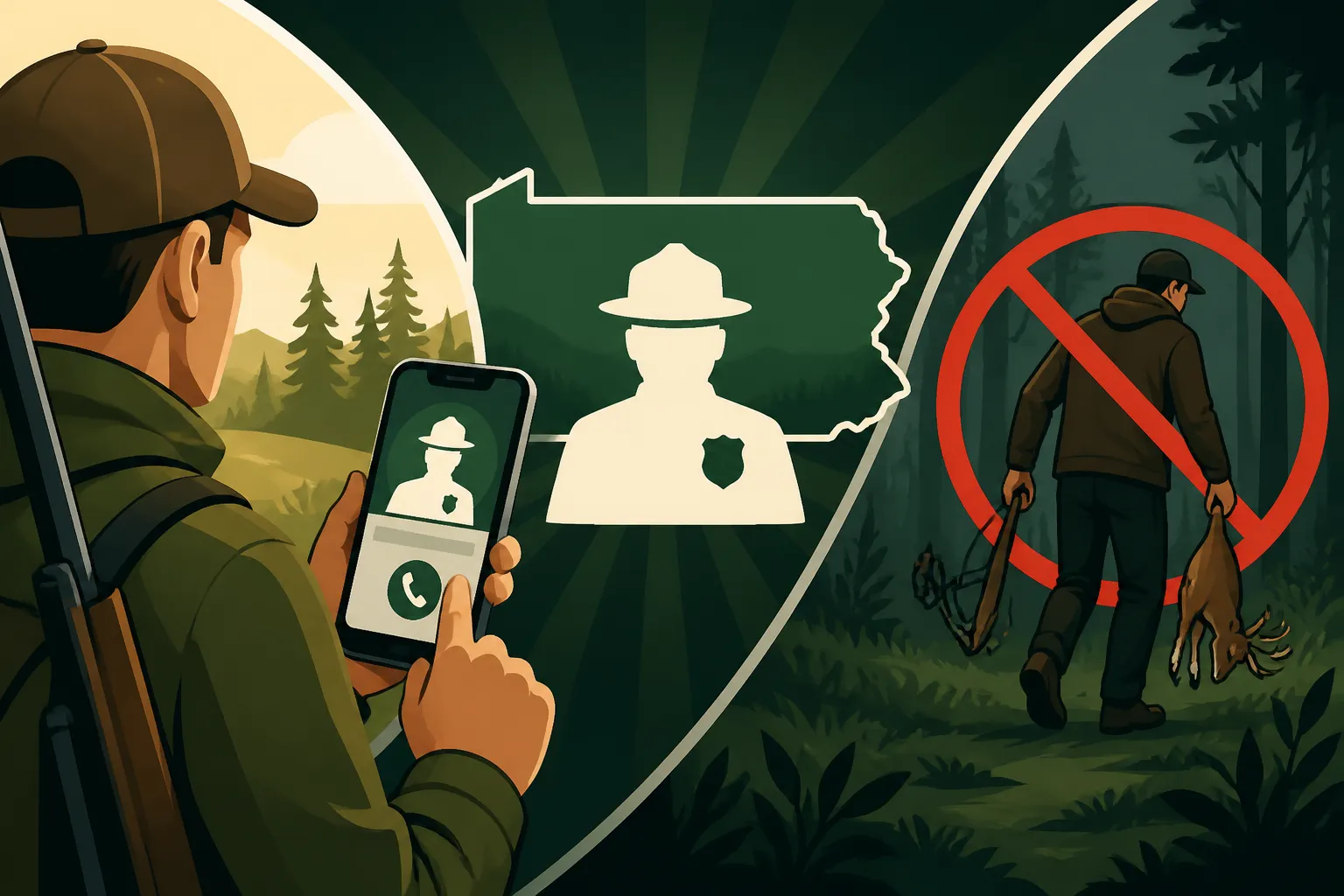
Reporting a Poacher in Pennsylvania
It’s a gut-wrenching feeling for any ethical hunter or outdoors enthusiast: stumbling upon evidence of someone breaking the rules, or worse, witnessing a blatant act of poaching. This isn't just about minor infractions; it’s a crime that undermines conservation efforts, depletes wildlife populations, and disrespects every legal hunter who puts in the time and effort. This comprehensive guide will walk you through exactly how to report a poacher in Pennsylvania, what critical information to gather, and what to expect when you take a stand for our wildlife.
Understanding Poaching: More Than Just "Bending the Rules"
When we talk about poaching, it’s often dismissed by some as merely "taking a deer" out of season or "just a little bit over the limit." But in Pennsylvania, and across the nation, poaching is a serious criminal act with far-reaching consequences. It's not a casual disregard for regulations; it’s a deliberate theft of public resources that impacts everyone, whether you hunt, hike, birdwatch, or simply appreciate the beauty of our state's wild places. Seeing someone engage in such activities can be incredibly frustrating, leaving you feeling helpless or angry, but understanding the severity helps underscore why reporting is so vital.
What Exactly Constitutes Poaching in Pennsylvania?
The Pennsylvania Game Commission (PGC) has a clear framework for what constitutes a wildlife violation, and many of these rise to the level of poaching, especially when done with intent and disregard for the law. These aren't just technicalities; they are foundational rules designed to protect our game species and ensure fair chase. For example, hunting deer with an illegal firearm, using artificial lights to "spotlight" deer at night, or taking an animal outside of the designated seasons are all serious offenses.
Consider the classic scenario: you're driving home late one evening on a rural road, and you see a vehicle slowly cruising a field with a spotlight shining out the window. That's a textbook example of illegal activity. Or maybe you find a deer carcass in the woods, stripped of its meat but with only a head and no tag, well before archery season even opens. That's a red flag. These acts directly violate laws that govern when, where, and how animals can be harvested, like those outlined in Pennsylvania Deer Seasons and WMU Rules or Legal Firearms for Pennsylvania Deer. The penalties for these actions, which we’ll delve into shortly, reflect their severity. It’s also important to remember that not all wild animals are legal game, and hunting a Protected Species in Pennsylvania Hunting Country is also a serious offense.
Why Poaching Hurts All of Us
Poaching isn't a victimless crime. First and foremost, it directly impacts wildlife populations. When animals are taken indiscriminately, without regard for seasons, bag limits, or species management, it can significantly reduce local populations, especially for species that are already facing challenges. Think about areas where local deer populations are struggling, and then imagine several animals being poached from that same area each year. This makes the work of biologists and conservationists much harder, and it can take years for those populations to recover, if they ever do.
Beyond the biological impact, poaching steals from ethical hunters and all Pennsylvanians. Hunting license fees, special tags like the Pennsylvania Bear Licence and Seasons, and federal excise taxes on hunting equipment fund the vast majority of wildlife conservation efforts in our state. When someone poaches, they are essentially taking an animal that belongs to the public without contributing to the funding that supports its habitat, research, and management. It creates an unfair playing field, eroding trust and causing resentment among those who diligently follow the law, attend Pennsylvania Hunter Education Requirements courses, and buy their Pennsylvania Hunting Licences and What They Cost every year. It also jeopardizes the future of hunting itself by creating a negative public perception.
How to Report a Poacher: Getting the Right Information
The act of reporting a poacher might feel intimidating, but it's one of the most powerful things you can do to protect Pennsylvania's wildlife. The Pennsylvania Game Commission relies heavily on concerned citizens and hunters to be their eyes and ears in the field. Don’t ever feel like you're "snitching" – you're upholding the law and protecting a shared resource. The key to a successful report is providing as much specific, verifiable information as possible.
The Pennsylvania Game Commission's Operation Game Thief
The PGC has a dedicated program called "Operation Game Thief" specifically for reporting wildlife violations. This program is designed to make it easy for you to report suspicious activity or confirmed violations directly to wildlife conservation officers. Their hotline is staffed 24/7, ensuring that urgent situations can be addressed swiftly.
The primary method for reporting is their toll-free hotline: 1-888-PGC-8001 (1-888-742-8001). This is your go-to number for immediate reports, especially if you're witnessing an active violation or something that needs quick attention. For less urgent reports, or if you prefer to submit information electronically, the PGC also offers an online reporting form on their website. Both methods are effective, but knowing which one to use based on the urgency of the situation is important. Always prioritize the phone call for active violations where officers might be able to intercept the individuals.
Key Information to Gather for Your Report
When you make a report, the more details you can provide, the better. Think like an investigator; every piece of information, no matter how small it seems, can be crucial for a wildlife conservation officer (WCO) to follow up effectively. Before you even pick up the phone, try to mentally (or physically, if safe) make notes of these critical elements:
- Date and Time: When did you observe the violation? Be as specific as possible, including the exact time. Even a rough estimate is better than nothing.
- Location: This is paramount. Provide precise details like road names, mile markers, GPS coordinates (if you have them from an app like GoHunt), landmarks (e.g., "just past the old red barn on State Route 15 south of Lewisburg," or "on State Game Lands 176, near access gate #3"). Identifying features like nearby creeks, power lines, or distinct terrain can also help.
- Description of Suspects: If you saw individuals, note their appearance. How many people were there? What were they wearing? Were they male or female? While you should never confront them or put yourself in harm's way to get this information, any detail can help.
- Vehicle Description: This is often one of the most useful pieces of information. Note the make, model, color, and especially the license plate number (state included). Any distinguishing features like bumper stickers, rust spots, dents, or aftermarket modifications (lift kits, specific tires) can also be incredibly helpful.
- Description of the Violation: What exactly did you see? Was an animal killed? What kind? Was it during a closed season? Were illegal methods used (e.g., spotlighting, shooting from a road, hunting on Sunday when not permitted for that species)? Did they seem to be using an illegal firearm for Pennsylvania's Two-Week Firearms Deer Season?
- Other Evidence: Did you see any weapons? Were there dogs involved where they shouldn't be? Did they have any other gear that seemed out of place? If you can safely take photos or videos without being detected, this can be incredibly powerful evidence, but always prioritize your safety.
Remember, even if you don't have all of this information, still make the call. Any detail you can provide could be the missing piece of a larger puzzle.
Here's a quick summary of essential information:
| Information Category | Specific Details to Look For | Importance |
|---|---|---|
| Location | Road name, mile marker, GPS coordinates, nearby landmarks, SGL # | Critical for WCO response |
| Date & Time | Specific date, exact time or close estimate | Establishes timeline for investigation |
| Suspect(s) | Number of people, gender, clothing, approximate age/build | Helps identify individuals, if observed safely |
| Vehicle(s) | Make, model, color, license plate (state!), unique features (dents, stickers) | Often the best way to track down perpetrators |
| Violation | What happened? What animal? Method? Season? | Clarifies the nature and severity of the crime |
| Other Evidence | Weapons, spent casings, unusual gear, photos/videos (if safe) | Provides direct proof for officers |
Using Technology to Aid Your Report
In today's world, technology can be a huge asset when you need to report a wildlife violation. Most of us carry powerful computers in our pockets: our smartphones.
- GPS and Mapping Apps: If you’re out Scouting Pennsylvania Public Land Before Season or just enjoying the outdoors, having a good mapping app like GoHunt can be a game-changer. If you observe suspicious activity, you can quickly drop a pin with your exact GPS coordinates. This is far more accurate than trying to describe "that big oak tree by the creek" later. Many apps also allow you to add notes or photos directly to your pins, creating a detailed record. Using the mapping layers from GoHunt can also help you quickly determine if you are on public land or adjacent private property, which might influence the type of violation (e.g., trespassing).
- Camera/Video: If it's safe to do so without being detected or putting yourself in danger, discretely taking photos or short video clips can provide irrefutable evidence. A clear picture of a vehicle's license plate or individuals engaged in illegal activity can make an officer's job much easier. However, always remember that your safety is the absolute priority. Do not escalate a situation for the sake of a picture.
- Notes App: A simple notes app on your phone can be a quick way to jot down details like vehicle descriptions, license plate numbers, or specific times, ensuring you don't forget crucial information before you can make the official report.
The more accurate and detailed your information, the higher the chance of a successful investigation.
What Happens After You Make a Report?
Reporting a poacher is just the first step. Many people wonder what actually happens once they hang up the phone or click 'submit' on the online form. The Pennsylvania Game Commission takes these reports very seriously, and a structured process unfolds. Knowing this can help you feel more confident in taking action.
The Investigation Process and Officer Discretion
Once your report is received, it's routed to a wildlife conservation officer (WCO) in the relevant district. The WCO will review the information you provided and determine the best course of action. If it's an active situation, they will try to respond immediately. For less urgent reports, they will use the information to initiate an investigation.
This investigation might involve:
- Patrolling the area: WCOs will often increase patrols in the reported location, looking for the vehicle or individuals described.
- Interviewing witnesses: If you've left your contact information and are willing, a WCO might contact you for more details or clarification.
- Checking records: With a license plate number, they can often trace the vehicle to its owner. They might cross-reference this with hunting license databases or past violation records.
- Surveillance: In some cases, WCOs might conduct surveillance on a location or individuals if there's a pattern of suspected illegal activity. This is particularly true for repeat offenders.
It's important to understand that WCOs have discretion. Not every report will lead to an arrest or citation. Sometimes, the evidence might be insufficient, or the individuals might be gone by the time they arrive. However, every report helps build a picture of poaching activity in an area, allowing the PGC to allocate resources more effectively and potentially catch offenders in the future. Even a seemingly minor detail you provided could be the piece that connects to other information the WCO already has, leading to a successful case.
Penalties for Wildlife Violations in Pennsylvania
The consequences for poaching in Pennsylvania are substantial, reflecting the seriousness of the crime. Penalties vary significantly depending on the nature and severity of the violation, whether it's a first offense or a repeat offense, and the species involved. You can learn more about the specifics in Pennsylvania Wildlife Violation Penalties.
Generally, penalties can include:
- Fines: These can range from hundreds to thousands of dollars per violation. For instance, hunting out of season for certain species can carry hefty fines.
- Restitution: Poachers may be ordered to pay restitution for the value of the poached animal. The PGC has established values for various game animals, with larger or rarer species commanding higher restitution amounts.
- Loss of Hunting Privileges: This is often one of the most impactful penalties for a hunter. Individuals convicted of poaching can lose their hunting, trapping, and furtaking privileges for several years, sometimes even for life in egregious cases. This means no more buying licenses or participating in any legal hunting activities.
- Jail Time: For serious or repeat offenses, especially those involving commercial poaching (taking animals to sell illegally) or resisting arrest, jail time is a very real possibility.
- Seizure of Equipment: Firearms, vehicles, and other equipment used in the commission of a poaching crime can be seized and forfeited to the state. Imagine losing your truck, rifle, and other expensive gear because of one illegal act.
The Game Commission is committed to enforcing these laws rigorously. They understand that strong penalties act as a deterrent and send a clear message that poaching will not be tolerated in Pennsylvania.
Anonymity and Rewards for Reporting
Many people are hesitant to report a poacher because they fear retaliation or simply don't want to get involved. The Pennsylvania Game Commission understands this concern and offers ways to report anonymously. When you call the Operation Game Thief hotline, you can choose to remain anonymous. You are not required to give your name or contact information. The WCO will simply take down the details you provide.
However, if you are willing to provide your name and contact information, it can sometimes aid the investigation, as officers may need to ask follow-up questions. If you choose to share your identity, the PGC will protect your privacy to the fullest extent possible under the law.
Furthermore, Operation Game Thief offers rewards for information that leads to the successful prosecution of wildlife offenders. The reward amount can vary based on the severity of the violation and the impact of the information provided. This incentive is designed to encourage individuals to come forward with vital intelligence, ensuring that those who break the law are held accountable. You don't have to seek a reward to report, but it's there as an option for those who provide critical assistance.
Preventing Poaching and Promoting Ethical Hunting
While reporting active poaching is crucial, fostering an environment where poaching is less likely to occur is just as important. This involves both individual responsibility and community engagement. Every ethical hunter and outdoors enthusiast has a role to play in safeguarding Pennsylvania's natural resources.
Being a Proactive Steward of Our Wildlife
Being a good steward means more than just following the rules yourself; it means being observant and willing to act when you see something amiss. When you're out in the woods, whether you're hunting during Bowhunting Pennsylvania's October Archery Season, hiking a remote trail, or shed hunting, pay attention to your surroundings. Notice unusual vehicles, fresh tire tracks in odd places, or discarded carcasses that don't look like legal harvests. Using mapping tools like GoHunt to understand land boundaries can also help you identify potential trespassers or illegal activities on private property.
Familiarize yourself with what's normal for your area. For example, knowing When Pennsylvania Bucks Shed Antlers helps you distinguish between natural antler drops and antlers that might have been illegally removed from a poached animal. Understanding Pennsylvania Deer Tagging Requirements means you'll recognize when a deer carcass isn't properly tagged. The more you know about the rules and regulations, the better equipped you'll be to spot a violation. Also, remember that baiting is generally prohibited, so seeing corn piles or other feed in an area could be a sign of illegal activity. The more knowledgeable we are, the better we can protect our resources.
Encouraging Ethical Practices in Your Hunting Community
One of the most effective ways to combat poaching is to cultivate a strong culture of ethical hunting within our communities. This starts with conversations, education, and leading by example.
- Mentorship: If you're an experienced hunter, mentor new hunters. Teach them not just how to hunt, but why we follow the rules, the importance of conservation, and the role they play as stewards of the land. This includes explaining details about Pennsylvania Antler Restrictions by WMU and the proper way to handle a Reading a Pennsylvania Harvest Report.
- Open Dialogue: Don't shy away from discussing ethical hunting practices with friends and family. If you hear someone bragging about a questionable harvest, gently remind them of the rules and the potential consequences. Sometimes, people are simply ignorant of the law, and a friendly correction can prevent future violations.
- Support Conservation Efforts: Become a member of local conservation organizations or even directly support the PGC. These groups actively work to protect habitats, educate the public, and lobby for strong wildlife laws.
- Set an Example: Always hunt legally and ethically. Purchase all required licenses and permits, including any for Pennsylvania Migratory Game Bird Licence if applicable. Report your harvest accurately and on time, adhering to The Pennsylvania Harvest Report Deadline. Follow all safety rules, including Pennsylvania Hunter Orange Rules. Your actions speak volumes and can inspire others to do the same.
By being informed, vigilant, and actively participating in the conversation around ethical hunting, we can collectively work to ensure that Pennsylvania's rich wildlife heritage is protected for generations to come.
Disclaimer
The information provided in this guide is for general informational purposes only and does not constitute legal advice. Hunting regulations and laws can change, and it is the responsibility of every hunter to consult the official Pennsylvania Game Commission regulations and seek professional legal counsel for specific situations.