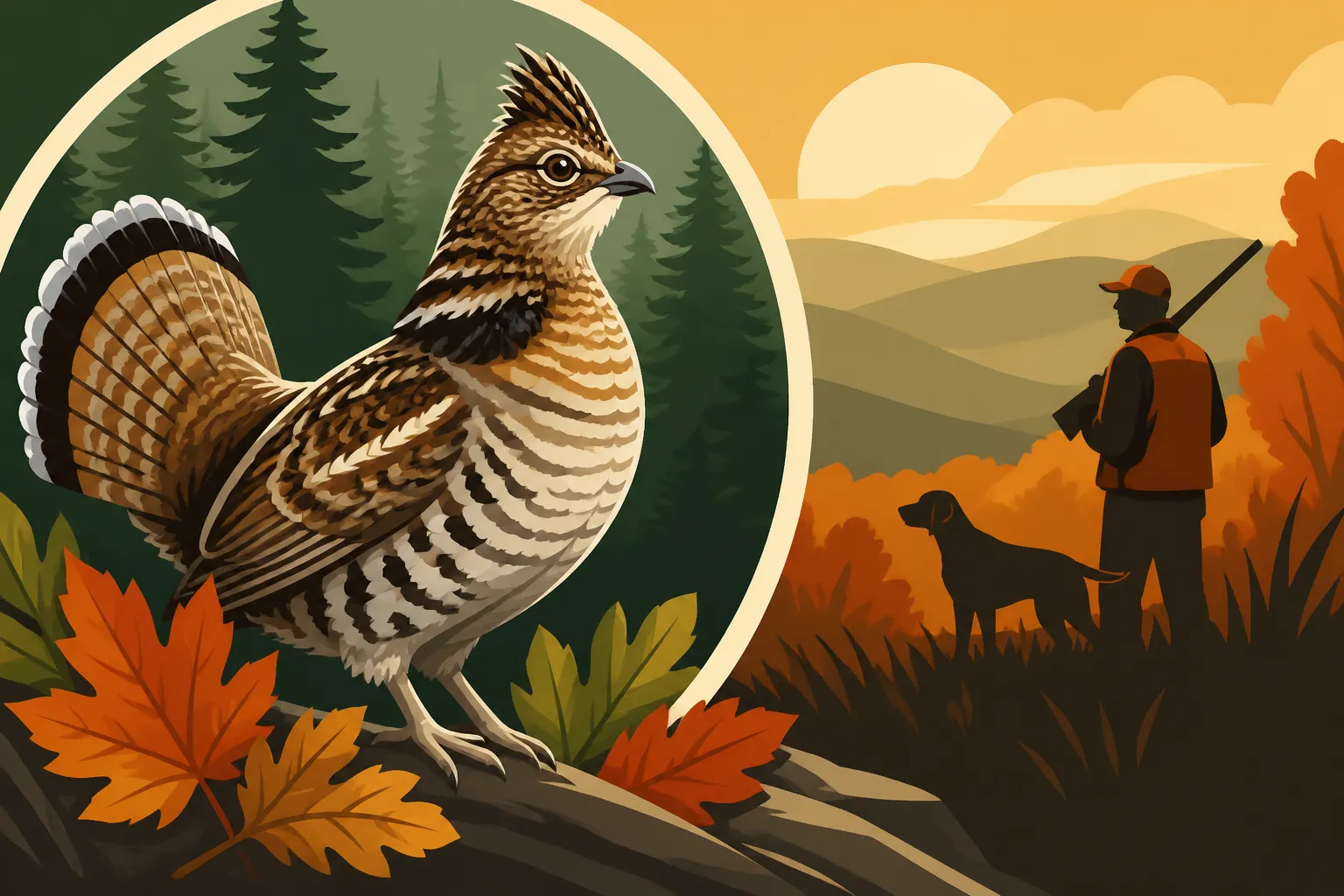
Ruffed Grouse, Pennsylvania’s State Bird
For many of us who cherish the wild places of Pennsylvania, the ruffed grouse holds a special, almost sacred place in our hearts. It’s a symbol of rugged independence and a wildness that feels increasingly rare. Yet, the stark reality is that finding these elusive "thunder chickens" has become a frustratingly difficult endeavor, leaving many hunters and bird enthusiasts wondering what happened to our beloved state bird. This comprehensive guide will delve deep into the world of Pennsylvania's ruffed grouse, exploring their history, the challenges they face, what conservation efforts are underway, and how passionate hunters can adapt their strategies to pursue these magnificent birds today.
The Enduring Legacy of the Ruffed Grouse in Pennsylvania
The ruffed grouse isn't just a game bird in Pennsylvania; it's practically royalty. Its explosive flush, the drumming sound of its mating ritual, and its preference for the wild, rugged cover define a certain type of Pennsylvania wilderness that many of us grew up loving.
A Cultural Icon and State Bird
For generations, the ruffed grouse has been more than just Bonasa umbellus; it's been a part of the fabric of Pennsylvania's outdoor heritage. Adopted as the official state bird in 1931, it embodies the spirit of our woodlands. Imagine crisp autumn mornings, the smell of damp leaves, and the sudden, heart-stopping whirrrrrrrr as a grouse erupts from underfoot. That sound is etched into the memories of countless Pennsylvanians, connecting us to a simpler time and the raw beauty of our forests.
This bird symbolized the abundant wildness of our state, thriving in various forest types from the deepest Big Woods to the edges of farm country. Families would gather for grouse hunts, often accompanied by well-trained bird dogs, turning a day in the woods into a cherished tradition. The challenge of hitting a flushing grouse, often obscured by thick cover, was a badge of honor, and the flavor of a wild grouse dinner was a seasonal delicacy. It was a tangible link to our hunting past, a bird that taught patience, quick reflexes, and an appreciation for specific, often thorny, habitat.
Historical Abundance and Hunting Traditions
Pennsylvania was once a ruffed grouse paradise. Early accounts speak of vast tracts of young forest, created by widespread logging and subsequent regrowth, providing perfect conditions for these birds. As a result, grouse hunting was incredibly popular and successful for many decades. Hunters recall days where multiple flushes per hour were not uncommon, and filling a limit felt like a realistic goal rather than a distant dream.
The hunting traditions surrounding grouse are rich. Many hunters, like my grandfather, didn't just hunt grouse; they studied them. They understood the nuances of the cover, the subtle signs of a grouse's presence, and the way the birds would hold or run depending on the weather and time of day. Weekends were spent walking logging roads, navigating dense clearcuts, and working dogs through briar patches, all in pursuit of that thrilling flush. The camaraderie of a grouse hunt, the shared stories, and the connection to the land fostered a deep respect for this spirited bird. The memories associated with Grouse Hunting Pennsylvania Cover are often among the fondest for seasoned upland hunters.
Understanding the Decline: Why are Grouse Numbers Down?
It's no secret that the glory days of abundant ruffed grouse seem to be behind us. Hunters across the state have witnessed a noticeable, and frankly, heartbreaking, decline in populations. This isn't just anecdotal; scientific data supports these observations, and it’s critical to understand the multifaceted reasons behind it.
Habitat Loss and Fragmentation
The primary driver of the decline in ruffed grouse populations is undoubtedly habitat loss and fragmentation. Grouse are creatures of the "young forest" – dense, brushy areas created by timber harvesting, wildfires, or other disturbances that allow new trees and shrubs to grow thickly. This type of habitat provides essential cover from predators, food sources like buds and catkins, and nesting sites.
However, Pennsylvania's forests have matured. The widespread logging that characterized the late 19th and early 20th centuries created vast acreages of the ideal early successional habitat. As those forests grew into mature timber, the dense understory grouse rely on thinned out. Today, while we have plenty of forest land, much of it is older, unbroken canopy forest that simply doesn't offer the specific conditions grouse need. Furthermore, increasing development and infrastructure projects fragment remaining patches of suitable habitat, isolating grouse populations and making them more vulnerable. This ongoing challenge is a major reason behind the Ruffed Grouse Decline in Pennsylvania.
The Impact of West Nile Virus
While habitat loss is a long-term, landscape-level issue, the emergence of West Nile Virus (WNV) has been a more acute and devastating blow to grouse populations, particularly in the eastern United States. WNV, a mosquito-borne illness, was first detected in North America in 1999 and quickly spread. Research conducted by the Pennsylvania Game Commission (PGC) and various universities has strongly linked WNV to grouse mortality.
Grouse, unlike some other bird species, appear to be highly susceptible to WNV, with high mortality rates when infected. The virus can kill both adult birds and chicks, leading to significant population crashes in infected areas. The insidious nature of WNV is that it targets grouse regardless of habitat quality. Even in areas with good cover, WNV can decimate populations, making recovery incredibly difficult. It's a frustrating situation for hunters and conservationists alike, as simply creating more habitat isn't enough when a disease agent is consistently present. The specifics of How West Nile Virus Reaches Grouse are complex, involving mosquito vectors, but the outcome for grouse is often fatal.
Other Contributing Factors
Beyond habitat and WNV, several other factors likely play a role in the struggles of Pennsylvania's ruffed grouse. Increased predation, for example, can be a factor, especially in fragmented landscapes where predators like coyotes, foxes, and raptors have easier access to nesting and roosting areas. As deer populations have boomed in some areas, overbrowsing can also impact the understory growth that grouse depend on, reducing both cover and food availability.
Climate change, with its potential to alter weather patterns, insect populations (and thus, mosquito vectors), and the timing of food availability, also presents an unknown but likely significant long-term challenge. Additionally, while hunting pressure is often cited, regulated hunting is generally not considered a primary driver of population declines for most game species, especially when populations are low and harvest rates are naturally reduced. The combination of these factors creates a complex web of challenges that makes grouse recovery a truly uphill battle.
Essential Habitat: What Grouse Need to Thrive
Understanding the critical components of good grouse habitat is paramount for anyone hoping to find these birds or contribute to their recovery. It’s not just about having trees; it's about having the right kind of forest.
Young Forest and Early Successional Growth
Ruffed grouse are the poster children for young forest, also known as early successional habitat. This isn't the majestic, cathedral-like old-growth forest that comes to mind for many. Instead, it's the chaotic, dense, often thorny tangles of saplings, shrubs, and briars that sprout up after a significant disturbance. Think of clearcuts, abandoned fields, or areas recovering from severe storms.
In these young, regenerating areas, the grouse find everything they need:
- Protection from Predators: The sheer density of vegetation makes it incredibly difficult for avian predators (hawks, owls) to spot grouse from above, and ground predators struggle to navigate the thickets.
- Abundant Food: Young trees and shrubs provide a steady supply of buds, catkins (especially aspen and birch), berries, and insects.
- Nesting and Brooding Cover: The tangled understory offers ideal nesting sites, and the rich insect life is crucial for growing chicks.
Without this specific type of cover, grouse simply cannot thrive. This is why initiatives focused on creating and maintaining Why Young Forest Matters to Grouse are so vital. It often looks "messy" to the casual observer, but to a grouse, it's paradise.
Ideal Cover Types and Food Sources
Within the broader category of young forest, grouse have preferences. They particularly favor areas with a mix of deciduous trees and evergreens. Poplar (aspen), birch, and cherry stands are often grouse magnets due to their abundant buds and catkins, which are a primary food source, especially in winter. Areas with dense thickets of hawthorn, dogwood, or greenbrier provide excellent thermal cover and protection.
Evergreen cover, such as hemlock thickets, conifer plantations, or rhododendron patches, is crucial for winter survival and provides roosting sites. A good grouse covert often contains a mosaic of these elements: a dense, young clearcut adjacent to a mature stand of oaks for acorns in the fall, interspersed with pockets of hemlock for winter shelter. When scouting, I often look for areas where these different cover types blend, especially on north-facing slopes or along creek bottoms, which tend to hold moisture and support denser growth. A good mapping tool like GoHunt can help you identify these varied cover types and edges by using different land cover layers.
The Importance of Connected Landscapes
Isolated patches of grouse habitat are better than nothing, but truly robust populations require interconnected landscapes. When suitable habitat patches are close together or linked by corridors of cover, grouse can move between them safely, finding new food sources, mates, and escape cover as needed. This connectivity helps maintain genetic diversity and allows populations to recover more easily from localized disturbances.
Conversely, habitat fragmentation, where suitable areas are cut off from each other by roads, development, or unsuitable mature forest, isolates grouse populations. These isolated pockets become more vulnerable to localized extinctions from predation, disease, or harsh weather, as birds cannot easily disperse to replenish numbers. Think of it like a series of islands; if one island's population dies out, it's much harder to recolonize if there's no bridge or close proximity to another healthy island. Conservation efforts are increasingly focused on not just creating habitat, but ensuring that these habitat patches are part of a larger, functional network.
Hunting Ruffed Grouse in Today's Pennsylvania
Hunting grouse in Pennsylvania today is a humbling experience, often more about the walk and the hope than about a full game bag. But for the dedicated few, the challenge itself is the reward.
Finding Remaining Grouse Cover on Public Land
For most hunters, public lands – particularly State Game Lands and State Forests – are the primary hunting grounds. However, simply walking onto any public land won't cut it for grouse anymore. You need to actively seek out specific habitat types. Look for:
- Recent Timber Harvests: These are gold mines. The PGC and DCNR manage state lands, and they often conduct timber sales. Look for areas logged within the last 5-15 years. These will be dense, often difficult to walk, but that's precisely what grouse want. Maps, especially online interactive mapping tools like those offered by the Pennsylvania Game Commission, or subscriptions like GoHunt which include public land boundaries and timber cut data, are invaluable for this.
- Old Field Edges and Abandoned Farms: Some older State Game Lands were once private farms. Overgrown fields, especially those with hawthorns, multiflora rose, and dense brush, can hold birds.
- Riparian Zones: Areas along streams and creeks often have different vegetation mixes and denser growth due to moisture, providing good cover.
- Dense Conifer Plantations: While not always ideal, thick stands of young pines or spruce can offer sanctuary, especially in winter.
Always remember that Scouting Pennsylvania Public Land Before Season is crucial. Drive the access roads, look for signs of logging, and then get out on foot. Don't be afraid to walk a little further than everyone else; sometimes the best cover is deeper in.
Tactics for Flushing Birds Without a Dog
Many grouse hunters don't have the luxury of a well-trained bird dog, but that doesn't mean you can't be successful. It just means your tactics need to shift. This is often referred to as "still-hunting" or simply "walking them up."
- Go Slow, Then Stop: Grouse often hold tight, relying on their camouflage. Walk a few steps, then pause for 30-60 seconds. This "start and stop" method can unnerve a hiding grouse, causing it to flush when it thinks you've passed. Scan the ground and branches during your pauses.
- Hunt the Edges and Transitions: Grouse love edge cover – where one habitat type meets another (e.g., clearcut meets mature timber, dense brush meets an old logging road). These edges offer both food and escape routes.
- Work the Cover Thoroughly: Don't just walk around the thickest cover; you need to push through it. Use natural funnels, downed trees, and old deer trails to your advantage. Be prepared for a close-range, explosive flush.
- Listen for Clues: Pay attention to chickadees or other small birds sounding alarm calls; they might be reacting to a hidden grouse. Look for droppings, dusting sites, or shed feathers, though these are often sparse.
- Partnership Approach: If hunting with a friend, spread out 20-30 yards apart and walk parallel. This can cover more ground and increase the chance of flushing a bird. The flushed bird might fly toward the other hunter, offering a shot. Detailed advice can be found in resources like Flushing Grouse Without a Dog.
The Role of Bird Dogs in Grouse Hunting
For many, grouse hunting and bird dogs are synonymous. A good grouse dog, typically a setter or pointer, is an invaluable asset, not just for finding birds, but for enhancing the entire experience.
- Finding Scent and Holding Birds: Dogs have an incredible sense of smell, allowing them to locate grouse scent that a human would never detect. When they "point" or "stand" a bird, they freeze, indicating the grouse's exact location, allowing the hunter to move in for the flush. This is crucial in dense cover where a grouse might hold so tight you could step on it.
- Retrieval: Once a bird is shot, a dog can quickly retrieve it from thick briars or underbrush, preventing lost game.
- Covering Ground Effectively: Dogs can cover far more ground more efficiently than a human, working the best cover while the hunter navigates easier terrain. This allows you to explore more potential habitat in a day.
- Enhanced Experience: Beyond the practicalities, the partnership with a well-trained bird dog adds a deeply rewarding dimension to grouse hunting. Watching a dog work, seeing its instincts take over, and celebrating a successful point and retrieve together is a joy unique to upland hunting. Investing in Bird Dog Gear for Pennsylvania Cover is a significant commitment, but often worth it for dedicated grouse hunters.
Gear and Tactics for Pennsylvania Grouse Hunting
Grouse hunting demands specific gear and a thoughtful approach. Unlike deer hunting, where stealth and patience from a stand are key, grouse hunting is an active, often physically demanding pursuit through tough cover.
Shotgun and Load Considerations
The choice of shotgun and loads for grouse is critical, emphasizing quick handling and dense patterns at close range.
- Gauge: The 12-gauge and 20-gauge are by far the most popular. A 20-gauge is lighter and easier to carry all day, often preferred for its reduced recoil and quick swing. A 12-gauge offers a slightly denser pattern but can be a bit more cumbersome in thick brush. For detailed comparison, look into Best Shotgun Gauge for Pennsylvania Grouse.
- Action: Side-by-sides, over-unders, and semi-automatics are all viable. Many traditionalists prefer the balance and classic feel of a double barrel. Semi-automatics offer a third shot, which can be useful but less critical given the fleeting nature of grouse shots.
- Choke: Open chokes are essential. Improved Cylinder (IC) or Skeet are ideal for the close-range shots typical of grouse hunting. A grouse flushing at 15-25 yards requires a quickly spreading pattern to hit effectively. Some hunters even run Cylinder bore in their lead barrel.
- Barrel Length: Shorter barrels (24-26 inches) are highly favored for their maneuverability in dense cover, allowing you to swing through tangles without getting snagged.
- Ammunition: #7.5 or #8 lead shot is standard for grouse. You want a high pellet count for a dense pattern. For environmentally sensitive areas (like some federal lands or near water, though less common for grouse), non-toxic shot like bismuth or steel #6 might be required. Always check local regulations.
Clothing, Boots, and Upland Vests
Your attire for grouse hunting needs to be tough, comfortable, and functional.
- Brush Pants/Chaps: This is non-negotiable in Pennsylvania grouse cover. You will be pushing through briars, multiflora rose, and thorny thickets. Heavy-duty brush pants or chaps (often made of waxed cotton, Cordura, or tough nylon) will save your legs from countless scratches and tears.
- Boots: Invest in comfortable, waterproof, ankle-supporting boots. You'll be covering miles on uneven, often wet, terrain. A good pair of leather or synthetic hiking boots, or even insulated rubber boots for colder, wetter days, are vital. Consider lightweight boots that don't weigh you down.
- Upland Vest/Strap Vest: Ditch the heavy backpack. An upland vest or strap vest is designed for grouse hunting. It distributes weight, provides blaze orange visibility (often required, and always a good idea in thick cover), carries shells, water, and has a large game bag in the back for your birds. Many also have hydration sleeves for water bladders. When choosing, consider Upland Vests With Water Capacity.
- Layers: Dress in layers. You'll be exerting yourself, so you'll heat up quickly, but then cool down during pauses. Wicking base layers are important, followed by a mid-layer and an outer shell that can repel moisture and thorns.
- Blaze Orange: Pennsylvania requires specific amounts of How Much Orange Pennsylvania Requires during certain seasons. Even when not legally required for small game, wearing blaze orange is a common-sense safety measure, especially in areas with mixed-use hunting.
Navigation and Scouting Tools
In today's grouse woods, technology can be a huge asset in finding birds and staying safe.
- GPS/Smartphone Apps: A reliable GPS unit or a smartphone with a hunting app like GoHunt or onX Hunt is indispensable. These apps allow you to:
- Identify Public/Private Land: Crucial for knowing where you can legally hunt.
- Pinpoint Timber Cuts: Many apps offer layers that show recent logging activity, often with dates, guiding you to prime young forest.
- Mark Waypoints: Drop pins for good coverts, flushes, parking spots, and your truck.
- Track Your Route: Prevents getting lost in unfamiliar, dense terrain.
- View Topography: Helps understand how grouse might use terrain features.
- Topographic Maps and Aerial Photos: Even with digital tools, understanding how to read a traditional topo map or aerial photo can give you a deeper understanding of the land. Look for drainage features, bench cuts, and changes in elevation that might funnel birds or provide unique cover.
- Compass: Always carry a traditional compass as a backup, even if you rely on electronics. Batteries die, and signals drop. Knowing how to use it can literally save your life.
- Water and Snacks: Staying hydrated and fueled is vital for long days of walking rugged terrain. A small first-aid kit is also a wise addition.
Conservation Efforts and the Future of Grouse
The decline of the ruffed grouse is a serious concern, but it’s not for lack of effort. Dedicated individuals and organizations are working tirelessly to understand the problems and implement solutions to bring this iconic bird back.
Game Commission Initiatives and Partnerships
The Pennsylvania Game Commission (PGC) recognizes the critical situation facing the ruffed grouse. They are at the forefront of conservation efforts, often partnering with other agencies and non-profits.
- Habitat Management: A significant portion of PGC's work involves active habitat management on State Game Lands. This includes timber sales designed to create young forest habitat, prescribed burning, and creating early successional growth through brush hogging and planting specific food sources. They aim to create a mosaic of different forest ages, ensuring a continuous supply of suitable grouse cover. Understanding where the PGC focuses its habitat work can be key to Finding Grouse Cover on Game Lands.
- Research and Monitoring: The PGC conducts ongoing research into grouse populations, studying reproductive success, survival rates, and the impacts of diseases like West Nile Virus. They monitor harvest data, conduct drumming surveys, and collaborate with universities to better understand the complex factors affecting grouse.
- Partnerships: The PGC works closely with organizations like the Ruffed Grouse Society (RGS). The RGS is a national non-profit dedicated specifically to ruffed grouse and American woodcock conservation, primarily through habitat creation. They provide funding, expertise, and advocacy for young forest management projects across Pennsylvania and beyond. These partnerships multiply the impact of conservation dollars and efforts.
How Hunters Can Contribute to Grouse Recovery
As hunters, we have a unique stake in the future of the ruffed grouse, and we can play an active role in their recovery.
- Support Conservation Organizations: Becoming a member of the Ruffed Grouse Society or other wildlife conservation groups directly supports habitat work and research. A portion of your membership dues goes directly to on-the-ground projects.
- Purchase Licenses and Stamps: Your hunting license fees and any specific habitat stamps directly fund the PGC's conservation efforts. It's a fundamental way to contribute to the management of all wildlife, including grouse.
- Advocate for Young Forest Management: Educate yourself and others about the importance of young forest habitat. Speak with your local legislators and game commissioners about the need for active forest management on both public and private lands. Sometimes, what looks like "destructive" logging is actually vital for grouse.
- Report Sightings and Observations: Share your observations with the PGC. If you're out hunting or hiking and you consistently flush grouse in a particular area, or conversely, notice a significant lack of them where they once were, this information can be valuable for biologists. While the specific data for Pennsylvania Grouse Flush Rate Surveys often comes from scientific studies, anecdotal hunter reports can still paint a picture.
- Be a Responsible Hunter: Practice ethical hunting. Know your target, ensure clean kills, and retrieve all downed birds. Respect private property and always follow game laws. This helps ensure that hunting remains a respected and viable tool in wildlife management.
Pennsylvania Grouse Information at a Glance
| Category | Detail | Importance |
|---|---|---|
| State Bird | Ruffed Grouse (Bonasa umbellus) | Cultural significance, symbol of Pennsylvania's wild character. |
| Primary Habitat | Young Forest / Early Successional Growth (5-20 years post-disturbance) | Essential for cover, food, nesting, and brooding. |
| Major Decline Factors | Habitat loss/maturation, West Nile Virus | Understanding these helps focus conservation efforts. |
| Conservation Focus | Active forest management (clearcuts, prescribed burns), disease research | Creating and maintaining suitable habitat, mitigating disease impacts. |
| Key Food Sources | Buds and catkins of aspen/birch, berries, insects (especially for chicks) | Guides hunters to productive areas and informs habitat restoration. |
| Hunting Season | Generally mid-October to early December (check specific PGC dates annually) | Strict adherence to regulations is critical for sustainable hunting. |
| Bag Limit | Typically 2 per day, 4 in possession (check PGC regulations annually) | Designed to allow recreational hunting while protecting populations. |
| Recommended Gear | Open choke shotgun (20-gauge/12-gauge), brush pants, upland vest, GPS/mapping app | Equips hunters for success and safety in dense, challenging cover. |
| Conservation Orgs | Ruffed Grouse Society (RGS), Pennsylvania Game Commission (PGC) | Actively involved in habitat, research, and advocacy for grouse. |
Disclaimer
Please be aware that hunting regulations, seasons, and bag limits can change annually. It is your responsibility as a hunter to consult the most current Pennsylvania Game Commission Digest for official and up-to-date information before heading afield. This guide provides general information and recommendations, but it is not a substitute for the official regulations. Always prioritize safety and ethical hunting practices.