Pennsylvania Elk Herd Size and Range
The majestic presence of elk in Pennsylvania is a true testament to conservation, yet for many, understanding where these magnificent animals live and how many truly roam our woods remains a bit of a mystery. It can be incredibly frustrating to hear stories of successful elk hunts or breathtaking sightings, only to feel lost about where to even begin your own quest to see or pursue one. This guide is designed to unravel that mystery, providing a comprehensive look at the Pennsylvania elk herd's current size, its historic return, and the distinct areas where you can find them across the Commonwealth.
The Return of Giants: Pennsylvania's Elk Restoration Story
It's easy to take for granted the incredible elk population we have in Pennsylvania today, but it wasn't always this way. For a long time, these majestic creatures were completely absent from our landscape, a stark reminder of unchecked hunting and habitat destruction that plagued much of North America in the 19th century. The story of their return is one of the greatest conservation successes our state has ever seen, a true comeback narrative driven by dedicated efforts and a growing understanding of ecological balance.
From Extinction to Reintroduction
Imagine a Pennsylvania without elk. That was the reality by the late 1800s. The native Eastern elk, a subspecies that once roamed vast portions of the state, was hunted to extinction. Their powerful presence, vital to the ecosystem, was simply gone. But thankfully, a vision for their return began to take shape in the early 20th century. The Pennsylvania Game Commission (PGC) spearheaded reintroduction efforts, bringing elk from states like Wyoming into our central and northcentral mountains. These initial releases were small, often met with challenges, but they laid the groundwork for what was to come. It was a delicate dance of trying to find suitable habitat, manage new populations, and educate a public that had largely forgotten what it was like to share the woods with such large herbivores.
A Century of Growth and Management
The reintroduction wasn't an overnight fix; it was a decades-long commitment. Over time, as hunting regulations became more sophisticated and habitat improved through responsible forestry practices, the elk herd slowly but steadily grew. The early years focused on protecting the burgeoning population, limiting hunting opportunities to ensure numbers could recover sustainably. As the herd expanded, so did the need for careful management. This involved monitoring health, studying their movements, and gradually introducing a highly controlled hunting season, which remains a coveted opportunity for hunters today. The management strategies employed by the PGC have been crucial in ensuring the herd's continued health and growth, preventing overpopulation in some areas while encouraging expansion into others. If you're interested in how the elk were brought back, you might find our article on How Elk Returned to Pennsylvania insightful.
Where the Elk Roam: Understanding Their Range
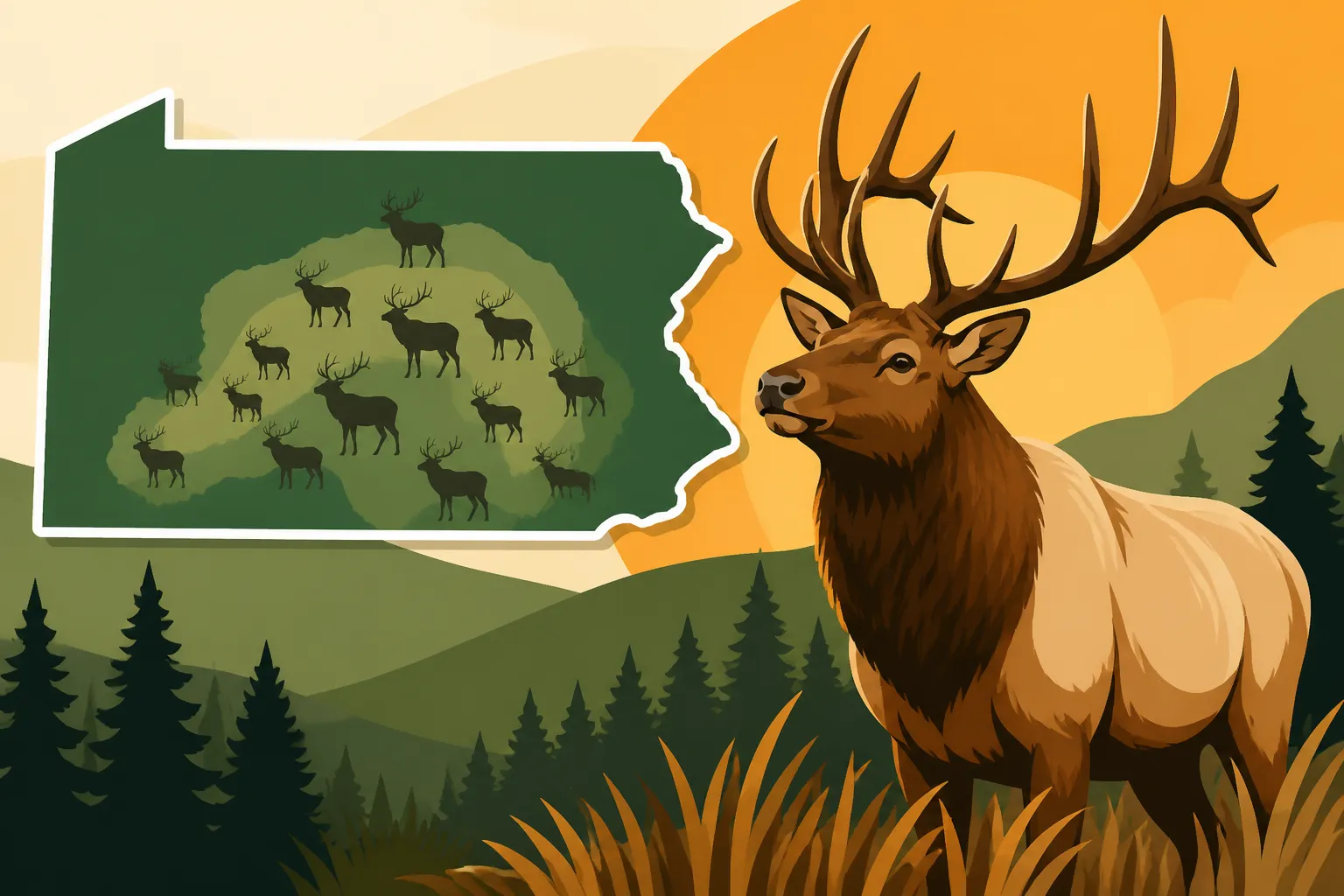
While the Pennsylvania elk herd is thriving, they aren't found just anywhere. Their range is quite specific, concentrated primarily within a unique geographical and ecological region of northcentral Pennsylvania often referred to as the "Pennsylvania Wilds." This isn't just a random distribution; it's a testament to the availability of specific habitat requirements that elk need to survive and flourish.
The Core Elk Range: Elk and Cameron Counties
At the heart of Pennsylvania's elk country are Elk and Cameron Counties. This is where the largest concentrations of elk can be found, and it's truly a special place. The terrain here is rugged, characterized by expansive state forests, clear-cuts, old fields, and agricultural pockets. It's a mosaic habitat that provides everything an elk needs: dense cover for security, open areas for foraging on grasses and forbs, and access to water. Townships like Benezette, Weedville, and Medix Run, particularly around Winslow Hill, have become synonymous with elk sightings, drawing thousands of visitors each year. The rolling hills and deep hollows offer ideal bedding areas, while the scattered logging operations create the successional growth that is crucial for their diet. Hunters frequently consult detailed maps, often utilizing tools like GoHunt, to identify prime public land parcels and understand the nuances of the terrain within this core range, especially when scouting for suitable hunting grounds or simply trying to navigate the vast Public Land Inside Pennsylvania Elk Country.
Expanding Borders: Clearfield, Potter, and Clinton Counties
Beyond the core, the elk herd has gradually expanded into neighboring counties, though usually in lower densities. Clearfield, Potter, and Clinton Counties all host varying numbers of elk, particularly in areas adjacent to Elk and Cameron. This expansion is a natural result of a growing population seeking new food sources and less competition. In these peripheral areas, elk might be found in more isolated pockets, often utilizing similar mixed forest and open land habitats. While you might not see the same massive herds as in Benezette, these counties offer unique opportunities for more solitary sightings and challenging hunts. This outward movement also presents new management challenges, as elk sometimes venture into areas with more agricultural activity, leading to potential crop damage.
Geographical and Habitat Influences on Distribution
The specific geography and habitat types of northcentral Pennsylvania play an undeniable role in defining the elk's range. The expansive state forests, such as Elk State Forest, Moshannon State Forest, and Sproul State Forest, offer vast tracts of relatively undisturbed land. These forests are managed for timber, which creates a continuous supply of early successional habitat – young, regenerating forests – that provides excellent browse for elk. Interspersed with these forests are old farmsteads and reclaimed strip mines that have revegetated into rich grasslands, offering vital foraging opportunities. The relatively low human population density in much of this region also contributes to its suitability for elk, allowing them space to roam without excessive human-wildlife conflict. This intricate blend of dense timber, open fields, and relatively wild spaces creates the ideal conditions for Pennsylvania's elk to thrive. Understanding the specific characteristics of these areas is key to locating elk, whether you're observing them or exploring the Pennsylvania Elk Hunt Zones.
Counting the Herd: Pennsylvania's Elk Population
Knowing where elk live is one thing, but understanding how many of them are out there adds another layer to their incredible story. The Pennsylvania Game Commission diligently monitors the herd's size, aiming for a healthy, sustainable population that balances ecological needs with public interest and hunting opportunities. These numbers are a direct result of ongoing conservation efforts and inform crucial management decisions.
Current Population Estimates
As of recent estimates, Pennsylvania's elk herd typically hovers around 1,300 to 1,500 animals. These numbers fluctuate slightly year to year based on various factors like calf survival, harvest rates, and winter mortality. While this might not sound like a massive herd compared to some Western states, it's a remarkable achievement considering their absence just over a century ago. This healthy population supports not only significant viewing tourism but also a highly regulated and extremely sought-after hunting season. The PGC uses a combination of aerial surveys, ground observations, and harvest data to arrive at these figures, constantly refining their methods to ensure accuracy.
Population Trends Over Time
The trend for Pennsylvania's elk population has largely been one of steady growth since reintroduction. After initial struggles, the herd began to expand, particularly from the 1980s onwards. Management strategies, including habitat improvement, strict harvest quotas, and public education, played a critical role in this upward trajectory. In the early 2000s, the herd numbered around 600-700, and it has nearly doubled since then. While the growth isn't exponential, it reflects a stable, healthy population that has successfully adapted to its environment. There are, of course, natural ebbs and flows, with some years seeing higher calf recruitment and others facing tougher winter conditions, but the overall picture is one of successful long-term recovery.
Factors Influencing Herd Size
Several factors contribute to the overall size and health of the elk herd. Habitat availability and quality are paramount; a constant supply of diverse forage and secure cover is essential. The PGC's habitat improvement projects, often involving timber management and food plots, directly support the herd. Weather also plays a significant role, with harsh winters potentially impacting calf survival and overall herd health. Disease, particularly Chronic Wasting Disease (CWD), is a growing concern that wildlife managers are carefully monitoring, as it could have a substantial impact on long-term population trends. Finally, hunting is a critical management tool. The limited number of elk licenses issued each year helps control population growth, maintain a healthy bull-to-cow ratio, and prevent overgrazing in specific areas, ensuring the herd doesn't outgrow its available resources.
Here's a simplified look at the elk range and general population distribution (note: numbers are approximate and fluctuate):
| County | Primary Elk Presence | Estimated Number of Elk (General) | Main Habitat Type |
|---|---|---|---|
| Elk | High | 600-800 | Mixed forest, clearcuts, old fields, agriculture |
| Cameron | High | 300-400 | Mixed forest, deep hollows, some agriculture |
| Clinton | Moderate | 100-200 | Extensive state forest, some clearings |
| Clearfield | Moderate | 50-100 | Mixed forest, reclaimed mines, agricultural fringes |
| Potter | Low to Moderate | 20-50 | Rugged big woods, scattered open areas |
| Centre | Low | <20 | Limited pockets within state forest adjacent to range |
| McKean | Low | <20 | Northern fringes of main range |
This table provides general estimates and is subject to change based on annual surveys and herd dynamics.
Conservation Efforts and Future Outlook
The current success of Pennsylvania's elk herd is a direct result of continuous, proactive conservation efforts. These aren't one-time fixes but ongoing commitments that blend scientific research with practical land management and public engagement. Looking ahead, maintaining this success requires vigilance and adaptability.
Ongoing Habitat Management and Research
The Pennsylvania Game Commission, along with the Department of Conservation and Natural Resources (DCNR), actively manages habitat within the elk range. This includes prescribed timber harvesting to create diverse forest age classes, planting forage crops in strategic locations (often called food plots), and reclaiming old mine lands to transform them into productive grasslands. These efforts ensure a year-round food supply and ample cover, both essential for a healthy elk population. Beyond habitat work, intensive research is ongoing. Scientists track elk movements, study their diet, monitor reproduction rates, and assess their overall health. This data is invaluable for making informed decisions about hunting quotas, habitat projects, and disease prevention. For those exploring hunting opportunities, resources like GoHunt can be incredibly useful for overlaying habitat types and land ownership when planning scouting trips in the Pennsylvania Wilds.
Disease Monitoring and Prevention
One of the most significant threats to the long-term health of the elk herd is Chronic Wasting Disease (CWD). While CWD has not been detected in Pennsylvania's elk herd to date, it is present in deer populations in several parts of the state. The PGC maintains a robust CWD surveillance program, testing harvested deer and elk, and implementing special regulations in Disease Management Areas (DMAs) to prevent its spread. These measures include restrictions on carcass movement and a ban on feeding deer and elk, which could concentrate animals and facilitate disease transmission. Hunters play a vital role in this by cooperating with testing requirements and understanding Pennsylvania CWD Carcass Rules. Proactive steps are crucial to protect this precious resource from a disease that has devastating impacts on cervid populations elsewhere.
Sustainable Hunting and Viewing Opportunities
The highly regulated elk hunt in Pennsylvania is a testament to the herd's health and sustainability. Each year, only a very limited number of highly coveted Pennsylvania Elk Licence Application are issued, allowing for a controlled harvest that ensures the population remains robust while providing a once-in-a-lifetime hunting experience. Beyond hunting, elk viewing has become a massive draw for tourism, particularly in the Benezette area. Designated viewing areas, interpretative centers, and guided tours allow thousands of visitors to safely observe elk in their natural habitat, contributing significantly to the local economy. Balancing these viewing opportunities with the needs of the animals and hunting pressures is an ongoing management challenge, but one that the PGC handles with careful consideration to maintain the herd's welfare.
Hunting and Viewing Opportunities
For many, the ultimate goal is to either hunt or simply observe these magnificent animals. Pennsylvania offers unique opportunities for both, but understanding the nuances of each pursuit is key to a successful and ethical experience. Whether you're a seasoned hunter or a wildlife enthusiast, preparation and respect for the animals are paramount.
The Coveted Elk Hunt
Hunting Pennsylvania elk is a dream for many, but securing a license is incredibly challenging due to the limited number issued annually. The PGC holds a public lottery for these tags, making it one of the most sought-after draws in North America. Successful applicants typically embark on an intensive scouting period, often months in advance, to locate animals and understand their patterns within the assigned Pennsylvania Elk Hunt Zones. This involves long hours in the woods, using topographic maps, and sometimes even employing advanced mapping software to pinpoint prime areas. The hunt itself is physically demanding, often requiring navigation of steep terrain and dense cover. It’s a true test of a hunter’s skill and perseverance, culminating in a potentially once-in-a-lifetime harvest of a truly impressive animal, which can often be a Pennsylvania Record Book Bull Elk.
Prime Elk Viewing Areas
If hunting isn't your aim, or you just want to experience the grandeur of elk without a tag, Pennsylvania offers exceptional viewing opportunities. The undisputed capital for elk viewing is the Benezette area in Elk County. Specifically, the Winslow Hill Elk Viewing Area, operated by the PGC, provides excellent chances to see elk, especially during the early mornings and late evenings. The fall rut, typically from mid-September through mid-October, is a particularly exciting time as bulls bugle and spar for dominance. The Elk Country Visitor Center in Benezette is an invaluable resource, offering educational exhibits and up-to-date information on elk movements. While Benezette is the most popular, other parts of the core elk range also offer opportunities for quieter, more solitary viewing experiences for those willing to venture deeper into state forests, using reliable mapping tools to find secluded spots. Planning a trip to see Elk Viewing in Pennsylvania during the rut can be an unforgettable experience.
Ethical Considerations and Regulations
Whether hunting or viewing, ethical conduct and adherence to regulations are crucial. For hunters, this means understanding shot placement for a clean kill, being prepared for the physical demands of tracking and recovering a large animal, and respecting private property boundaries. For viewers, it means maintaining a respectful distance from the animals, especially during the rut when bulls can be aggressive, and never attempting to feed them. Feeding wild elk can habituate them to humans, lead to aggressive behavior, and contribute to the spread of disease. Always follow PGC guidelines and posted signs in viewing areas. This responsible approach ensures the safety of both people and wildlife, allowing the Pennsylvania elk herd to continue its remarkable journey for generations to come.
Disclaimer
Please be aware that hunting regulations, seasons, and wildlife populations can change. Always consult the most current Pennsylvania Game Commission Digest and official sources before planning any hunting or viewing activities. This guide is for informational purposes only and should not replace official regulations or professional guidance.