CWD Risk to the Pennsylvania Elk Herd
For Pennsylvania hunters, few topics spark as much apprehension as Chronic Wasting Disease, or CWD. While much of the conversation rightly focuses on our deer herd, there's a growing and very real concern about the potential impact of CWD on Pennsylvania's majestic elk. This guide aims to thoroughly explain why CWD poses a significant threat to our elk population, what the current situation looks like, and what steps hunters and wildlife managers are taking to protect this iconic species.
Understanding Chronic Wasting Disease and Its Threat to Elk
Chronic Wasting Disease is a relentless, always-fatal neurological disease affecting deer, elk, and moose. It's caused by misfolded proteins called prions, which slowly degrade the brain and nervous system of infected animals. Unlike bacteria or viruses, prions are incredibly resilient, surviving in the environment for years, even decades, in soil, plants, and contaminated surfaces. This environmental persistence is a huge part of what makes CWD such a formidable adversary, especially for long-lived, social animals like elk.
Imagine a silent, invisible killer that takes years to manifest symptoms but is constantly spreading through the landscape. That's CWD. Once an animal is infected, there's no treatment and no cure. Over time, the animal will develop classic symptoms like drastic weight loss (hence "wasting"), stumbling, listlessness, excessive salivation, and an overall blank stare. It's a heartbreaking sight, and it underscores the urgency of preventing this disease from establishing a stronghold in our wild elk country.
The Biology of CWD: Prions and Transmission
At its core, CWD is about prions. These abnormal proteins convert normal proteins in the host animal's brain into more misfolded prions, creating a snowball effect that eventually destroys brain tissue. Think of it like a zombie apocalypse for brain cells. The most concerning aspect is how these prions are transmitted. Infected animals shed prions through saliva, urine, feces, and even decaying carcasses. This means that a CWD-positive deer or elk doesn't just spread the disease while alive; its body can continue to contaminate the environment long after it's gone.
The direct contact between animals, especially during breeding seasons or when feeding, is a major transmission route. But indirect transmission, where animals come into contact with contaminated soil or vegetation, is equally problematic. Consider an elk herd visiting a mineral lick or a common bedding area. If a CWD-infected animal has been there, it can leave behind prions that can infect other elk months or even years later. This environmental contamination makes eradication incredibly difficult, if not impossible, once the disease becomes established in a wild population. For hunters trying to stay informed, checking resources like GoHunt can sometimes provide updates or maps related to disease zones that might affect broader wildlife populations.
Why Elk are Particularly Vulnerable
While CWD is a serious threat to all cervids, elk possess certain characteristics that make them particularly vulnerable. First, their social structure. Elk live in larger, more cohesive herds than deer, often congregating in significant numbers during different seasons. This increased population density and social interaction means more opportunities for direct transmission between individuals. A single infected elk could potentially expose dozens of others in a relatively short amount of time.
Secondly, elk have longer lifespans than white-tailed deer. A deer typically lives 3-5 years in the wild, while an elk can live well over a decade. Since CWD has a long incubation period (sometimes 18-24 months or more before symptoms appear), a CWD-positive elk could be shedding infectious prions into the environment for a much longer period than a deer, spreading the disease to more animals and contaminating a wider area. The larger body size of an elk also means more tissue to decompose and potentially release prions into the soil after death, further exacerbating environmental contamination. The sheer challenge of managing a large, free-ranging herd that congregates in Elk in the Pennsylvania Wilds areas makes surveillance and mitigation incredibly complex.
Current CWD Status in Pennsylvania and the Elk Range
The Pennsylvania Game Commission has been aggressively monitoring and managing CWD since it was first detected in the state in 2012. While initially concentrated in specific areas, the disease has regrettably spread, expanding the footprint of Chronic Wasting Disease in Pennsylvania. The proximity of these CWD-positive zones to the historic and current elk range is a primary concern for wildlife managers and hunters alike.
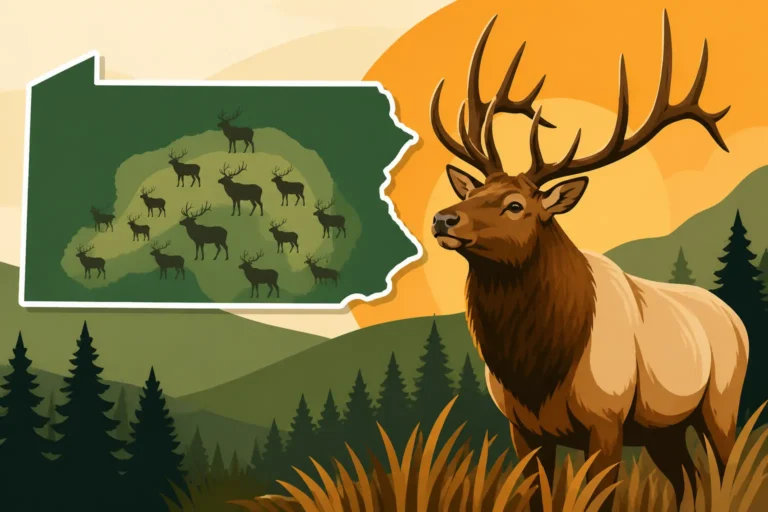
Pennsylvania's wild elk herd, a remarkable conservation success story, thrives in a relatively contained area primarily across parts of Cameron, Centre, Clearfield, Clinton, Elk, and Potter counties. This region, often referred to as "elk country" or Hunting the Pennsylvania Wilds, is a point of pride for the state. The critical question is how close CWD has gotten to this cherished population and what the implications are for its future.
Where CWD Has Been Detected in Pennsylvania
CWD has not been detected in Pennsylvania's wild elk herd to date, which is fantastic news and a testament to ongoing efforts. However, it's crucial to understand where CWD has been found in deer populations within Pennsylvania. The disease has been confirmed in several Disease Management Areas (DMAs) established by the Pennsylvania Game Commission. These DMAs are dynamic, expanding or shifting as new positive cases are detected.
The DMAs are primarily located in the south-central, southeastern, and parts of the western regions of Pennsylvania. While none of these DMAs currently overlap with the core elk range, the disease has been detected in counties adjacent to the elk management area. For example, some DMAs have edged closer to the southern and western fringes of elk habitat. This geographical proximity means there's a constant, albeit currently low, risk of CWD prions being transported into elk country, whether by natural deer movement, illegal carcass movement, or even human activities. Knowing the boundaries of these Pennsylvania CWD Disease Management Areas is vital for any hunter.
Surveillance and Monitoring Efforts in Elk Country
Protecting the elk herd from CWD is a top priority for the Pennsylvania Game Commission. Extensive surveillance and monitoring efforts are continuously underway within the elk range. This involves several key strategies:
- Targeted CWD Testing: Every elk harvested during the annual Pennsylvania Elk Licence Application hunt, as well as any elk found dead from other causes, is tested for CWD. This provides critical data on whether the disease has made its way into the herd.
- Deer Testing in and Around Elk Country: Because deer can carry and spread CWD, the Game Commission also focuses significant testing efforts on deer populations residing within and bordering the elk management zones. Detecting CWD in deer in these transition areas would be an early warning sign for the elk.
- Public Reporting: Hunters and citizens are encouraged to report any deer or elk exhibiting CWD-like symptoms, such as emaciation, neurological signs, or abnormal behavior. Prompt reporting allows wildlife officials to investigate and test potentially infected animals.
- Research and Collaboration: The Game Commission works with universities and other agencies to conduct research on CWD transmission, ecology, and potential mitigation strategies, always with an eye toward protecting the elk.
These surveillance efforts are a continuous, year-round commitment. They represent our best defense in detecting CWD early, should it ever appear in Pennsylvania's elk.
Mitigating the Risk: Hunter and Management Actions
Protecting Pennsylvania's elk from CWD is a shared responsibility. While the Game Commission implements broad management strategies, individual hunters play an absolutely critical role in preventing the spread of the disease. Every action, no matter how small, can contribute to safeguarding our wild cervid populations.
The core principle here is to minimize opportunities for CWD prions to spread. This involves careful handling of harvested animals, adhering to all regulations, and staying informed. It's not about fear-mongering, but about informed, responsible stewardship of our natural resources.
Hunter Responsibilities and Best Practices
Hunters are on the front lines when it comes to CWD prevention. Here are key responsibilities and best practices every hunter should adopt:
- Know the DMAs: Before you head afield, especially if you're hunting deer in or near any of the established Pennsylvania CWD Disease Management Areas, know the boundaries. This is crucial for understanding specific regulations regarding carcass movement. Many hunters use apps or platforms like GoHunt for up-to-date maps of these areas.
- Carcass Movement Restrictions: This is arguably the most critical hunter responsibility. If you harvest a deer or elk within a DMA, there are strict rules about what parts of the animal you can take out of that zone. Generally, certain high-risk parts (brain, spinal cord, lymph nodes) must be left within the DMA or disposed of safely. Understanding Pennsylvania CWD Carcass Rules is non-negotiable. Only boned-out meat, clean hides, skull caps with antlers attached (after removing brain material), and teeth are typically allowed to leave a DMA.
- Get Your Harvest Tested: If you harvest a deer or elk in a DMA, or if you simply want peace of mind, consider submitting your animal for CWD testing. The Game Commission provides locations and instructions for submitting samples. This not only gives you information but also helps wildlife managers track the disease.
- Proper Carcass Disposal: If you process your deer or elk at home, especially if it came from a DMA, ensure proper disposal of high-risk parts. Do not dispose of them in household trash that goes to a landfill, as this can still spread prions. Check with the Game Commission for approved disposal methods, which often include designated collection bins or rendering services.
- Report Sick Animals: If you observe a deer or elk exhibiting CWD-like symptoms, do not approach or harvest it. Instead, immediately contact the Pennsylvania Game Commission. Early detection of sick animals is vital for disease monitoring. Learn how to identify and report such cases by reviewing guidance on Reporting a Sick Animal in Pennsylvania.
- Avoid Spreading Bait: While baiting deer is generally prohibited in Pennsylvania, it's worth reiterating that concentrating animals at bait sites can increase the likelihood of CWD transmission. Animals sharing saliva at a food source is an easy way for prions to spread.
Wildlife Management Strategies
The Pennsylvania Game Commission employs a multi-faceted approach to combat CWD and protect the elk herd, building on the surveillance discussed earlier.
| Strategy | Description | Impact on CWD Risk to Elk |
|---|---|---|
| Disease Management Areas (DMAs) | Geographically defined zones where CWD has been detected. Special regulations (e.g., carcass movement restrictions, feeding bans) are implemented to limit CWD spread. DMAs are the primary tool for containing localized outbreaks. | High |
| Targeted Removals | In some limited, high-prevalence areas, the Game Commission may implement targeted removals of deer to reduce population density and slow disease spread. This is a contentious but sometimes necessary tool for intense localized outbreaks. | Moderate |
| Carcass Collection Sites | Providing designated sites within or near DMAs for hunters to deposit high-risk carcass parts, preventing their movement out of the infected zones and into other areas, including elk country. | High |
| Public Education | Ongoing campaigns to educate hunters and the public about CWD, its risks, and how individuals can help prevent its spread. This includes workshops, online resources, and direct communication. | High |
| Research & Collaboration | Investing in scientific research to better understand CWD transmission, prion persistence, and potential long-term solutions. Collaborating with state and federal agencies, as well as academic institutions. This helps refine and improve all other strategies and understand risks to populations like the Pennsylvania Elk Herd Size and Range. | High |
| Feeding Bans | Prohibiting the feeding of deer and elk, especially in DMAs or near elk country, to prevent the unnatural congregation of animals that could facilitate CWD transmission. | Moderate |
These strategies are constantly evaluated and adapted based on new scientific understanding and the evolving landscape of the disease. The goal is always to minimize the impact on deer populations while aggressively protecting species like the elk from ever encountering this devastating disease. Understanding the larger context of Pennsylvania Wildlife Disease Monitoring helps underscore the importance of these efforts.
The threat of CWD to Pennsylvania's elk herd is a stark reminder of the delicate balance in our natural world. While the news so far remains positive – no CWD in our wild elk – continued vigilance from both wildlife managers and dedicated hunters is paramount. By understanding the disease, adhering to regulations, and practicing responsible hunting ethics, we can all contribute to protecting these magnificent animals for generations to come.
Disclaimer
This article is for general informational purposes only and does not constitute professional advice. Laws, prices and regulations vary by location and change over time. Consult a qualified professional for guidance on your specific situation.