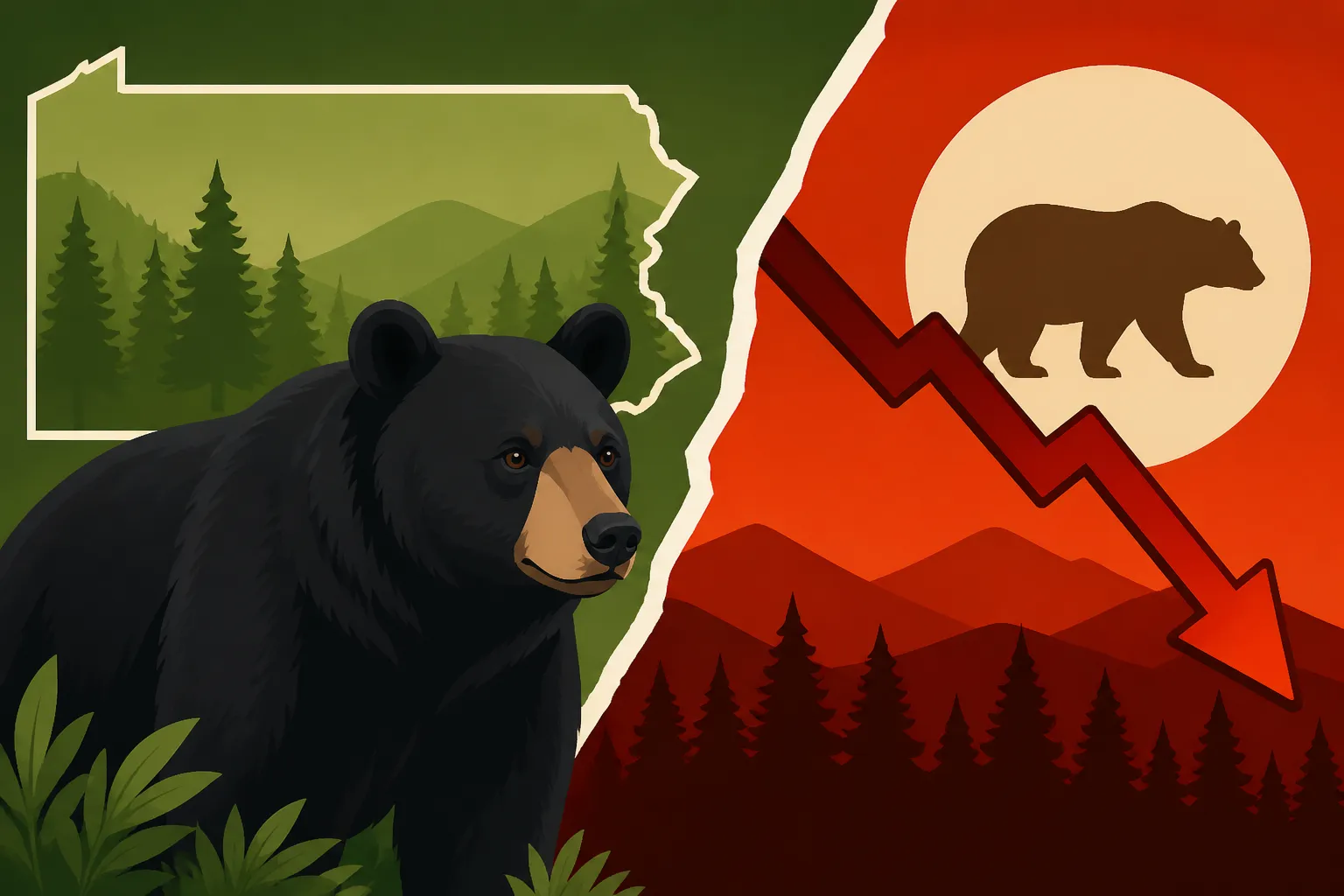
Why the Bear Harvest Fell to a Ten-Year Low
Many Pennsylvania bear hunters experienced a truly tough season, scratching their heads as harvest numbers dipped to a ten-year low. It's incredibly frustrating when you put in the time and effort, scouting and sitting, only for the woods to feel emptier than usual. This guide will dive deep into the confluence of factors that likely contributed to this unusual downturn, offering a clearer picture of what transpired during a challenging bear season in the Commonwealth.
Understanding Pennsylvania's Bear Harvest Trends
Bear hunting in Pennsylvania is a cherished tradition, but like any wildlife management endeavor, the results can fluctuate. While a lower harvest can feel disheartening, it's essential to understand the bigger picture and how these numbers are recorded and interpreted.
Historical Context of Bear Hunting
For decades, Pennsylvania has been a true success story when it comes to black bear management. The bear population has steadily grown, expanding its range across the state from its traditional northern strongholds into southern farm country and even suburban fringes. This expansion has led to a general trend of increasing harvest numbers over time, punctuated by annual ups and downs. Hunters have adapted, learning new techniques like still-hunting, stand hunting, and even participating in Bear Drives in Pennsylvania to pursue these elusive animals. We've seen periods of record harvests, and the state's reputation as a top bear hunting destination has soared. Because of this success, when we hit a ten-year low, it certainly catches everyone's attention, causing us to look closely at the "why."
How Harvest Numbers Are Tracked
The Pennsylvania Game Commission (PGC) employs a rigorous system for tracking bear harvests, which provides highly accurate data. Unlike deer, where harvest reporting is largely self-reported online or by mail, every bear killed in Pennsylvania must be physically presented at a PGC check station within a specific timeframe. This mandatory checking process allows biologists to collect critical data: the bear's sex, weight, and a premolar tooth for aging. This hands-on approach ensures that the harvest figures are exceptionally reliable, offering a true snapshot of how many bears were taken during the season. This data is then used to monitor the overall Pennsylvania bear population and inform future management decisions, including season lengths and bag limits. When these check stations see fewer bears, it’s a direct reflection of what happened in the woods.
Key Factors Influencing Bear Harvest Numbers
A lower harvest isn't usually due to a single cause; more often, it's a perfect storm of several converging elements that make bears harder to find and hunters less successful.
Bear Population Dynamics
First and foremost, let's address the elephant in the room – or rather, the bear in the woods. A dip in harvest doesn't automatically mean the bear population has crashed. In fact, PGC biologists continue to report a healthy, stable, and even expanding bear population across much of the state. How Many Black Bears Pennsylvania Has is a question many hunters ask, and the data suggests a robust population. The lower harvest could simply be a reflection of how those bears were distributed and behaving, rather than a significant decline in their overall numbers. Bears are incredibly smart and adaptable creatures. If they feel less pressured, or if food is plentiful and spread out, they may not move as much during daylight hours, making them less vulnerable to hunters. It's a testament to their wilderness wisdom. The PGC carefully monitors these population dynamics to ensure sustainable hunting opportunities for future generations.
Hunter Participation and Effort
Another significant piece of the puzzle is hunter behavior and participation. Even with a healthy bear population, if fewer hunters are in the woods, or if those hunters spend less time pursuing bears, the harvest numbers will naturally decline. Think about it: a bear hunt can be physically demanding, often requiring long hikes into rugged terrain, especially when you're Hunting Pennsylvania Bear in the Big Woods. The cost of Pennsylvania Hunting Licences and What They Cost, along with specialized gear, is a consideration for many.
Did adverse weather discourage some hunters from venturing out? Did others, after a few tough days without seeing much activity, simply decide to pack it in early? These are common scenarios. Bear hunting, particularly for firearms season, often brings out larger crowds, and sometimes, the sheer pressure can push bears into thicker, less accessible cover. Some hunters, myself included, rely on tools like GoHunt to scout and find less-pressured areas on public lands, using detailed maps to pinpoint remote benches or creek bottoms. It’s a constant chess match between hunter and hunted, and when the conditions aren't ideal, hunter effort can certainly wane. The spirit is willing, but sometimes the motivation to sit in miserable weather for hours on end just isn't there.
The Role of Habitat and Food Sources
One of the most critical, yet often overlooked, factors influencing bear harvest is the availability and distribution of natural food sources. Bears are voracious eaters, and their movements are almost entirely dictated by where they can find their next meal.
Mast Crops and Their Effect
Pennsylvania's forests are rich in mast crops, primarily acorns from various oak species, but also beech nuts and hickory nuts. These are calorie-dense foods that bears absolutely crave, particularly as they prepare for winter denning. The success of the mast crop can have a profound impact on bear behavior during hunting season.
Consider a year with an excellent, widespread mast crop. If acorns are raining down across every ridge and hollow, bears don't need to travel far or often to fill their bellies. They can simply gorge themselves in small areas, remaining largely sedentary and hidden in thick cover. This makes them incredibly difficult for hunters to locate and pattern. They aren't concentrating in specific food plots or limited oak flats; they're everywhere, and thus, nowhere in particular. Conversely, in a year with a poor mast crop, bears are forced to move much more, actively seeking out what little food is available, which can often concentrate them in certain areas, making them more predictable for hunters. Learning to identify and hunt these areas, especially when Hunting Oak Ridges and Benches, is key. A widespread bumper crop of natural food can lead to a healthy, well-fed bear population that is simply harder to find and harvest.
Agricultural Foraging and Suburban Encounters
Beyond the natural mast crops of the deep woods, Pennsylvania bears are notorious for taking advantage of agricultural fields, especially corn, and even venturing into suburban areas in search of easy meals. If natural food sources are scarce in the wilderness, bears will often shift their focus to cornfields, orchards, or even residential areas where bird feeders and unsecured trash can provide a caloric jackpot.
While this can lead to increased human-bear conflicts, it also means that a significant portion of the bear population might be spending time in areas that are either not open to hunting, or where hunting is severely restricted due to safety zones and proximity to dwellings. A bear feeding regularly in a cornfield surrounded by houses, or lurking in a woodlot near a small town, is essentially "off-limits" to hunters, even though it's still part of the overall population. This can artificially lower harvest numbers by shifting bears away from accessible hunting grounds. Tracking these movements, and understanding Where Pennsylvania Bears Range, can be critical for hunters using tools like GoHunt to analyze aerial imagery and scout for potential travel corridors between cover and food sources.
Weather's Impact on Hunter Success
No matter how well you scout or how dense the bear population, the weather always plays a starring role in the hunting season narrative. For bear hunting, it can be a make-or-break factor.
Warm Temperatures and Hunter Activity
Pennsylvania's bear firearms season often takes place in late November, a time traditionally associated with crisp, cold weather, and sometimes even snow. However, in recent years, we've experienced unseasonably warm spells during this crucial period. Warm temperatures are a double-edged sword for bear hunters.
Firstly, they can deter hunter effort. Nobody wants to haul heavy hunting clothes through the woods when it feels more like October than late November, leading to increased fatigue and discomfort. Hunters might simply not stay out as long, or might not venture out at all. Secondly, and perhaps more importantly, warm weather can make bears less active during daylight hours. Bears are insulated creatures; on warm, sunny days, they prefer to lay up in dense cover, conserving energy, rather than moving around. This reduced activity makes them incredibly difficult to spot. Furthermore, warmer temperatures pose significant challenges for meat care after a harvest, adding another layer of consideration for hunters. It's a lot easier to recover and process a bear when the temperatures are hovering near freezing.
Snow Cover and Bear Movement
Snowfall is almost like a cheat code for bear hunters, and its absence can drastically reduce success. A blanket of fresh snow offers several distinct advantages. It provides visible tracks, allowing hunters to follow fresh sign directly to a bear's bedding area or feeding location. Without snow, still-hunting and tracking become exponentially harder; bears simply vanish into the leaf litter and thickets.
Snow also tends to limit a bear's overall movement, as deeper snow makes travel more energetically costly. This can make them more predictable. A bear moving through snow is also far more visible against the white backdrop than one camouflaged by brown woods. When a season is largely devoid of snow, as has been the case in some recent low-harvest years, it removes one of the most effective tools in a bear hunter's arsenal. This is particularly true for those who prefer Still-Hunting Pennsylvania Big Woods or organizing drives, where knowing the bears' recent movements is paramount. Without snow, the odds are stacked against us, and the bears hold all the cards.
Looking Ahead: Bear Management and Future Harvests
Even with a ten-year low in harvest, the PGC remains committed to managing Pennsylvania's black bear population responsibly and ensuring healthy hunting opportunities for the future.
Management Strategies in Play
The Pennsylvania Game Commission continuously monitors the bear population using a variety of scientific methods, including harvest data, mark-recapture studies, and nuisance bear complaints. They use this comprehensive data to adjust season lengths, bag limits, and even the number of available Archery and Muzzleloader Bear Tactics opportunities. It's a dynamic process aimed at maintaining a robust and healthy bear population while providing recreational hunting opportunities and managing human-bear conflicts. For example, extended bear seasons in certain WMUs are designed to address areas where bear populations are higher or expanding. The PGC's goal is not to maximize harvest every year, but to achieve a sustainable balance. This means that sometimes, a "lower" harvest might simply be a natural fluctuation within a well-managed population.
Hunter's Role in Conservation
As hunters, our role extends beyond simply pulling the trigger. We are vital partners in wildlife conservation. Adhering to regulations, reporting harvests accurately, and contributing to discussions about management are all part of our responsibility. When harvest numbers fluctuate, it's an opportunity for us to learn more about the species we pursue and the intricate ecosystems they inhabit. For new hunters, taking a Pennsylvania Hunter Education Requirements course and understanding the nuances of the landscape is invaluable.
By continuing to scout, adapt our tactics, and embrace the challenges nature throws our way, we contribute to the legacy of bear hunting in Pennsylvania. While a ten-year low might feel like a setback, it also reminds us that wildlife populations are complex and influenced by many factors beyond our control. Using resources like the Pennsylvania Mapping Center or GoHunt can help us scout more effectively, learn the terrain, and be better prepared for whatever conditions the next bear season brings.
Factors Contributing to Lower Bear Harvest
| Factor | Impact on Bear Harvest | How it Affects Hunters |
|---|---|---|
| Abundant Mast Crops | Bears are dispersed across the landscape, less concentrated around specific food sources. | Harder to pattern bear movement, less predictable, require more expansive scouting. |
| Warm Weather | Bears are less active during daylight hours, may den earlier due to adequate fat reserves. | Reduced hunter comfort and endurance, less visible bears, difficult tracking. |
| Lack of Snow | No tracking opportunities, bears blend seamlessly into the forest floor, increased visibility for bears. | Harder to locate bears, eliminates tracking advantage, increased difficulty in still-hunting. |
| Hunter Effort/Pressure | If fewer hunters participate or concentrated effort decreases, fewer bears are harvested. | More competition in popular areas, requires deeper scouting and adaptation of tactics. |
| Bear Population Dynamics | Healthy, well-fed bears may be less inclined to move, or population distribution shifts. | Bears can be more elusive, requiring hunters to seek out new hunting grounds. |
Disclaimer
This article is for general informational purposes only and does not constitute professional advice. Laws, prices and regulations vary by location and change over time. Consult a qualified professional for guidance on your specific situation.