Slings for a Long Mountain Walk
Every hunter who's spent a day tracking deer through the sprawling State Forests or scaling a ridge on Pennsylvania Game Lands knows the feeling: that deep, nagging ache in your shoulder from miles of walking with a rifle slung. The pursuit of wild game in our state often means covering serious ground over unforgiving terrain, and a poorly managed carry can quickly turn an exciting day afield into an exhausting, painful ordeal. This guide is here to transform those arduous treks by helping you understand, choose, and utilize the humble rifle sling to its fullest potential for long mountain walks.
The Unsung Hero: Why a Good Sling is Essential for Mountain Hunting
Let's be honest, for many of us, a rifle sling is an afterthought—something that comes with the rifle or a cheap accessory we grab without much thought. But in Pennsylvania's rugged mountain country, particularly when you're committed to Hunting Pennsylvania's Big Woods for Deer or navigating steep public lands, that sling transitions from a simple carrying strap to a critical piece of gear. The truth is, your rifle isn't just a tool for the shot; it's a constant companion that you carry for hours, often for days on end, before that moment of truth arrives.
Imagine this: You've just climbed a thousand-foot elevation gain up a rocky slope on Rothrock State Forest, sweat stinging your eyes, and your lungs burning. Your rifle, which felt light enough at the truck, now feels like a lead pipe digging into your collarbone. Without a proper sling, you're constantly shifting the rifle, trying to find a comfortable position that doesn't exist, or worse, carrying it in your hands, which quickly fatigues your arms and makes negotiating obstacles even harder. This constant discomfort isn't just annoying; it drains your energy, distracts you from scanning for game, and can even affect your shooting accuracy when you finally get an opportunity, simply because you're physically worn out. A well-designed sling distributes that weight, frees up your hands for balance or using trekking poles, and keeps your rifle secure and ready for action.
Beyond mere comfort, a good sling also plays a pivotal role in safety and readiness. When you're scrambling over downed logs or navigating slippery leaf litter on a steep incline, having both hands free to catch yourself or maintain balance is paramount. A rifle bouncing uncontrollably or slipping off your shoulder is a dangerous proposition, not to mention the risk of damaging your firearm. A secure sling ensures your rifle stays where it should, allowing you to move through the woods confidently and safely. It also positions your rifle for quick acquisition, which is essential when a buck busts out of a thicket unexpectedly. That precious second saved by not fumbling with a loose rifle could be the difference between a successful shot and watching a trophy disappear over the ridge. This often comes down to thoughtful planning, much like using tools such as GoHunt's mapping software to visualize the terrain and anticipate these scenarios before you even step foot out of the truck.
Decoding Sling Types and Their Mountain Advantages
Not all slings are created equal, and what works for a quick sit in a blind on flat farmland certainly won't cut it for traversing the steep, unforgiving inclines of the Allegheny National Forest. Understanding the different types and their specific design benefits for mountain hunting is key to making an informed choice that truly supports your efforts in the field.
Traditional Two-Point Slings: The Tried and True
The two-point sling is probably what most hunters picture: a simple strap that attaches to two points on the rifle, typically at the buttstock and just behind the forend. This design has been around forever for a reason—it's straightforward, reliable, and versatile. For mountain hunting, the advantages lie in its simplicity and the ability to carry the rifle in various positions. You can wear it over one shoulder, across your back diagonally, or even draped across your chest for hands-free carrying that keeps the rifle in front of you for quicker access.
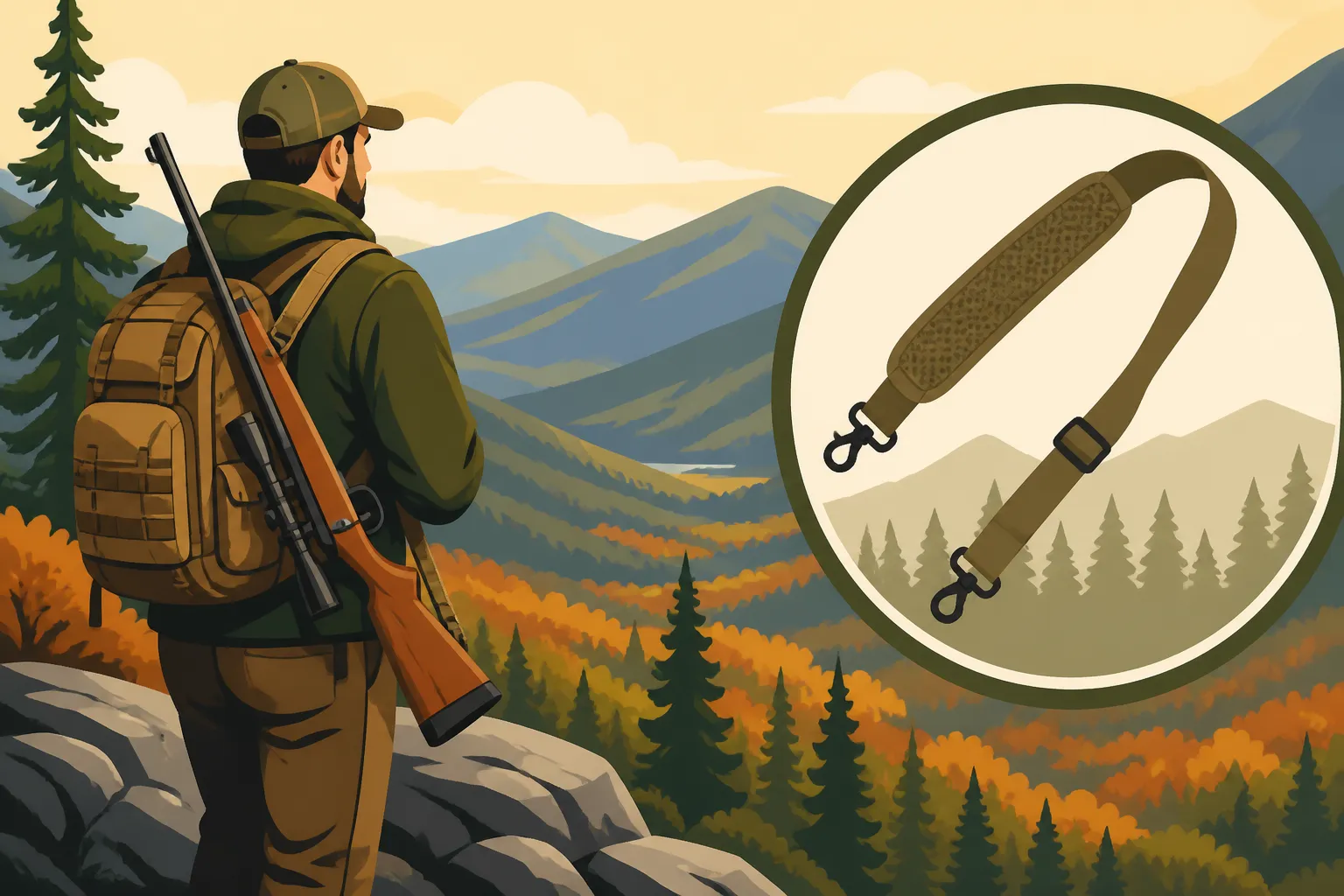
However, a basic two-point sling needs specific features to excel in mountain conditions. Padding, especially a wider, thicker section over the shoulder, is non-negotiable. A thin leather or nylon strap will cut into your shoulder and cause immense discomfort within a few miles. Look for materials that offer grip, like neoprene or rubberized sections, to prevent the rifle from constantly slipping off your shoulder as you climb and descend. The ability to adjust the length quickly and easily is also vital; you'll want to cinch it tight when scrambling to keep the rifle from swinging, and then perhaps loosen it a bit when still-hunting slowly through open timber. A good two-point sling, when properly equipped, is a workhorse that can handle anything from Hunting the Pre-Rut in Late October to the late season.
Padded Slings: Your Shoulder's Best Friend
This category often overlaps with two-point slings, but the emphasis here is purely on comfort. Padded slings are designed with substantial cushioning, often made from neoprene, foam, or thick leather, specifically where the sling rests on your shoulder. This padding isn't just a luxury; it's a necessity when you're looking at miles of walking over uneven ground. Think about the difference between carrying a backpack with thin straps versus one with well-padded, ergonomic straps – it's the same principle for your rifle.
The best padded slings for mountain hunting feature non-slip backing to keep them firmly in place. This is critical because constantly readjusting a slipping sling not only eats up energy but can also be noisy, scaring off wary game. Some padded slings even incorporate shock-absorbing materials, which can further reduce the felt weight and impact of the rifle bouncing against you during vigorous movement. When you're making your way through a thick clearcut or descending a shale slide, that extra cushioning makes a world of difference, allowing you to save your energy for glassing distant hillsides or preparing for a shot. Even if you're using a Deer Cart on Game Lands for the final haul, you still have to get to your stand, and a good padded sling will ease the burden getting there.
| Sling Type | Primary Benefit for Mountain Hunting | Drawbacks for Mountain Hunting | Ideal Use Case |
|---|---|---|---|
| Basic Two-Point | Simple, versatile carry options | Lacks comfort, slips easily | Short walks, flat terrain, if padding is added aftermarket |
| Padded Two-Point | Superior comfort, reduced fatigue | Can be bulkier, heavier | Long walks, rugged terrain, cold weather with heavy clothing |
| Quick-Adjust | Rapid length changes, secure carry | May lack padding if not specified | Steep climbs, varied terrain requiring hands-free movement, quick shots |
| Non-Slip Grip | Stays put on shoulder, stable | Can be less comfortable on bare skin | Anytime stability is paramount, especially when wearing smooth outer layers |
Key Features for the Ultimate Mountain Rifle Sling
Selecting the right sling involves more than just picking a pretty color or the cheapest option. For the specific demands of Pennsylvania's diverse hunting landscape, from the steep-sided hollows of the Big Woods to the rocky outcrops of the Ridge and Valley region, certain features will elevate a sling from adequate to indispensable.
Material Matters: Durability and Grip
The material of your sling dictates its comfort, durability, and ability to stay put. For the rough and tumble of mountain hunting, you want something that can withstand briars, wet weather, and abrasive rock, all while offering a secure grip on your shoulder.
- Neoprene: This is a popular choice for its excellent padding and non-slip qualities. Neoprene slings conform to your shoulder, distributing weight evenly, and they tend to grip clothing well, preventing slippage. They're also water-resistant, which is a huge plus for those damp Pennsylvania mornings or unexpected rain showers. Just make sure the neoprene is robust and not too flimsy.
- Leather: A classic choice, good quality leather slings are incredibly durable and can last a lifetime. They look great and, with time, will mold to your shoulder. However, traditional leather can be slippery against certain fabrics, and unpadded leather offers little in the way of shock absorption. Look for wider, thicker leather slings or those with a suede-like backing for better grip and comfort.
- Nylon/Cordura: Extremely durable and lightweight, synthetic slings are a workhorse. They are often less expensive but can lack padding and grip unless specifically designed with those features. If opting for a synthetic, ensure it has integrated padding and a non-slip treatment, or plan to add a shoulder pad. These are often adjustable and dry quickly, which can be useful when facing unpredictable weather or Cold Weather Sitting Strategy.
Swivels, Hardware, and Adjustability: Reliability in the Field
The hardware on your sling is just as important as the strap itself. Flimsy swivels can fail at the worst possible moment, potentially leading to a damaged rifle or a lost opportunity.
- Quick-Detach (QD) Swivels: These are invaluable. They allow you to rapidly remove the sling from your rifle when you're in a stand, in a blind, or if you need to quickly transition to a different carrying method. Quality QD swivels are strong, secure, and operate smoothly. You don't want to be fumbling with stiff, cheap swivels when you've just scaled a rock face.
- Robust Hardware: Ensure all buckles, clasps, and adjustment slides are made from durable metal or high-strength polymer. Plastic hardware, while lighter, can become brittle in extreme cold or break if snagged on brush.
- Easy Adjustability: A good sling allows for quick, one-handed adjustments to its length. This feature is crucial when moving from active trekking to still-hunting, or when you need to quickly cinch the rifle tight to your body for a difficult climb. The ability to lengthen or shorten the sling on the fly means you can tailor your carry for comfort and security in any situation without stopping or drawing undue attention to yourself. This kind of adaptability is something you often read about from experienced hunters on platforms like GoHunt, emphasizing its value in varied terrain.
Sling Width and Padding: The Comfort Equation
This is where your shoulder will thank you. A narrow, unpadded sling concentrates all the rifle's weight onto a small area, quickly causing discomfort and pain.
- Width: Look for slings with a minimum shoulder-strap width of 2 inches, but 2.5 to 3 inches is even better for spreading the load. A wider strap distributes the pressure over a larger surface area, significantly reducing fatigue.
- Padding Thickness: The thicker the padding, generally the better, within reason. Too thick and it can become cumbersome. Aim for at least 1/4 to 1/2 inch of dense, resilient padding. Memory foam or gel inserts can offer superior comfort, conforming to your shoulder and absorbing shock. When you're carrying a rifle for miles up and down the steep inclines found on places like Loyalsock State Forest, generous padding will make a world of difference. It's often worth the extra investment for your long-term comfort and hunting endurance.
Mastering the Carry: Adjusting and Using Your Sling Effectively
Having the best sling in the world won't do you much good if you don't know how to adjust it and carry your rifle effectively. Proper technique can minimize fatigue, maximize quick access, and enhance safety, allowing you to truly focus on the hunt.
The Right Length: Finding Your Sweet Spot
Adjusting the sling length is crucial and often overlooked. There's no one-size-fits-all setting, as it depends on your body, your rifle, and the terrain you're covering.
- For General Walking/Trekking: When walking, you typically want the rifle to ride high enough on your shoulder that the muzzle is clear of the ground and the buttstock isn't dragging. If carrying across your back, it should be snug enough that it doesn't bounce excessively, but loose enough that you can easily swing it around to your front without much effort. The sweet spot allows the rifle to hang freely without interfering with your stride, yet remains stable against your body.
- For Steep Climbs and Thick Cover: This is where quick adjustability shines. When climbing a steep ascent or pushing through dense mountain laurel thickets, you want the sling cinched tight. This secures the rifle close to your body, preventing it from snagging on branches or swinging wildly, which could throw you off balance. A tightly cinched sling also keeps the muzzle pointing in a safe direction. The last thing you want is a loose rifle pointing unpredictably when you're exerting yourself in challenging conditions, especially if you're navigating Entry Routes on Steep Ground.
- For Still-Hunting/Ready Position: When you're moving slowly and deliberately, anticipating a shot, you might want a slightly looser sling that allows you to transition the rifle quickly to your shoulder. Some hunters prefer to carry the rifle in their hands at this point, but a well-adjusted sling can still provide support. If using a "tactical" style sling (though less common for traditional hunting), you can use it to stabilize the shot by pushing forward against the sling tension.
Carrying Positions for Different Scenarios
Versatility in carrying positions is a major benefit of a good sling. Understanding when to use which position can dramatically improve your comfort and readiness.
- Traditional Shoulder Carry (Strong Side): This is the most common. The sling is over your strong-side shoulder (the one you shoot from), with the rifle hanging down your back. It offers good accessibility but can become uncomfortable on long walks, and the rifle can swing if not managed. To combat slippage, ensure your sling has a good non-slip surface. This position is generally fine for less strenuous walks or when you anticipate needing the rifle quickly.
- Off-Shoulder Carry (Weak Side): Sling over your weak shoulder, rifle hanging down your back. This can distribute weight differently and allow your strong arm to rest or be free for other tasks. It requires a bit more effort to bring the rifle to bear for a shot but can be a good option for covering ground.
- African Carry (Strong Side, Muzzle Down): The sling goes over your strong shoulder, but the rifle hangs vertically down your back with the muzzle pointing towards the ground. This position protects the muzzle from dirt and snow, keeps the rifle snug, and positions it well for quickly bringing it up for a shot. It’s excellent for still-hunting or moving through moderately dense cover, offering a stable and balanced feel. Just be mindful of the buttstock not hitting the ground.
- Cross-Body/Patrol Carry (Muzzle Up or Down): The sling goes over one shoulder and diagonally across your back, with the rifle resting across your chest or back. This is fantastic for hands-free carrying, especially over rough terrain, as the rifle is secure and doesn't swing. If carrying across your chest (muzzle down), it allows for very quick access, but can sometimes feel a bit cumbersome, especially if wearing a bulky pack. If carrying across your back (muzzle up), it's very secure for long treks and frees both hands, but takes a moment longer to bring to the shoulder. This method is particularly useful when you need your hands free for balancing, using optics like those from GoHunt, or carrying other gear while traversing steep ground.
Always remember that practice makes perfect. Spend time with your rifle and sling, walking around your property or local woods, experimenting with different lengths and carry positions. This will help you find what works best for you and build muscle memory, ensuring that when the season opens, your sling is an asset, not an afterthought.
Disclaimer
This article is for general informational purposes only and does not constitute professional advice. Laws, prices and regulations vary by location and change over time. Consult a qualified professional for guidance on your specific situation.