Crossbow Bolt and Broadhead Rules
It's incredibly frustrating when you're trying to prepare for archery season, only to find the regulations for crossbow bolts and broadheads seem to shift or are just plain confusing. You want to make sure you're legal, ethical, and effective in the field, but navigating the minutiae of diameter, weight, and blade type can feel like trying to hit a moving target. This comprehensive guide will break down the essential rules and practical considerations for choosing and using crossbow bolts and broadheads in Pennsylvania, ensuring you’re confident and compliant when you head into the woods.
Understanding Pennsylvania's Legal Requirements for Crossbow Bolts and Broadheads
When it comes to hunting in Pennsylvania with a crossbow, the Pennsylvania Game Commission (PGC) has specific regulations that hunters must adhere to. These rules are in place to ensure fair chase and ethical harvesting of game animals, primarily deer and bear. Ignoring these details isn't just a risk of a fine; it's a risk to the well-being of the animal you're pursuing and the integrity of the hunt.
Legal Broadhead Specifications
Pennsylvania's regulations for broadheads used with crossbows are straightforward, yet often misinterpreted. The core requirement revolves around the cutting diameter of the broadhead. You can’t just screw any old broadhead onto your bolt and expect it to be legal. The PGC specifies that broadheads must be of a cutting-edge design, and those cutting edges must be a certain width. This isn't about how many blades it has, but the actual span of those blades when deployed or fixed.
For instance, whether you prefer fixed-blade broadheads or mechanicals, the legal standard remains the same. A fixed-blade broadhead's cutting diameter is typically measured from tip to the widest point of the blades. For mechanicals, it’s the diameter of the blades once they are open. The intent here is to ensure that the broadhead creates a wound channel large enough to effect a quick and humane harvest. A broadhead that is too small might not create sufficient hemorrhaging, leading to a long, difficult, and potentially unsuccessful tracking job, which is something every ethical hunter wants to avoid. Always double-check the current PGC Digest for the precise minimum cutting diameter requirement, as these details can occasionally be updated. Platforms like GoHunt often compile state regulations in an accessible format, making it easier to verify these specifics before you purchase new gear. Bow Setups for Pennsylvania Whitetails is a great resource if you're looking at your whole archery system.
Legal Crossbow Bolt Specifications
Beyond the broadhead, the bolt itself has parameters to consider, though these are less about physical dimensions and more about general archery ethics. There aren't specific length or weight minimums for bolts like there are for broadhead cutting diameter in Pennsylvania, but common sense and ethical hunting practices dictate certain considerations. A bolt that is too light might not carry enough kinetic energy to penetrate effectively, especially on larger game like a black bear or a mature buck. Conversely, an overly heavy bolt might drop too quickly, making range estimation critical and reducing your effective range.
The key is to use bolts that are properly matched to your crossbow's draw weight and power stroke, ensuring consistent flight and adequate energy delivery. Most crossbow manufacturers provide guidance on compatible bolt weights. It's also critical that your bolts are straight and undamaged. A cracked fletching or a bent insert can cause erratic flight, leading to a missed shot or, worse, a wounded animal. Think about it: you've spent hours scouting, practicing, and waiting for that perfect shot. You don't want your equipment to be the weakest link. For those exploring other aspects of their setup, Crossbow Bolt and Broadhead Rules also covers different components.
Choosing the Right Broadhead for Ethical Hunting
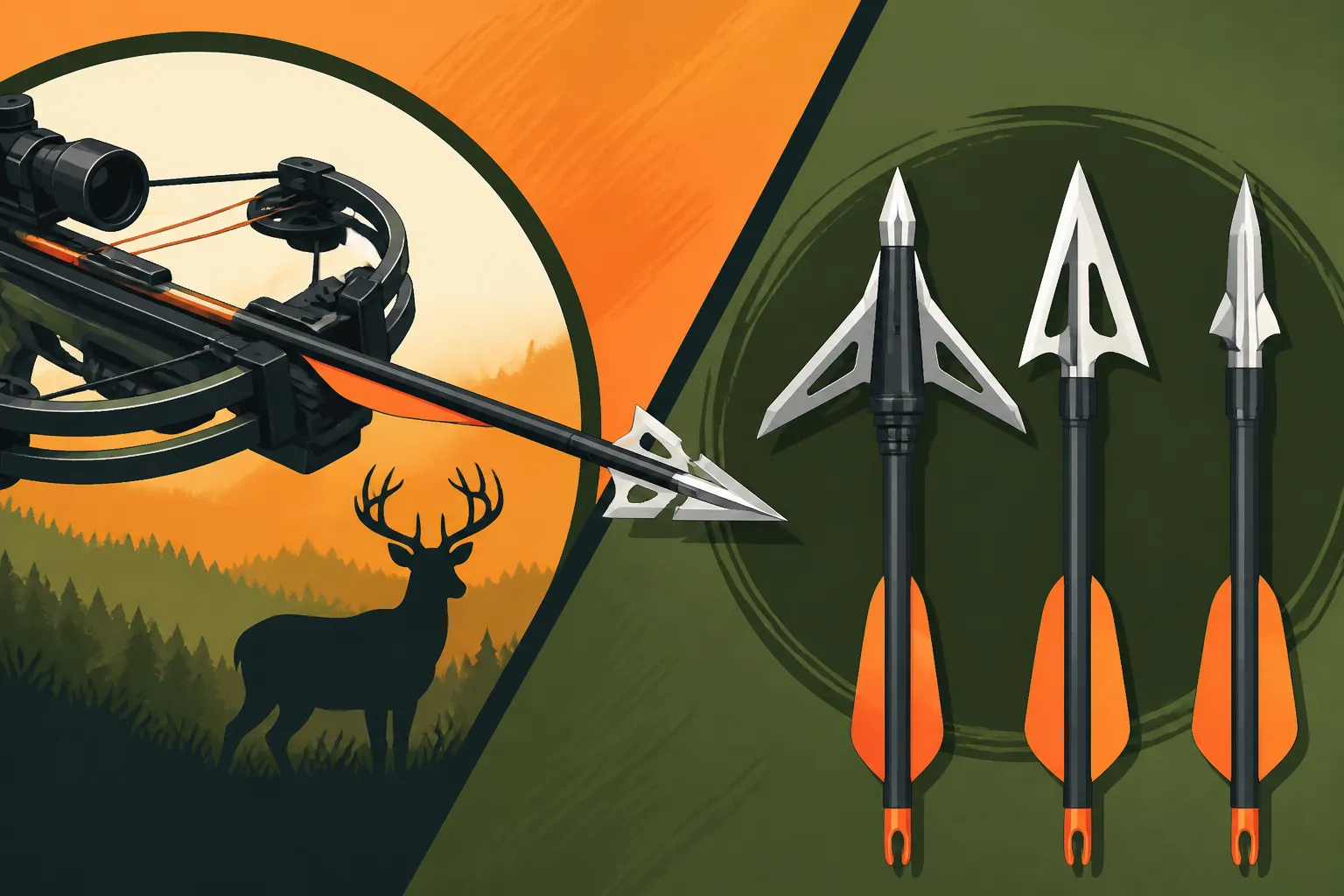
Beyond the legal minimums, selecting the right broadhead is a deeply personal and critical decision that impacts your success and, more importantly, your ethical responsibility to the game you pursue. There are primarily two types of broadheads hunters consider: fixed blades and mechanicals. Each has its pros and cons, and understanding these differences is key to making an informed choice for Pennsylvania’s diverse hunting environments.
Fixed-Blade Broadheads: Reliability and Penetration
Fixed-blade broadheads are the traditional choice and remain popular for good reason. They are essentially a razor-sharp blade fixed to a ferrule, offering unparalleled reliability. Because there are no moving parts, there's no risk of mechanical failure upon impact – what you see is what you get. This means they are generally very robust and can withstand hitting bone, often driving right through it, which is crucial for deep penetration and maximizing internal damage. In thick timber and brush, where deflections can occur, the sturdy design of fixed blades can sometimes reduce the chances of a catastrophic failure.
However, fixed blades can be more challenging to tune with some crossbows. The blades act like tiny wings, and if they aren't perfectly aligned with your fletchings and the crossbow's launch, they can cause the bolt to plane or steer in flight, impacting accuracy. Many hunters find they need to spend more time practicing with their specific fixed-blade broadheads to ensure they fly true at hunting distances. When hunting in windy conditions, for instance, a fixed blade might catch the wind more than a sleek mechanical, requiring a steadier hold. Despite these challenges, many experienced hunters swear by them for their deep penetration and reliability, especially when chasing bigger game or when hunting in scenarios where bone impacts are more likely, such as a steep quartering-away shot on a large buck. Fixed Versus Mechanical Broadheads goes deeper into this comparison.
Mechanical Broadheads: Accuracy and Larger Cutting Diameter
Mechanical broadheads, also known as expandable broadheads, have gained immense popularity over the years, largely due to their "field point accuracy." When shot, their blades are folded back, presenting a small profile similar to a field point, which minimizes aerodynamic drag and makes them fly very much like your practice tips. This can be a huge advantage for hunters who struggle to get fixed blades to fly consistently or who want to reduce tuning time. Upon impact, the blades deploy, creating a significantly larger cutting diameter than most fixed blades. This wider cut leads to larger wound channels and often results in more profuse blood trails, making tracking much easier.
However, mechanical broadheads aren't without their drawbacks. They rely on moving parts, and while modern designs are incredibly reliable, there's always a slight chance of a mechanical failure where the blades might not deploy properly or could be damaged on impact with heavy bone. Some designs require a specific amount of kinetic energy to ensure full deployment, so it's vital to ensure your crossbow-bolt combination generates enough power for the specific mechanical broadhead you choose. When hunting a mature Pennsylvania buck with heavy shoulders, you want absolute confidence that your broadhead will perform as intended. Companies like GoHunt provide resources and forums where hunters discuss their experiences with various mechanical broadheads, helping you gauge real-world performance. Remember to always check current PGC regulations on broadhead type, though generally, both fixed and mechanicals are legal as long as they meet the cutting diameter requirement.
Bolt Specifications and Performance in the Field
While broadheads get a lot of attention, the bolt itself is equally crucial for accuracy and performance. The right bolt, properly maintained, ensures consistent flight and effective energy transfer, making all the difference when that moment of truth arrives.
Bolt Weight and Kinetic Energy
The weight of your crossbow bolt is a significant factor in how it performs. A heavier bolt generally carries more kinetic energy, which translates to better penetration on impact. This is particularly important for larger game or when bone might be encountered. A heavier bolt also tends to be more stable in flight and less susceptible to wind drift, which can be an advantage in open fields or on a blustery ridge top. However, heavier bolts will have a more pronounced trajectory drop over distance, meaning you need to be very precise with your range estimation, especially beyond 30 yards. Many hunters use the tools on their GoHunt mapping platform to mark distances to key landmarks from their stand to aid in this.
Conversely, a lighter bolt will fly faster and have a flatter trajectory, simplifying range estimation to some degree. However, lighter bolts carry less kinetic energy, which can reduce penetration, and they are more prone to wind drift. It's a balance. Most crossbow manufacturers recommend a specific range of bolt weights for optimal performance with their models. Sticking within these recommendations is usually a good starting point. Ultimately, the best bolt weight for you is one that provides sufficient kinetic energy for the game you're hunting while maintaining acceptable accuracy and trajectory for your typical shooting distances. Arrow Weight for Short Shots provides a good foundation for understanding these principles.
Fletching, Nocks, and Inserts
Beyond the shaft and broadhead, the smaller components of your bolt play a huge role in its overall performance. The fletchings (the vanes at the back of the arrow) are critical for stabilizing the bolt in flight. Any damage, twist, or misalignment can cause the bolt to wobble, reducing accuracy significantly. Most crossbow bolts come with three or four fletchings, and maintaining their integrity is paramount. Inspect them before every shot, especially if your bolt has hit a target or the ground.
Nocks are the small plastic pieces at the very back of the bolt that attach to the crossbow string. They come in various designs, including flat nocks and half-moon nocks, and it's vital to use the correct type for your specific crossbow. An improperly seated nock can lead to a dry fire or erratic shot, both dangerous and detrimental to accuracy. Inserts, on the other hand, are glued into the front of the bolt shaft and provide the threading for your broadhead. A poorly glued or loose insert can cause your broadhead to wobble or even detach, impacting accuracy and safety. It's a good practice to periodically check your broadheads to ensure they are securely fastened and that the inserts are solid. These small details might seem minor, but they collectively ensure your bolt flies true and your broadhead performs as expected.
| Broadhead Type | Pros | Cons | Best Use Scenarios |
|---|---|---|---|
| Fixed Blade | – Extremely reliable, no moving parts. – Excellent penetration, often through bone. – Robust construction. |
– Can be harder to tune for consistent flight. – May plane or drift in windy conditions. – Smaller cutting diameter than most mechanicals. |
– Larger game (bear, big deer). – Situations where bone impact is likely. – Hunters prioritizing reliability above all else. |
| Mechanical (Expandable) | – Field point accuracy, easy to tune. – Very large cutting diameter for better blood trails. – Less susceptible to wind drift in flight. |
– Relies on mechanical deployment, slight risk of failure. – Requires sufficient kinetic energy for full deployment. – May not penetrate as deeply through heavy bone. |
– Hunters prioritizing accuracy and large wound channels. – Longer shots where flat trajectory is beneficial. – Game like deer where heavy bone isn't always primary impact. |
Maintenance and Safety Considerations
Proper care of your crossbow bolts and broadheads isn't just about preserving your gear; it's about ensuring safety for yourself and others, and maximizing your effectiveness in the field. Neglecting maintenance can lead to unexpected failures, poor accuracy, or even dangerous situations.
Inspecting and Maintaining Bolts and Broadheads
Before every hunting trip, and even before each practice session, take the time to thoroughly inspect your bolts and broadheads. For bolts, check for any nicks, cracks, or splinters in the shaft, especially near the nock and insert. Carbon fiber bolts can develop hairline cracks that are hard to see but can cause the bolt to shatter upon firing, which is incredibly dangerous. Run your fingers gently along the shaft to feel for imperfections. Inspect fletchings for tears, bends, or separation from the shaft. If a fletching is damaged, it's best to replace it or the entire bolt if you're not comfortable re-fletching. Similarly, ensure your nocks are firmly seated and free from cracks.
When it comes to broadheads, sharpness is paramount. A dull broadhead will tear rather than cut, leading to poor penetration and a less humane kill. Many fixed-blade broadheads can be resharpened; invest in a good broadhead sharpener and learn how to use it. For mechanicals, inspect the blades for any nicks, bends, or dull spots. If they're replaceable, consider carrying spare blades. Ensure all screws and components are tight, but don't overtighten to the point of stripping. Keep broadheads protected in a broadhead box to prevent damage to the blades and to keep yourself safe from accidental cuts. A sharp broadhead is a safe and ethical broadhead.
Safe Handling and Transport
Broadheads are, by their very nature, extremely sharp and designed to cause damage. This means they require careful handling at all times. Never walk around with a broadhead-tipped bolt nocked on your crossbow unless you are actively hunting and anticipating a shot. When transporting bolts with broadheads, always use a quiver that completely covers and protects the broadheads. This prevents accidental cuts to yourself or others and protects the delicate cutting edges from becoming dull or damaged.
When moving through dense brush or climbing into a tree stand, be acutely aware of your crossbow and nocked bolt. A branch snagging a broadhead can lead to an accidental discharge or a dangerous situation. Always transport your crossbow uncocked and uncased to and from your hunting location, unless specific regulations allow otherwise. When stalking or still-hunting, keep your crossbow cocked but the safety engaged, and only nock a bolt when you are in a stationary position and ready for a shot. Safe handling practices are not just rules; they are critical habits that prevent accidents and ensure everyone enjoys their time in the woods. For more on stand safety, refer to Treestand Setups in Pennsylvania Hardwoods. These practices, combined with diligent scouting, are the cornerstone of a successful and safe season, whether you're chasing that big buck in October or later in the season. Hunting the Pre-Rut in Late October requires maximum focus on safety and execution.
Disclaimer
This article is for general informational purposes only and does not constitute professional advice. Laws, prices and regulations vary by location and change over time. Consult a qualified professional for guidance on your specific situation.