Illuminated Reticles for Dark Timber
Hunting Pennsylvania's dense timber, especially as the sun dips below the ridges or struggles to pierce a heavy cloud cover, often means you're trying to make out your reticle against a dark background – a frustrating challenge that can cost you a shot at a legal deer. That fleeting moment when a buck steps out from the shadows can disappear if your crosshairs blend into the dim backdrop. This guide will dive deep into how illuminated reticles can be a game-changer for those tricky low-light situations, ensuring your aim point is always visible when it counts most in our rugged woods.
Understanding the Basics of Illuminated Reticles
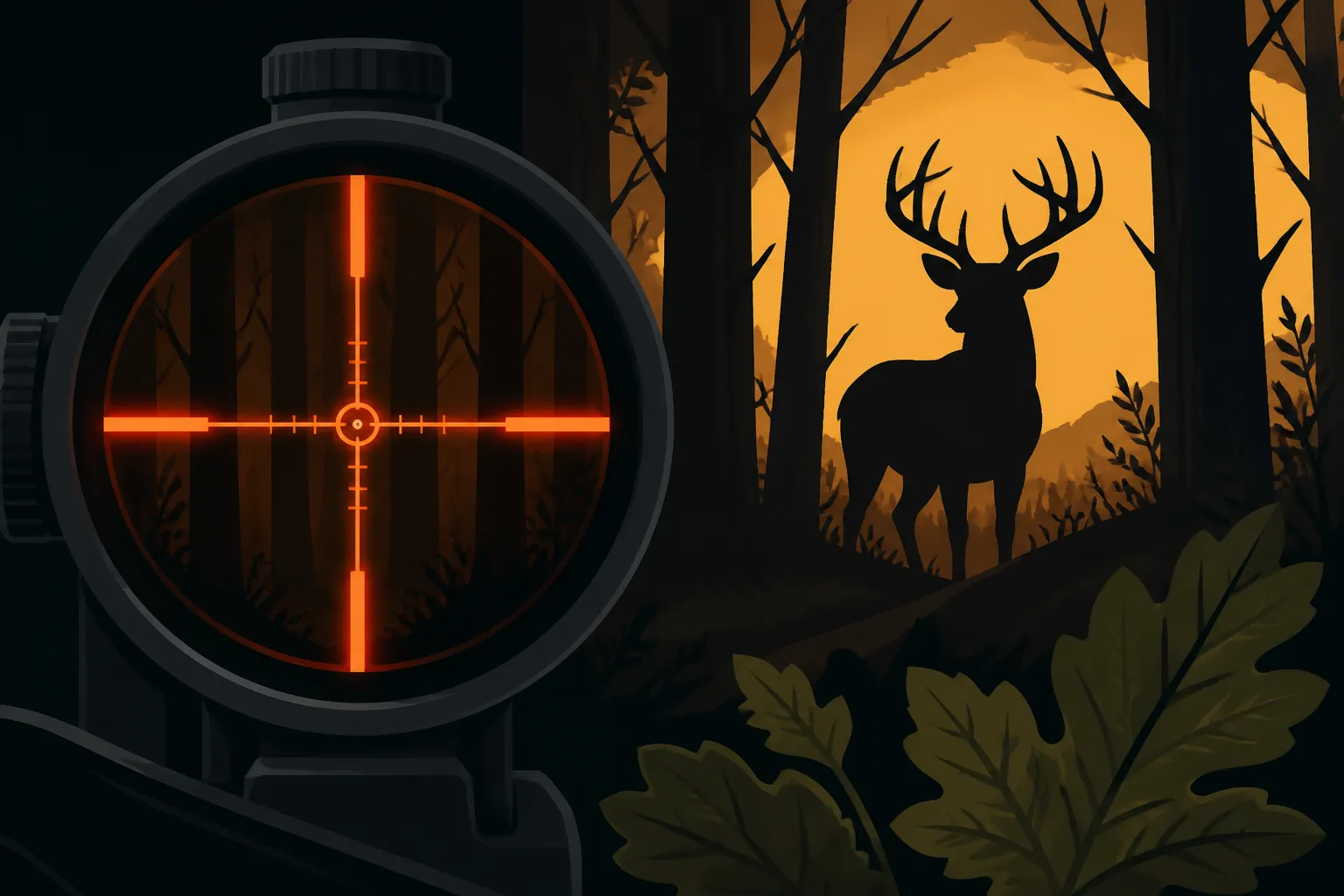
At its core, an illuminated reticle is simply a traditional crosshair or aiming point within your rifle scope that can be lit up, usually by a small battery-powered LED. Think of it like a tiny, adjustable flashlight for your reticle. Instead of just seeing a black reticle against a potentially dark or busy background, you now have a glowing point of aim that stands out, making target acquisition faster and more precise in less-than-ideal lighting conditions. This technology has revolutionized hunting in areas where natural light is a precious commodity.
How Illumination Works in a Scope
The magic happens thanks to a miniature light source, typically an LED, which projects light onto a small portion of the reticle, or sometimes the entire reticle pattern, depending on the scope's design. This light is often channeled through fiber optics or directly applied to etched glass reticles, making them glow. Most illuminated scopes offer multiple brightness settings, allowing you to dial in just enough illumination without washing out your vision or creating excessive glare. You definitely don't want a reticle that's so bright it blinds you to the deer you're trying to shoot, especially when your eyes are already adjusted to low light. The ability to adjust this intensity is crucial for adaptability in the field.
Imagine you're tucked into your stand on a north-facing slope, the kind where the sun just barely touches the canopy for a few hours a day. Without illumination, your black reticle might vanish against the dark bark of a hemlock tree or the shadow-drenched side of a deer. With a well-adjusted illuminated reticle, that bright dot or crosshair pops out, giving you a clear, undeniable aiming point. It's a subtle but profound difference that can mean the difference between a successful harvest and a missed opportunity when light is fading fast.
Common Reticle Patterns with Illumination
Illuminated reticles come in a variety of patterns, each with its own advantages. The most common include a simple illuminated dot in the center of a standard duplex reticle, a fully illuminated crosshair, or more complex patterns like a German #4 with an illuminated center dot. Some scopes even offer illuminated BDC (Bullet Drop Compensator) markings, although these are less commonly used in the close-quarters, timber-heavy hunting scenarios often found in Pennsylvania. The key is finding a pattern that you can quickly acquire and that doesn't obstruct too much of your target.
A simple illuminated dot in the center of a traditional crosshair is often preferred by many timber hunters because it keeps the field of view clean while providing a distinct aiming point. It's minimalist but incredibly effective. Other hunters might prefer a fully illuminated crosshair for better visibility across a broader area, especially if they anticipate shots at various distances, though in our deep woods, long-range shooting is less common. Whatever the design, the purpose remains the same: to give you a clear, contrast-rich aiming point regardless of how dim the surroundings become.
Why Pennsylvania's Dark Timber Demands Illumination
Pennsylvania is renowned for its diverse landscapes, from rolling farmlands to vast tracts of dense, unforgiving big woods. While farm country offers open fields and brighter conditions, much of our prime deer habitat exists within thick, dark timber. This environment presents unique challenges that make illuminated reticles not just a luxury, but often a necessity for ethical and effective hunting.
Overcoming Low-Light Challenges in Deep Woods
The "dark timber" in Pennsylvania isn't just a figure of speech. It refers to vast areas of mature conifer stands, especially hemlock and spruce, as well as north-facing slopes draped in heavy canopy that block out significant amounts of sunlight. Think of the deep hollows in the Sproul State Forest or the thick mountain laurel patches in the Tioga State Forest. When you're sitting in a stand in these areas, even on a sunny day, the ambient light can be significantly reduced. Add in overcast skies, a rainy morning, or the critical first and last half-hour of legal shooting light, and it becomes genuinely challenging to see your black reticle against a deer's dark hide or the shadow-laden undergrowth.
This is where the illuminated reticle truly shines. It provides the crucial contrast needed to place your shot accurately. Without it, you might find yourself struggling to identify the exact center of your crosshairs, leading to hesitation or, worse, an imprecise shot. When a mature buck steps out from a thick stand of pines just before dark, every second counts. The confidence of seeing a bright, clear aiming point can make all the difference in making a clean, ethical harvest.
The Impact of Weather and Canopy Cover
Pennsylvania weather is famously unpredictable. A crisp, sunny morning can quickly turn into a heavily overcast, drizzly afternoon, especially during deer season. Dense fog rolling through the mountains, or a steady rain, further diminishes light, turning already dim timber into near darkness. In these conditions, traditional black reticles can completely disappear, rendering your high-quality optics temporarily useless for precise aiming.
Consider a late November hunt during Hunting the Peak Rut Week in Pennsylvania, when deer movement is often highest during those marginal light periods. If a heavy cloud cover settles in, making the woods gloomy, your illuminated reticle ensures you can still confidently acquire your target. This ability to adapt to varying light and weather conditions is paramount for success and safety. It allows you to maximize your time in the woods and be ready when the opportunity finally presents itself, rather than being handicapped by conditions you can't control.
Choosing the Right Illumination for Your Hunting Style
Not all illuminated reticles are created equal. There are different colors, different intensity levels, and varying designs that cater to specific preferences and hunting situations. Understanding these differences will help you select a scope that best suits your needs for hunting in Pennsylvania's diverse terrain.
Red vs. Green Illumination
The two most common colors for illuminated reticles are red and green. Each has its proponents, and the "best" choice often comes down to personal preference and how your eyes perceive color in low light.
| Illumination Color | Pros | Cons | Best For |
|---|---|---|---|
| Red | – Traditionally less disruptive to night vision. – Many find it less fatiguing for prolonged use. – Excellent contrast against green foliage and brown animal hides. |
– Can be harder to see for individuals with red-green color blindness. – Some find it less "natural" than green. |
General all-around hunting, especially in mixed foliage and timber. |
| Green | – Often appears brighter to the human eye in daylight. – Can be highly visible in dense, dark timber. – Less likely to cause issues for red-green color blind individuals. |
– Can be more disruptive to natural night vision if too bright. – May blend in slightly with very green backgrounds. |
Hunters who prefer a brighter reticle, or those with red-green color blindness. |
For many Pennsylvania hunters, red is a popular choice because it offers excellent contrast against the predominantly brown and gray tones of deer, and the muted greens of evergreens like hemlock, without overly impacting natural night vision. However, some find green to be more vivid and easier to pick up quickly in very dark conditions. It's often worth trying to look through scopes with both colors, if possible, to see which one your eyes naturally gravitate towards. Ultimately, the ability to adjust the brightness is more critical than the color itself, as an overly bright reticle of any color will hinder your low-light vision.
Adjustable Brightness Settings
The ability to precisely adjust the brightness of your illuminated reticle is non-negotiable. You want a scope that offers a wide range of settings, from extremely dim to very bright. This allows you to fine-tune the illumination to the exact ambient light conditions. On a truly dark, overcast day in deep timber, you might need a brighter setting. However, as legal shooting hours approach their end and your eyes become fully accustomed to the gloom, even a slightly too-bright reticle can create a distracting glare or "halo effect," making it harder to see the deer.
Premium scopes often feature extremely low-light settings that are barely visible but provide just enough contrast to be effective without washing out your vision. They also include higher settings for bright daylight use, ensuring the reticle remains visible even against a snow-covered field. Having these incremental adjustments allows you to maintain optimal visibility and focus on your target. Some models even feature an auto-off function to conserve battery life, a thoughtful addition for forgetful hunters. This attention to detail means you’re not fumbling with settings when that trophy buck finally steps into view.
Practical Considerations for Illuminated Reticle Scopes
While the benefits of an illuminated reticle are clear, there are practical considerations that hunters in Pennsylvania should keep in mind. From battery life to durability, these factors play a significant role in the long-term satisfaction and reliability of your chosen optic.
Battery Life and Reliability
The biggest practical concern with illuminated reticles is battery life. Unlike a traditional scope, these optics rely on a power source, usually a small coin-cell battery. It's crucial to understand your scope's battery consumption and always carry spares. Imagine being deep in the woods during Hunting the Pennsylvania Rut in November, a prime time for low-light encounters, only to have your reticle die when you need it most. This is a common frustration, but it's easily avoidable with preparation.
Many modern illuminated scopes have efficient LED technology, offering hundreds or even thousands of hours of battery life on lower settings. However, leaving the illumination on a high setting can drain batteries quickly. Always check your battery before a hunt, and if your scope has an auto-off feature, utilize it. Carrying at least one, if not two, spare batteries in your pack is a simple habit that can save a hunt. While GoHunt primarily helps with mapping and scouting, remember that you are solely responsible for checking and maintaining your gear for the hunt itself.
Durability and Environmental Resistance
Pennsylvania hunting often involves harsh conditions: rain, snow, cold, and rough terrain. Your illuminated reticle scope needs to be just as durable and weather-resistant as any other piece of your hunting gear. Look for scopes that are advertised as waterproof, fog-proof, and shockproof. This means they can withstand getting soaked in a downpour, enduring drastic temperature changes without fogging internally, and taking the inevitable bumps and knocks that come with traversing rocky ridges or steep hollows.
The internal electronics for the illumination must be well-sealed to prevent moisture ingress, which can lead to corrosion and failure. A scope that performs flawlessly on a sunny range might fail miserably when you're caught in a freezing rainstorm on Hunting a Bench Above a Creek Bottom. Invest in a quality optic from a reputable manufacturer that stands behind its products, because reliability in the field is paramount. You need gear that won't let you down when the stakes are highest, especially with varying Cold Weather Sitting Strategy conditions.
Cost vs. Performance
Like most hunting gear, the price of illuminated reticle scopes can vary wildly, from budget-friendly options to high-end models that cost a small fortune. It's tempting to opt for the cheapest illuminated scope, but remember the old adage: "buy once, cry once." A low-cost illuminated scope might offer illumination, but it could compromise on optical clarity, light transmission, or durability – all critical factors for hunting in dim conditions.
A well-made scope, even if it's not the absolute top-tier, will provide clearer glass, better low-light performance (even without illumination), and a more robust construction. When you're making a significant investment in an optic, balance the cost with the features and performance you need. For most Pennsylvania deer hunters, a mid-range illuminated scope often provides the best balance of quality, reliability, and affordability. Remember to check specific product specifications from manufacturers for current pricing and feature details, as these can change. Prioritizing excellent glass and a proven track record of durability should be higher on your list than simply finding the cheapest option with a glowing dot.
Disclaimer
This article is for general informational purposes only and does not constitute professional advice. Laws, prices and regulations vary by location and change over time. Consult a qualified professional for guidance on your specific situation.