Turkey Decoys That Work on Pressured Birds
There's nothing quite as deflating as a gobbler that hangs up just out of range, or worse, spooks entirely, after a seemingly perfect calling sequence. It's a frustrating reality for many of us hunting Pennsylvania's wily wild turkeys, especially when they've been called to, hunted, and generally educated throughout the season. This guide is all about giving you the edge with turkey decoys, focusing on strategies and characteristics that actually work on these pressured birds.
Understanding the Mindset of Pressured Pennsylvania Turkeys
Hunting turkeys in Pennsylvania, particularly during the spring gobbler season, can be incredibly rewarding, but it’s rarely easy. These birds are intelligent and adapt quickly to hunting pressure. What worked on an unpressured tom in a secluded woodlot at the start of the season might send him running for the hills just a few weeks later. Understanding this wary mindset is crucial to choosing and deploying decoys effectively.
Why Traditional Decoy Setups Fail
Many hunters fall into the trap of using the same decoy setup year after year, or even hunt after hunt, without considering the specific conditions of the day or the level of pressure the birds have experienced. Picture this: you've got three full-strut gobblers, two jakes, and half a dozen hens spread across a hayfield, hoping to draw in a dominant tom. While this might be a showstopper for birds that haven't seen a hunter, for a gobbler that's already dodged a few calls and setups, it can scream "fake!" from a mile away.
Birds quickly learn to associate overly aggressive or unnatural displays with danger. They might see a decoy spread in a field they frequent, notice it's not quite right – perhaps the pose is too stiff, the color off, or the sheer number of fakes doesn't match the current flock dynamics – and simply skirt the area, or worse, blow out entirely. They're looking for inconsistencies. A mature gobbler, having survived a few close calls, develops an almost supernatural ability to spot something amiss. He’s seen plenty of other gobblers acting foolishly, and he doesn’t want to be next.
The Importance of Subtle Realism
When dealing with pressured birds, your goal isn't to shock and awe, but to subtly reassure and entice. Think of it less like a billboard and more like a whisper. The realism of your decoy, in terms of its appearance, posture, and even its movement, becomes paramount. You're trying to replicate a natural scene so convincingly that a wary gobbler doesn't hesitate, even for a second. This means paying attention to details many hunters overlook.
For example, a hen in a breeding posture can be incredibly effective, as it directly appeals to the gobbler's primal urge. However, if that hen looks too perfect, too static, or is placed in an area where a real hen wouldn't typically be, it can raise red flags. Subtle details like a slight lean, a head tilted just so, or even the way light reflects off the paint can make all the difference. The goal is to create a visual that says, "Everything is normal, come on in." This is especially important when you’re Calling a Pennsylvania Gobbler Off the Roost and need that extra visual draw.
Decoy Characteristics for High-Pressure Environments
Once you understand the wary nature of pressured Pennsylvania turkeys, you can start selecting decoys that cater to their caution. It’s less about having the flashiest or most expensive decoy, and more about having the right decoy for the situation. Focus on characteristics that enhance realism and minimize suspicion.
Less is More: Single Decoy Strategies
One of the biggest mistakes hunters make with pressured birds is deploying too many decoys. A large flock setup can sometimes work in wide-open country with unpressured birds, but in the typical rolling terrain and patchy woods of Pennsylvania, or on heavily hunted public lands, it often backfires. Less truly is more.
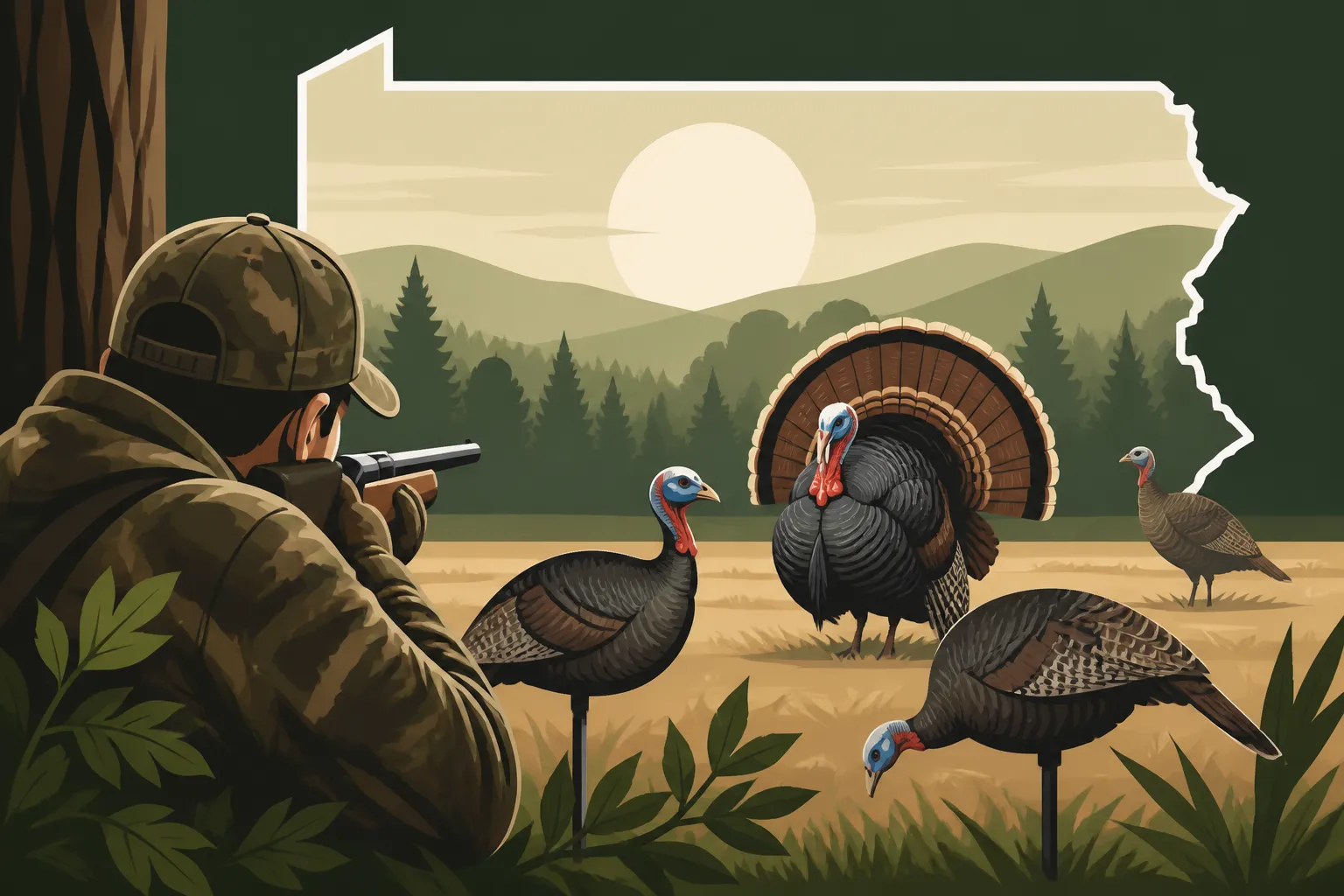
A single hen decoy, perhaps in a submissive or feeding posture, often creates a much more convincing and less threatening scene. A lone hen suggests availability and vulnerability without the perceived competition of a whole flock. Gobblers, especially those that have been bumped by other hunters, are looking for easy opportunities. A single hen quietly feeding or breeding can be exactly that. I’ve had great success with a single feeder hen placed at the edge of a field, just inside the timber line, making it look like she just stepped out for a morning snack. This minimalist approach requires confidence in your setup, but it frequently pays off. Another effective option is a single jake decoy, often in a semi-aggressive or submissive pose. This can challenge a dominant gobbler, making him want to assert his authority without overwhelming him with an entire fake flock. Many turkey hunters swear by a single hen and jake combo, but even that can be too much in high-pressure scenarios.
Achieving Ultimate Realism: Full-Body vs. Folds
The debate between full-body and collapsible decoys often comes down to realism versus portability. For pressured birds, realism wins, but there are nuances. Full-body fakes, often made of durable plastic or foam, offer incredible detail and lifelike postures. They don't crease, they don't flatten, and they hold their shape perfectly, no matter the weather. This can be a huge advantage when a gobbler is trying to pick out details from a distance. The natural contours, the way light plays on the painted feathers, and the sheer presence of a full-body decoy can make it incredibly convincing.
However, full-body decoys are bulkier and heavier. If you're Run-and-Gun Turkey Tactics on Game Lands or covering significant ground in the Pennsylvania woods, lugging multiple rigid decoys can be a real pain. That's where high-quality collapsible or inflatable decoys come in. Modern foldable decoys have come a long way, with better materials that resist creasing and maintain a more lifelike shape. Some even incorporate photo-realistic images printed on fabric, giving them an incredibly realistic feather pattern. The key is to find one that sets up quickly, holds its shape without looking like a deflated balloon, and has a non-shiny finish. Some models from companies like GoHunt focus on lightweight, realistic designs that make them perfect for mobile hunters.
Motion and Movement: Adding Life
A static decoy, no matter how realistic, can sometimes look "off" to a wary gobbler. Real turkeys are rarely perfectly still; they fidget, they preen, they peck at the ground, and their feathers subtly shift with the breeze. Adding a touch of natural motion to your decoy can transform it from a plastic statue into a living, breathing bird.
However, this isn't about using battery-powered flapping wings. That kind of overt, artificial movement is often a red flag for pressured birds. Instead, think subtle. A simple decoy stake that allows the decoy to pivot gently in the wind can mimic a feeding or preening motion. A spring-loaded stake can give a slight bobble, making the decoy seem more alive. Even just a small feather duster attached to the decoy that catches the breeze can add that crucial element of natural movement. The idea is to create just enough motion to suggest life, but not so much that it looks mechanical or out of place. This small detail can be the difference between a gobbler committing to your setup and hanging up at 60 yards, inspecting every detail.
Tactical Deployment: Placing Decoys for Wary Birds
Even the most realistic decoy is useless if it's placed incorrectly. With pressured turkeys, your placement strategy needs to be precise, considering everything from the terrain to the angle of the sun. It's about creating an irresistible scene that plays right into the gobbler's instincts while minimizing any potential for him to feel threatened.
Situational Placement: Reading the Terrain and Birds
Where you place your decoy is just as important as the decoy itself. For pressured birds, you need to think about their approach and what natural features might make them feel secure or exposed. If you're hunting open fields, consider placing your decoy closer to the edge of the timber or brush line, where a real hen might feel comfortable emerging. This gives the gobbler a more natural approach and provides you with a backdrop for concealment. When Hunting Turkeys in Pennsylvania Big Woods, you might place your decoy in a small clearing or at the edge of a subtle bench, mimicking a bird that has just stepped out into an open area.
Consider the angle of the decoy relative to your position and the expected approach of the gobbler. You want the gobbler to see the most convincing side of the decoy first, and ideally, he should be looking away from your hide. If he approaches head-on, he’s more likely to scrutinize your setup and potentially spot you. A good tactic is to angle your decoy slightly so the gobbler passes by your shooting lane, focusing on the decoy as he closes the distance. Also, be mindful of the sun. Avoid placing your decoy directly in front of the rising or setting sun, as this can create a silhouette or cause glare that makes the decoy appear unnatural. The goal is to make the decoy look as much a part of the natural environment as possible.
Decoy Poses and Their Messages
The posture of your decoy sends a direct message to an approaching gobbler. For pressured birds, these messages need to be carefully chosen to be inviting and non-threatening, or to tap into specific dominant instincts without causing alarm.
A full-strut gobbler decoy, while exciting, often causes mature gobblers to hang up. They may be wary of competition, or simply not want to engage in a fight they can't quite read. Unless you are incredibly well-concealed and prepared for an aggressive interaction, it's generally best to avoid strutter decoys with pressured birds. Instead, focus on poses that suggest a relaxed or receptive hen, or a submissive jake.
| Decoy Pose | Message to Gobbler | Effectiveness with Pressured Birds | Scenarios |
|---|---|---|---|
| Breeder Hen | "I'm ready to mate." | High – very inviting | Field edges, clearings, open timber |
| Feeder Hen | "I'm relaxed and safe." | High – non-threatening, natural | Any feeding area, field edges |
| Upright Hen | "I'm alert, but not alarmed." | Moderate – can be too static | Best paired with a feeder or breeder |
| Submissive Jake | "I'm no threat, or easy target." | High – can draw dominant toms | Often combined with a breeder hen |
| Strutter Gobbler | "I'm here for a fight." | Low – can make birds hang up or spook | Only for very aggressive birds, excellent concealment |
A breeder hen is often your best bet, especially when combined with subtle calling. She's sending a clear, inviting signal that's hard for a gobbler to resist. A feeder hen suggests a comfortable, safe environment, which can lower a gobbler's guard. If you choose a jake, ensure it's a submissive or young jake pose, not an overly aggressive one. Many hunters find success placing a submissive jake with a breeder hen, as it encourages a dominant tom to come in to run off the younger bird and claim the hen.
Combining Decoys with Calling Strategies
Decoys and calls are two sides of the same coin when it comes to luring in turkeys. Your decoy acts as the visual confirmation for the auditory message you're sending. This synergy is particularly potent with pressured birds, as the visual can seal the deal when a gobbler is hesitant.
If you're making soft yelps and clucks, a hen decoy that looks like she's feeding or subtly moving reinforces that message of a calm, available hen. If you're doing aggressive cutting and cackling, a breeder hen might be a better visual, implying a hot hen ready to be bred. Many experienced hunters know that Turkey Calls Worth Carrying in Pennsylvania are varied, but it’s the combination with the right visual that makes the difference.
Often, a gobbler will hang up just out of range, gobbling but refusing to commit. This is where the decoy truly earns its keep. He's heard you, he's interested, but he needs that final push of confidence. Seeing a realistic hen, or a jake he wants to dominate, can be the visual cue that convinces him to take those last crucial steps into your shooting lane. GoHunt's extensive articles often delve into specific calling sequences and how to pair them with your decoy setups for maximum effect, helping you adapt to exactly When Pennsylvania Gobblers Go Quiet and need that extra incentive.
Overcoming Common Decoy Mistakes with Pressured Turkeys
Even with the right decoy and a thoughtful placement strategy, there are still common pitfalls that can derail your hunt for pressured Pennsylvania turkeys. Learning to anticipate and avoid these mistakes is critical for consistent success.
The "Too Close" Conundrum
It’s tempting to place your decoy right at your desired shooting distance, say 25 yards, so that when a gobbler reaches it, he’s perfectly in range. However, with pressured birds, this often leads to the frustrating "hang up" scenario. A wary gobbler, having approached cautiously, will often stop short of the decoy, scrutinizing it and the surrounding area before committing. If your decoy is at 25 yards, he might stop at 35 or 40, just out of effective range for a clean shot with many shotgun setups.
The solution is counterintuitive: place your decoy further out than your ideal shooting distance. If you want a 25-yard shot, place your decoy at 30-35 yards. This way, when the gobbler inevitably hangs up at 5-10 yards shy of the decoy, he'll still be within your comfortable shooting range. This requires a little more patience but significantly increases your chances of getting a clean, ethical shot. It’s also crucial to ensure your own position is well-concealed, perhaps Setting Up Against a Big Oak or another natural blind, so you can move slightly to adjust if he does hang up.
Handling "Decoy Shy" Birds
Some turkeys, particularly those in heavily hunted areas or older, wiser gobblers, can become completely "decoy shy." They've seen too many fakes, perhaps had a bad experience, and will flee at the mere sight of a plastic bird. For these birds, traditional decoy tactics simply won't work.
When you encounter a decoy-shy bird, you have a few options. One is to ditch the decoy entirely. Rely solely on your calling, using subtle sounds and focusing on concealment and patience. Another tactic is "fanning" or "reaping," where you use a real or artificial turkey fan to attract a gobbler. This is an aggressive tactic and requires extreme caution, as the gobbler will often charge directly at the fan. It's not for every situation, and safety is paramount—always be 100% sure of your target and what's beyond it. Finally, if you must use a decoy, make it an ultra-realistic, single hen, placed very naturally and subtly, almost hidden in the cover. The key here is not to announce its presence, but to allow the gobbler to "discover" it naturally as he approaches your calls. These birds are a true test of a hunter's skill and patience.
Safety First: Hunter Orange and Visibility
While the focus of this guide is on effectively using decoys to fool turkeys, it's absolutely crucial to remember the safety aspects, especially when using realistic decoys. A turkey decoy, especially a full-body one, can look incredibly convincing to another hunter.
Never, ever stalk a decoy. If you need to retrieve a decoy or adjust its placement, always assume there's another hunter in the area and announce your presence. When moving through the woods or setting up, especially in Spring Gobbler Hunting in Pennsylvania, wear hunter orange. While hunter orange isn't typically required once you're set up and calling for turkeys, it's a good practice to wear it while walking to and from your spot, and keep a patch handy to display on your decoy when you're leaving it unattended or retrieving it. Always identify your target beyond any doubt before you shoot, ensuring it's a legal turkey and not another hunter's decoy or, worse, another hunter. Your safety, and the safety of others, always comes first.
Disclaimer
This article is for general informational purposes only and does not constitute professional advice. Laws, prices and regulations vary by location and change over time. Consult a qualified professional for guidance on your specific situation.