Power Banks for Long Days Afield
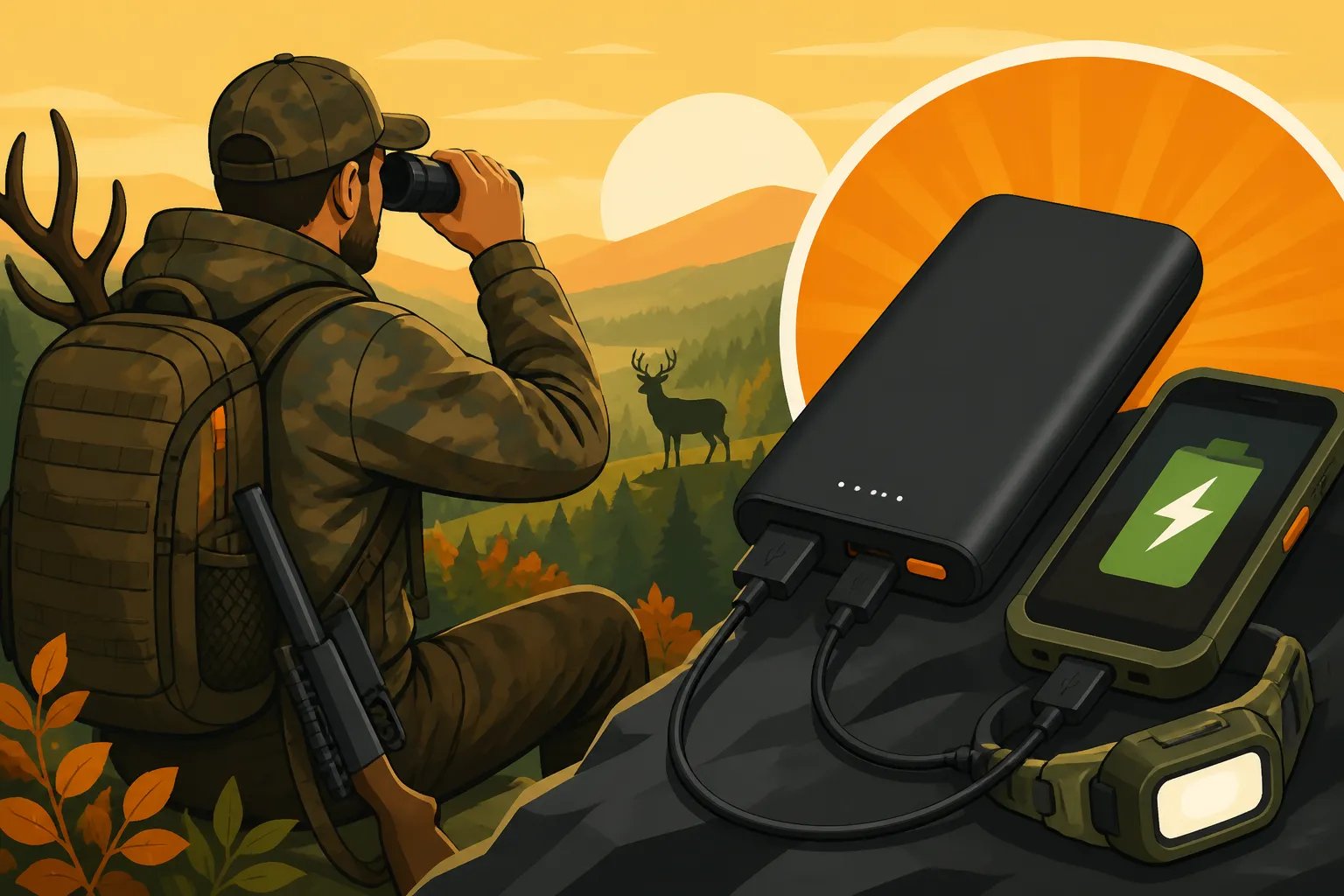
There’s nothing quite like the crushing feeling of pulling your phone out deep in the Pennsylvania big woods, ready to check your Reading Aerial Photos for Big Woods Deer or confirm your location on a crucial ridge, only to see the battery icon flashing red and then dying. We've all been there, and in today's hunting world, where our phones are often our primary navigation, communication, and even emergency tools, a dead battery can quickly turn a minor inconvenience into a serious safety concern. This guide is all about making sure that doesn't happen to you, exploring how power banks have become an indispensable piece of gear for every Pennsylvania hunter and how to choose and use them effectively for long days afield.
Why a Reliable Power Bank is Essential for the Pennsylvania Hunter
The days of simply carrying a compass and a paper map are, for many, a thing of the past. While those traditional tools are still vital backups, our smartphones have become central to how we scout, navigate, communicate, and even manage our hunts. From checking wind direction with an app before a Hunting a Bench Above a Creek Bottom to confirming property lines using mapping software like GoHunt, or simply staying in touch with hunting partners on a Deer Drives With Three or Four Hunters, a powered-up phone is critical.
Navigation and Mapping in Remote Terrain
Pennsylvania's varied landscape, from the steep, sprawling mountains of the north-central region to the rolling farmlands of the south, presents unique challenges. Getting lost isn't just a nuisance; it can be dangerous, especially as daylight fades or bad weather rolls in. Your phone, loaded with detailed maps and GPS capabilities, is a lifesaver. Imagine being miles from the truck, trying to follow a faint deer trail in a deep hollow, and realizing your phone's battery is too low to even load the map. It's a terrifying scenario. A power bank ensures you can always bring up your GPS, confirm your location, and navigate safely back to your vehicle or camp. This is especially crucial when Hunting Pennsylvania's Big Woods for Deer where features can look very similar.
Communication for Safety and Coordination
Beyond navigation, your phone is your lifeline to the outside world. Whether it's letting your family know you're running late, calling a hunting buddy to coordinate a drive, or, in the worst-case scenario, making an emergency call after an accident, a charged phone is non-negotiable. Many of us venture into remote areas where cell service is spotty, but even a weak signal can often be enough for a text message or a brief call if your phone has the juice to hold onto it. When you're in an area with marginal service, your phone works harder to find a tower, draining its battery even faster. Having a power bank means you can keep that phone topped off, ready for when you absolutely need it. This is even more important when considering the sheer size of some State Game Lands, where a long walk out could take hours.
Digital Scouting and Data Management
Modern hunting often involves a significant amount of digital planning and record-keeping. We use apps to track game movement, analyze Scrape Lines Along a Logging Road, log observations, and review trail camera photos. Platforms like GoHunt allow you to mark waypoints, identify prime habitat features, and even collaborate with hunting partners. All of these activities consume battery power. For instance, reviewing a day's worth of trail camera photos on your phone or marking a new potential stand location on your map can quickly deplete your device. A power bank allows you to perform these crucial tasks in the field without fear of losing power. It means you can spend more time actually hunting or scouting, rather than worrying about preserving battery life. Scouting With the Pennsylvania Mapping Center often involves heavy phone use, making a power bank an indispensable companion.
Choosing the Right Power Bank for the Rigors of PA Hunting
Not all power banks are created equal, and the demands of Pennsylvania hunting mean you need something robust, reliable, and with ample capacity. When you're out there, exposed to the elements, your gear needs to be up to the challenge.
Capacity and Charging Speed: Don't Skimp on mAh
The most critical specification for a power bank is its capacity, measured in milliampere-hours (mAh). A typical smartphone might have a battery capacity of 3,000-5,000 mAh. To get multiple full charges, you'll want a power bank with significantly higher capacity.
- For a single day trip: A 10,000 mAh power bank might give your phone 1-2 full charges, which is often sufficient if you're only out for the daylight hours and charge your phone overnight.
- For multi-day hunts or remote trips: You'll want to look at 20,000 mAh or even 30,000 mAh power banks. These can provide several full charges for your phone and keep other devices, like a Headlamps for Walking Out in the Dark or a GPS unit, topped off for longer durations. Remember, cold weather (which we'll discuss next) can reduce a power bank's effective capacity, so erring on the side of more mAh is always a good idea.
Charging speed is also important. Look for power banks that support fast-charging protocols (like USB Power Delivery or Quick Charge) for your devices. This means less time tethered to the power bank and more time focused on your hunt. Having multiple output ports is also a huge plus if you need to charge your phone and, say, a buddy's phone or a headlamp simultaneously.
Durability and Weather Resistance: Built for the Woods
Pennsylvania hunting means exposure to rain, snow, mud, and rough handling. A flimsy power bank designed for city life won't cut it.
- Impact Resistance: Look for power banks with rugged, reinforced casings. Dropping your pack while navigating steep, rocky terrain shouldn't result in a shattered power bank. Many feature rubberized exteriors or come with protective cases.
- Water Resistance: This is paramount. An IP rating (e.g., IP67 or IP68) indicates how well a device is protected against dust and water. An IP67 rating means it's dust-tight and can withstand immersion in water up to 1 meter for 30 minutes. While you might not plan on dropping it in a creek, a heavy downpour or a tumble in wet snow can quickly ruin a non-waterproof device. Imagine your power bank failing during a wet Flintlock Hunting in Pennsylvania Snow trip—you'd be out of luck for communication.
Consider brands known for their rugged outdoor gear. While specific prices vary, you generally get what you pay for in terms of durability. Investing a bit more upfront can save you a headache (or worse) in the long run.
Weight, Size, and Additional Features
While capacity and durability are key, practical considerations like weight and size can't be ignored when you're packing for a long trek. You're already carrying your rifle or bow, ammo, calls, food, water, and perhaps a Packs for a Day on Game Lands. Every ounce counts.
- Weight vs. Capacity: Larger capacity power banks are inherently heavier. Find a balance that suits your typical hunt duration and physical endurance. A small 10,000 mAh unit might fit easily in a pant pocket, while a 20,000 mAh+ unit will likely need to go into your pack.
- Built-in Lights: Some power banks include a small LED flashlight. While not a substitute for a dedicated Headlamps for Walking Out in the Dark, it can be incredibly useful for quickly finding items in your pack or navigating a short distance around camp at night.
- Solar Panels: While appealing in theory, small solar panels on power banks typically offer very slow charging and are largely ineffective for quickly recharging a large capacity unit in the field, especially under heavy canopy in the woods. They are better seen as a trickle charge to maintain a small charge over many days of continuous sun, not a primary charging method. If you rely on solar, consider a separate, larger foldable solar panel system, but be aware of the added bulk and weight.
Power Bank Comparison Table
Here's a general comparison of power bank characteristics to help you decide what might suit your hunting style:
| Feature | Light User (Day Hunts) | Moderate User (Weekend Hunts) | Heavy User (Multi-Day, Remote Hunts) |
|---|---|---|---|
| Capacity (mAh) | 10,000 – 15,000 | 15,000 – 25,000 | 25,000+ |
| Durability | Splash-resistant, some drop protection | Rugged, IPX4-IPX6 water-resistant | Highly rugged, IP67+ water/dustproof |
| Weight/Size | Compact, pocketable | Moderate, fits pack/larger pocket | Bulkier, heavier, pack-only |
| Charging Ports | 1-2 USB-A | 2 (USB-A, USB-C) | 2-3 (USB-A, USB-C PD) |
| Special Features | Basic LED light | Fast charging, possibly pass-through | Fast charging, multi-port, wireless charging, robust casing |
| Best For | Quick top-offs, short trips | Keeping critical devices charged | Extended off-grid power, multiple devices |
Maximizing Your Power Bank's Performance in the Field
Having the right power bank is one thing; knowing how to get the most out of it, especially under challenging hunting conditions, is another. Environmental factors, charging habits, and careful management all play a role.
The Impact of Cold Weather on Battery Life
This is a critical point for Pennsylvania hunters, especially during late archery, firearms, and Flintlock Season Tactics in Pennsylvania. Cold temperatures significantly reduce the efficiency and effective capacity of lithium-ion batteries found in both your phone and your power bank.
- Keep it Warm: Store your power bank (and your phone!) in an inner pocket close to your body heat. This helps maintain a more optimal operating temperature, preserving battery life.
- Charge in a Tent/Sleeping Bag: If you're camping, consider charging devices inside your sleeping bag overnight or in a tent where the air is slightly warmer. This will result in more efficient power transfer.
- Expect Reduced Performance: Always assume your power bank won't provide its full rated capacity in very cold conditions. Factor this into your planning and consider a higher capacity unit than you might otherwise need if you hunt regularly in cold weather. This ties into a good Cold Weather Sitting Strategy where every piece of gear needs to perform.
Smart Charging Habits for Extended Use
You can extend the overall usefulness of your power bank by adopting a few smart charging habits.
- Top Off, Don't Fully Drain: It's generally better for lithium-ion batteries to be topped off frequently rather than fully drained and recharged. When you notice your phone battery dropping below 50%, plug it into the power bank for a quick boost.
- Turn Off Unnecessary Features: While your phone is charging, or even when it's not, turn off features you don't need, such as Wi-Fi, Bluetooth, background app refresh, and location services (unless actively navigating). Dim your screen brightness. This reduces the phone's power draw, making your power bank's charge last longer.
- Use Airplane Mode: If you're in an area with no cell service, engaging airplane mode on your phone will prevent it from constantly searching for a signal, which is a major battery drain. You can still use your GPS mapping apps, as GPS functionality doesn't require a cell signal.
- Prioritize Devices: If you have multiple devices to charge, decide which are most critical. Your phone for emergency communication usually takes precedence over, say, a recreational tablet.
Regular Maintenance and Storage
A little care goes a long way in ensuring your power bank serves you reliably season after season.
- Recharge Periodically: Even when not in use, power banks slowly lose their charge. Recharge them every few months, even if they're just sitting in your gear & optics box. Don't store them completely drained for long periods.
- Clean Ports: Keep the charging ports free of dirt, dust, and debris. A small blast of compressed air or a careful brush with a toothpick can help. Corroded or dirty ports can lead to inefficient charging or prevent charging altogether.
- Avoid Extreme Heat: While cold reduces efficiency, extreme heat can actually damage the battery cells, shortening their lifespan. Don't leave your power bank baking in a hot car dashboard in the summer.
- Check Cables: The charging cables are often the weakest link. Carry sturdy, high-quality cables and check them regularly for frays or damage. A broken cable makes even the best power bank useless.
Integrating Your Power Bank into Your Hunting System
A power bank isn't just a standalone gadget; it's part of a larger system that ensures you're prepared for anything the Pennsylvania wilds throw at you. Thinking about how it fits with your other gear and routines can make a big difference.
Powering Other Essential Devices
Your phone isn't the only piece of electronic gear that needs juice. Many hunters rely on a range of other battery-powered devices.
- GPS Units: While many hunters use phone apps, some still prefer dedicated GPS Units Versus Phone Apps for their robust design and often superior battery life. However, even these units can run low, and a power bank can extend their operational time significantly.
- Headlamps: If you're walking in before dawn or walking out after dark, a headlamp is indispensable. Many modern headlamps are rechargeable via USB, making them perfect candidates for a power bank top-off during a multi-day trip.
- Heated Vests or Hand Warmers: Some innovative heated clothing and rechargeable hand warmers use USB power. On a brutally cold late-season sit, being able to recharge these can make the difference between staying on stand and calling it a day. Just be mindful of the significant power draw these items can have.
- Two-Way Radios: While not as common for solo hunters, groups often use Two-Way Radios on a Deer Drive for coordination. If they are USB-chargeable, your power bank can keep the lines of communication open.
Developing a Charging Strategy at Camp or in the Field
When you're out for multiple days, especially camping on public land, you need a strategy for managing your limited power resources.
- Designated Charging Times: Establish specific times for charging devices. This helps conserve power in the power bank and ensures critical devices are ready when needed. For instance, charging your phone and headlamp during mid-day lulls or when you're back at camp for lunch.
- Central Charging Hub: If you're with a group, designate one power bank (ideally a high-capacity one) as a central charging station for everyone's critical devices. This is more efficient than everyone carrying small, individual banks.
- Vehicle Charging: If you're able to drive your vehicle to a camp site, utilize your car's USB ports or a 12V adapter to charge your power bank itself, or even your primary devices directly. This frees up the power bank for when you're truly away from any vehicle access.
- Conserve Power Bank Battery: Just as you conserve your phone battery, be mindful of your power bank's charge level. Only plug in devices when they truly need it, rather than keeping them constantly topped off, which results in more frequent power bank recharges.
Embrace the power bank as an essential part of your hunting kit. It's an investment in safety, convenience, and the overall enjoyment of your time in Pennsylvania's incredible outdoors. You won't regret having that peace of mind when you're miles from anywhere and need your phone the most.
Disclaimer
This article is for general informational purposes only and does not constitute professional advice. Laws, prices and regulations vary by location and change over time. Consult a qualified professional for guidance on your specific situation.