Setting Up on a Clearcut Edge
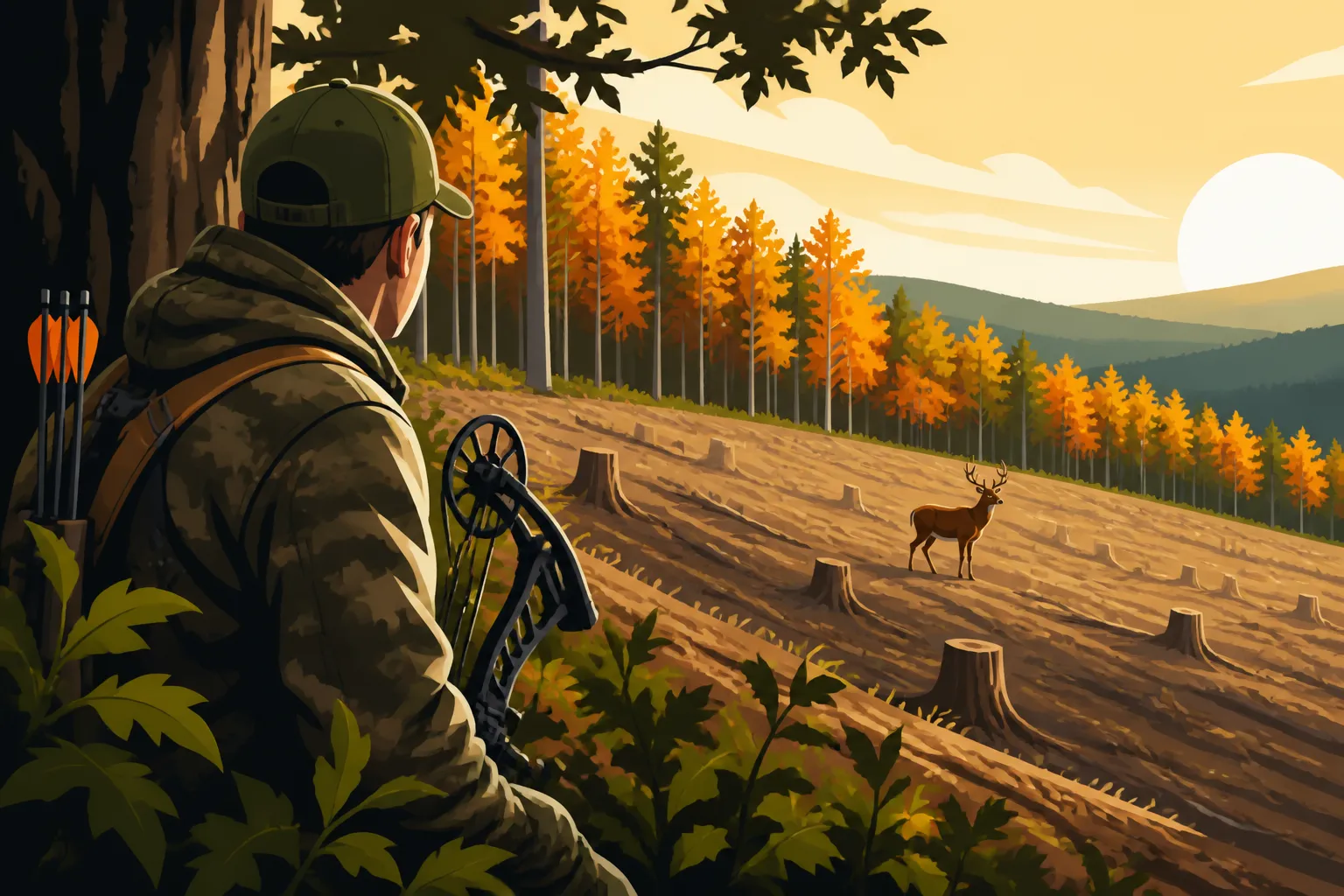
Oh, the clearcut edge. If you've spent any time hunting whitetails in Pennsylvania, you know these spots can be a real head-scratcher. They look like a deer magnet, a dense tangle of new growth offering food and supreme cover, but actually setting up to consistently encounter deer here, let alone get a shot, feels like trying to find a needle in a haystack. This guide is all about cutting through that frustration and helping you master the art of hunting these incredibly productive, yet often challenging, clearcut edges.
Understanding Deer Movement in Pennsylvania Clearcuts
Clearcuts are essentially nature's buffet and impenetrable fortress for deer in Pennsylvania. They're a temporary, dynamic habitat created by timber harvesting, and understanding why deer flock to them is the first step in setting up effectively.
Why Deer Love Clearcuts
Think about it from a deer's perspective: a clearcut, especially one that's a few years old and growing thick, is paradise. After the mature timber is removed, sunlight floods the forest floor, causing an explosion of new growth. This regrowth includes a smorgasbord of browse—tender young saplings, briars, ferns, and various forbs that deer absolutely devour. It’s like a fresh grocery store opening up in their backyard.
Beyond the food, clearcuts offer unparalleled security. The sheer density of the vegetation – thorny briars, crisscrossing downed logs, and thickets of regenerating hardwoods – makes it incredibly difficult for predators (including us hunters) to move through silently or spot deer. This dense cover provides thermal protection from harsh winter winds and scorching summer sun, making it an ideal bedding area virtually year-round. Bucks, especially older, wiser ones, know they can disappear into these tangles and be virtually invisible, only emerging when they feel completely safe, often under the cloak of darkness.
The Edge as a Travel Corridor
While deer absolutely love being inside the clearcut, navigating those thick interiors can be a chore even for them. This is where the "edge" becomes so critical. Deer often prefer to skirt the perimeter of a clearcut, using the transition zone between the impenetrable new growth and the more open, mature timber as their primary travel routes. These edges act as natural funnels and pinch points. Imagine a dense wall of briars on one side and a more open hardwood stand on the other – deer will naturally walk the path of least resistance right along that boundary.
They’ll use these edges to enter and exit the clearcut, especially when moving between bedding within the thicket and feeding areas outside or deeper within the clearcut. They'll also follow these edges to travel between different sections of a larger woodlot or to access water sources. Learning to identify these subtle travel corridors along the edge is paramount. Sometimes it's a well-worn trail, other times it's just a slightly more open lane where deer can move with less effort.
Reading Clearcut Sign
You can’t just blindly hang a stand on any old clearcut edge and expect success. You need to become a detective. Start by walking the entire perimeter of the clearcut, paying close attention to fresh deer sign. Look for heavily used trails entering and exiting the thicket. These are your highways. Don't be fooled by older, less-used trails; focus on what's fresh and active. You’ll want to key in on rubs and scrapes, especially during the pre-rut and rut, as bucks will often mark their territory right along these edges, checking for does moving in and out of the cover.
Pay attention to where deer are actually browsing. Are they nipping off saplings at the very edge, or are they pushing deeper into the clearcut? This tells you about their feeding patterns. Also, try to identify potential bedding areas just inside the thickest cover. While you don't want to bust a bed, knowing where they likely lay up can help you predict their movements. This kind of detailed scouting, especially in the off-season, is crucial for Scouting Pennsylvania Public Land Before Season and getting a leg up on opening day. Fresh sign tells you where deer are now, not just where they were last month.
Strategic Stand Placement on the Clearcut Edge
Once you’ve done your homework and identified promising areas along the clearcut, the next challenge is choosing the right spot for your stand. This is where strategy, wind, and approach become paramount.
Scouting for the Perfect Setup
Pre-season scouting is your secret weapon, especially for clearcuts. You want to be out there in late summer or early fall, before the leaves drop too much, but when the deer are still in their summer patterns. Use good mapping tools – this is where a service like GoHunt really shines. You can zoom in on aerial photos, identify clearcut boundaries, logging roads, and even subtle terrain features that might funnel deer. Look for points, saddles, or small draws that connect the clearcut to other parts of the timber. These are natural congregation and travel points.
As you walk the clearcut edge, mark potential stand trees on your GPS. When doing this, always think about the wind. Where will your scent blow? Deer are masters of using Wind and Thermals on a Ridge, and a clearcut edge, especially if it's on a slope, can have tricky thermals that rise in the morning and fall in the evening. You need an approach route that keeps your scent out of the clearcut and away from anticipated deer travel lanes. Also, consider the sun's position. You don't want to be staring directly into the rising or setting sun, silhouetted against the sky, or have the sun reflecting off your optics. It might seem like a minor detail, but a perfectly placed stand minimizes every potential mistake. If you're looking for more guidance on what makes these thickets so great for deer, take a look at Hunting Pennsylvania Clearcuts and Regrowth.
Treestand Versus Ground Blind Tactics
The choice between a treestand and a ground blind on a clearcut edge depends heavily on the specific situation and your personal hunting style.
Treestands offer a significant advantage in terms of visibility and scent control, assuming you're elevated enough. From a treestand, you can often see over some of the initial clearcut growth, gaining a better perspective on deer moving along the edge or just inside. This higher vantage point also helps your scent dissipate above the deer's nose, especially if you're 20+ feet up. When choosing a treestand location, look for mature trees that provide good cover against the skyline and allow for clear shooting lanes into likely travel corridors and potential openings within the clearcut. You might need to do some trimming of small branches to create those lanes, but always check Game Commission regulations regarding cutting vegetation on public land.
Ground blinds, on the other hand, provide excellent concealment and are often easier to set up quickly without drawing attention. They're particularly effective if the clearcut edge is flanked by dense saplings or thick brush that offers natural concealment for the blind itself. The key to successful ground blind hunting is meticulous brushing in. You want that blind to disappear into the environment. While scent control can be more challenging at ground level, the ability to make small movements, adjust your shot, and stay out of the wind and rain can be a huge benefit. A well-placed ground blind can be incredibly effective, especially in areas with limited suitable treestand trees or if you need to be mobile. For more detailed tips, check out Using a Ground Blind on Pennsylvania Game Lands.
| Feature | Treestand | Ground Blind |
|---|---|---|
| Visibility | Excellent, over obstacles | Limited, at ground level, requires brushing |
| Scent Control | Easier from height, scent disperses | More challenging, meticulous scent management needed |
| Concealment | Good if tree offers cover, against skyline | Excellent if properly brushed in |
| Mobility | Can be portable (climber/saddle), but setup takes time | Highly portable, quick setup |
| Comfort | Exposed to elements, can be cold/wet | Protected from elements, more comfortable |
| Safety | Requires harness, risk of falls | Generally safer, less fall risk |
| Shot Angle | Downward, often steep, requires practice | Level, common hunting shot |
Access and Exit Routes
This might be the single most overlooked and crucial aspect of hunting clearcut edges. You can have the perfect stand in the perfect spot, but if your entry and exit routes blow deer out, you might as well stay home. Deer learn incredibly quickly, and if they associate your presence with a particular trail, they will avoid it.
Your approach should be from downwind, always. Even a slight breeze can carry your scent into the clearcut, alerting deer well before you reach your stand. Plan your route using terrain features like creek bottoms, ravines, or ridges that allow you to stay out of sight and mask your sound. Using Entry Routes on Steep Ground can be a game-changer when tackling rugged Pennsylvania terrain. If possible, walk through areas of less deer activity to minimize disturbance. Once you’re in your stand, stay put. The same rules apply for your exit. Wait until dark, if possible, or until you are absolutely sure no deer are in the immediate vicinity before climbing down. A noisy or scent-laden exit can ruin your hunt for days. This often means adding extra minutes to your walk, but it’s worth it for undisturbed deer.
Timing Your Hunt and Adaptable Strategies
Knowing where to set up is only half the battle; knowing when to be there, and what to do once you are, is equally important for success on Pennsylvania's clearcut edges.
When to Hunt the Clearcut Edge
Clearcut edges can be productive throughout the season, but certain times offer higher odds.
- Morning Hunts: These are excellent for catching deer moving out of their clearcut bedding areas to feed in more open timber or agricultural fields. Setting up just before legal shooting light allows you to be in position as deer make their first movements of the day. They might stage along the edge, browsing lightly before committing to a larger feeding area.
- Evening Hunts: This is arguably the most consistent time to hunt clearcut edges. Deer, particularly mature bucks, will often stage along the edge of the clearcut as dusk approaches, waiting for dark to move into more open feeding areas. Does and fawns might move earlier, browsing in the clearcut. You’ll be catching them as they transition from security cover to feeding.
- Mid-day Bedding Observation: While not a traditional "hunt" time, mid-day can be great for observing clearcut activity. If you have a good vantage point from afar, you might spot deer bedding just inside the thicket or making small movements within the clearcut. This intel can be invaluable for your next hunt.
- The Rut: During the rut, clearcut edges become superhighways for cruising bucks. Does often seek refuge in the dense cover of clearcuts when being pursued, and bucks will relentlessly patrol the perimeters, checking every entry and exit point for hot does. This is a fantastic time to use calls and scents along these edges. If you're targeting bucks during the breeding season, understanding Hunting the Pennsylvania Rut in November is key, and clearcut edges play a massive role. The early archery season can also be fantastic, especially if you're trying to pattern deer moving from food to bed, as covered in Bowhunting Pennsylvania's October Archery Season.
Calling and Decoying on the Edge
Using calls and decoys on a clearcut edge can be incredibly effective, but it requires finesse.
- Calling: Grunt calls are often your best friend here. A buck cruising the edge might not immediately come into view, but a well-timed grunt can often pull him off his established trail. Rattling can also work, especially during the peak rut, but remember that the thick cover of a clearcut can dampen sound. You might need to use a bit more volume than you would in open timber. The goal is to make it sound like a small sparring match just inside the clearcut, piquing a buck's curiosity enough to investigate. For more insights on this, refer to Rattling and Grunting in Pennsylvania. Always be ready for a shot immediately after calling, as deer can appear silently and quickly.
- Decoying: Decoys can be tricky but rewarding. If you're setting up a ground blind, a doe decoy placed slightly out from the clearcut edge, facing the clearcut, can draw the attention of cruising bucks. They might see the decoy and assume a doe has just emerged from the thicket. For bowhunters, this can provide those precious extra seconds or a better angle. Make sure your decoy placement considers your wind, as you don't want a buck circling downwind of the decoy and catching your scent. A small, lightweight doe decoy or a "fawn in distress" decoy can also be effective.
Adapting to Pressure and Changing Conditions
Pennsylvania's public lands, including clearcuts, see a lot of hunting pressure. Deer quickly learn to avoid highly trafficked areas. If you find your clearcut edge isn't producing, it might be due to pressure. Deer might still be using the clearcut, but they're staying deeper inside the thicket during daylight hours. This is when you need to be adaptable. Consider moving deeper into the clearcut yourself, finding a small, relatively open pocket within the dense growth, or identifying secondary trails further from the main edge. Understanding Hunting Pressure on Pennsylvania Game Lands will help you anticipate how deer will react.
Weather also plays a huge role. Fresh snow makes tracking and identifying trails much easier, but it also means deer might move less or seek more thermal cover within the thicket. Heavy rain might keep deer bedded, but lighter drizzle can encourage movement. High winds can be challenging for both hunting and deer movement, as deer often seek sheltered areas. Always be ready to adjust your strategy based on current conditions.
Practical Considerations and Gear for Clearcut Edges
Hunting clearcut edges demands specific gear and a mindset geared for navigating challenging terrain and cover. Being prepared makes all the difference between a miserable, unproductive hunt and a successful one.
Essential Gear for Thicket Hunting
You’re going into the briars, the thick stuff, the places where comfort and durability are paramount.
- Durable Clothing: Forget your lightweight, breathable hunting pants for open country. For clearcuts, you need briar-proof or at least highly durable pants and a jacket. Companies like Filson, Orvis, and even some workwear brands offer options specifically designed to withstand thorns and heavy brush. Tears and snags are inevitable, but quality gear will minimize them. Layers are also critical, as you'll be exerting yourself moving through thick cover, then sitting still.
- Good Boots: This isn't just about comfort; it's about protection and traction. You'll be walking over uneven ground, downed logs, and potentially through muddy or wet areas. Invest in a sturdy pair of waterproof boots with good ankle support. Rubber boots are excellent for keeping scent down, but a well-broken-in pair of leather or synthetic boots with a strong sole can be equally effective. More tips can be found in Boots and Packs for Steep Country.
- Pruners/Small Saw: While you must always respect regulations regarding cutting vegetation on public land, a small hand saw or a pair of quality pruners can be invaluable for clearing a few small shooting lanes from your stand or blind, especially on private land or if permitted. Don't go overboard, just enough to ensure a clear shot.
- Water and Snacks: Moving through dense cover is physically demanding. Staying hydrated and fueled is essential for maintaining focus and energy throughout your hunt.
Scouting Tools and Technology
Modern technology has revolutionized hunting, and clearcuts are no exception.
- Mapping Apps: As mentioned earlier, apps like GoHunt are indispensable. They provide detailed aerial imagery, topographical maps, and public/private land boundaries. You can identify clearcuts, old logging roads, terrain features, and mark stand locations or promising sign. The ability to use these offline is crucial, as cell service is often spotty in remote clearcut areas. Reading Aerial Photos for Big Woods Deer can give you an advanced edge in interpreting these maps.
- Wind Indicators: A small bottle of unscented powder or a feather tied to a string is invaluable for checking micro-thermals and wind direction right at your stand. This can be different from the general wind direction reported by weather apps.
- Trail Cameras: Strategically placed trail cameras on established deer trails along the clearcut edge can provide invaluable intelligence. They'll tell you when deer are moving, which deer are moving (bucks vs. does), and how they’re using the edge. This data allows you to fine-tune your hunt timing and strategy. For insights on optimal placement, see Where to Hang a Camera on a Ridge.
Safety First in Thick Cover
Hunting clearcuts, especially in Pennsylvania, comes with unique safety considerations.
- Hunter Orange: Always adhere to Pennsylvania's hunter orange requirements for the season you're hunting. During the firearms seasons, this usually means wearing at least 250 square inches of fluorescent orange on your head, chest, and back. Even during archery season, many hunters opt for an orange hat while walking in and out. This is critical for visibility and preventing accidents in thick cover where visibility is limited.
- Awareness of Other Hunters: Clearcuts are popular. Assume there are other hunters in the area, especially on public land. Be aware of where shots might come from and always identify your target and what is beyond it.
- Navigation: It's incredibly easy to get disoriented in the dense, monotonous growth of a clearcut. Always carry a reliable GPS unit or a fully charged phone with a mapping app (like GoHunt) and an external power bank. Mark your truck, your stand, and any key features. A compass and paper map are also excellent backups.
- First Aid Kit: A basic first aid kit with essentials for cuts, scrapes, and minor injuries is a must. Twisted ankles are also a common risk on uneven clearcut terrain.
- Communication: Let someone know where you're going and when you expect to be back. Consider a two-way radio or satellite communicator if you're in an area with no cell service.
Clearcut Edge Stand Selection Considerations
| Factor | Considerations for Treestand | Considerations for Ground Blind |
|---|---|---|
| Tree Suitability | Needs sturdy tree with good cover for concealment | Not dependent on specific trees, relies on existing brush |
| Shooting Lanes | Must identify or trim for downward angles, wider clearings | Can trim small lanes at eye level, relies on natural openings |
| Wind & Scent | Elevated position helps, but approach still critical | Requires very strict scent control, careful wind planning |
| Approach/Exit | Needs hidden path to stand base without disturbing deer | Easier to sneak in/out with natural cover to blind |
| Cover | Tree itself provides vertical break-up | Relies entirely on natural brush for concealment |
| Durability/Stealth | Requires quiet climbing, solid stand to minimize creaks | Requires heavy brushing-in, quiet movements inside blind |
| Terrain | Can be set on steep slopes or flat areas if suitable tree exists | Flexible, can be set anywhere with sufficient ground cover |
Hunting clearcut edges is a dynamic challenge, but it's also incredibly rewarding when you finally connect with a mature Pennsylvania whitetail using that dense cover. With good scouting, strategic planning, and the right gear, you'll be well on your way to success.
Disclaimer
Hunting involves inherent risks, including injury and death. Always prioritize safety by following all local, state, and federal hunting regulations. Ensure you have proper licenses and have completed hunter education. This guide provides general information and recommendations; specific conditions and regulations may vary. Always verify current rules with the Pennsylvania Game Commission.