Scrape Lines Along a Logging Road
It’s a common scenario in Pennsylvania: you’ve put in the legwork, trekked deep into the woods, and finally stumbled upon what looks like promising deer sign. But amidst all the rubs and tracks, how do you pinpoint the real hotspots, the places where a mature buck is actually putting in the work? One often-underestimated goldmine for finding consistent buck activity and communication hubs is along logging roads. These pathways can concentrate deer movement and, with the right approach, turn into some of your most productive hunting spots. This guide will walk you through understanding, finding, and effectively hunting scrape lines found along these crucial woodland arteries.
Why Logging Roads Are Buck Magnets for Scrapes
Think about it from a deer’s perspective. What makes a logging road so appealing? It’s not just about an easy walk; these pathways create a confluence of factors that actively encourage bucks to lay down serious sign. Many hunters overlook the subtle advantages these corridors offer, assuming deer prefer untouched wilderness, but nothing could be further from the truth when it comes to marking territory.
Natural Travel Corridors
Logging roads, whether they're well-maintained or slowly returning to nature, inherently carve out the path of least resistance through dense timber or thick undergrowth. Imagine trying to push through a clearcut choked with briars and young saplings versus sauntering down a relatively open logging road. Deer, especially mature bucks, are incredibly efficient creatures. They’re not going to expend unnecessary energy if there’s a smoother, quieter route available. They use these old roads like we use highways—to get from point A to point B with minimal fuss. This consistent travel means a higher likelihood of deer encountering existing scrapes or choosing to make new ones. Using advanced mapping tools like GoHunt, you can often identify these old logging paths before you even set foot in the woods, giving you a serious head start in your scouting efforts.
The Powerful Edge Effect
Any seasoned hunter knows the value of an "edge." This is where two distinct habitat types meet, creating a diverse environment that offers both cover and food. A logging road is a perfect example of this. On one side, you might have mature, dense forest offering security; on the other, the more open roadbed provides a slightly different vegetation profile, often with browse opportunities along its shoulders. Bucks love to cruise these edges. They can stay close to the safety of heavy cover while still surveying the more open area, and these edges are prime locations for establishing scrape lines. The change in vegetation, light, and humidity creates a dynamic zone that deer naturally gravitate towards, making it an ideal place to leave their scent signature.
Visibility and Scent Dissemination
A scrape isn't just a patch of pawed earth; it's an advertisement, a communication hub for deer. For that advertisement to be effective, it needs to be seen and smelled. A scrape placed prominently on a logging road is far more visible to passing deer than one buried deep in thick brush. The open canopy above a logging road also allows the potent scent from a licking branch and the scraped earth to waft further on the breeze. This enhanced scent dispersal makes these locations incredibly attractive for bucks looking to broadcast their presence and status. It's like putting up a billboard on a busy highway rather than a back alley. The message travels further, reaching more potential mates or rival bucks.
Ease of Maintenance for Bucks
Lastly, consider the sheer practicality for a buck. Creating and maintaining a scrape requires effort. Digging through tangled roots and thick leaf litter in dense woods is much harder than pawing at the softer, often looser soil found along a logging roadbed. Overhanging branches, perfect for licking branches, are frequently accessible and at just the right height along these open corridors. This ease of creation and upkeep means bucks are more likely to establish and routinely visit scrape lines in these areas. It’s a low-effort, high-reward communication strategy for them.
Deciphering Active Scrape Lines on Logging Roads
So, you’ve found a logging road. Now what? Not every patch of disturbed earth is an active scrape, and not every scrape is worth hunting. The real skill comes in discerning which scrapes are current, frequently visited, and part of a larger communication network. This attention to detail can save you countless hours and put you in front of a cruising buck.
Distinguishing Active Versus Old Scrapes
The first, and most crucial, step is telling the difference between a scrape that was made last week and one from last season. You're not looking for just any scrape; you're looking for fresh activity. Old scrapes might be covered in leaves, or the dirt might be hard and crusty. An active scrape, however, will show signs of recent disturbance. The earth will be freshly pawed, exposing damp, darker soil. Sometimes, if it's very fresh, you might even see where a buck has urinated into the scrape, leaving a dark, moist spot.
- The Licking Branch Connection: This is the absolute dead giveaway for an active scrape. Above almost every buck scrape, you'll find an overhanging branch, typically 3-5 feet off the ground. This is the "licking branch." Bucks rub their pre-orbital glands, forehead, and even chew on this branch, depositing their scent. Look for branches that are frayed, broken, chewed, or discolored from repeated use. If the branch looks healthy and untouched, the scrape below is likely old. If it's freshly abraded or wet, you're in business. The scent left here is a potent calling card to other deer.
- Freshness Indicators Beyond the Dirt: Beyond the disturbed earth, look for other subtle clues. Are there fresh tracks leading to and from the scrape? Are there any fresh rubs nearby, indicating a buck has been working over trees as well? Is there a distinct musky odor, especially during the peak rut? All these indicators, taken together, paint a picture of how recently and intensely a buck has been using this particular spot.
Multiple Scrapes and Rubs: The Scrape Line
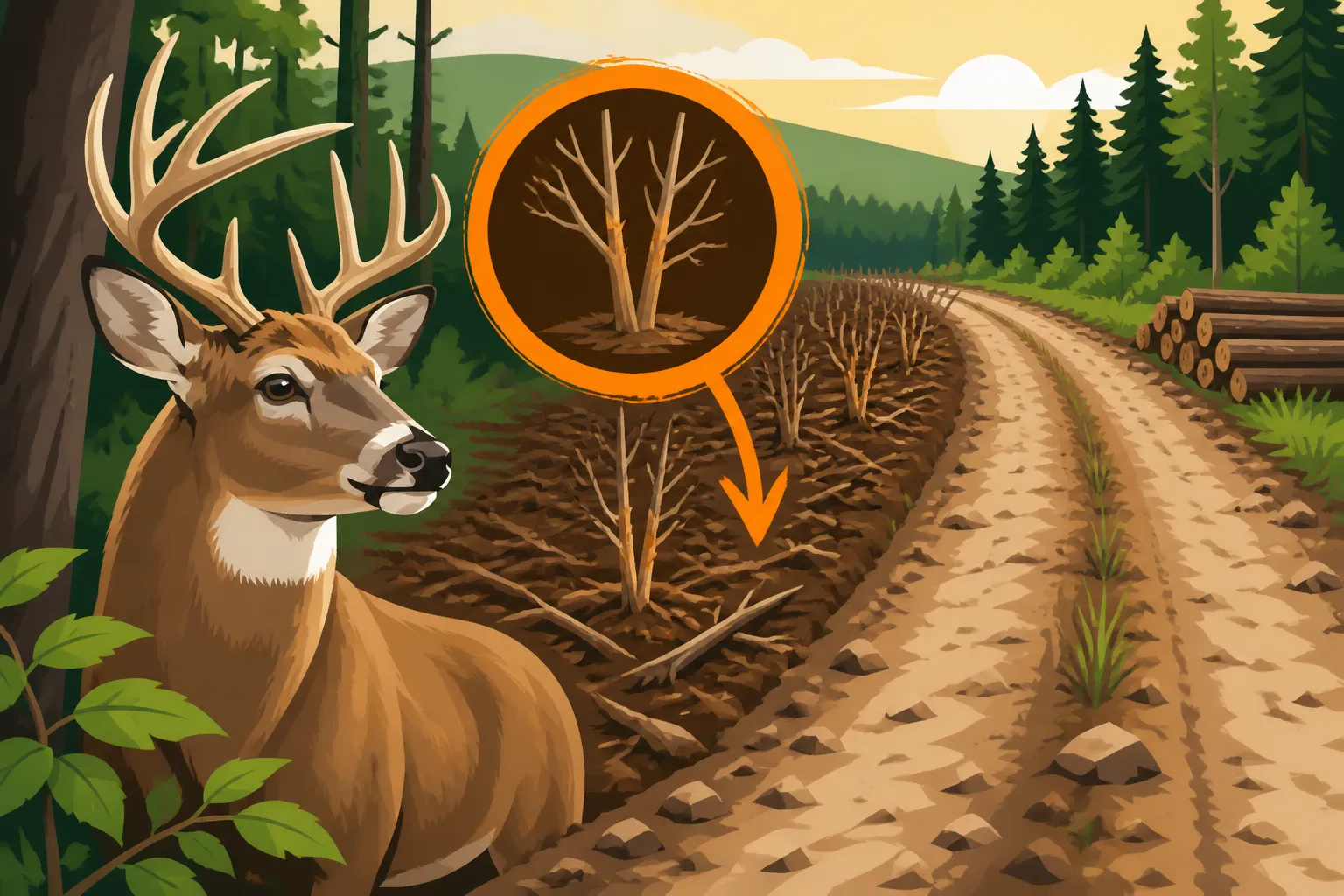
While a single, isolated scrape can be interesting, what you’re truly hoping to find is a scrape line. This is a series of scrapes, often stretching for dozens or even hundreds of yards along the edge of a logging road. These lines signify a consistent travel pattern and a major communication hub for one or more bucks. These aren't random acts; they're deliberate statements of territory and presence.
- Pattern Recognition: Pay attention to how these scrapes are spaced. Are they regularly occurring every 20-50 yards? Are they all connected by well-worn deer trails along the road’s edge? This pattern tells you a buck is actively patrolling this route. Often, these scrape lines will also have fresh rubs intermingled, further confirming consistent buck activity.
- Connecting to Other Sign: A detailed scouting trip, perhaps cross-referencing with data you've gathered on GoHunt, will confirm if these roads are being actively used by bucks. Where does this scrape line lead? Does it run from a thick bedding area, through a slightly more open timber patch, and towards a known food source like an oak ridge or a planted field? Mapping tools and physical scouting (see Scouting Pennsylvania Public Land Before Season) are invaluable here. Understanding the broader context of the scrape line will help you predict when and from where a buck might approach. For instance, if the scrape line is near a steep hollow, consider how Reading a Pennsylvania Hollow for Deer might influence deer movement and your setup.
Strategic Hunting Approaches for Logging Road Scrapes
Finding an active scrape line is only half the battle; successfully hunting it requires careful planning and execution. The last thing you want to do is educate a mature buck about your presence. Every detail, from your timing to your scent control, can make or break your hunt.
Timing is Everything
Scrapes aren't created equal throughout the hunting season. While you might find a few "early season" scrapes, they tend to be sporadic and not as intensely visited. The true magic of scrape lines comes alive during the pre-rut and peak rut phases, typically from late October through the majority of November in Pennsylvania. This is when bucks are most actively seeking does and asserting their dominance. Their hormones are raging, and they are constantly checking and refreshing these communication hubs. If you're hunting during Hunting the Peak Rut Week in Pennsylvania, these scrape lines can be absolute hotbeds of activity. Even during Hunting Pennsylvania's Late Archery Season, a secondary rut can sometimes activate these lines again.
Precision Stand Placement for Success
Your stand placement is paramount. A careless setup can send a buck packing before you even see him. This is where attention to detail really matters.
- Playing the Wind: This cannot be stressed enough. Bucks are masters of using their nose. They will almost always approach a scrape from downwind to scent-check the area for does or rival bucks. You must position your stand or blind so that your scent cone is blowing away from the anticipated approach of the deer and the scrape itself. A crosswind can sometimes work, but a direct downwind approach is your safest bet. Understanding Wind and Thermals on a Ridge is critical, especially when dealing with logging roads that often run along contour lines.
- Concealment and Cover: Blend into your surroundings. If you're using a treestand, select a tree that offers good cover from both the road and common deer travel paths. Thick pines or dense clusters of hardwoods can provide excellent natural camouflage. If using a ground blind, ensure it’s well-brushed in and set back from the scrape enough to not stand out. Consider Using a Ground Blind on Pennsylvania Game Lands if hunting public land. Your objective is to be a silent, invisible observer. Remember that Treestand Setups in Pennsylvania Hardwoods require careful consideration of tree size and surrounding cover.
- Planned Approach and Exit Routes: This is often overlooked but is crucial for long-term success. Every time you walk to and from your stand, you're leaving scent. Plan your routes to use terrain features, existing game trails, or thick cover to minimize your scent footprint near the scrape. Avoid walking directly down the logging road to your stand. Instead, approach from an angle that keeps you out of the deer's primary travel corridor until you're safely in your setup. Think about Entry Routes on Steep Ground if the logging road is in mountainous terrain.
Calling and Decoy Strategies
Sometimes, a little extra encouragement can seal the deal. While calling isn't always necessary, it can be effective when a buck is cruising the area.
- Grunt Calls: A soft, inquisitive grunt call can often pique a buck's curiosity if he's close by and working the scrape line. It mimics another deer, drawing his attention. Don't overdo it; a few subtle grunts are often more effective than a long, loud sequence. Mastering Grunt Calls in Mature Timber means understanding when and how much to use.
- Rattling: During the peak rut, when bucks are actively fighting for breeding rights, light rattling can sometimes bring a buck right into your lap. Again, gauge the situation. If you believe a mature buck is in the vicinity and the timing is right, clashing antlers can simulate a dominance display. Pay attention to Rattling Volume in Thick Cover – you might not need to crash them together wildly in denser woods.
- Doe Decoys: While not a guaranteed solution, a doe decoy positioned strategically 20-30 yards from the scrape, facing the scrape, can sometimes draw a buck's attention. He might approach cautiously, giving you a shot opportunity. Ensure the decoy is visible but not so prominent that it spooks incoming deer.
Avoiding Common Pitfalls When Hunting Scrape Lines
Even with the best intentions and knowledge, hunters often make mistakes that can ruin a prime scrape line. Being aware of these common pitfalls can help you maximize your chances of success and ensure you don’t burn out a hot spot.
Overhunting and Scent Contamination
This is probably the biggest mistake hunters make. It’s tempting to check an active scrape every day, but every visit leaves your scent. Even with the best scent control, human odor lingers. A mature buck, especially one that established the scrape, will quickly recognize human intrusion and avoid the area. You're effectively educating him.
- Remote Monitoring is Key: Utilize trail cameras (make sure you're up to date on Trail Camera Rules on Game Lands if you're on public land) to monitor scrape activity remotely. This allows you to gather intel without contaminating the area. Check your cameras infrequently—once a week or even less—and approach them stealthily.
- Strategic Visits: Only visit a scrape when you intend to hunt it, or when absolutely necessary to retrieve a camera card. Minimize your time in the area. The less human presence, the better.
Ignoring the Wind (Seriously, Don't)
We talked about this in stand placement, but it bears repeating. Hunting with a bad wind is a waste of time and will almost certainly result in an educated buck. No matter how perfect the scrape, how fresh the sign, or how ideal your treestand appears, if the wind is blowing your scent towards where a buck will likely approach, you've already lost. Always, always check the wind before heading out. If it's wrong for your primary scrape location, have a backup plan or hunt a different area.
Hunting a "Cold" Scrape
Another common mistake is spending valuable hunting time over a scrape that has gone cold. If a scrape shows no fresh activity—no new pawing, no fresh scent on the licking branch, and certainly no tracks—it's time to move on. Bucks will abandon scrapes if does aren't frequenting them or if they find better opportunities elsewhere. Continuing to hunt an inactive scrape is futile. Focus your efforts on the freshest, most active sign.
Lack of Patience
Hunting scrapes requires patience. Bucks don't punch a time clock. They might visit a scrape at dawn one day, midday the next, and evening the day after. Especially during the rut, bucks are cruising, covering vast amounts of ground. You need to be prepared to sit for extended periods during prime hunting hours, particularly in the mornings and evenings. Don’t get discouraged if you don’t see immediate action. The buck you’re after could be just around the bend, checking another scrape line on a distant logging road. Staying put and remaining vigilant increases your odds dramatically.
| Indicator | Active Scrape | Old Scrape |
|---|---|---|
| Soil Condition | Freshly pawed, damp, dark, loose dirt | Dry, hardened, often covered with leaves |
| Licking Branch | Chewed, frayed, broken twigs, often wet | Intact, no fresh damage, dry |
| Odor | Distinct musky scent, sometimes faint urine | No discernible odor |
| Leaf Litter | Pushed aside, exposed soil | Covered, leaves settled over disturbed area |
| Sign Proximity | Often near fresh rubs and deer trails | May be isolated or part of old rub line |
Disclaimer
Hunting is a challenging but rewarding pursuit. Always prioritize safety, adhere to all local and state hunting regulations, and respect wildlife and the environment. This guide provides general information and tactics; conditions and deer behavior can vary. Always scout your specific hunting area thoroughly and adjust your strategies accordingly.