Tracking a Deer in Pennsylvania Snow
There’s nothing quite like the sight of fresh snow on opening day, or any hunting day, in Pennsylvania. It paints the landscape in a pristine white, but when you connect with a deer, that same snow can turn into a cruel blank canvas, swallowing up a blood trail faster than you’d believe possible. The stress of losing a shot deer is immense, and the thought of leaving an animal in the woods is every hunter's nightmare. This guide is all about equipping you with the knowledge and techniques to effectively track a deer through Pennsylvania's varied snowy conditions, ensuring you do everything possible to recover your game.
Understanding the Language of Snow
Tracking a deer in the snow isn't just about following a red drip; it's about reading the entire story the deer leaves behind. Every track, every disturbed flake, every subtle sign speaks volumes if you know how to listen.
Interpreting Deer Tracks in Varying Snow Conditions
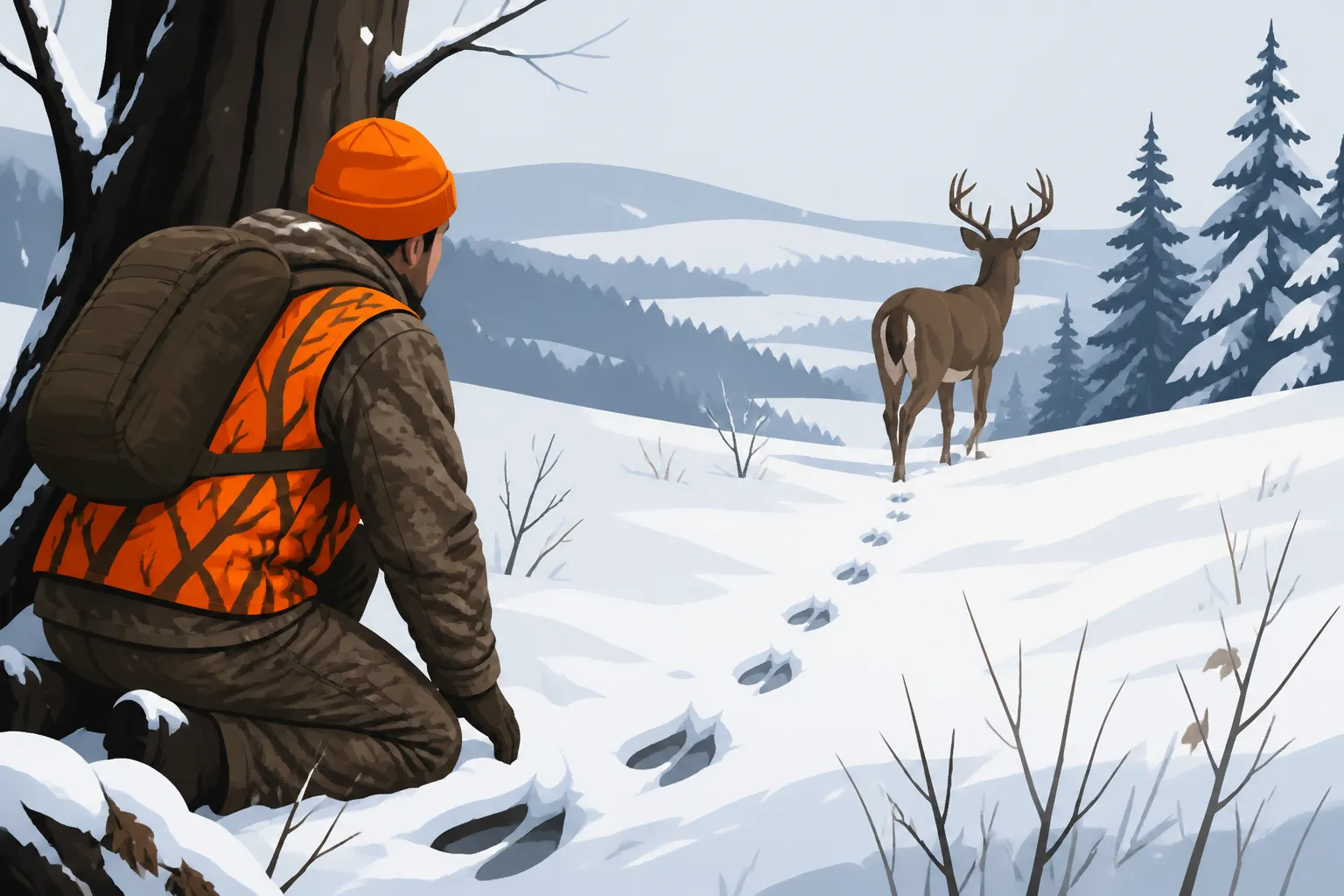
The type of snow you're dealing with profoundly impacts how a track appears and how easy it is to follow. Fresh, light powder, for instance, often shows incredibly clear, detailed tracks. You might see the distinct outline of the hooves, the dewclaws, and even the subtle drag marks from the deer's leg as it lifts. In this kind of snow, a wounded deer's tracks might show a more exaggerated drag from an injured leg or a wider stance.
However, once that snow gets a crust on it, things change. A thin crust can make tracks look "blown out" or indistinct, as the crust shatters around the hoof. A thick, icy crust can be even trickier; the deer might leave only a slight depression where its weight broke through, or its hooves might only score the top layer. In these conditions, you'll need to look beyond the perfect print. You'll be searching for any disturbance – displaced snow, shattered ice, or even just a slight discoloration from where dirt or debris was kicked up. As the snow deepens, you'll also be looking for the depth of the track and the amount of snow pushed aside. A healthy deer often moves with purpose, its tracks relatively even. A wounded deer might stumble, leave deeper depressions, or show a more erratic gait.
Identifying Other Crucial Signs Beyond Blood
While blood is king, a good tracker knows to look for a whole host of other indicators. Think about the terrain: a deer often takes the path of least resistance. If you lose the blood, consider what a wounded animal might do. Would it head for the thickest cover, a steep hillside, or a creek bottom? Often, a deer will try to get to water, or find a place to bed down where it feels secure.
Beyond tracks, look for disturbed vegetation. A deer crashing through a laurel thicket or a stand of saplings will leave broken branches, bent grass, or scraped bark. Sometimes you’ll even find hair – especially if the deer was hit in an area where hair is easily dislodged, like the brisket or flank. Even urine or scat can offer clues. A deer in distress might urinate more frequently or pass looser droppings. Keep an eye out for any sign of a bed – a depression in the snow, often with disturbed snow around it from the deer getting up quickly. Even something as small as a dislodged stone or a patch of exposed earth can be a sign of a deer moving through an otherwise pristine landscape. Tools like the GoHunt app, with its topographic maps, can really help you anticipate these natural travel corridors and escape routes.
Mastering Blood Trailing Techniques in Snowy Conditions
Snow can be your best friend or your worst enemy when it comes to blood trailing. Learning to work with it, not against it, is key to a successful recovery.
Systematic Grid Searches and How to Apply Them
When the blood trail becomes sparse or disappears entirely, panic can set in, but that's when a systematic approach is most crucial. Instead of aimlessly wandering, implement a grid search. Start at the last confirmed blood sign. Mark it clearly with flagging tape, toilet paper, or even a stick. Then, expand your search in concentric circles or a grid pattern.
One effective method is the "spoke and wheel" technique: have one person stay at the last blood, and others fan out in straight lines (spokes) for 20-30 yards, then circle back towards the center. Another is a simple grid: have two or more people walk parallel to each other, 5-10 yards apart, slowly sweeping an area. Once an area is thoroughly covered, move your "base" to the next point where you expect the deer to have gone. This methodical approach ensures you don't miss anything. If you're Still-Hunting After a Fresh Snow, these grid search techniques are invaluable for both finding fresh sign and recovering a shot deer. Remember, deer rarely travel in perfectly straight lines, especially wounded ones. They'll often quarter away, follow contour lines, or circle back.
Differentiating Fresh Blood from Old Sign
This is where keen observation comes in. Fresh blood in snow will often be bright red and wet, sometimes still glistening. It can look like a small puddle or a fine spray, depending on the wound. As it sits, especially in colder temperatures, blood starts to darken and can become a deep maroon or even blackish. It will also dry, losing its wet sheen. If the snow is melting, the blood might appear diluted or spread out, which can be deceptive.
Pay attention to the edges of the blood. Fresh blood will have sharp, clear edges. Older blood might have frozen or started to melt into the snow, creating a softer, less defined perimeter. Also, consider how the blood sits on the snow. Fresh arterial blood might bubble or appear foamy if it's from a lung shot, which is a key indicator. Look at the volume, too. A steady drip every few yards is a good sign. A single, small speck might be old, or simply a splash from a healthy deer that brushed past something. If you're working with multiple hunters, assigning one person to focus solely on the blood can be very effective.
Leveraging Light Conditions for Better Visibility
Light plays a huge role in how visible a blood trail is. Overcast days, surprisingly, can often be the best for tracking because they provide soft, diffused light that minimizes harsh shadows. Direct sunlight, especially bright, glaring sun on fresh snow, can actually make blood harder to see, as the reflection can wash out subtle reds.
The golden hours of dawn and dusk, when the sun is low on the horizon, can be tricky due to long shadows. However, sometimes the low angle of light can make tracks and depressions stand out more. When the light is poor, such as during twilight or Blood Trailing After Dark in Pennsylvania, a good headlamp or powerful flashlight is indispensable. Shine your light at a low angle across the snow; this will create shadows that highlight disturbances and blood spatters that might be invisible when looking straight down. Different filters on headlamps (red, green) can sometimes help, but often a bright, clear white light angled just right is most effective.
Navigating Challenging Scenarios
Not every deer drops within sight, and not every blood trail is a highway. Pennsylvania's rugged terrain and unpredictable weather can make tracking a true test of grit and patience.
When the Snow Changes or Stops Entirely
This is a tracker's nightmare: you're following a beautiful trail, and suddenly the snow thins out, melts away, or you hit a patch of bare ground. Or worse, more snow starts to fall, covering your existing trail. In these situations, resist the urge to rush. Go back to the last good sign and assess.
If the snow simply stops, assume the deer will still follow logical escape routes. Think like the deer. Which way would it go to find dense cover, a steep ravine, or an area with less human activity? Utilize your maps, whether paper or an app like GoHunt, to identify potential travel corridors. Look for subtle signs on bare ground: disturbed leaves, bent grass, or even faint hoof prints in soft earth. If fresh snow starts falling, you need to work quickly, but also methodically. The fresh snow will obscure the trail, but it might also highlight new tracks if the deer moves again. In deep snow, a deer might tunnel through thickets, which can create a tunnel-like impression that’s easier to spot than a faint track.
Dealing with Multiple Deer Tracks and Confusing Intersections
It’s inevitable: you’re on a good trail, and then two, three, or even a whole herd of deer tracks cross or merge with yours. This is where attention to detail really matters. Look for subtle differences in hoof size, gait, and pressure. A wounded deer will often have a unique gait or an uneven stride. If you saw the deer before the shot, remember its size, sex, and any distinguishing features.
Look for the tell-tale sign of blood, even if it's just a tiny speck. If you have multiple trackers, have each person focus on a different set of tracks while staying in communication. Mark your deer's tracks with flagging tape if they momentarily diverge from others, or if you suspect it's about to. When the tracks become hopelessly muddled, go back to the last clear sign of your deer. Then, fan out and try to pick up your deer's unique signature, whether it's a specific size, a drag, or the presence of blood, further down the line. Patience here is absolutely paramount. Knowing Reading a Pennsylvania Hollow for Deer can give you an edge, as deer often use these as travel corridors, and knowing how they move can help you anticipate where your deer might rejoin a clear path.
Recovering a Deer on Steep or Difficult Terrain
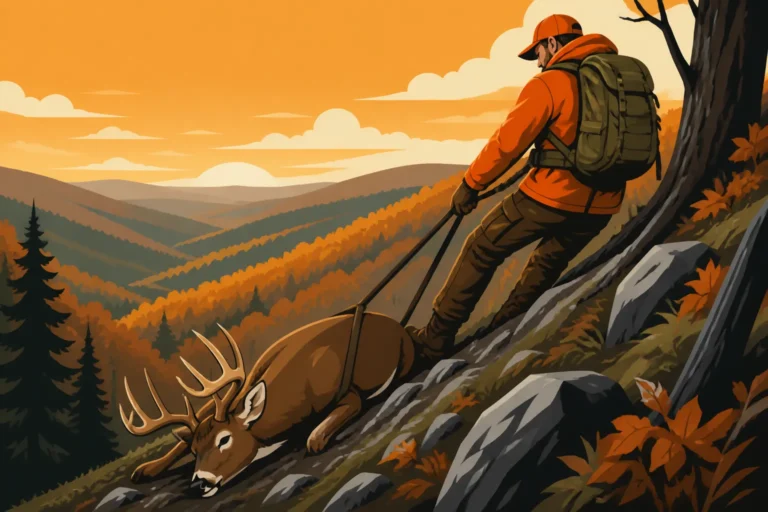
Pennsylvania is renowned for its rugged hills and steep mountain hollows. A deer, especially when wounded, will often gravitate towards the steepest, thickest, nastiest cover it can find. This makes recovery incredibly challenging, both for tracking and for getting the animal out. If you're tracking on steep ground, remember that Recovering a Deer on Steep Ground comes with its own set of risks. Be mindful of your footing, and consider safety first.
On steep slopes, tracks can be distorted as the deer slips or slides. Look for displaced snow, disturbed rocks, or scraped bark on trees. Blood might be diluted by melting snow or smeared if the deer slides. If the deer is hit in the vitals, it might make a final desperate climb before succumbing. Conversely, a deer with a broken leg might try to pick its way down a less steep path. If you lose the trail, again, think about what a wounded deer would logically do in that terrain. Would it try to cross a creek bottom, or climb to a bench top? Once recovered, getting a deer out of a Pennsylvania hollow is a monumental task, often requiring multiple people and specialized gear like a deer cart or sled, if the terrain permits.
Essential Gear and Safety for Snowy Tracking
You wouldn't head into the woods without your rifle or bow, and tracking in the snow requires its own specialized kit to be both effective and safe.
Must-Have Items for a Successful Snow Track
Beyond your hunting weapon, a dedicated tracking kit is crucial. First and foremost, a good quality headlamp or powerful flashlight is non-negotiable, even if you start tracking in daylight. As mentioned, low-angle light helps immensely, and you might find yourself out longer than expected. Carry extra batteries!
Next, flagging tape (biodegradable is preferred) or bright toilet paper is essential for marking blood drops and the last known sign. A compass or a GPS-enabled phone with a mapping app like GoHunt are critical. Knowing your position and marking the last blood will prevent you from getting disoriented or losing your way. Consider having a fully charged power bank for your phone. A small pair of binoculars can help you scan ahead for a downed deer or subtle disturbances in the snow without having to walk over every inch. Warm gloves, a hat, and waterproof outerwear are crucial to stay comfortable and focused in the cold, wet conditions. A pack with some water and a high-energy snack will also keep you going. For processing, having a sharp knife and even some game bags can be helpful, especially if you anticipate a long drag or field dressing.
| Item | Purpose | Notes |
|---|---|---|
| Headlamp/Flashlight | Illuminating blood trail, especially in low light/dark | High lumens, fresh batteries, low-angle beam is key |
| Flagging Tape/TP | Marking last blood, direction of travel, downed deer | Bright colors for visibility, biodegradable if possible |
| GPS/Mapping App | Navigating, marking locations, checking property lines (GoHunt) | Essential for staying oriented and avoiding trespass |
| Extra Batteries | Power for headlamp, GPS, phone | Cold weather drains batteries faster |
| Binoculars | Scanning ahead for deer, subtle signs, terrain features | Save steps, identify potential obstacles |
| Warm, Waterproof Gear | Staying dry and comfortable during prolonged outdoor exposure | Layers are best; focus on outer shell and insulated boots |
| Water & Snacks | Maintaining energy and hydration | Tracking is physically demanding |
| Knife & Game Bags | Field dressing and meat care | Prepare for immediate processing once the deer is located |
| Two-Way Radios | Communication with tracking partners | Especially useful on larger properties or in thick cover |
Team Tracking: Benefits and Best Practices
Tracking a deer, especially in challenging snow, is almost always more successful with a team. More eyes mean a higher chance of finding that next sign, and the physical effort of Dragging a Deer Off a Pennsylvania Mountain is significantly eased with extra hands.
When tracking as a team, designate a lead tracker. This person focuses intently on the ground, calling out every sign of blood or track. Others can act as "flankers," walking parallel to the lead tracker, 5-10 yards out, scanning for sign further ahead or to the sides. This helps cover more ground and anticipate the deer's likely path. Communication is vital. Use clear, concise calls: "Blood here!", "Track goes this way!", "Lost trail." If you have two-way radios, they can be invaluable, especially if you get separated or need to coordinate a wider search. Don't be afraid to take breaks. Tracking is mentally and physically draining. Rehydrate, refuel, and discuss strategy. Sometimes, stepping away for a few minutes can give your eyes a fresh perspective. Having a dedicated person for Scouting With the Pennsylvania Mapping Center to predict travel routes while another focuses on the ground sign can make a formidable team.
Respecting Property Boundaries and Public Land Rules
Pennsylvania offers incredible hunting opportunities, but it also means navigating a mix of private and public lands. When tracking a wounded deer, respecting property boundaries is paramount. You might have seen the deer run onto posted land, and it can be excruciating to stop the pursuit.
However, you must obtain permission from the landowner before crossing private property to retrieve an animal, even if you believe it's mortally wounded. Trespassing, even for recovery, can lead to fines and loss of hunting privileges. Use your GoHunt or onX mapping app to identify property lines clearly. If you encounter a boundary, make every effort to contact the landowner. Carry their contact information if you know it, or be prepared to use public records to find them. If you're on public land, be aware of specific rules regarding vehicle access, off-trail use, and even the use of game carts or ATVs for recovery. Some State Game Lands allow deer carts, but many steep, remote areas do not. Always check the regulations for the specific area you're hunting. Ethical hunting means doing everything in your power to recover an animal, but never at the expense of breaking the law or disrespecting landowners.
The Mental Game of Tracking
Tracking a deer, especially a tough one, is as much a mental challenge as it is a physical one. It tests your patience, your resolve, and your ability to remain calm under pressure.
Patience and Persistence: Your Best Allies
It’s incredibly frustrating when the blood trail dwindles to nothing, or when you find yourself walking in circles. This is when many hunters give up, but often, the difference between a lost deer and a recovered one is sheer persistence. Tell yourself it's a marathon, not a sprint. Take your time. Move slowly. Re-examine every possible sign.
If you hit a wall, step back and re-evaluate the situation. What have you missed? What logical path might the deer have taken? Sometimes, leaving the trail for an hour or two (if conditions allow, and you're confident the deer won't travel far or spoil) can give the deer time to expire, and it gives your eyes a rest. Returning with a clear head can often lead to finding that next crucial sign. Don't let frustration cloud your judgment. Remember why you're out there – to make an ethical recovery. This unwavering commitment is what sets truly dedicated hunters apart. When Hunting Deer in Deep Pennsylvania Snow, persistence is doubly important as every step is harder.
Knowing When to Call for Help or Return Later
Sometimes, despite your best efforts, you simply can't find the deer immediately. It's not a failure to ask for help or to make the tough decision to return later. If the trail is completely gone, or you're running out of daylight, and the temperatures are cold enough to preserve the meat, sometimes the best strategy is to back out. A deer will often bed down after being wounded, and if it's not pressured, it might expire there. Returning with fresh eyes in the morning can often yield results.
If you decide to leave, mark the last blood sign very clearly and take detailed GPS coordinates. Notify your hunting partners or other experienced trackers. Many experienced hunters in Pennsylvania are more than willing to lend a hand, especially with a tough recovery. Organizations like the United Bowhunters of Pennsylvania or local hunting clubs often have members with extensive tracking experience and even trained tracking dogs that can be legally used in certain situations. Knowing when to involve others or when to pause is a sign of a responsible and ethical hunter, not a defeated one.
Disclaimer
Hunting is a challenging and rewarding pursuit. Always prioritize safety, adhere to all Pennsylvania Game Commission regulations, and respect private property. The information provided here is for educational purposes and should be used in conjunction with official guidelines and common sense. Conditions in the field can change rapidly; always be prepared and make responsible decisions.