Woodcock in Pennsylvania Bottoms
There's a special kind of frustration that comes with hunting timberdoodles, those elusive woodcock, especially when you know they should be holding tight in those damp, tangled Pennsylvania bottoms. You walk for miles through dense cover, brush slapping your face, boots sucking in mud, and then suddenly, a blur of brown explodes from underfoot, twisting and darting through the alders before you can even shoulder your gun. This guide is here to unravel the mystery of finding and hunting woodcock in Pennsylvania's bottomland coverts, offering practical advice to help you connect with these fantastic migratory birds.
Understanding Woodcock Habitat in Pennsylvania Bottoms
Woodcock, often called timberdoodles, are fascinating migratory shorebirds that make their homes in damp, often overlooked corners of Pennsylvania. They aren't like pheasants or quail that prefer open fields, nor are they strictly deep-woods birds like grouse, though their habitats can certainly overlap. To find woodcock, you really need to understand what makes a "bottom" appealing to them, and it usually boils down to two key ingredients: moist soil and dense, young cover.
The Ideal Bottomland Features for Woodcock
When we talk about "bottoms" in Pennsylvania for woodcock, we're not just talking about any low-lying ground. We're zeroing in on areas with specific characteristics that cater to their unique diet and protective needs. Woodcock primarily feed on earthworms, which means they need soft, moist, and loamy soil where they can probe with their long bills. This often translates to floodplains, creek bottoms, and swampy edges that retain moisture even during drier spells. Look for areas with rich, dark soil, often found near smaller streams, seepages, or even just poorly drained areas in a larger valley.
Beyond the soil, the cover itself is paramount. Woodcock need dense, regenerating woody growth for protection from predators and as roosting sites. Think about thickets of alder, willow, dogwood, aspen, and young maple or birch saplings that have grown up in old clearings or along watercourses. These spots should be almost impenetrable to walk through, offering a canopy of intertwined branches from about knee-high to twenty feet up. The ideal covert often feels almost claustrophobic, with just enough open ground beneath for them to walk and probe for food. If you're walking through big, mature timber with a clear understory, you're likely in the wrong spot. Instead, focus your efforts where you might also find success when Hunting Pennsylvania Clearcuts and Regrowth, as the early successional habitat is key.
Migration Patterns and Timing Through Pennsylvania
Woodcock are migratory birds, which means their presence in Pennsylvania is seasonal, tied directly to their annual journey between southern wintering grounds and northern breeding areas. Understanding their migration timing is absolutely critical to hitting the woods when the birds are actually there. In Pennsylvania, we experience two distinct periods of woodcock activity: the spring migration and, more importantly for hunters, the fall migration.
Spring migration sees birds moving through in March and April, heading north to their breeding grounds, often farther north in Pennsylvania or into New England and Canada. While they can be found in spring, hunting is generally prohibited or highly restricted during this time to protect breeding populations. The real opportunity for hunters comes in the fall. Generally, woodcock begin their southward journey in late September, with the main wave often arriving in Pennsylvania from mid-October through early November. The exact timing can vary year to year, influenced heavily by weather patterns, particularly cold fronts that push birds south. A sharp drop in temperature or a heavy frost in the northern states can send a fresh push of birds into our coverts overnight. These birds will stick around as long as the ground isn't frozen solid, allowing them to feed, and until a major cold snap or snowfall pushes them further south. Tracking these movements is part of the challenge and excitement. For a deeper dive into their seasonal movements, you might want to read more about Woodcock Migration Timing in Pennsylvania.
Scouting and Locating Woodcock Coverts
Finding a good woodcock covert isn't always easy, especially if you're new to it. These birds are specialists, meaning they aren't everywhere. You can spend hours busting brush in what looks like good cover only to come up empty. The key is focused scouting, combining modern tools with old-fashioned legwork.
Reading the Landscape for Prime Spots
Before you ever put boots on the ground, some serious digital scouting can save you a ton of time and effort. Start with online mapping tools like the Pennsylvania Mapping Center or even apps like GoHunt, which overlays topographic maps, satellite imagery, and public/private land boundaries. What you're looking for are those low-lying areas, especially along creeks, rivers, or marshy depressions. Use the topographic lines to identify flat or gently sloping bottoms, and then switch to satellite view. Look for different shades of green that indicate varied forest ages – those brighter, often mottled green patches are often younger, denser growth.
Identify areas where agriculture meets woods, or where old logging operations might have created new, brushy clearcuts that are now regenerating. River and creek bottoms are prime candidates, especially where oxbows or meanders create pockets of slower-draining ground. Pay close attention to areas that look almost too thick for deer, as that's often exactly what a woodcock wants. Don't be afraid to look at smaller, seemingly insignificant pockets of cover; woodcock don't need vast acres, sometimes a few hundred square yards of perfect habitat is all it takes to hold several birds. These observations can also help inform your strategies for Hunting a Bench Above a Creek Bottom or other topographical features.
Ground Scouting for Woodcock Sign
Once you've identified potential spots on the map, it's time for boots-on-the-ground reconnaissance. This is where you confirm your suspicions and pinpoint exactly where the birds are likely to be. The most obvious sign of woodcock presence is their unique "boring" holes in the mud. These are small, pencil-sized holes where they've probed for earthworms. You'll find these in soft, moist soil, often clustered together. If you find an area riddled with these holes, you're in the right place.
Another tell-tale sign is their splashy, white, chalk-like droppings, often called "splashes." These are usually found on the forest floor, on leaves, or on small twigs, resembling whitewash. Unlike deer droppings, which are pellets, woodcock splashes are more liquid and distinct. Finally, the most exciting sign is a woodcock flush. Even if you're not hunting, walking through potential coverts a week or two before the season opens can give you a clear indication of bird presence. If you flush one or two, you know the area is holding birds. Remember, woodcock often sit incredibly tight, so you might have to walk right up on them.
Essential Tactics for Hunting Pennsylvania Woodcock
Hunting woodcock is a unique experience. It's often fast-paced, demanding quick reflexes, and requires a willingness to dive into some truly thick cover. Unlike hunting deer from a stand, woodcock hunting is all about movement and reactive shooting.
Hunting With Dogs Versus Without
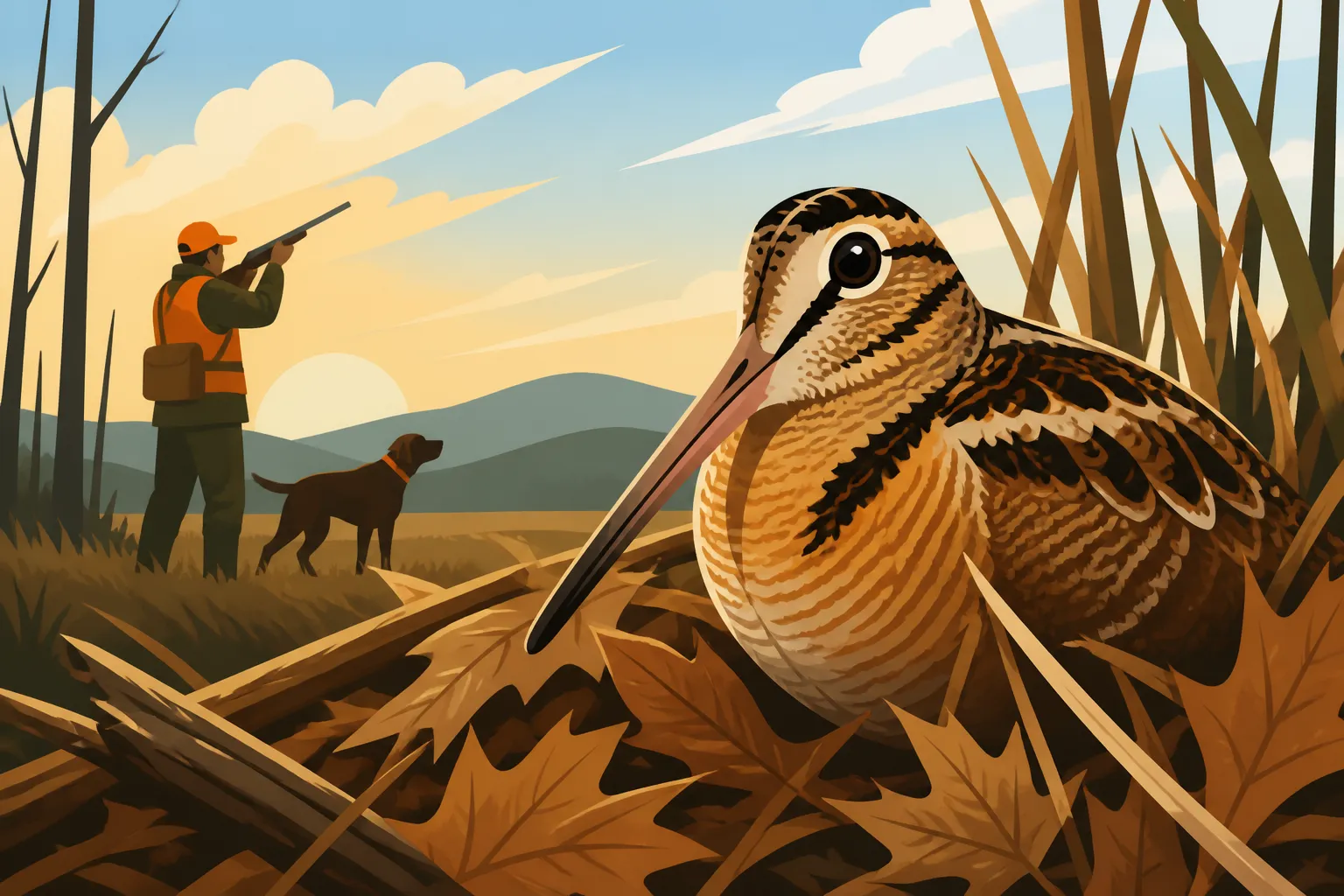
Many woodcock hunters swear by a good pointing dog, and for good reason. Dogs, especially those bred for upland work like Brittanys, English Setters, or German Shorthaired Pointers, are invaluable for finding these masters of camouflage. A well-trained dog can pinpoint a woodcock holding tight, allowing you to walk in for the flush and prepare for the shot. The dog's nose will detect birds you'd walk right past, and their ability to hold a point on such a reclusive bird is truly a joy to witness. Hunting with a dog generally leads to more consistent flushes and recovery of downed birds in dense cover.
However, you absolutely don't need a dog to hunt woodcock. Many successful hunters "still-hunt" or simply "kick brush." This involves slowly, methodically walking through prime coverts, keeping your eyes and ears open. Walk in a zigzag pattern, pausing frequently. Woodcock will often hold tighter when you pause, then flush when you take the next step. Focus on breaking up the cover, pushing through thick clumps of alder or multi-flora rose. You'll have to work harder, and you'll likely flush birds out of range or behind obstructions, but persistence pays off. It's a true test of your bushwhacking abilities, much like Still-Hunting Pennsylvania Big Woods for deer, but with a much smaller target.
Approach and Shot Opportunities
When a woodcock flushes, be prepared for an explosion of erratic flight. They'll typically fly straight up for a few feet, then dart horizontally, often twisting and weaving through the trees. The key is to react quickly but smoothly. Resist the urge to snap-shoot the moment you see movement. Instead, try to pick out a small window where the bird will be momentarily clear of cover, swing through it, and take the shot. They aren't big birds, so even a few branches can deflect your shot or mask them completely.
Because the shots are often close and in extremely dense cover, an open choke and small shot are your best friends. Improved Cylinder or Skeet chokes are ideal, spreading the pattern quickly. Shot sizes 7.5 or 8 are commonly used, providing a dense pattern of small pellets that are effective on these relatively fragile birds. You're typically shooting at ranges of 10 to 25 yards, so a tight pattern isn't necessary and can actually be a hindrance. Remember to always be aware of your hunting partners and dogs when a bird flushes; safety is paramount, especially in thick cover.
| Shotgun Gauge | Recommended Choke | Shot Size | Typical Range (Yards) | Notes |
|---|---|---|---|---|
| 12 Gauge | Skeet, IC | 7.5, 8 | 10-25 | Most common, versatile |
| 20 Gauge | Skeet, IC | 7.5, 8 | 10-25 | Lighter, easier to carry in thick brush |
| 28 Gauge | Skeet, IC | 8, 9 | 10-20 | Very light, patterns well at close range |
| .410 Bore | Modified, Full | 7.5, 8 | <15 | Challenging, best for experienced shooters |
Key Gear and Considerations for Success
Woodcock hunting isn't gear-intensive in the same way some other pursuits are, but having the right essentials can make a huge difference in comfort, safety, and success.
Shotgun and Ammunition Choices
As discussed, a fast-handling shotgun with an open choke is king for woodcock. Many hunters prefer a lightweight 20-gauge or even a 28-gauge, which are easier to swing quickly in tight quarters and less fatiguing to carry all day. Over/under or side-by-side shotguns are popular for their balance and quick follow-up shots, but a pump or semi-automatic works just as well. The key is familiarity and comfort with your chosen firearm. When considering your setup, think about what you might use for Best Shotgun Gauge for Pennsylvania Grouse, as the requirements are very similar due to the shared habitat and close-quarters shooting.
For ammunition, non-toxic shot is required in certain areas, particularly around federal refuges or some state-managed lands, so always check local regulations before heading out. However, for most general woodcock hunting in Pennsylvania, lead shot is permissible. Small shot sizes like 7.5 or 8 are highly effective. You want a dense pattern of small pellets to reliably put down these relatively small birds. Don't be tempted to use larger shot; it will create too many gaps in your pattern at close range. Your Choke Choice for Fast Flushes will greatly impact your success.
Clothing, Navigation, and Safety Gear
You're going to be walking through thick, often wet cover, so your clothing needs to be tough and functional. Brush pants or chaps are a game-changer, protecting your legs from thorns, briars, and thickets. A good upland vest is also essential, providing storage for shells, water, snacks, and most importantly, a large game pouch for your birds. Many vests, including some from brands like Orvis or Filson, even have a built-in seat, perfect for a quick rest. Look for vests with decent Upland Vests With Water Capacity, as staying hydrated is important during active hunting.
Pennsylvania law requires hunters to wear a certain amount of fluorescent orange during certain seasons. For small game, this usually means 250 square inches visible 360 degrees when moving, and 100 square inches when stationary. Always check the current regulations for Pennsylvania Hunter Orange Rules to ensure you're compliant. Bright orange hats and vests are common. Good, waterproof boots with ankle support are also critical for navigating uneven, damp terrain. A GPS unit or a reliable mapping app on your phone (like GoHunt) is crucial for navigation in dense cover, helping you keep track of your location and avoid trespassing. Always carry a compass and a physical map as a backup.
Finally, consider a small first-aid kit for minor cuts and scrapes, a knife for field dressing, and plenty of water. Whistle for communicating with hunting partners and a fully charged cell phone (though service can be spotty in some remote bottoms) for emergencies. Woodcock hunting can be physically demanding, so be prepared for a solid workout.
Preparing and Enjoying Your Harvest
Bringing a woodcock to hand after a challenging hunt is incredibly rewarding. These birds are not just fun to hunt; they are also excellent table fare. Their meat is dark, rich, and flavorful, often compared to dove or even duck.
Field Dressing and Meat Care
Because woodcock are small, field dressing them quickly is important, especially on warmer days. Many hunters simply remove the entrails (gutting) as soon as the bird is recovered. You can do this by making a small incision near the vent and pulling out the organs, or by carefully plucking the breast and severing it from the body for a "breast-out" method. Some hunters prefer to keep them whole for presentation. Regardless of the method, cooling the bird quickly is key to preserving meat quality. If you're hunting multiple birds, consider carrying a small game bag or even a cooler with ice back at your vehicle, especially if temperatures are mild.
Once home, you can pluck them whole or skin and breast them out. The breast meat is the most prized, but the legs and thighs can also be utilized. Woodcock meat lends itself well to quick cooking methods like searing or grilling, often served medium-rare to maintain its tenderness and flavor. It pairs wonderfully with rich sauces, mushrooms, or fruit reductions. For more on handling game after the shot, you might find some relevant tips in a guide on Field Dressing a Deer in Cold Weather, as the principles of clean and quick processing are universal.
The Special Appeal of Woodcock Hunting
Hunting woodcock is about more than just the bird in the bag; it’s about the experience. It's about exploring those wild, often forgotten corners of Pennsylvania, wading through thickets, and appreciating the incredible tenacity of these migratory wonders. It’s a hunt that puts you right in the middle of nature, demanding engagement and quick wits. The flush, the shot, the retrieve – it all happens in a blink.
For many, it's also about the companionship, whether with a loyal dog or good friends, sharing stories and laughter amidst the brambles. It's an active, immersive form of hunting that connects you intimately with the landscape and the rhythm of the seasons. Don't be discouraged by the initial challenge of finding them; once you unlock the secret of the bottoms, you'll find a truly special pursuit. And remember to respect the resource, taking only what you need and adhering to all Pennsylvania Small Game Seasons and Bag Limits.
Disclaimer
Please ensure you always check the current Pennsylvania Game Commission hunting regulations before heading afield. Seasons, bag limits, and rules can change annually, and it is every hunter's responsibility to know and follow the law. This guide provides general information and should not be taken as legal advice.