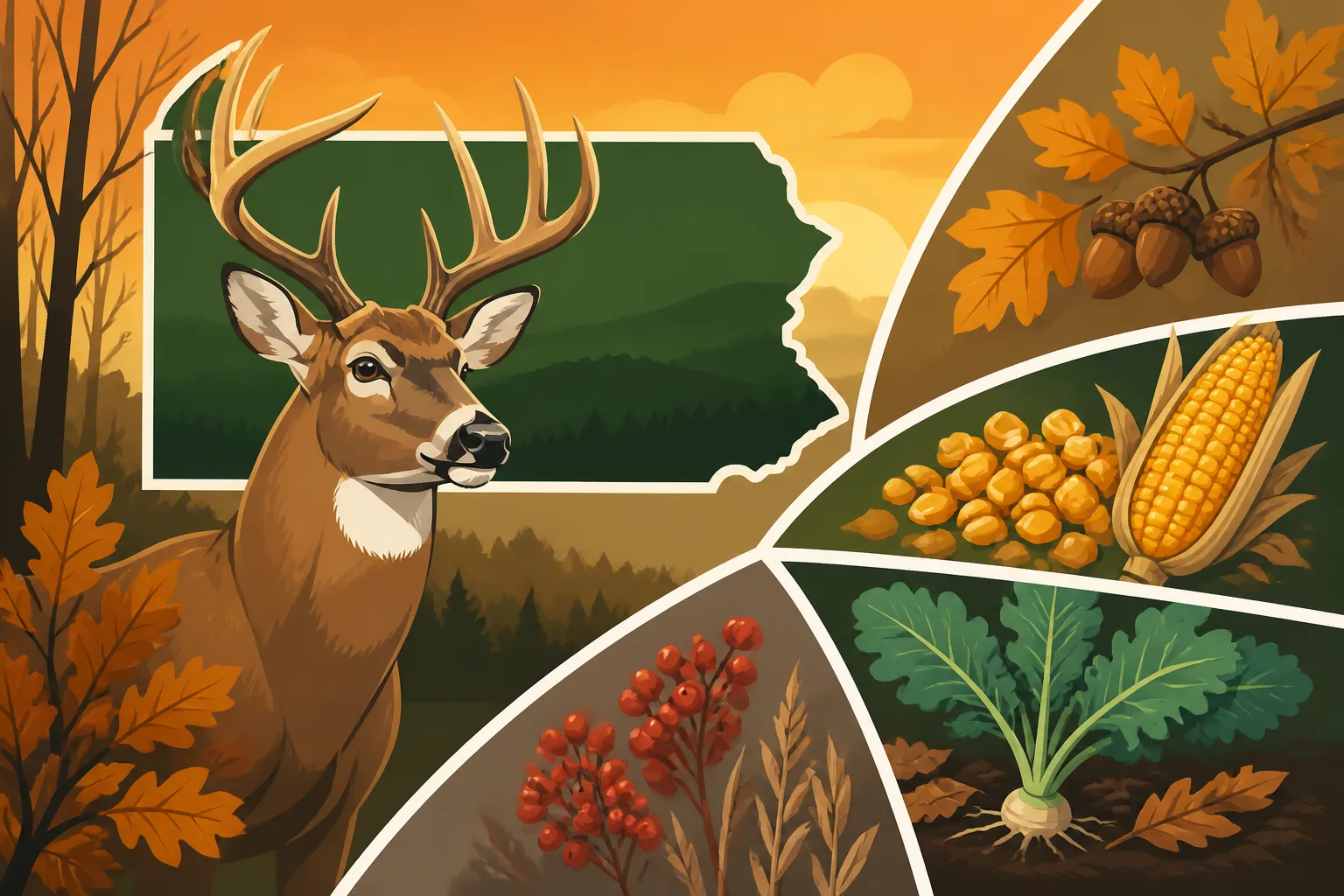
Late-Season Food Sources for Whitetails
As the late season winds down in Pennsylvania, many deer hunters find themselves facing a whole new set of challenges. The vibrant woods of early archery have transformed into stark, often snow-covered landscapes, and with that change comes a drastic shift in deer behavior. Bucks are often gaunt after the rut, does are working hard to maintain their condition, and natural food sources are dwindling fast. This guide is all about helping you understand what those whitetails are truly desperate for in the late season and how to locate those crucial, often overlooked, food sources to punch your tag.
The Late-Season Whitetail's Desperate Search for Calories
Hunting success in Pennsylvania's late deer seasons, whether it's the extended archery, flintlock, or final antlerless firearm opportunities, hinges almost entirely on finding food. The deer aren't moving much just for the sake of it; every step is calculated to conserve energy. Their sole focus is survival, and that means finding the most calorie-dense, accessible nutrition they can.
The Energy Deficit of Post-Rut Bucks
Think about what a buck goes through during the rut. For weeks, they're chasing, fighting, breeding, and barely eating. Their body mass can plummet by 20-30%. By the time December rolls around, these bucks are often shadows of their early-season selves, thin and depleted. Their instinct screams for calories, not just any calories, but concentrated energy to rebuild fat reserves for the brutal winter ahead. They're not looking for a snack; they're looking for a feast. This desperate need drives them to predictable, often heavily used, late-season food sources. Understanding this post-rut recovery phase is critical to predicting where they’ll be.
Does, Fawns, and Winter Survival
It's not just the bucks. Does are also feeling the pinch, especially those carrying fawns from the past spring. They need to maintain their own condition to survive winter and increase the chances of carrying future fawns to term. Fawns, still relatively small and inexperienced, are particularly vulnerable. They rely heavily on their mother and on easily accessible, high-energy foods to get through their first winter. When you find a reliable late-season food source, you'll often find groups of does and fawns congregating. And where the does are, especially if the rut is truly over and bucks are prioritizing food, a weary old buck might not be far behind, looking to feed in relative peace before the deepest snows hit.
How Snow and Ice Dictate Deer Movement
Pennsylvania winters can be unpredictable. One week it's bare ground, the next you're post-holing through a foot of snow, followed by a sheet of ice. These weather conditions profoundly impact food availability. A light dusting of snow might only make deer shy, but deep, crusty snow can bury low-growing browse and acorns, forcing deer to expend valuable energy digging. Ice can coat branches, making browse inaccessible, or create treacherous footing. When conditions get truly harsh, deer will flock to the easiest-to-reach, highest-calorie foods, often shifting from natural browse to standing crops. This is why a field that saw little deer activity in October might become a late-season deer magnet when the weather turns truly bitter. Understanding these changes means you're always a step ahead of the deer's next meal.
Natural Food Sources: Where to Look When Nothing Else Remains
Even in the depths of winter, nature still provides. While the bounty of early autumn is long gone, certain natural food sources persist and become absolute lifelines for whitetails. These are the places that often get overlooked by hunters focused solely on agricultural fields.
The Enduring Power of Acorns and Other Hard Mast
Ah, acorns! The undisputed kings of deer food in much of Pennsylvania. While the initial acorn drop of September and October might be a distant memory, never underestimate the power of a late-dropping or persisting acorn crop. Red oak acorns, for example, tend to drop later and have a higher tannin content, making them less palatable initially, but they also last longer on the ground without sprouting or rotting as quickly as white oak acorns. If you can find a ridge or a bench where red oaks dropped a massive crop, and especially if it's protected by thick cover or on a south-facing slope that gets less deep snow, those acorns can be a goldmine. Deer will paw through snow to get at them. Other hard mast, like beechnuts (though less common in Pennsylvania now) or even the nuts from black walnut trees, if accessible, also offer high-energy rewards. Focus your scouting on south-facing slopes, protected pockets, and areas with dense canopy cover that might have shed snow more easily or collected a larger, later drop. This is a perfect example of when to start Hunting After the Acorn Crop Fails in other areas, by seeking out these overlooked reserves.
Essential Woody Browse and Green Forbs
When the ground is frozen and blanketed in snow, and the hard mast is gone, deer turn to browse. This is the woody twigs and shoots of shrubs and trees. Many native Pennsylvania plants offer crucial browse:
- Maple and Oak Saplings: Deer will heavily browse the tender tips of young maples and oaks. Look for areas with recent timber cuts or regenerating clearcuts, as these create an abundance of new growth within deer reach.
- Greenbriar (Smilax): This thorny vine is often ignored by hunters, but deer absolutely love it, especially in winter. The leaves stay green longer into the cold, and the tender new shoots are highly nutritious. Find thickets of greenbriar, often in swampy areas, powerline cuts, or neglected clearings, and you've found a deer hideout and cafeteria.
- Honeysuckle and Multiflora Rose: These invasive species are a curse for forest health but a blessing for deer in winter. Their leaves can persist, and the woody stems provide browse.
- Hemlock and Rhododendron: While not primary food sources, deer will browse these evergreens, especially the new growth, as a last resort for sustenance and cover.
Identifying heavily browsed areas – where the tips of branches look clipped and ragged – is a dead giveaway. These are often in thick, dense cover that also offers thermal protection, making them ideal bedding-to-feeding transition zones.
Overlooked Soft Mast and Persistent Crops
Sometimes, you get lucky and find a forgotten patch of soft mast. Wild apple trees, often found in old homesteads, neglected orchards, or along forgotten logging roads, can still hold some shriveled fruit late into the season. Deer will absolutely devour these frozen or dessicated apples. Persimmon trees, while more common in the southern parts of Pennsylvania, can also hold fruit late. These often-missed food sources are incredibly attractive because of their sugar content.
Similarly, don't overlook "relic" crops – patches of old garden vegetables that have gone wild or small, forgotten patches of corn or sunflowers on the edge of old fields. These aren't common, but when you find them, they're typically magnets. Scouting these forgotten corners of the landscape with a good eye or even an aerial map can reveal a late-season honey hole.
Agricultural Magnets: Drawing Deer in the Late Season
While natural foods are vital, nothing screams "calories" to a deer in winter like a field full of standing agricultural crops. In many parts of Pennsylvania, especially the farm country of the southeast or central regions, these fields become the primary late-season food source, especially as natural forage dwindles.
Unharvested Grain Fields: Corn and Soybeans
For many deer in farm country, unharvested corn or soybean fields are the ultimate winter buffet. Farmers often leave small patches unpicked due to accessibility issues, or simply due to the economics of harvesting a small, irregular plot.
- Corn: Even when harvested, shattered corn on the ground is a huge draw. But a standing cornfield, or even just the edges of one, provides not only abundant, high-energy kernels but also invaluable thermal cover and security, especially when snow blankets the landscape. Deer will often bed right inside these fields.
- Soybeans: Leftover soybean pods provide protein and fat that deer desperately need. If you can find a field that wasn't cleanly harvested, deer will spend hours pawing through the stubble to find every last bean.
The trick is finding these unharvested patches or fields with significant waste grain. Often, the best spots are in low-lying areas, near creeks, or against a woodline where equipment couldn't easily reach. These fields become deer magnets, offering both food and escape cover, making them prime targets for Hunting a Standing Cornfield in Farm Country.
Strategic Food Plots and Winter Cover Crops
Many landowners, and even some public land managers, plant food plots specifically designed to draw and hold deer during the late season. These aren't just for attraction; they provide critical nutrition when deer need it most.
- Brassicas: Plants like kale, turnips, and radishes are phenomenal late-season choices. After a few hard frosts, the starches in these plants convert to sugars, making them incredibly palatable and highly nutritious for deer. They stand up well to snow and remain accessible.
- Clover and Winter Wheat: While not as calorie-dense as brassicas, a lush green clover or winter wheat plot can still provide essential forage, especially during milder spells or when snow cover isn't too deep.
- Standing Sorghum or Corn Plots: Similar to agricultural fields, dedicated food plots of these grains provide both food and excellent bedding cover, creating a complete late-season habitat package.
If you know a property has active food plot management, these are obvious places to focus your efforts. However, these plots also often see significant hunting pressure, so understanding how deer approach and use them is key.
Gaining Access to Private Agricultural Land
Many of these prime agricultural food sources are on private land, which can be a barrier for public land hunters. However, gaining permission is not impossible, especially in the late season when deer may be causing crop damage. The key is respectful, early communication.
- Do Your Homework: Before approaching a landowner, use mapping tools like GoHunt to understand parcel boundaries, topography, and potential deer entry/exit points. This shows you're serious and knowledgeable.
- Timing is Everything: Approach farmers well before the season, or, if you're trying for late-season permission, understand their harvest schedule. A farmer might be more amenable to a hunter cleaning up some deer after the main harvest is complete.
- Be Respectful and Offer Help: Offer to help with chores, respect their property boundaries, and be clear about your intentions. A well-mannered hunter is far more likely to get permission.
- Target DMAP Properties: Some farms participate in the Deer Management Assistance Program (DMAP), issuing special permits to help control deer numbers. These offer an opportunity to gain access and often correlate with areas of high deer activity.
Learning how to approach landowners and Knocking on Doors in Pennsylvania Farm Country can unlock some of the best late-season hunting opportunities, particularly around these agricultural havens.
Mastering Late-Season Scouting and Hunting Strategies
Finding late-season food is one thing; effectively hunting it is another. The deer are smarter, more pressured, and their routines are dialed into survival mode. Your strategies need to be just as sharp.
Deciphering Fresh Sign Around Food Sources
In the late season, fresh sign is paramount. Old tracks from October are meaningless; you need to find evidence of current feeding.
- Fresh Tracks: Look for tracks entering and exiting feeding areas, especially after a fresh snowfall. Pay attention to the size and depth – larger, deeper tracks likely belong to mature deer.
- Droppings: Fresh deer droppings (pellets) are soft, moist, and often dark. The sheer volume of droppings can tell you how heavily an area is being used. If you find large piles, you're in a consistent feeding zone.
- Browsing Evidence: In browse areas, look for freshly nipped twigs and torn leaves. The darker the wood where it was broken, the more recent the browse.
- Rub Lines and Scrapes: While the rut is largely over, you might still find bucks freshening up a scrape or rub. These aren't for breeding, but often territorial signposts along their travel to and from prime food.
Concentrate your efforts on finding these "hot zones" – areas with a high density of fresh sign. Use binoculars to scan field edges or distant timber for movement, especially during the last hour of daylight.
Optimizing Bed-to-Feed Travel Routes
In cold weather, deer movements become incredibly efficient. They want the shortest, most cover-rich route from their bedding area to their preferred food source.
- Thermal Cover: Deer will bed in thick conifer stands (like hemlocks or pines), south-facing slopes that catch more sun, or dense briar thickets to escape the wind and stay warm.
- Sheltered Travel Corridors: Look for draws, creek bottoms, saddlebacks, or lines of thick brush that connect bedding to feeding. These routes offer security and a break from the elements.
- Observation: Spend time glassing at a distance during mid-day to identify exactly where deer are emerging from cover and where they are heading to feed. Don't push them out of their bedding area.
Understanding Wind and Thermals on a Ridge is especially crucial here. Deer will often use thermals dropping in the evening to travel to food with the wind in their favor, then climb back to bedding using rising morning thermals.
Leveraging Modern Mapping and Observation Tools
Today's hunter has an incredible advantage with digital mapping tools. Platforms like GoHunt, onX Hunt, and others can revolutionize your late-season scouting.
- Topographical Maps: Identify potential bedding areas (thick cover, south slopes) and food sources (agricultural fields, old clearcuts).
- Aerial Imagery: Pinpoint specific oak stands, unharvested field corners, or dense thickets. You can often see deer trails or areas of heavy usage from above.
- Public/Private Land Boundaries: Crucial for knowing where you can legally hunt and for researching adjacent private parcels for permission.
- Weather Overlays: Some apps offer weather data, including snow depth, which can help predict where deer will be able to access food.
By using these tools from home, you can minimize disturbance in the woods and maximize your time in high-potential areas. It's a fantastic way to do your Scouting Pennsylvania Public Land Before Season or during the season, without spooking deer.
Adapting to the Cold and Pressure for Success
Late-season hunting isn't just about finding food; it's about enduring the elements and outsmarting deer that have faced weeks of hunting pressure. This requires a shift in your approach and a good dose of perseverance.
The Impact of Hunting Pressure on Feeding Patterns
Pennsylvania's deer are no strangers to pressure. By late season, they've been chased, shot at, and seen countless hunters. This makes them incredibly wary, especially around popular food sources.
- Nocturnal Habits: Deer often become entirely nocturnal around heavily pressured food sources, only feeding under the cover of darkness.
- Edge Avoidance: They might avoid the open edges of fields during daylight, opting to feed deeper in cover or only after legal shooting hours.
- Movement Timing: Their daylight movement often compresses into the first and last hour of light, making shot opportunities fleeting.
To combat pressure, try to find food sources that are harder to access, deeper in public land, or on private land with less hunting activity. Consider using a ground blind, which helps with scent control and keeps you out of the elements, allowing for longer, more comfortable sits. Using a Ground Blind on Pennsylvania Game Lands can be a game-changer when deer are skittish.
Essential Cold Weather Hunting Tactics
Late-season weather can be brutal, but with the right preparation, you can stay comfortable and effective.
- Layer, Layer, Layer: Proper clothing is non-negotiable. Start with a moisture-wicking base layer, add insulating layers (wool or synthetics are best for warmth even when damp), and top it with a waterproof/windproof outer shell. Don't forget a warm hat, gloves, and insulated boots.
- Warmth Management: Pack hand and foot warmers. A small, portable propane heater in a ground blind can be a lifesaver. Stay hydrated with warm drinks in a thermos.
- Shorter, Smarter Sits: While all-day sits are common in the rut, late season might call for shorter, strategic sits during prime feeding times (early morning and late afternoon). However, if you're on a hot food source, a commitment to staying put through the cold can pay off.
- Movement for Warmth: If sitting still for too long becomes unbearable, consider still-hunting very slowly towards the food source, taking a few steps every 15-20 minutes, pausing to scan. This keeps your blood flowing and helps you cover ground. For more on this, check out Cold Weather Sitting Strategy.
Ultimately, late-season hunting demands resilience. But the reward of a hard-earned whitetail in a snowy Pennsylvania landscape, especially when you've successfully deciphered their desperate search for food, is one of the most satisfying experiences a hunter can have.
| Food Source | Primary Benefit | Typical Location | Accessibility in Snow | Persistence (Late Season) |
|---|---|---|---|---|
| Red Oak Acorns | High calories, fat | Upland ridges, south-facing slopes, mature timber | Requires pawing through light snow, difficult in deep snow | Excellent (until consumed) |
| White Oak Acorns | High calories, fat | Bottomlands, mixed hardwoods | Difficult in any snow | Poor (rots faster) |
| Greenbriar | Persistent green browse | Thickets, clearcuts, powerlines, swamp edges | Good (stems are above snow) | Excellent |
| Maple/Oak Saplings | Woody browse | Clearcuts, timber sales, forest regeneration | Tips accessible above snow | Excellent |
| Wild Apples/Persimmons | Sugars, soft mast | Old homesteads, field edges, forgotten orchards | Variable (can be buried) | Fair (if not consumed) |
| Standing Corn | High calories, protein, cover | Agricultural fields, food plots | Excellent (stands above snow) | Excellent |
| Soybeans | High protein, fat | Agricultural fields | Good (pods above light snow) | Excellent |
| Brassicas (Turnips, Kale) | High sugars, protein | Food plots | Excellent (stands above snow) | Excellent |
| Winter Wheat/Clover | Green browse | Food plots, cover crops | Good (if snow isn't deep) | Good |
Disclaimer
Hunting is an inherently dangerous activity. Always prioritize safety, follow all Pennsylvania Game Commission regulations, and obtain appropriate licenses and permits. The information provided in this guide is for educational purposes only and should not replace professional guidance or personal judgment. Be aware of your surroundings, know your target and what is beyond it, and hunt responsibly.