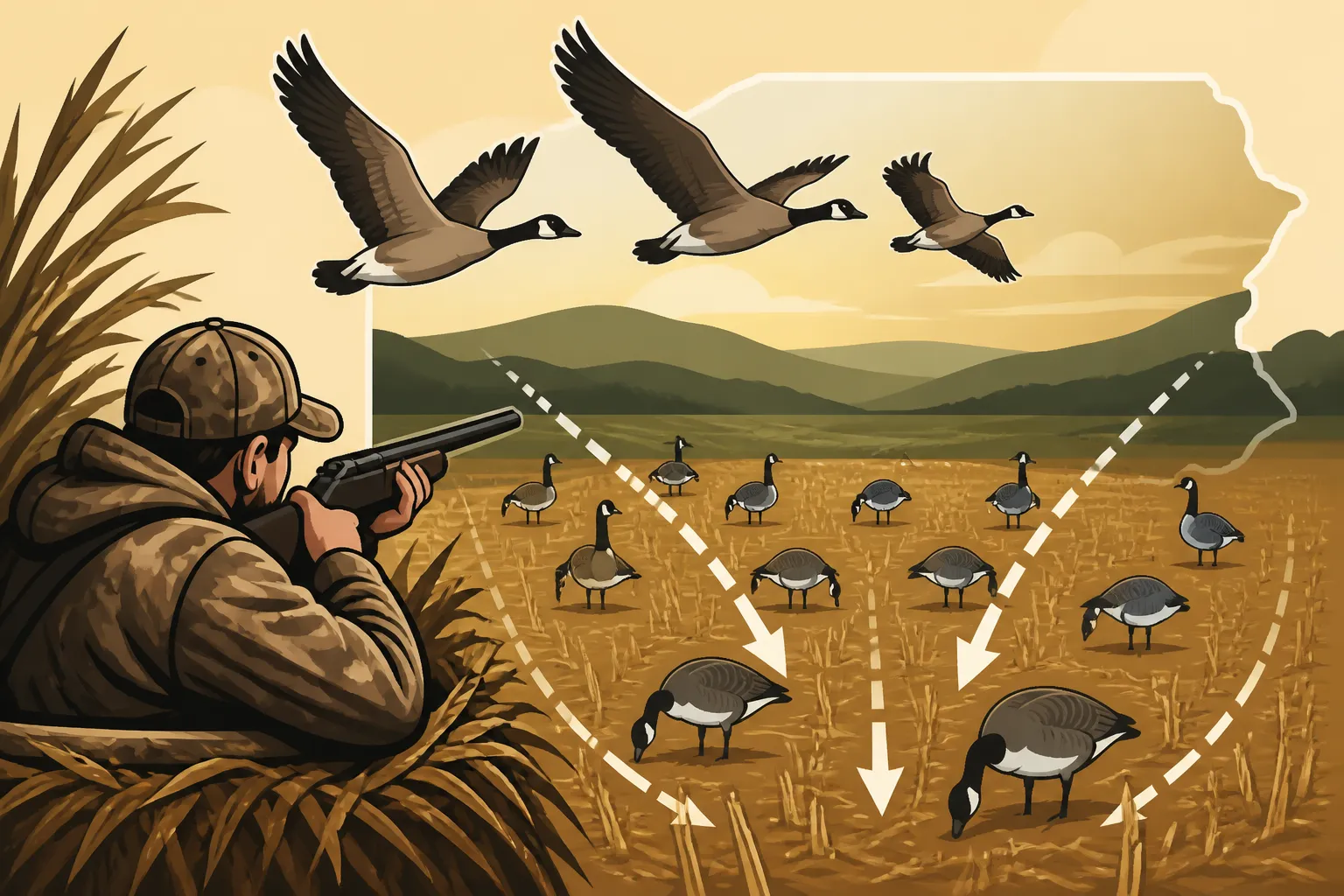
Decoy Placement for Pressured Birds
It's incredibly frustrating, isn't it? You spend hours scouting, pick the perfect spot, set your decoys just right, only to have those birds flare at 60 yards, giving you a wide berth as if they've seen your setup a hundred times before. Those pressured birds, whether it's a wise old gobbler or a flock of Canada geese that have survived a dozen seasons, develop an uncanny ability to spot anything "off" about a setup. This comprehensive guide is all about understanding that wariness and adapting your decoy placement to fool even the most educated game birds in Pennsylvania.
The Unique Challenge of Pressured Game Birds in Pennsylvania
Pennsylvania is a state rich in hunting heritage, which also means our game birds have seen it all. From public lands teeming with hunters to farm country where birds learn to avoid specific fields, pressure is a constant factor. You can't just throw out a dozen decoys and expect magic anymore. The birds that survive develop a serious case of "educated eye," making standard decoy tactics largely ineffective.
How Pressure Shapes Bird Behavior
Think about it: every time a turkey struts into a field and sees a hunter, or a flock of ducks commits to a spread only to be shot at, those birds learn. This isn't just an individual experience; birds communicate danger. A gobbler that has been called in and shot at a few times will often hang up out of range, scanning intensely for any sign of a threat. Waterfowl that have been shot over specific fields or potholes will often circle high, looking for movement, unnatural patterns, or too many decoys that scream "trap." This learned caution makes them incredibly difficult to fool. They become experts at identifying subtle cues that indicate danger, such as perfectly uniform decoy spacing, decoys facing the wrong way, or a lack of natural movement. The key is to break these learned patterns and present a scene that looks utterly non-threatening and inviting.
Recognizing the Signs of Wary Birds
You'll know you're dealing with pressured birds when they exhibit certain behaviors. For turkeys, it might be gobblers that only answer distant calls but refuse to commit, or those that hang up just inside the woods, pacing nervously but never stepping into your kill zone. They might even approach silently, circling your setup to get a better angle on the "hen" they heard. For waterfowl, expect high circles, extended periods of observation, and short-stopping well out of range. They'll often land far away and walk in, or swing wide, giving your decoys a suspicious once-over before turning tail. If you're seeing birds, but they're consistently not finishing, or they're flaring at predictable distances, consider that a clear sign of pressure. Observing these behaviors closely is your first step in adapting your approach. You might even use a tool like the GoHunt app to scout aerial photos of areas with known high pressure, looking for subtle changes in topography or cover that might offer birds a safe approach, or a vantage point to spot danger. This proactive scouting can save you a lot of frustration later.
The Limitations of "Standard" Decoy Spreads
The glossy magazine photos of a hundred full-body goose decoys spread across a cut cornfield, or five jake and hen turkey decoys fanned out in a perfect semi-circle, are often for unpressured, naive birds. On public land, or even on private ground that sees consistent hunting, these "standard" setups can be a dead giveaway. Wary birds have likely encountered similar spreads multiple times and learned to associate them with danger. They see the perfect alignment, the unrealistic density, or the lack of motion and immediately become suspicious. A large, static spread, particularly for turkeys, can sometimes even deter birds by looking too perfect, creating an unnatural scene that simply doesn't occur in nature. For waterfowl, too many decoys can look intimidating or signal a feeding frenzy that's too good to be true, making them fly on to what looks like a more relaxed environment.
Fundamental Principles for Decoy Placement with Pressured Birds
When dealing with birds that have a master's degree in evasion, your decoy strategy needs to evolve. It's less about overwhelming them and more about subtle deception and creating a believable, non-threatening scene.
Less Can Be More: The Art of Subtlety
This is perhaps the most crucial principle for pressured birds. Instead of a dozen decoys, try two or three. For turkeys, a single hen or a breeding pair (one jake, one hen) often works wonders. An aggressive gobbler might come in to investigate a lone hen, or challenge a jake, without feeling overwhelmed by a large "flock." For waterfowl, particularly on smaller water bodies or tight river bends, a spread of three to six decoys can be far more effective than a massive one. These birds are looking for small, unthreatening groups. A big spread might suggest too much competition or too many eyes to avoid danger. When Hunting Pressure on Pennsylvania Game Lands, reducing your decoy footprint can make your setup appear much more natural and less like a trap. Less volume means less to go wrong, and fewer visual cues for a wary bird to analyze and reject.
Natural Positioning and Realism Over Quantity
Every decoy must look like it belongs. If you're setting up for turkeys, make sure your hen decoys are facing a realistic direction, perhaps feeding, looking around, or even slightly away from your position, implying they're relaxed and unaware of danger. A jake decoy should be positioned as if challenging, but not necessarily staring directly at the approach path. For waterfowl, don't just dump them in a line. Create natural gaps, groups of two or three, and vary their postures. Some should appear to be feeding, heads down, while others are "loafing" or preening. Crucially, pay attention to the wind. Waterfowl almost always land into the wind, so position your decoys to funnel them into your shooting lane as they approach a landing zone that requires them to face away from your blind. This forces them to commit before they can fully scrutinize your hide. Incorporate motion whenever possible – a spinner for ducks, a slight rocking motion for a hen turkey decoy – but ensure it’s subtle and realistic, not frantic or mechanical. When setting up in a location like a bend on the Duck Hunting Pennsylvania Rivers, making sure your decoys are placed with the current in mind, as if naturally resting or feeding, will greatly increase your success.
Creating a Safe Zone and Escape Routes
Wary birds, especially gobblers, want to feel secure. They will often approach an area where they perceive a safe escape route. When placing decoys, think about where the birds will want to land or approach. For turkeys, leave an open, clear path directly in front of your decoys, between them and your blind, that looks like an easy stroll for them. They rarely want to land right on top of a decoy or struggle through thick brush to get to a hen. Give them an easy, open approach lane that naturally puts them in your shooting window. For waterfowl, leave a large, open landing zone in the middle or downwind of your spread. Birds will typically land into the wind, so understanding the prevailing wind direction is critical. If your decoys are too dense, or there's no clear, inviting landing spot, they'll simply move on. By creating this "safe zone" or funnel, you guide them exactly where you want them, making them focus on the clear space rather than scrutinizing the edges of your setup. This is particularly important when calling a Roost Hunting Pennsylvania Gobblers situation, where a bird is often committing to fly down directly into a perceived safe zone.
Tailoring Decoy Tactics to Pennsylvania's Wary Turkeys and Waterfowl
Different species, even within the "pressured bird" category, require nuanced approaches. What works for a wily longbeard might send a flock of geese packing.
Decoy Strategies for Pennsylvania Gobblers
Pressured gobblers are perhaps the hardest birds to decoy. They often hang up, strutting just out of range, waiting for the hen to come to them. Your decoy strategy needs to cater to this inherent wariness.
- Single Hen or Breeding Pair: Forget the flock of hens. A single feeding hen, or a pair with one feeding and one alert hen, often appears more natural and less threatening. If you use a jake decoy, pair it with a single hen. The jake should be slightly subordinate or engaged with the hen, not standing aggressively erect, which can sometimes intimidate a real gobbler. This is especially true when attempting Turkey Tactics for Farm Country Edges where birds have wide-open spaces to observe.
- Proximity to Cover: Gobblers love to strut in the open, but they also feel safer knowing cover is nearby. Position your decoys at the edge of woods or brush, where a gobbler feels comfortable stepping out but doesn't have to fully commit to a wide-open field immediately. This plays into their natural desire for safety while still being visible.
- Angles for the Shot: Place your decoys so that an approaching gobbler will present a broadside or slightly quartering-away shot as he engages with them. If your decoys face directly away from you, he might also face away, presenting a less ideal shot. A good rule of thumb is to have your hen decoy looking slightly away from you, allowing a gobbler to approach from the side, giving you a better angle. Remember, when Setting Up Against a Big Oak, you want the gobbler focused on the decoy, not your hiding spot.
- Less Motion, More Reality: While some motion decoys exist for turkeys, static, realistic decoys often work best for pressured birds. Ensure they are clean, flock-coated, and have natural colors. Unnatural sheen or a decoy that looks "plastic" can be a deal-breaker.
- The "Reversed" Jake: For exceptionally wary gobblers, some hunters advocate placing a jake decoy facing away from your calling position, almost as if it's casually walking away from the sound. This can sometimes pique a real gobbler's curiosity, making him approach from behind the decoy to investigate why it's leaving, putting him in your kill zone.
Setting Up for Skeptical Ducks and Geese
Waterfowl that have been shot over repeatedly quickly learn. They've seen every spread and heard every call.
- Small, Scattered Groups: Instead of a large, dense "V" or "J" spread, try breaking your decoys into smaller, loose family groups of two to five birds. Scatter these groups naturally, leaving plenty of open water or field space in between. This makes the spread look less like a crowded, competitive feeding area and more like relaxed, content birds.
- Landing Zone is Key: The most crucial element is a clear, inviting landing zone directly into the wind, situated within your desired shooting range. The birds should be able to commit to this landing zone without having to fly over your blind or directly into your line of sight.
- Motion Decoys – Used Wisely: Spinners can be a powerful attractant, but for pressured birds, they can also be a red flag. Use them judiciously. A single, slow-spinning spinner or a jerker string setup that mimics feeding ducks can be incredibly effective, but multiple fast-spinning wings might scream "fake." Some hunters even prefer to remove spinners entirely for heavily pressured birds and rely solely on subtle motion from jerk strings or feeding decoys.
- Edge Placement: For geese, consider placing smaller groups of decoys along the edges of a field, rather than packing them all in the middle. Geese often land on the edge of a feeding area and walk in. This also works well when combined with a well-camouflaged blind, especially if you're attempting to hunt Goose Hunting Pennsylvania Fields.
- Variety and Species-Specific: Use decoys that match the species you are hunting. If you're after mallards, primarily use mallard decoys, but a few black ducks or pintails can add realism. For geese, a spread of all Canada geese is fine, but adding a few less common species can make the spread look more diverse and natural. Using good map resources like GoHunt can help you identify common waterfowl species in specific areas by reviewing habitat type.
Adjusting for Local Pressure Hotspots
Every hunting spot is different. A public lake might see consistent pressure, while a private pond down the road might only get hunted a few times a year. Your local knowledge is paramount.
- Observe Flight Paths and Landing Zones: Spend time scouting without hunting. Watch where birds fly, where they land naturally, and how they react to different conditions. Use this intel to inform your decoy placement. This is similar to Reading Roost-to-Field Flight Lines for turkeys; apply that same observation to waterfowl. If you notice birds consistently avoiding a certain area or landing in a specific corner, adjust your spread to capitalize on that behavior, or avoid the problematic spot entirely.
- Mimic Natural Patterns: If local birds typically feed in small groups, don't put out a giant flock. If they land on a specific side of a pond, set your landing zone there.
- Utilize Natural Cover: Integrate your decoys with existing natural cover. Don't place them in perfectly open areas if the real birds often hug a treeline or a brushy point. For waterfowl, position them near clumps of grass, logs, or other natural elements that break up the outline. For turkeys, position a hen or jake near a downed log or a subtle rise in the terrain.
- Adapt to Hunter Density: On heavily hunted areas, especially those known for intense Hunting Pressure on Pennsylvania Game Lands, you'll need to be even more conservative. Reduce numbers, prioritize realism, and focus on absolute concealment. Sometimes, simply calling without decoys can be more effective than a poorly executed decoy spread.
Advanced Considerations and Avoiding Common Decoy Blunders
Beyond the basics, there are subtle factors and common errors that can make or break your decoy setup for pressured birds.
Wind, Sun, and Terrain: The Unsung Heroes of Placement
These environmental factors are critical yet often overlooked.
- Wind Direction: For waterfowl, wind is everything. Birds land and take off into the wind. Your landing zone must be set up with this in mind. Place your decoys upwind of your landing zone, allowing birds to cup their wings and float directly into your shot. If the wind shifts, be prepared to adjust your spread. For turkeys, while wind doesn't dictate their landing, it certainly affects their approach. Gobblers often prefer to approach with the wind at their back, which allows them to hear better, but they also use the wind to carry their scent away from a potential threat. Position your decoys so that a bird approaching from a common direction (e.g., along a ridge) will still be looking at your decoys, not directly at your blind, and won't smell you coming.
- Sun Position: The sun can either be your friend or your foe. Avoid placing decoys where direct sunlight creates an unnatural glare or makes them look unnaturally shiny, especially plastic decoys. Conversely, positioning decoys so the sun is behind them, and therefore shining directly into the eyes of approaching birds, can help obscure your blind and make it harder for birds to see imperfections in your setup. However, this also means you'll be looking into the sun, so consider eye protection.
- Terrain Features: Use natural terrain to your advantage. For ducks, place some decoys on a small sandbar or bank to mimic loafing birds. For geese, set them on a slight rise in a field. For turkeys, a jake decoy positioned on a slight knoll can appear more dominant, or a hen feeding behind a small clump of brush can appear more vulnerable. Leverage every dip, rise, and patch of cover to create a more believable scenario. When using a ground blind, remember to excel at Brushing In a Blind on a Field Edge, integrating it completely with the terrain.
Concealment and Hunter Position Are Paramount
No matter how perfect your decoy placement, if you're seen, it's game over. Pressured birds have an uncanny ability to pick out even the slightest movement or an unnatural silhouette.
- Become Invisible: This means full camouflage, face masks, and gloves. Your blind, whether it's a pop-up or natural cover, must be absolute. Ensure there are no gaps for birds to see through. For turkeys, your setup against a wide tree like in Setting Up Against a Big Oak is essential, ensuring you break up your outline completely.
- Movement Discipline: This is where many hunts go wrong. Wait until the birds are committed and within range before making any move. Even a slight head turn can send a wary bird flaring. Practice drawing your bow or raising your gun slowly and smoothly before the shot opportunity arises, so it's second nature when the time comes.
- Location, Location, Location: Your blind or hide needs to be positioned downwind or crosswind of your decoy spread for waterfowl, and generally in a spot where you have good visibility without being exposed. For turkeys, position yourself so a gobbler approaching your decoys will be looking at the decoys, not at you. Think about the bird's line of sight. Using scouting tools like GoHunt can help you pinpoint these optimal positions on unfamiliar public lands or new private tracts. It allows you to analyze terrain and potential approach routes before you even step foot in the woods.
Learning from Every Hunt: Adapting Your Decoy Game
The best hunters are lifelong learners. Every hunt, successful or not, offers valuable lessons.
- Post-Hunt Analysis: After every hunt, especially if birds flared, take a moment to analyze what happened. What was the wind doing? Where did the birds come from? What did they seem to react to? Did your decoys look natural from their approach angle? Perhaps you had too many, or they were spaced incorrectly. This critical self-assessment is vital for improvement. If you find When Pennsylvania Gobblers Go Quiet after approaching your setup, there's a reason, and you need to figure it out.
- Adjustments, Not Abandonment: Don't throw out a strategy because it didn't work once. Make small adjustments. Change the number of decoys, their spacing, their posture, or your own hiding spot. Experiment with different setups until you find what works for the specific birds in your area.
- Observe Other Birds: Pay attention to how non-target birds or even unpressured game react to your decoys. Their behavior can sometimes offer clues about what looks natural and what doesn't.
- Stay Flexible: The perfect decoy spread doesn't exist. Conditions change, bird behavior changes, and pressure levels change. Be ready to adjust your spread on the fly, even moving a decoy mid-hunt if you see a new pattern developing. This adaptability is the mark of a seasoned hunter. If you're using decoys in conjunction with Calling a Pennsylvania Gobbler Off the Roost, you might need to adjust their position depending on where he decides to fly down.
By embracing these principles and constantly refining your approach, you'll find that even the most cagey, pressured birds in Pennsylvania can be enticed into range. It takes patience, attention to detail, and a willingness to learn, but the reward of fooling a truly wary animal is unmatched.
Here's a quick comparison of decoy strategies for pressured game birds:
| Feature/Species | Pressured Turkeys | Pressured Waterfowl (Ducks/Geese) |
|---|---|---|
| Decoy Quantity | Minimal (1-3 decoys) | Minimal to moderate (3-12, broken into small groups) |
| Postures | Feeding hen, loafing hen, subordinate jake | Feeding, loafing, preening; varied postures and sizes |
| Placement | Near cover edges, open approach lanes, angled for shot | Upwind of landing zone, clear landing strip, natural clusters |
| Realism Focus | Flock-coated, natural sheen, realistic poses | Realistic paint, natural movement, matching species |
| Motion Decoys | Static preferred, subtle jake/hen motion if any | Jerk strings, minimal/slow spinners, careful with movement |
| Hunter Concealment | Absolutely critical, no movement | Blind brushed in, no movement until birds are committed |
| Key Objective | Appear non-threatening, curious, inviting | Look safe, relaxed, and provide an easy landing |
Disclaimer
Hunting is an inherently dangerous activity. Always prioritize safety, follow all Pennsylvania Game Commission regulations, and be aware of your surroundings. This information is for educational purposes only and should not replace proper hunter education and adherence to all local, state, and federal laws.