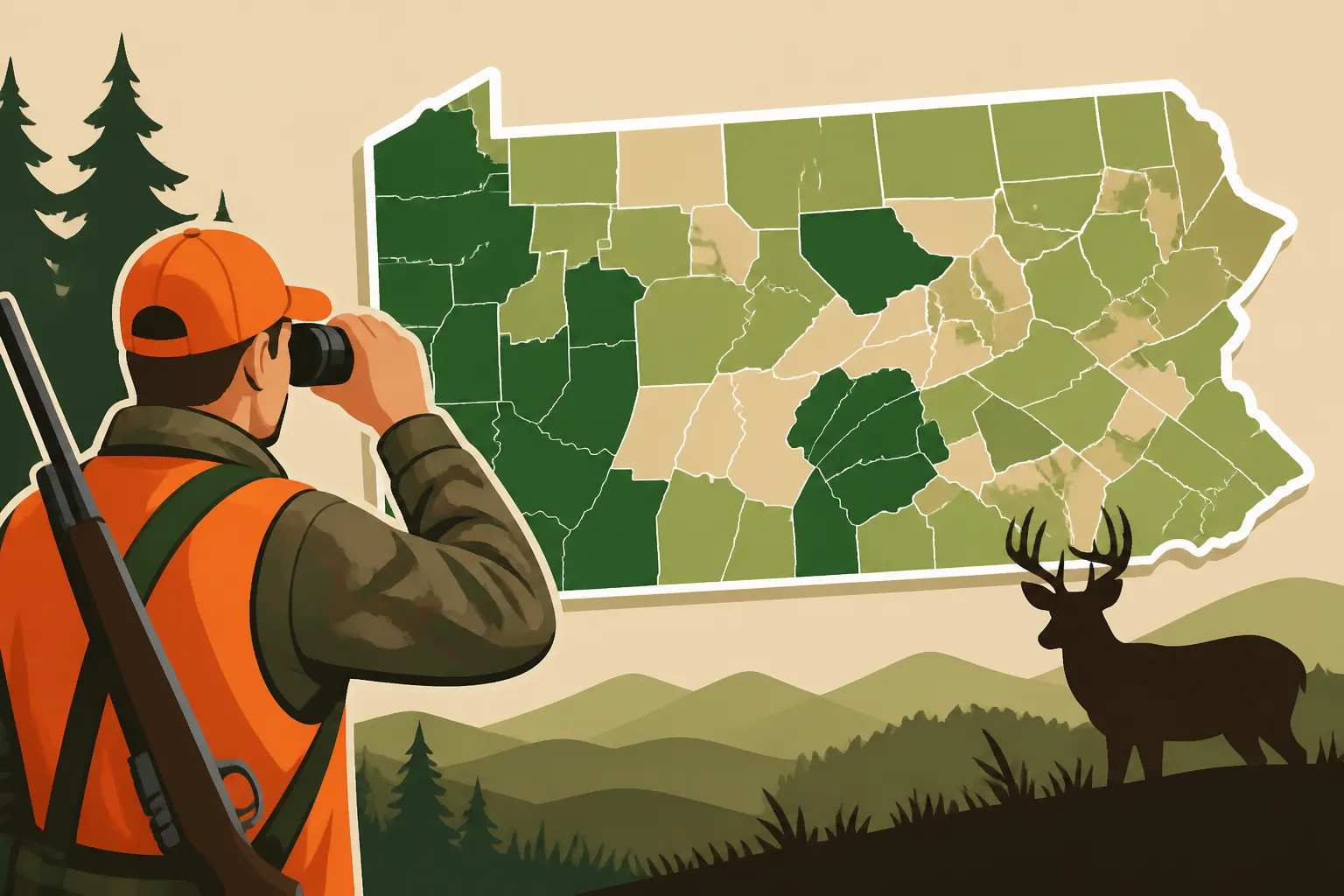
Which Counties Are in a Pennsylvania DMA
The invisible threat of Chronic Wasting Disease (CWD) casts a long shadow over Pennsylvania's deer herds, creating confusion and uncertainty for hunters trying to navigate the ever-changing regulations. Understanding which counties fall within a Disease Management Area (DMA) is absolutely critical for compliance and for doing your part to keep our wild deer healthy. This comprehensive guide will meticulously break down the current DMAs in Pennsylvania, explaining the specific rules that apply within them and empowering you to hunt responsibly.
Understanding Chronic Wasting Disease (CWD) in Pennsylvania
CWD is a serious, fatal neurological disease affecting deer, elk, and moose. It's caused by an abnormal protein called a prion that slowly degrades the brain and nervous system of infected animals. For hunters in Pennsylvania, CWD isn't just a scientific term; it's a very real and present concern that impacts where, when, and how we hunt our beloved whitetails. The disease can be transmitted through direct animal-to-animal contact or indirectly through environmental contamination, making its spread particularly insidious and difficult to contain.
The Pennsylvania Game Commission (PGC) has been at the forefront of monitoring and managing CWD since its first detection in the state in 2012. This isn't just a local problem; CWD has been found in numerous states and Canadian provinces, highlighting its persistent threat to cervid populations across North America. The challenge lies in its long incubation period, which means an animal can be infected for months or even years without showing any outward signs, all while potentially shedding prions into the environment. This makes early detection and aggressive management strategies, like those implemented through DMAs, incredibly important.
What CWD Means for Deer and Hunters
For the deer themselves, CWD is 100% fatal. There is no cure, and once an animal contracts it, its fate is sealed. Symptoms often include drastic weight loss, stumbling, listlessness, behavioral changes like decreased interaction with other deer, and excessive salivation. Watching an animal succumb to CWD is heartbreaking, and the long-term impact on herd health is a major concern for wildlife managers. We're talking about a potential future where deer populations could be severely impacted if the disease is allowed to spread unchecked.
For us hunters, CWD adds a layer of complexity to our passion. It introduces new rules and responsibilities that we simply cannot ignore. These regulations are designed to minimize the risk of spreading the disease, particularly through the movement of deer carcasses and parts that might contain infectious prions. This includes specific guidelines on how to field dress, transport, and dispose of harvested animals. Ignoring these rules isn't just a violation; it's a disservice to the deer resource and to our fellow hunters who are all trying to preserve hunting traditions for future generations. For a deeper dive into the disease itself, check out our guide on Chronic Wasting Disease in Pennsylvania.
The Importance of Disease Management Areas (DMAs)
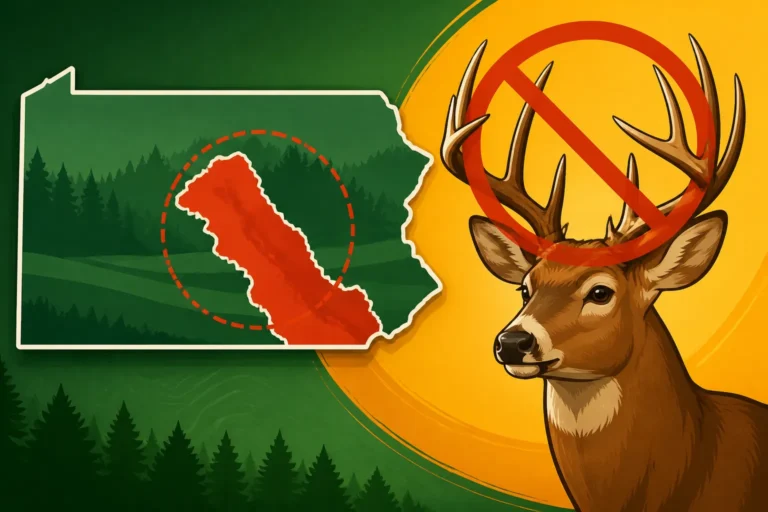
Disease Management Areas, or DMAs, are essentially designated zones where CWD has been detected in wild deer populations or where there is a significant risk of its spread. These aren't arbitrary lines on a map; they are strategic boundaries established by the PGC based on scientific data, surveillance efforts, and disease models. The primary goal of a DMA is to slow or stop the spread of CWD by implementing enhanced surveillance and special regulations within these defined geographical areas. Think of them as a containment strategy, albeit a challenging one.
The creation of DMAs allows the PGC to focus its resources and efforts where they are most needed, rather than implementing blanket regulations across the entire state. Within these areas, specific rules apply regarding baiting, feeding, and carcass movement—all aimed at reducing human-assisted transmission of the disease. While these rules can sometimes feel inconvenient, they are crucial tools in the fight against CWD. It's a collective effort, and every hunter's adherence to these guidelines contributes directly to the overall success of the management strategy. Without DMAs, the potential for CWD to rapidly engulf larger portions of the state would be significantly higher.
Counties Currently Affected: Identifying Pennsylvania's DMAs
Navigating the landscape of Pennsylvania's CWD Disease Management Areas can feel a bit like trying to hit a moving target, as boundaries can and do change. The PGC continuously monitors CWD prevalence and expands or shrinks DMAs as new information becomes available. It's absolutely crucial for every hunter to check the most current PGC CWD maps and regulations before heading afield, because what was true last year might not be true today. This isn't just about avoiding a fine; it's about being a responsible steward of the resource. You can often find up-to-date maps on the Pennsylvania Game Commission's website or through advanced hunting apps like GoHunt.
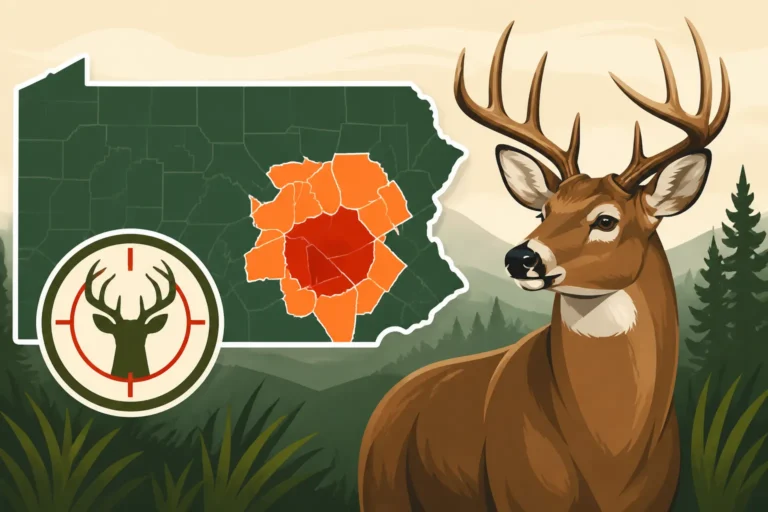
Currently, Pennsylvania has several active DMAs, each encompassing specific counties or portions thereof. These areas are concentrated where CWD has been confirmed in wild deer, and they serve as the front lines in the state's battle against the disease. Always remember that even if only a portion of a county is in a DMA, the special rules apply to that entire segment. Being aware of these boundaries is the first step in ensuring you hunt legally and ethically.
Overview of Pennsylvania's Current DMAs
As of the most recent updates, Pennsylvania's DMAs primarily cover regions where CWD has been identified or is deemed an imminent threat. Here’s a general breakdown of the counties involved in each major DMA. Please note that these are general descriptions, and specific boundaries often follow roads, rivers, or other geographical features, sometimes splitting counties. Always consult the official PGC CWD maps for precise, up-to-the-minute details.
- DMA 2 (Southeast/Southcentral PA): This has historically been one of the most significant DMAs in Pennsylvania, encompassing large parts of the southcentral region. Counties that are largely or partially included are Adams, Cumberland, Franklin, and York. This area has seen persistent CWD detections and is a major focus for surveillance.
- DMA 3 (Westcentral PA): Located further west, this DMA includes significant portions of Clearfield, Jefferson, and Indiana counties. This area represents another distinct cluster of CWD detections, necessitating specific management strategies for this geographic pocket.
- DMA 4 (Southcentral PA): Situated a bit south of DMA 5, this DMA impacts Bedford and Fulton counties. The boundaries here often follow major highways and natural features, aiming to contain the disease to specific watersheds or corridors.
- DMA 5 (Central PA): This DMA covers a vast swathe of central Pennsylvania. Counties predominantly or partially affected include Blair, Huntingdon, Juniata, Mifflin, and Snyder. This is a critical area given its central location and the potential for wider spread if left unchecked.
- DMA 6 (Southwest PA): This is a newer DMA, primarily affecting portions of Cambria and Westmoreland counties. The establishment of DMA 6 reflects recent detections and the ongoing need for adaptive management as CWD spreads into new territories.
- DMA 7 (Southeast PA): Another more recently established DMA, this one includes portions of Berks, Dauphin, and Lebanon counties. Its proximity to densely populated areas adds another layer of complexity to disease management.
It's also worth noting that sometimes there are smaller "CWD Areas" (CWAs) or Established Areas (EAs) that are not full DMAs but still have some specific regulations. For example, a CWA might be established around a captive deer facility where CWD was detected, even if it hasn't yet spread to wild deer in that immediate vicinity. The critical takeaway here is to never assume; always verify the current status of your hunting location. This includes using mapping tools like those offered by GoHunt, which can often integrate PGC data layers, or the Scouting With the Pennsylvania Mapping Center to pinpoint your exact location relative to DMA boundaries.
How DMAs Are Established and Adjusted
The process of establishing or adjusting a DMA is not a casual decision; it's driven by science, surveillance, and public health considerations. When the Pennsylvania Game Commission receives confirmation of a CWD positive deer, whether from hunter samples, roadkills, or targeted surveillance efforts, it triggers a detailed protocol. This often involves intense monitoring of the surrounding area, sometimes including increased deer testing and sampling.
If CWD appears to be established or spreading within a new area, a proposed DMA boundary is drawn. This boundary considers deer movement patterns, geographic features that might act as barriers or corridors, and existing infrastructure. Public input and scientific review also play a role before a new DMA is officially declared. Once established, DMAs aren't set in stone. The PGC continually evaluates their effectiveness and the changing disease landscape. If disease prevalence decreases significantly over several years in a particular area, a DMA might be reduced in size or even dissolved. Conversely, if CWD is detected outside an existing DMA, the boundaries are often expanded to encompass the new area and prevent further spread. This dynamic nature means hunters must remain vigilant and informed year after year.
Here's a simplified overview of Pennsylvania's DMAs and their primary counties:
| DMA Number | Primary Counties/Regions Included (Partial or Full) | Primary Rationale |
|---|---|---|
| DMA 2 | Adams, Cumberland, Franklin, York | Long-standing CWD detections |
| DMA 3 | Clearfield, Jefferson, Indiana | West-central PA CWD cluster |
| DMA 4 | Bedford, Fulton | Southcentral PA CWD detections |
| DMA 5 | Blair, Huntingdon, Juniata, Mifflin, Snyder | Central PA CWD detections |
| DMA 6 | Cambria, Westmoreland | Newer detections in southwest PA |
| DMA 7 | Berks, Dauphin, Lebanon | Newer detections in southeast PA |
Note: This table provides a general overview. Always consult the official Pennsylvania Game Commission CWD maps for precise, up-to-date boundaries.
Navigating Hunting Regulations within a DMA
Hunting within a CWD Disease Management Area in Pennsylvania means you have a specific set of rules and responsibilities beyond the general statewide regulations. These aren't suggestions; they are mandatory measures put in place to protect the health of our deer herd and, by extension, the future of hunting in the Commonwealth. It's not enough to know which counties are in a DMA; you need to understand what that means for your hunt, from the moment you pull the trigger to when you're preparing the meat.
One of the most significant changes you'll encounter in a DMA is the restriction on feeding and baiting. These activities, while popular with some hunters, concentrate deer in specific areas, increasing the likelihood of disease transmission. Another critical aspect is the handling and transport of deer carcasses, as specific parts can harbor CWD prions and contribute to the disease's spread if moved carelessly. Compliance here is paramount, and it's a good habit to incorporate these practices into your routine regardless of where you hunt.
Carcass Restrictions and Handling
The movement of certain deer carcass parts out of a DMA is strictly regulated. This is perhaps one of the most impactful rules for hunters, especially if you live outside a DMA but hunt within one. The core principle is simple: you cannot remove high-risk parts that are known to harbor CWD prions from a DMA. These high-risk parts include the head (especially the brain and spinal cord), spinal column, spleen, and lymph nodes.
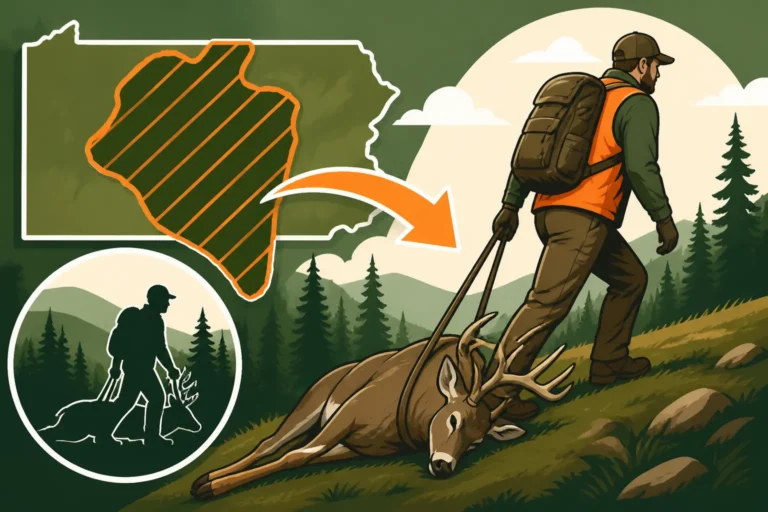
So, what can you take out? Generally, you can remove deboned meat, clean skull plates (antlers with no brain tissue attached), capes (without the skull), teeth, and hides. For many hunters, this means doing more of your processing in the field or at a butcher shop located within the DMA. If you harvest a deer in a DMA and plan to take it home outside the zone, you must debone the meat and separate the skull plate and cape, leaving the rest of the carcass behind in the DMA. This is a crucial step that helps prevent inadvertent spread. For detailed guidelines, refer to Pennsylvania CWD Carcass Rules. If you use a service like GoHunt, you might find features that highlight these regulations directly on their maps, which is incredibly helpful when planning your trip.
Feeding and Baiting Prohibitions
Another major regulation within a DMA is the prohibition on feeding and baiting deer. This might seem like a minor point, but it's incredibly important for disease control. Any activity that artificially congregates deer—whether it's bait piles, mineral licks, or even intentional feeding for observation—increases nose-to-nose contact and the sharing of saliva, urine, and feces. These are all potential vectors for CWD prion transmission.
The rule is straightforward: no artificial attractants for deer are permitted within a DMA. This includes corn, apples, commercial deer attractants, and mineral blocks. This prohibition extends to landowners, not just hunters. The goal is to discourage unnaturally high concentrations of deer, allowing them to disperse more naturally and reducing the chances of CWD spreading among them. This means traditional methods like Hunting a Standing Cornfield in Farm Country would need careful consideration if that field is within a DMA. It's a tough pill for some to swallow, but it’s a necessary step to protect the herd.
Testing and Reporting Your Harvest
While harvesting a deer in Pennsylvania requires reporting your kill statewide, hunting in a DMA often comes with additional CWD testing requirements or strong recommendations. The PGC relies heavily on hunter-submitted samples to monitor CWD prevalence and track its spread. In some DMAs, there are mandatory testing requirements for all harvested deer, or mandatory submission of heads at designated drop-off locations. In others, testing might be voluntary but highly encouraged.
When you harvest a deer in a DMA, familiarize yourself with the specific testing protocols for that area. This usually involves taking the deer to a PGC-operated check station or a designated collection bin where biological samples (like lymph nodes) can be taken for CWD analysis. The PGC uses this data to update its maps and refine its management strategies. Participating in this process is a vital part of your responsibility as a hunter in a CWD-affected area. Information on specific requirements and drop-off locations can be found at Pennsylvania CWD Testing for Hunters. Remember, every sample helps build a clearer picture of the disease's presence.
Hunter Responsibility and Preventing CWD Spread
As hunters, we are often the first line of defense and the most important partners in wildlife conservation. When it comes to CWD, our actions in the field, both within and outside DMAs, have a direct impact on the health of Pennsylvania's deer herd. It's not just about following rules; it's about understanding the "why" behind them and adopting best practices that go above and beyond mere compliance. The long-term health of our wildlife depends on our vigilance and commitment to ethical hunting practices.
Many hunters understandably feel frustrated by the added complexities that CWD introduces, especially when dealing with carcass restrictions or the prohibition of traditional hunting aids. However, it's crucial to channel that frustration into proactive measures. Education is key, and being an informed hunter means you can make better decisions, influence others positively, and contribute meaningfully to the fight against this insidious disease.
Best Practices for Hunters in and Around DMAs
Beyond the explicit regulations, there are several best practices that every hunter should adopt, especially if you hunt in or near a DMA. These are about minimizing risk and being a good steward of the resource:
- Know Your Location: Always confirm if your hunting area is within a DMA before you hunt. Use the PGC's online CWD maps, or reliable mapping apps like GoHunt that integrate this data. Boundaries can change, so check annually.
- Plan for Carcass Handling: If you hunt in a DMA, assume you'll need to process your deer there. Carry the necessary tools for field quartering or deboning. Identify local butchers or taxidermists within the DMA that can handle your harvest according to regulations.
- Proper Carcass Disposal: If you're required to leave certain parts of a deer in a DMA, dispose of them properly. Never just dump carcasses randomly. Use PGC-provided collection bins or approved landfills within the DMA to prevent further environmental contamination.
- Clean Your Gear: CWD prions are incredibly hardy and can survive in the environment for years. Thoroughly clean your boots, clothing, and hunting equipment (knives, saws, ATV tires, etc.) after hunting in a DMA, especially if you plan to hunt elsewhere. Use a 10% bleach solution on non-porous surfaces.
- Report Sick Deer: If you observe a deer exhibiting CWD-like symptoms (emaciation, drooling, unusual behavior), report it immediately to the PGC. Do not attempt to harvest or handle the animal. Your report helps the PGC track the disease.
- Avoid Spreading Soil/Plants: Since prions can persist in soil, be mindful of moving large amounts of soil or plants from a DMA to another area. This is a subtle point, but a legitimate concern for long-distance travel.
- Consider Voluntary Testing: Even if testing isn't mandatory in your DMA, consider submitting a sample. More data helps everyone.
By adopting these practices, you're not just following rules; you're actively participating in the conservation efforts that will determine the future of Pennsylvania's deer herd and our hunting heritage. The PGC has resources for Pennsylvania Deer Tagging Requirements and Reporting a Pennsylvania Deer Harvest that are also good to review.
Staying Informed About CWD Updates
CWD management is a dynamic situation. New detections can lead to rapid changes in DMA boundaries and regulations. Relying on outdated information can lead to inadvertent violations and, more importantly, contribute to the spread of the disease. Therefore, it's critical for every hunter to make staying informed an ongoing responsibility.
Here’s how you can stay up-to-date:
- Pennsylvania Game Commission Website: The PGC's official website (pgc.pa.gov) is the most authoritative source for CWD information, including current DMA maps, regulations, and news releases. Make it a habit to check this site before each hunting season, and even periodically during the season.
- PGC Email Alerts: Sign up for email newsletters or alerts from the PGC. They often send out timely updates regarding CWD detections and regulation changes.
- Hunting Publications and Forums: Reputable Pennsylvania hunting magazines, online forums, and social media groups can be good sources for discussions and summaries, but always cross-reference any critical information with the official PGC sources.
- Utilize GoHunt or Other Mapping Platforms: Many advanced hunting apps, like GoHunt, strive to integrate official PGC CWD data layers directly onto their maps. This allows you to visualize DMA boundaries in real-time as you plan your hunts or are in the field. Always ensure your app's data is updated regularly.
Remember that while apps and forums are helpful, the PGC website is the final word on CWD regulations and boundaries. Being proactive in seeking out current information is perhaps the most important thing a responsible hunter can do in the face of CWD. The future of our cherished White-Tailed Deer Across Pennsylvania depends on it.
Disclaimer
The information provided in this guide is for general informational purposes only and is subject to change. Hunting regulations, including CWD Disease Management Area boundaries and rules, are established and updated by the Pennsylvania Game Commission. Hunters are solely responsible for knowing and adhering to all current regulations. Always consult the official Pennsylvania Game Commission website and relevant state laws before engaging in any hunting activities.