Pennsylvania Deer Vehicle Collisions
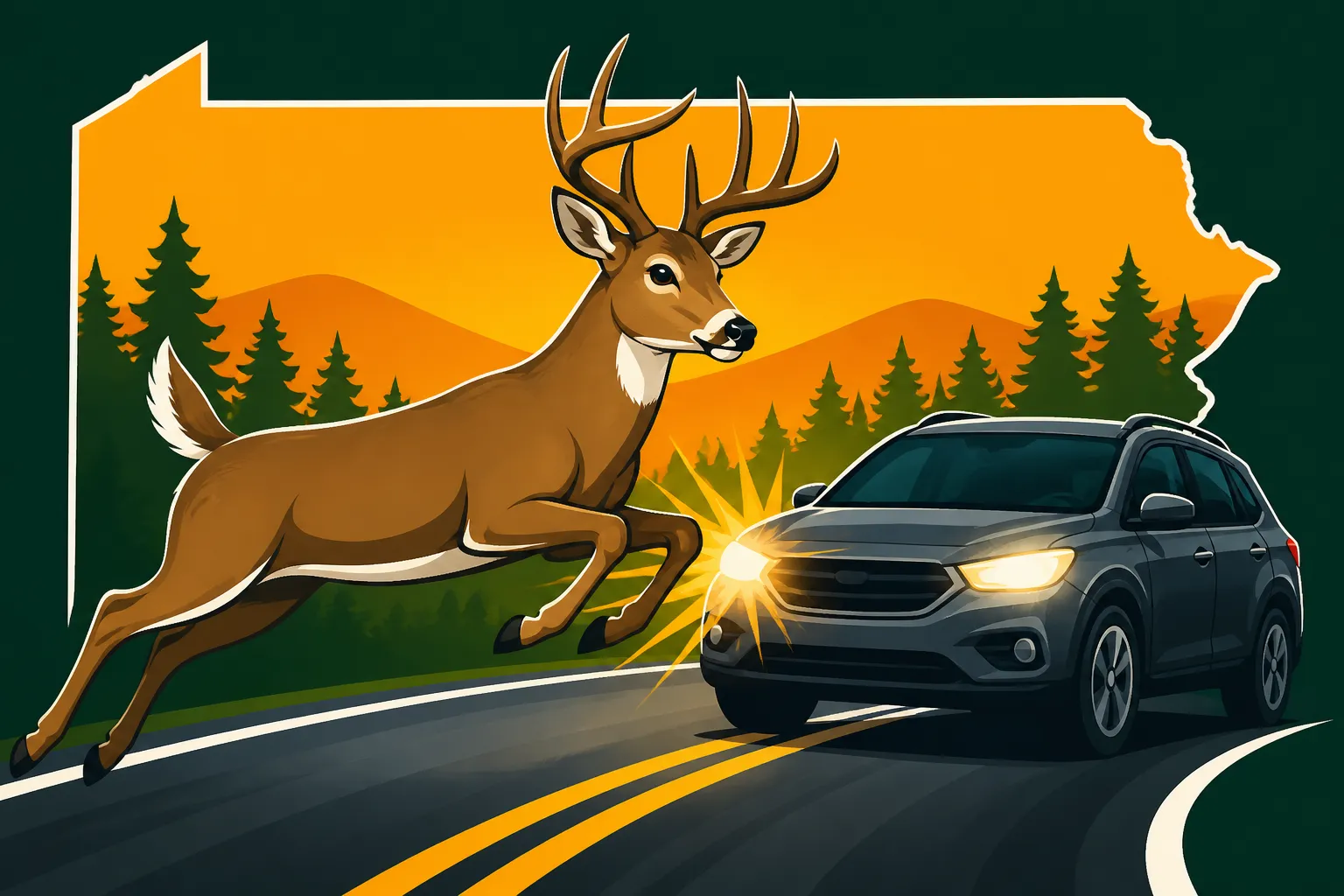
Every year, countless Pennsylvanians face the jarring, often dangerous, reality of striking a deer with their vehicle. It's more than just a fender bender; these collisions can lead to significant vehicle damage, serious injuries, and even fatalities, not to mention the tragic loss of wildlife. This guide is here to shed light on why deer-vehicle collisions are so prevalent in our state, equip you with knowledge to avoid them, and tell you exactly what to do if the worst happens.
The Unfortunate Reality of Deer-Vehicle Collisions in Pennsylvania
Living in Pennsylvania, it's almost impossible to avoid the topic of deer. They're part of our landscape, from the sprawling forests of the northern tier to the suburban fringes surrounding our major cities. While their presence is part of what makes our state so beautiful, it also comes with a serious, often underestimated, risk: deer-vehicle collisions. These aren't just minor inconveniences; they're a significant public safety issue and a consistent concern for anyone driving on our roads, whether it's a daily commute or a scenic Sunday drive.
Why Pennsylvania Has Such a High Risk
Pennsylvania consistently ranks among the top states for deer-vehicle crashes, a dubious distinction we'd all rather do without. Why is this the case? A major factor is simply the sheer abundance of white-tailed deer across our landscape. Our state boasts a robust deer population, thriving in diverse habitats from dense woodlands to agricultural fields and even encroaching into developed areas. This thriving population, coupled with our extensive network of roads that crisscross prime deer habitat, creates a perfect storm for these unfortunate encounters. Imagine a massive chessboard where deer are constantly moving across the board, and our cars are doing the same – eventually, paths are bound to intersect. It’s a dynamic interplay between a flourishing wildlife population and human infrastructure, making vigilance absolutely critical. We're talking about a significant number of animals moving around, and they don't exactly check for oncoming traffic. The more deer we have, and the more miles we drive, the higher the statistical probability of these incidents. Understanding the overall picture of White-Tailed Deer Across Pennsylvania helps explain why these events are so common.
The Impact Beyond Just the Vehicle
When a deer and a vehicle collide, the immediate concern is often the vehicle damage, which can be extensive and costly. From smashed headlights and crumpled hoods to deployed airbags and structural frame damage, repair bills can quickly climb into the thousands. But the impact extends far beyond just metal and plastic. For the occupants of the vehicle, the consequences can range from minor bruises and whiplash to severe injuries, including broken bones, internal trauma, and even fatalities in high-speed impacts or if the deer comes through the windshield. It's a sudden, violent event that leaves lasting physical and emotional scars. And of course, there's the deer itself. These collisions almost invariably result in the death of the animal, often suffering greatly before expiring. As outdoor enthusiasts, we value our wildlife, and these preventable deaths are a somber reminder of the constant interaction between human activity and the natural world.
Peak Times and Places for Deer Encounters
Knowing when and where you’re most likely to encounter a deer can dramatically increase your chances of avoiding a collision. Deer aren't just randomly wandering the roads; their movements are often predictable, tied to biological urges and environmental factors. Paying attention to these patterns can be your best defense against a costly and dangerous incident. This isn't about fear-mongering, but about informed driving, especially during certain times of the year.
Seasonal Spikes and Daily Patterns
If you've been driving in Pennsylvania for any length of time, you've probably noticed that deer sightings spike during certain months. The late fall, specifically October, November, and early December, is prime time for deer movement and, consequently, deer-vehicle collisions. This period coincides with the annual deer rut, when bucks are actively seeking does, often crossing roads with little regard for traffic. Their focus is singular, driven by instinct, making them less aware of their surroundings. This increased activity, combined with shorter daylight hours, means more deer are moving during times of low visibility for drivers. For many hunters, this is the time for Hunting the Peak Rut Week in Pennsylvania, and it’s also when deer are at their most active and visible on the roads.
Beyond the rut, spring also sees an increase in deer activity as young deer disperse from their mothers to find new territories. They're often less experienced, more skittish, and prone to unpredictable movements. As for daily patterns, deer are crepuscular, meaning they are most active at dawn and dusk. This is when they move between feeding and bedding areas. Unfortunately, these are also peak commuting hours for many drivers, creating a perilous overlap. If you’re heading out before sunrise or driving home as the sun sets, be extra vigilant.
Understanding High-Risk Roadways
Deer don't typically hang out on interstates, though they certainly can end up there. The roads where you’re most likely to hit a deer are often those that cut through or run adjacent to prime deer habitat. Think about those stretches of road bordered by dense woods, agricultural fields, or even large undeveloped tracts of suburban land. These are the natural corridors deer use for travel. Areas with mixed woodlands and open fields, such as those found while Hunting Pennsylvania Farm Country Edges, are particularly notorious.
You’ll also notice "Deer Crossing" signs, which are placed in areas identified as having a high frequency of deer movement. These aren't just suggestions; they are warnings based on data. Pay extra heed to these signs. Rural routes, state highways, and even suburban roads with patches of green space are all high-risk zones. The challenge is that deer don't always use the exact same crossing point; they might be 50 yards down the road from the sign. Using mapping apps like GoHunt can give you an idea of the surrounding terrain – if you see large blocks of green space, even if it's not "State Game Lands," assume deer could be nearby.
Proactive Measures to Avoid a Deer Collision
Avoiding a deer collision isn't just about luck; it's about making conscious choices behind the wheel and being aware of your surroundings. While you can't control what a deer does, you can control your reactions and your preparedness. A little foresight and defensive driving can go a long, long way in keeping you safe.
Defensive Driving Techniques
The most effective way to avoid hitting a deer is simply to slow down, especially in known deer-prone areas and during peak activity hours (dawn and dusk, and during the fall rut). Reduced speed gives you more time to react. If you see one deer, assume there are more. Deer often travel in groups, so if one crosses the road, its buddies might be right behind it. Don't immediately swerve; this is often more dangerous than hitting the deer, as it can lead to losing control of your vehicle, striking another car, or hitting a fixed object. Instead, brake firmly and stay in your lane. If a collision is unavoidable, hitting the deer head-on is often safer than a violent swerve.
It’s also crucial to scan the roadsides, not just the pavement directly in front of your vehicle. Look for reflections of deer eyes in your headlights, and for any sudden movements in the periphery. Deer can appear out of nowhere, seemingly teleporting from the ditch to your lane in an instant. Maintaining a safe following distance from the vehicle in front of you is also important. If they brake suddenly for a deer, you'll need that space to react. This general awareness helps you, whether you are trying to avoid a deer or navigating busy spots where Opening Day Crowds on Pennsylvania Game Lands are prevalent.
Leveraging Technology and Awareness
While your eyes are your primary tool, there are other ways to enhance your awareness. High beams, when safe and legal to use, can significantly extend your visibility, giving you more precious seconds to spot a deer. Just remember to dim them for oncoming traffic to avoid blinding other drivers. Some newer vehicles come equipped with advanced driver-assistance systems that include deer detection or automatic emergency braking. While these aren't foolproof, they can provide an extra layer of protection.
Using navigation apps or even dedicated hunting apps like GoHunt can also help you understand the landscape you're driving through. If you know you're passing through areas with high deer density, perhaps near Pennsylvania Deer Population Estimate hotbeds or extensive public lands, you can heighten your vigilance. Staying informed about local wildlife patterns, especially around hunting seasons when deer movement can be influenced by hunter activity, can also be beneficial. It's about combining your driving skills with an understanding of the environment around you.
What to Do After a Deer-Vehicle Accident
Despite all precautions, sometimes a collision is unavoidable. If you do hit a deer, it's a traumatic and confusing experience. Knowing the right steps to take immediately afterward can ensure your safety and help you navigate the necessary procedures. Don't panic; take a deep breath and follow these steps.
Immediate Steps for Safety
Your first priority after hitting a deer is safety – for yourself, your passengers, and other motorists.
- Pull Over Safely: If possible, move your vehicle to the side of the road, out of the flow of traffic. Turn on your hazard lights.
- Assess Injuries: Check yourself and any passengers for injuries. If anyone is injured, call 911 immediately.
- Do Not Approach the Deer: A deer that has been hit might be injured but still alive and incredibly dangerous. Its thrashing can cause serious harm. Keep your distance.
- Call the Police: Even if there are no injuries, it's wise to call local law enforcement or the Pennsylvania State Police. They can help with traffic control, document the accident for insurance purposes, and, if necessary, dispatch an officer to humanely dispatch an injured animal. Their report can be invaluable when dealing with your insurance company. This is a critical step, much like reporting any other significant incident.
Reporting the Incident and Carcass Retrieval
Once safety is secured, the next steps involve official reporting and potentially dealing with the deer carcass.
- Contact Your Insurance Company: As soon as you can, report the accident to your vehicle insurance provider. Provide them with all the details, including the police report number if one was filed. Deer-vehicle collisions are typically covered under the comprehensive portion of your auto insurance policy, not collision.
- Carcass Retrieval: In Pennsylvania, if you hit and kill a deer, you generally have the option to take possession of the carcass. However, you must contact the Pennsylvania Game Commission within 24 hours to obtain a free permit. This permit allows you to legally possess the deer. You can do this by calling their regional offices or the main headquarters. Don't just load it up and go; the permit is crucial for legal possession. This is important to remember, similar to understanding Pennsylvania Deer Tagging Requirements if you were hunting. The Game Commission will also sometimes remove deer from the roadway, particularly if it's a hazard. You cannot process or consume meat from a deer found dead without a permit, even if you did not hit it. For those interested in Cooking Venison From a Pennsylvania Buck, this is an important step to ensure your harvest is legal.
- Damage Assessment: Take photos of your vehicle damage and the accident scene. These can be helpful for your insurance claim.
Navigating Pennsylvania’s roads requires constant vigilance, especially when sharing the landscape with a thriving deer population. By understanding the risks, practicing defensive driving, and knowing what to do in an emergency, you can significantly reduce your chances of becoming another deer-vehicle collision statistic. Stay safe out there!
| Factor | High-Risk Periods | Driver Actions |
|---|---|---|
| Time of Day | Dawn (approx. 5-8 AM) | Increase vigilance, use high beams when safe |
| Dusk/Night (approx. 5 PM – Midnight) | Increase vigilance, use high beams when safe, slow down | |
| Season | Fall (Oct-Dec) – Peak Rut | Extreme caution, expect unpredictable movement |
| Spring (Apr-May) – Dispersal | Watch for young, less experienced deer | |
| Location | Wooded roads, farm country edges | Scan roadsides, heed "Deer Crossing" signs |
| Suburban areas with green spaces | Be aware of residential and parkland interfaces | |
| Weather | Fog, heavy rain, snow | Reduce speed significantly, increase following distance |
| Visibility | Blind curves, hill crests | Slow down, anticipate hidden hazards |
Disclaimer
This article is for general informational purposes only and does not constitute professional advice. Laws, prices and regulations vary by location and change over time. Consult a qualified professional for guidance on your specific situation.