Deer Meat Yield From a Pennsylvania Buck
It’s a moment every Pennsylvania deer hunter dreams of: finally walking up on that buck after a successful shot. Beyond the thrill and the story, a practical question quickly comes to mind: how much venison am I actually going to get from this deer? It's a question often met with a bit of a reality check, as the amount of boneless meat you bring home can sometimes feel a lot less than the impressive animal that went down. This guide is here to demystify deer meat yield, walking you through the factors that influence it and offering practical advice to maximize every ounce of delicious venison from your Pennsylvania buck.
Understanding What Impacts Your Deer Meat Yield
The amount of usable meat you get from a buck isn't a fixed number. It's influenced by a whole host of variables, from the deer's natural biology to your actions after the shot. It's easy to look at a live deer and imagine a freezer packed full, but understanding these factors can help set realistic expectations and, more importantly, help you increase your take-home yield.
Deer Size and Overall Health
This might seem obvious, but the sheer size and health of the buck are primary determinants of meat yield. A young, spike buck in an area with poor forage is simply not going to yield as much as a mature, healthy 8-pointer that's been feasting on acorns all fall. The overall body condition—whether the deer is fat and well-fed, or lean and struggling—plays a huge role.
Consider the habitat your buck came from. A deer taken from agricultural lands in southern Pennsylvania, where corn and soybeans are readily available, often carries more fat and muscle mass than a buck from the deep, rugged mountains of the north-central Big Woods. Bucks in farm country often have access to a more consistent and higher-quality diet, leading to heavier body weights. Factors like the age structure of the deer herd, influenced by specific regulations like Pennsylvania Antler Restrictions by WMU, can also play a part. Older bucks, generally speaking, carry more mass. So, while you might be thrilled with a legal spike, a mature deer often offers a significantly higher meat return.
Field Dressing and Initial Processing
The way you handle your deer immediately after the shot can dramatically affect the quality and quantity of meat you recover. Proper and timely field dressing is absolutely crucial, especially during warmer early archery seasons. Leaving the internal organs in for too long, especially in mild weather, can cause the body cavity to heat up, leading to bacterial growth and spoilage that can ruin large sections of meat.
This isn't just about hygiene; it’s about preservation. Getting the guts out quickly allows the carcass to cool down internally, halting bacterial activity and preserving the meat. For more on this, check out tips on Field Dressing a Deer in Cold Weather as the principles of cooling apply universally, even if the urgency is higher in warmer conditions. Removing the hide quickly, if conditions allow, further aids in cooling, exposing the muscle tissue to the ambient air. Even small delays or improper techniques can mean trimming away more meat during butchering due to off-flavors or spoilage, effectively reducing your overall yield.
Shot Placement and Meat Damage
Where your bullet or arrow impacts the deer has a direct and often significant impact on how much meat you get to keep. An ideal shot—a double-lung or heart shot—damages minimal meat, usually just a small entry and exit hole through the chest cavity. This leaves the prime muscle groups like the shoulders, backstraps, and hams intact.
On the other hand, a shot through the shoulder, while often effective at dropping a deer quickly, can destroy a significant portion of the front quarters. The impact of a high-velocity bullet or the force of a broadhead can turn muscle into a bruised, blood-shot mess that needs to be trimmed away. Similarly, a gut shot, while undesirable for many reasons, can contaminate a larger portion of the abdominal cavity, potentially affecting the tenderloins if not expertly handled during processing. Knowing the anatomy and aiming for a clean kill that minimizes damage is not only ethical but also practical for maximizing your freezer fill. Learning about Legal Firearms for Pennsylvania Deer and their ballistics can also help you choose a setup that minimizes meat damage while still being effective.
Estimating Your Venison Yield
So, how do you actually figure out how much meat you're likely to get? Hunters often talk in terms of percentages, which can be a good starting point for setting expectations. It's important to differentiate between live weight, dressed weight, and boneless meat weight, as these terms are often used interchangeably but represent very different things.
Live Weight, Dressed Weight, and Boneless Meat
Let's break down the common terms:
- Live Weight: This is the weight of the deer when it's still alive and standing. It's often the most impressive number you hear, but it includes everything—blood, guts, hide, antlers, bones, and all the organs.
- Dressed Weight (or Field Dressed Weight): This is the weight of the deer after the internal organs have been removed, but before skinning, deboning, or removing the head and lower legs. This is the weight often recorded at check stations or when a deer is weighed in the field.
- Boneless Meat Weight: This is the actual amount of pure muscle tissue you put in your freezer, free of bones, hide, and significant fat. This is the number that truly matters for meal planning.
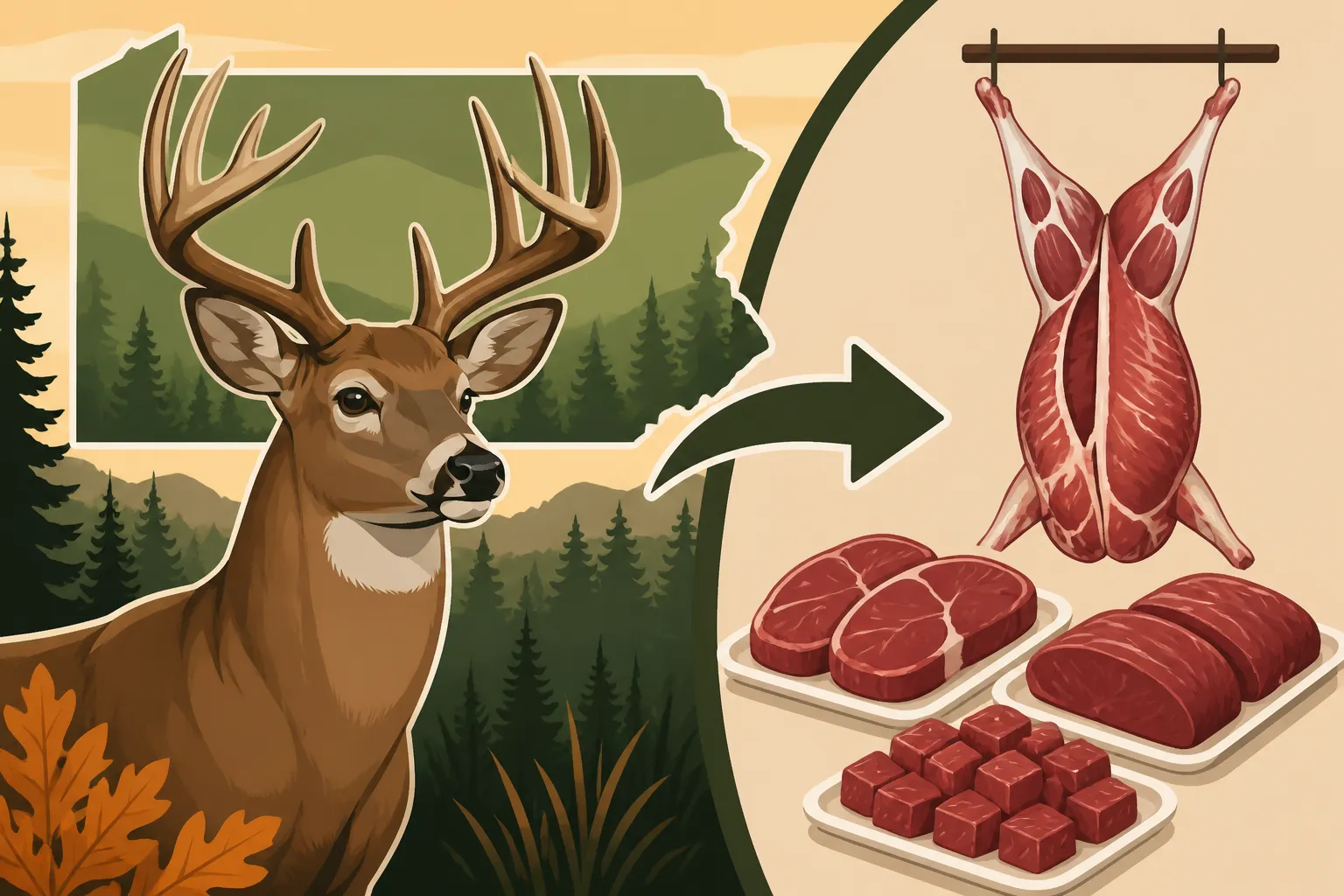
As a general rule of thumb, a deer's dressed weight is typically about 70-75% of its live weight. So, if you harvest a 150-pound live weight buck, it might dress out at around 105-112 pounds. From that dressed weight, you can expect to get about 50-60% boneless meat. That means our 150-pound buck might yield roughly 50-67 pounds of boneless venison. These are broad averages, and actual results can vary based on all the factors we discussed earlier.
Practical Estimation Methods and Tools
While precise measurement often requires a scale and a butcher's block, you can get a good estimate in the field. Many hunters use visual cues to judge a buck's body mass, not just its antlers. A thick, well-muscled neck and a deep chest cavity usually indicate a heavier deer with more meat.
Some hunting resources, similar to how tools like GoHunt provide data for Western hunting, offer insights into deer populations and health within specific Pennsylvania Wildlife Management Units Explained. While GoHunt itself might be geared more toward Western species, the principle of using data to inform your hunt is invaluable. Reviewing local harvest reports, which often include average weights, can give you a baseline for your specific area.
Here’s a simplified table to give you a rough idea of estimated yields for average Pennsylvania whitetails:
| Live Weight (lbs) | Estimated Dressed Weight (70-75%) | Estimated Boneless Meat Yield (50-60% of Dressed Weight) |
|---|---|---|
| 100 | 70-75 | 35-45 |
| 120 | 84-90 | 42-54 |
| 140 | 98-105 | 49-63 |
| 160 | 112-120 | 56-72 |
| 180 | 126-135 | 63-81 |
| 200 | 140-150 | 70-90 |
Remember, these are estimates. A small-bodied, heavy-antlered buck might yield less than a larger-bodied, lighter-antlered one, even if they dress out at similar weights. It's about muscle mass, not just bone and antler.
Maximizing Your Meat Yield From a Pennsylvania Buck
Knowing the factors that affect yield is one thing, but actively working to maximize it is another. Every hunter wants to make the most of their harvest, and a few key practices can help ensure you bring home as much high-quality venison as possible.
Ethical Shot Placement for Minimal Damage
This goes hand-in-hand with ethical hunting. A well-placed shot not only ensures a quick, humane kill but also preserves the most meat. Aim for the "boiler room"—the lung and heart area—just behind the shoulder. This shot typically passes through soft tissue, leaving the valuable shoulder meat intact. Avoid shooting directly into the shoulder if possible, as it will likely result in significant meat loss.
Practicing with your chosen weapon is paramount. Whether you're using a bow for Bowhunting Pennsylvania's October Archery Season or a rifle during Pennsylvania's Two-Week Firearms Deer Season, consistent accuracy at various ranges will pay dividends. Understand your firearm's capabilities and your personal limitations. If you're hunting in thick cover, sometimes a shot that might damage a bit of shoulder meat is still preferable to a less ethical shot that risks wounding the animal or losing it altogether. Ultimately, the goal is always a quick, clean kill that respects the animal and the food it provides.
Proper Field Care and Cooling Techniques
Once the deer is down, the clock starts ticking, especially on warmer days. Immediate and thorough field dressing is your first line of defense against spoilage. Open the body cavity wide, remove all organs, and get as much air as possible circulating inside. If you can, prop the cavity open with a stick.
Next comes cooling. If you’re hunting in cold weather, natural air circulation might be enough. However, if temperatures are above freezing, you need to consider how to cool that carcass quickly. This might involve getting the deer back to camp or home and hanging it in a cool, dry place. Some hunters will even pack ice inside the body cavity for transport. For those long drags out of a hollow, consider ways to speed up the process to get the deer out of the sun and into a cooler environment. Even if you're hunting during Hunting the Peak Rut Week in Pennsylvania in November, unseasonably warm days can happen, making quick cooling vital.
Professional Versus Do-It-Yourself Processing
The choice between processing your deer yourself or taking it to a professional butcher can also impact your final yield.
- Professional Butcher: A good wild game processor knows how to maximize yield. They have specialized tools, cold storage, and the experience to efficiently debone, trim, and package your meat. They can often recover cuts you might miss or struggle with. However, this comes at a cost, and you're entrusting your valuable venison to someone else. Make sure they have a good reputation for handling wild game.
- Do-It-Yourself (DIY): Processing your own deer gives you complete control over every cut and ensures you recover every possible scrap of meat. You can customize your cuts—steaks, roasts, ground meat, jerky—exactly to your liking. It can also be incredibly rewarding. However, it requires time, a clean workspace, the right tools, and a good understanding of anatomy. If you're new to it, you might initially leave a bit more meat on the bone than a seasoned pro. Many experienced hunters learn how to do this themselves, often after a successful season, as described in guides like Butchering a Deer at Camp.
Regardless of your choice, the goal is to get the meat processed as soon as possible after cooling to prevent spoilage and ensure the best flavor. Delaying can lead to tougher, less palatable meat and greater trimming loss.
The True Value of a Pennsylvania Deer Harvest
Beyond the pounds and percentages, there's a deeper value to the venison from a Pennsylvania buck. It represents the culmination of your efforts, your connection to the landscape, and a source of organic, lean protein for your family. Understanding deer meat yield isn't just about the numbers; it's about appreciating the resource and making the most of every harvest.
Pennsylvania is blessed with abundant white-tailed deer, as detailed in our comprehensive guide to White-Tailed Deer Across Pennsylvania. Every deer harvested contributes to wildlife management, and the meat it provides is a tangible benefit of that stewardship. Whether you're focused on Hunting Pennsylvania's Big Woods for Deer or Farm Country Deer Hunting in Southern Pennsylvania, the principles of maximizing your meat yield remain the same. It's about respecting the animal, utilizing practical skills, and enjoying the fruits of your labor.
Ultimately, the venison in your freezer is more than just meat; it's a testament to your hunting heritage and a healthy, sustainable food source that connects you directly to the wild places of Pennsylvania.
Disclaimer
This article is for general informational purposes only and does not constitute professional advice. Laws, prices and regulations vary by location and change over time. Consult a qualified professional for guidance on your specific situation.