Pennsylvania Squirrel Harvest Numbers
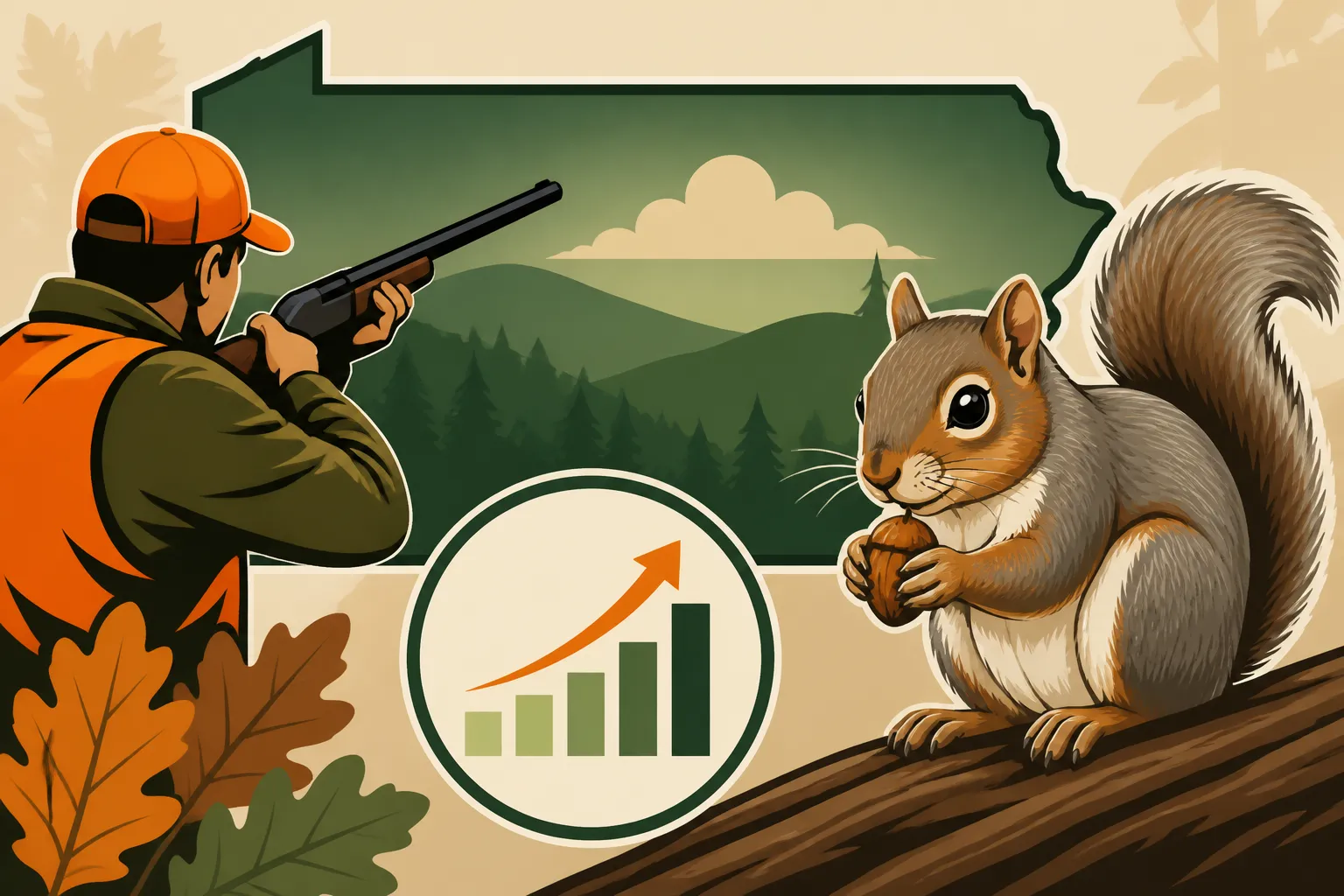
For many of us who cherish the tradition of small game hunting in Pennsylvania, understanding the health of our squirrel populations is more than just academic curiosity. It’s about being connected to the woods, knowing what to expect when you head out, and appreciating the cyclical nature of our wildlife. You might wonder, year after year, how well the squirrel populations are doing and how many other hunters are finding success. This guide dives deep into the factors that influence Pennsylvania's squirrel harvest numbers, how those numbers are collected, and what they can tell you about your next hunt, even when the exact figures fluctuate annually.
Why Tracking Squirrel Harvest Matters to Hunters
When you're out in the crisp autumn air, slipping through a stand of oaks, the rustle of leaves often signals a squirrel, perhaps a gray squirrel darting up a trunk or a fox squirrel barking from a high limb. These moments are the essence of squirrel hunting. But behind every successful outing, behind every full game vest, there's a larger ecological story playing out. The number of squirrels harvested each year isn't just a simple tally; it's a vital piece of the puzzle that helps both wildlife managers and individual hunters understand the bigger picture of the squirrel population's health and distribution across our varied landscape.
Beyond Just a Tally Mark
Think about it: the squirrels you encounter are part of a dynamic, interconnected system. Their numbers reflect the availability of food, the condition of their habitat, and even the pressures from predators and diseases. When you see information about squirrel harvest numbers, it’s not just about how many were taken by hunters; it’s an indicator of the population's ability to sustain that harvest. For the dedicated small game hunter, these figures, or at least the trends they represent, can inform decisions like where to hunt, what tactics to employ, and even what species to target. It’s about being a more informed and responsible participant in the ecosystem.
Every hunter’s experience contributes, in a way, to this understanding. While you might not fill out a detailed survey every time you bag a bushy-tail, the aggregate data provides invaluable insights. Are the gray squirrels doing particularly well in the central mountains this year, while fox squirrels are thriving in the southern farm country? Harvest trends help answer these questions, guiding hunters to more productive areas and ensuring the long-term health of our small game resources.
How Harvest Data Guides Management
The Pennsylvania Game Commission relies heavily on harvest data, among other surveys, to make crucial management decisions. These decisions aren't just pulled out of thin air; they're based on scientific understanding of wildlife populations. If harvest numbers show a consistent decline in certain areas over several years, it might prompt investigations into habitat loss, disease outbreaks, or other environmental factors impacting the squirrels. Conversely, robust harvest figures can indicate a healthy, thriving population that can support current hunting seasons and bag limits.
This data also influences broader conservation efforts. For example, if a particular region consistently shows lower squirrel numbers, it might highlight the need for specific habitat improvement projects, such as promoting oak or hickory regeneration, or managing forest stands to provide better cover and food sources. It's a feedback loop: hunters report harvests, that data is analyzed, and management strategies are adjusted to benefit both the wildlife and the hunting community. It's a testament to the collaborative effort required to maintain our outdoor heritage for future generations.
The Science Behind Pennsylvania's Squirrel Harvest Estimates
So, how exactly do wildlife biologists and game commissions come up with these "harvest numbers" when there are thousands of hunters scattered across the state? It's not like every squirrel hunter checks their game at a designated station, though that happens for bigger game like deer and bear. Instead, it's a careful combination of surveys, statistical analysis, and ongoing research designed to provide reliable estimates without placing an undue burden on hunters. Understanding this process helps us appreciate the figures we see and how to interpret them best.
Hunter Surveys: The Backbone of the Numbers
The primary way Pennsylvania estimates squirrel harvest numbers, much like many other small game species, is through voluntary hunter surveys. After the hunting seasons conclude, a statistically significant sample of licensed hunters receives questionnaires. These surveys ask about their hunting effort (how many days they hunted for specific species) and their success (how many of each species they harvested). This isn't a perfect system, of course, because it relies on accurate recall and honest reporting from hunters. However, when done correctly with a large enough sample size, these surveys provide a remarkably accurate snapshot of statewide and sometimes even regional harvest trends.
These surveys also capture other valuable information, such as hunter participation rates. Knowing how many people actually went squirrel hunting in a given season, and how many days they spent afield, is just as important as knowing the number of squirrels harvested. If the harvest numbers are down, is it because there are fewer squirrels, or simply because fewer people went hunting for them? Or perhaps the weather was so poor that hunter effort decreased significantly. These nuances are vital for drawing accurate conclusions about population health. For serious hunters, understanding this data collection process can inform their own scouting efforts. A platform like GoHunt, for instance, might offer tools or data layers that, if available, could help hunters cross-reference their own observations with broader trends reported through these surveys.
Reading Between the Lines of the Data
It's tempting to look at a single harvest number and take it as absolute truth, but real-world wildlife data is far more complex. These figures are always estimates, accompanied by margins of error. A slight dip in one year might be within the normal statistical fluctuation, rather than an alarm bell for a crashing population. Conversely, a significant, sustained trend—either up or down—is what really catches the attention of wildlife managers. Pennsylvania Squirrel Harvest Numbers are influenced by so many variables that looking at them in isolation can be misleading.
Therefore, when reviewing harvest information, it's always best to look for trends over several years rather than getting fixated on a single season's figure. Was last year an anomaly due to a late spring or an exceptionally wet fall? Or is there a consistent pattern emerging that suggests a long-term change in squirrel numbers or hunter behavior? Understanding these dynamics allows for a more nuanced perspective and helps you prepare for what you might encounter in the woods. This approach to interpreting data is crucial for any hunter aiming to be consistently successful and informed.
Key Factors Driving Annual Squirrel Harvest Fluctuations
Squirrel populations, and consequently, squirrel harvest numbers, aren't static. They ebb and flow with a variety of environmental and human-related factors. It’s like a complex ecological dance, with each element playing a role in the overall picture. Understanding these drivers can give you a significant edge when planning your hunts and can help you interpret the annual reports that come out. From the food on the forest floor to the weather patterns we experience, everything contributes to the story of the squirrel.
The Critical Role of Mast Crops
Perhaps the most significant natural factor influencing squirrel populations and subsequent harvest numbers is the abundance, or lack thereof, of mast crops. "Mast" refers to the nuts and seeds produced by forest trees, particularly hardwoods like oaks, hickories, and beeches. Acorns are a prime example. When Pennsylvania experiences a bumper crop of acorns and hickory nuts, squirrels have an abundant food source, which typically leads to higher survival rates through the winter and more successful breeding in the spring. More young squirrels surviving means a larger population heading into the fall hunting season. Reading Cuttings Under an Oak is an essential skill to understand how productive a mast crop is.
Conversely, a poor mast year can have a cascading negative effect. Scarcity of food means higher mortality rates for squirrels, especially young ones, and often results in reduced breeding success the following spring. Hunters scouting for squirrels in a poor mast year will likely find fewer animals and struggle to locate concentrations of them. This directly impacts hunter success and, therefore, the reported harvest numbers. Hunters often spend more time scouting for these crucial food sources than for the squirrels themselves, knowing that the food dictates where the animals will be. A good mapping app, such as one might find through a service like GoHunt, can be invaluable for identifying mature stands of oak and hickory before you even step foot in the woods.
Weather's Impact on Hunter and Squirrel Activity
Weather plays a dual role in shaping squirrel harvest numbers. First, it directly affects the squirrels themselves. Harsh winters with prolonged deep snow and extreme cold can reduce survival rates, especially if coupled with a poor mast crop. Mild winters, on the other hand, can allow more squirrels to survive and reproduce, boosting populations. Second, and perhaps more immediately impactful on harvest numbers, is the effect of weather on hunter effort and success.
Imagine a deer season where the first two weeks are deluged with rain, or a spring gobbler season with constant high winds. Hunters simply won't be out as much, and their success rates will drop. The same holds true for squirrels. A beautiful, crisp autumn day with minimal wind is ideal for squirrel hunting, encouraging more people to head afield and increasing their chances of success. Conversely, extended periods of heavy rain, high winds that make spotting difficult, or sudden severe cold snaps can significantly deter hunters. This reduced hunter participation, even if squirrel numbers are healthy, will naturally lead to lower reported harvest figures. Being prepared for varying weather conditions with appropriate Clothing for a Pennsylvania December is key to staying out and increasing your odds.
Hunter Effort and Participation Trends
Beyond weather, the sheer number of hunters pursuing squirrels and their dedicated effort also heavily influences harvest data. In some years, there might be a surge of interest in small game hunting, perhaps due to a particular economic climate or a renewed focus on traditional hunting. More hunters in the woods, even if individual success rates remain stable, generally translate to a higher overall harvest. On the flip side, if hunter numbers decline, or if existing hunters shift their focus to other species, squirrel harvest numbers can drop, even if the squirrel population itself is robust.
This trend in hunter participation is a critical component that managers examine when interpreting harvest data. Is a lower harvest a sign of fewer squirrels, or fewer hunters? The distinction is important for management decisions. The long tradition of small game hunting in Pennsylvania means that many hunters have their favorite spots and methods, but external factors can always shift interest. Knowing When Pennsylvania's Long Squirrel Season Explained can help you plan your season and maximize your time in the woods when other seasons might be closed or less appealing.
Translating Harvest Trends into Hunting Strategy
So, you've looked at the reports, you've considered the mast crop forecasts, and you've noted the general trends in squirrel harvest. How do you take this somewhat abstract data and turn it into actionable strategy for your next hunt? It’s about leveraging collective knowledge to enhance your personal experience in the woods. While specific numbers might not always be available for public consumption, understanding the direction of the trends and the reasons behind them can make you a more effective and adaptable hunter.
Adapting to High vs. Low Harvest Years
If reports suggest a year with higher-than-average squirrel harvest, it usually points to a strong population, likely driven by a plentiful mast crop and favorable breeding conditions. What does this mean for you?
- Expect more squirrels: You might find squirrels in areas where they were less common in previous years. Expanding your hunting grounds beyond your usual hotspots could be fruitful.
- Consider new tactics: With more animals, you might experiment with different calling techniques, or try still-hunting through more open timber where squirrels might be less wary. Still-Hunting Pennsylvania Big Woods can be very effective in years of high squirrel numbers.
- Potential for more hunter competition: More squirrels might also draw more hunters. If you hunt public land, consider seeking out less accessible areas or hunting during off-peak times.
Conversely, if harvest trends indicate a lower year, it suggests populations might be down, possibly due to poor mast, harsh weather, or other ecological pressures.
- Focus on prime habitat: Stick to proven areas with consistent food sources, especially mature oak and hickory stands. Squirrels will concentrate where the food is, making these spots crucial. Squirrel Hunting in Hickory Timber becomes even more important in these years.
- Hunt smarter, not harder: Be more patient, move slower, and pay closer attention to subtle signs. Locating those fewer, more dispersed squirrels requires greater diligence.
- Extend your scouting: You might need to scout more extensively before the season to find pockets of higher squirrel density. Tools like GoHunt can help you analyze terrain and canopy cover to identify potential food sources.
Scouting for Success Amidst the Numbers
Ultimately, no matter what the statewide harvest numbers suggest, successful squirrel hunting boils down to effective scouting. The broader trends provide a backdrop, but local conditions dictate your individual success. Even in a "down" year statewide, you can find a honey hole with a strong local mast crop and a healthy squirrel population. Conversely, a "bumper crop" year statewide doesn't guarantee every patch of woods will be teeming with bushy-tails.
Focus your scouting efforts on identifying key food sources, especially during late summer and early fall before the leaves drop. Look for evidence of feeding: cut nuts shells, chewed husks, and fresh droppings. Pay attention to stands of mature oaks, hickories, and beeches. Note areas with good canopy cover, as squirrels prefer to stick to the treetops for safety. Finding Sign in Mature Timber is a vital skill. Also, consider water sources, especially during dry periods, as squirrels will need to drink. By combining the general knowledge gleaned from harvest trends with diligent, boots-on-the-ground scouting, you can consistently put squirrels in the game bag.
| Characteristic | Gray Squirrel (Sciurus carolinensis) | Fox Squirrel (Sciurus niger) |
|---|---|---|
| Size | Smaller, sleeker body (1-1.5 lbs) | Larger, more robust (1.5-3 lbs) |
| Coloration | Typically gray back, white belly | Variable; reddish-brown, often yellowish-orange belly |
| Tail | Bushy, often edged with white | Bushy, more reddish hue |
| Habitat | Dense deciduous forests, prefers continuous canopy | More open woodlands, woodlots, farm edges, parks |
| Behavior | Agile, more arboreal, social | More terrestrial, solitary, slower moving |
| Food Preference | Acorns, hickory nuts, beech nuts, seeds, buds | Acorns, hickory nuts, corn, fruits, fungi |
| Distribution in PA | Widespread across the state | More localized, often in agricultural areas and river bottoms |
Disclaimer
This article is for general informational purposes only and does not constitute professional advice. Laws, prices and regulations vary by location and change over time. Consult a qualified professional for guidance on your specific situation.