Handling Bear Meat and Trichinella
There’s nothing quite like the thrill of a successful Pennsylvania black bear hunt. The sheer size and power of these animals make them a formidable quarry, and bringing one home is a true accomplishment. But once the excitement of the harvest settles, a serious responsibility arises: safely preparing that magnificent animal for the table. One critical concern often overlooked by newer hunters, and sometimes even seasoned ones, is the risk of Trichinella, a parasite that can be found in bear meat. This guide is here to walk you through everything you need to know about handling bear meat to ensure it's not only delicious but also completely safe for you and your family to enjoy.
Understanding Trichinella and Its Risks in Pennsylvania Black Bears
Hunting black bear in Pennsylvania offers an incredible experience, often a culmination of scouting, patience, and skill. When you’ve finally put that bear on the ground, the work is far from over. Unlike deer, bear meat comes with a specific, significant health consideration: Trichinella. It's a topic that can cause some anxiety, but with the right knowledge and proper handling, it's an easily manageable risk. The key is understanding what you're dealing with.
What is Trichinella and Why Hunters Need to Know
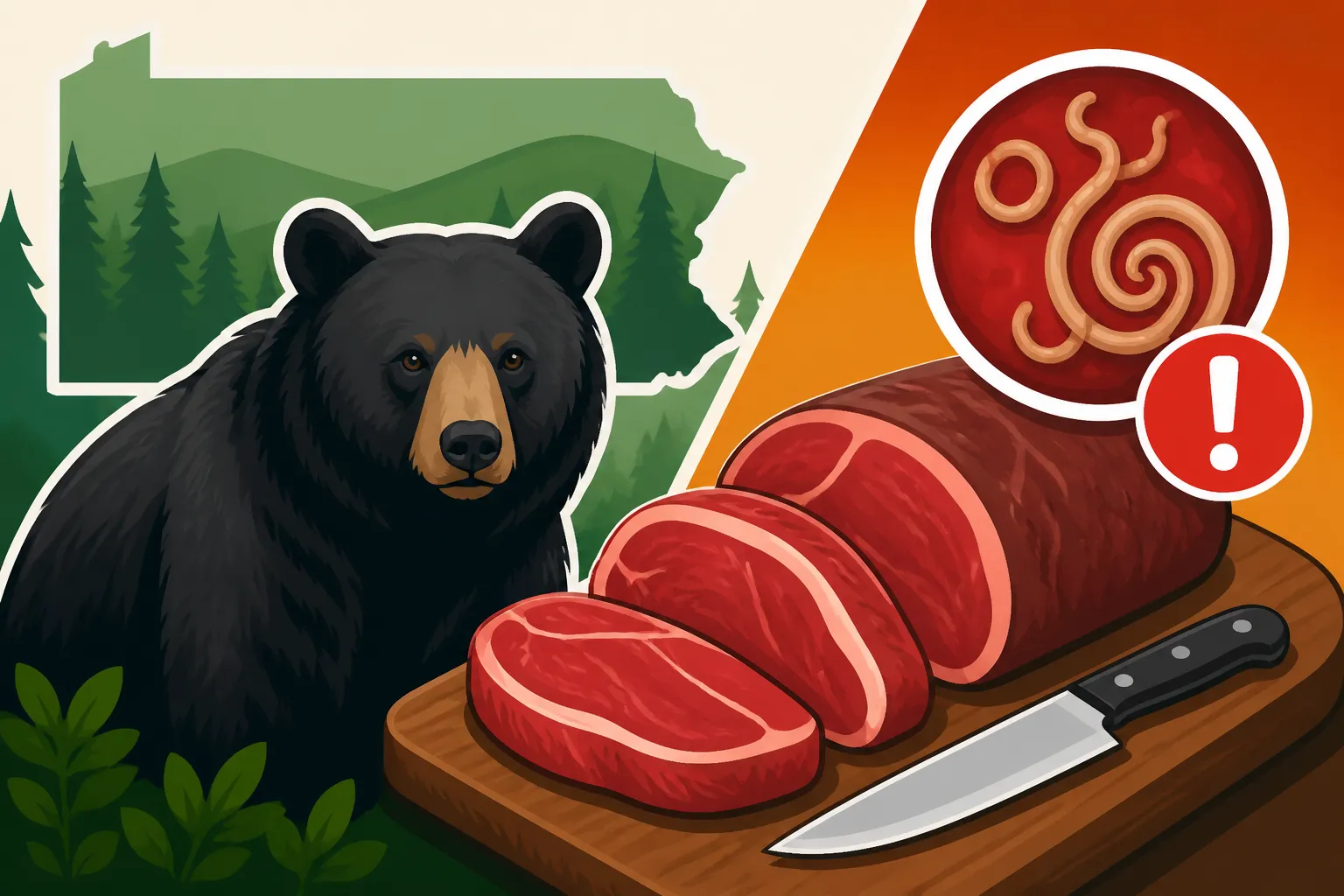
Trichinella is a genus of parasitic roundworms, and the species Trichinella spiralis is the one most commonly associated with humans and wild game like bears. These tiny worms, almost microscopic, live in the muscle tissue of infected animals. When another animal, or a human, consumes undercooked meat containing these larvae, the larvae mature in the new host's intestines, reproduce, and then new larvae migrate to and encyst in the host's muscle tissue. This causes a condition known as trichinellosis, sometimes called trichinosis.
For hunters, especially those of us chasing black bear here in Pennsylvania, understanding this parasite is non-negotiable. Bears are particularly susceptible because of their omnivorous diet. They are opportunistic feeders, often scavenging on carrion or preying on small mammals, which can be infected with Trichinella. When a bear eats an infected animal, the cycle continues within the bear. If we then harvest that bear and consume its meat without proper preparation, we become the next link in that chain. Symptoms in humans can range from mild digestive upset and muscle pain to, in severe cases, serious neurological or cardiac problems, and even death. It’s a sobering thought, but it’s precisely why we need to be diligent.
How Common is Trichinella in Pennsylvania Black Bears?
It's a common question: "How likely is it that my bear has Trichinella?" While specific prevalence rates can vary by region and year, the general consensus among wildlife biologists is that Trichinella is present in the black bear population across North America, including right here in Pennsylvania. It's not a rare anomaly; it's something you should always assume could be present in any bear you harvest.
You absolutely cannot tell if a bear is infected by looking at it. There are no external signs, no visual cues in the meat itself that would indicate the presence of Trichinella larvae. This means that whether you harvest a small cub or a massive boar, you must treat all bear meat as if it contains the parasite. Relying on visual inspection is a dangerous gamble. The parasite's presence is simply a part of the natural ecosystem, influenced by the bear's diet and environment, which, when considering Pennsylvania's Black Bear Population, is quite varied. From the remote wilderness of the Big Woods to the edges of suburban development, bears will eat whatever they can find, increasing their exposure risks.
Dispelling Myths About Bear Meat Safety
Over the years, I've heard my share of myths and old wives' tales about processing wild game, and bear meat safety is no exception. It's vital to separate fact from fiction when it comes to Trichinella, because misinformation can lead to serious health risks. Let's tackle a few of the most common ones head-on.
One pervasive myth is that "only big, old bears carry Trichinella" or conversely, "small, young bears are safe." This is absolutely false. A bear's age or size has no bearing on its likelihood of carrying the parasite. A yearling bear that scavenged an infected carcass is just as likely to harbor Trichinella as a mature sow. Every bear, regardless of its apparent health, age, or size, must be treated with the same caution.
Another dangerous misconception is that "freezing bear meat kills Trichinella." While this is true for some species of Trichinella found in domestic pork, it is generally not reliable for the species found in wild game like black bears. The larvae in wild game are often more resistant to freezing temperatures and can survive typical home freezer conditions. To reliably kill these parasites by freezing, you would need temperatures well below what most home freezers can maintain, and for extended periods. We're talking commercial-grade, ultra-cold freezers, not your garage chest freezer. So, while freezing is excellent for preserving the meat, do not rely on it to make the meat safe from Trichinella.
Finally, some hunters believe that "searing the outside or cooking it medium-rare is fine if the meat looks clean." This is perhaps the most dangerous myth of all. Trichinella larvae are encased within the muscle tissue throughout the meat. Searing the outside simply does not heat the interior sufficiently to kill the parasites. You cannot cook bear meat like you would a prime cut of beef. For complete safety, every bit of bear meat must be cooked thoroughly, all the way through, to a specific internal temperature. There's no room for guessing or wishful thinking when it comes to bear meat safety.
Safe Handling Practices in the Field and During Initial Processing
The work of ensuring safe, high-quality bear meat begins the moment your bear hits the ground. Field conditions can be challenging, especially here in Pennsylvania with our varied terrain and weather, but diligent initial handling is crucial for both overall meat quality and minimizing any potential risks. Think of it as the first line of defense in making sure your harvest is a success from start to finish.
Field Dressing and Initial Cooling
The very first step after a successful harvest, once you’ve taken a moment to appreciate the animal, is to field dress your bear promptly. This means removing the entrails as quickly as possible. Bear body heat, combined with their thick hide and fat layers, can cause meat to spoil rapidly, especially if temperatures are mild or warm. The faster you can get those organs out and introduce cool air into the body cavity, the better the overall meat quality will be.
When field dressing, take care to keep the carcass as clean as possible. Avoid puncturing the intestines or stomach, as their contents can contaminate the meat. Once the organs are removed, you can use snow, ice, or even cool water if available, to rinse out the cavity. This is particularly important for bear, as their diet can sometimes lead to a stronger odor in the gut cavity. Prop the cavity open with sticks to allow for maximum air circulation and cooling. If you're in warmer weather, getting the hide off quickly can also aid in cooling, but for now, focus on getting the guts out and the body cavity open. The goal is to bring that internal temperature down as fast as you can. For more general advice on preparing game after the shot, consider looking at Handling a Bear After the Shot.
Transport and Carcass Care
After field dressing, the next challenge is getting that bear out of the woods. A black bear, even a medium-sized one, is a heavy animal, and navigating Pennsylvania's steep terrain or thick cover can be quite the workout. Whether you're dragging it, packing it out in pieces, or using a game cart, keeping the meat clean and cool during transport is paramount. If you're quartering the bear in the field to lighten the load, try to keep the meat off the bare ground, perhaps on a tarp or clean branches. This prevents dirt, leaves, and other debris from sticking to the meat.
Once you’ve successfully moved the bear from the kill site, which can sometimes involve significant effort, especially when trying to meet the requirements of Getting a Bear to a Check Station, the focus remains on keeping it cool. If you can't get it to a cooler or processing facility immediately, ensure it's in the shade, with the body cavity propped open. A good strategy is to pack clean ice or snow into the cavity, wrapped in game bags or plastic, to continue the cooling process. Hygiene during this stage is vital. Always wash your hands thoroughly after handling the raw carcass, especially before touching anything else. Keep your knives and other tools clean as well. Any dirt or bacteria introduced at this stage can compromise the quality and safety of the meat down the line. Having a good set of Meat Care Gear for Pennsylvania Hunters is invaluable for this stage of the process.
Processing Bear Meat for Consumption: The Critical Steps
After the initial field dressing and transport, you'll be ready to break down your bear. This is where the most critical steps for preventing Trichinella transmission come into play. There are no shortcuts here, and assuming "it won't happen to me" is a risk you simply cannot afford to take. The delicious reward of your hunting effort depends entirely on these final processing and cooking stages.
Thorough Cooking: Your Best Defense
Let's be absolutely clear: Thorough cooking is the only reliable method for killing Trichinella larvae in bear meat. This isn't a suggestion; it's a non-negotiable rule. Forget medium-rare; bear meat needs to be cooked well done, all the way through, with no pink remaining. The U.S. Department of Agriculture (USDA) recommends cooking all cuts of wild game, including bear, to an internal temperature of 160°F (71°C).
To achieve this safely, you absolutely must use a reliable meat thermometer. Insert the thermometer into the thickest part of the meat, avoiding bone. Cook until the thermometer consistently reads 160°F or higher. This applies to roasts, steaks, chops, and especially ground bear meat or bear sausage. For larger cuts, slow cooking methods like stewing, braising, or roasting at a lower temperature for a longer time can help ensure even heating throughout the meat without drying it out completely. Always let the meat rest for a few minutes after cooking; this allows the internal temperature to equalize and the juices to redistribute, making for a more tender and flavorful meal. This thorough cooking is the cornerstone of Handling Bear Meat Safely, ensuring you eliminate the parasite.
Grinding and Sausage Making Considerations
Many hunters opt to grind a significant portion of their bear meat, often blending it with pork fat to make delicious burgers, chili, or various types of sausage. Grinding is a fantastic way to utilize cuts that might otherwise be tough, but it also introduces an additional layer of caution regarding Trichinella. When meat is ground, any potential Trichinella larvae that might have been localized to one area are now thoroughly distributed throughout the entire batch of ground meat.
This means that every single portion of that ground bear meat or sausage must be cooked to the recommended 160°F internal temperature. There’s no part of a burger or sausage patty that can be left undercooked. This is particularly important for homemade sausages. While smoking or curing processes can add incredible flavor, they typically do not achieve the high internal temperatures necessary to kill Trichinella larvae. If you're making smoked sausage or jerky from bear meat, these items must first reach the 160°F internal temperature before being smoked or dried, or they should be treated as uncooked and then thoroughly cooked before consumption. Never assume that the smoking or curing process alone has rendered the bear meat safe from Trichinella.
Freezing Bear Meat: What It Does and Doesn't Do
Freezing is an indispensable tool for preserving wild game meat, allowing us to enjoy our harvest throughout the year. For most game, freezing effectively stops bacterial growth and maintains quality. However, when it comes to bear meat and Trichinella, it's crucial to understand its limitations.
As mentioned earlier, typical home freezing does not reliably kill the species of Trichinella found in wild black bears. The larvae in these animals are more resilient to cold than those found in domestic pork. While professional-grade, ultra-cold freezing at temperatures far below what a standard home freezer can achieve, maintained for extended periods, can be effective, this isn't practical for the average hunter. Relying on your home freezer to kill Trichinella in bear meat is a dangerous gamble and should not be done.
Therefore, you should always freeze bear meat for preservation purposes, to keep it fresh until you're ready to cook it. But never freeze it with the expectation that this process will make it safe from Trichinella. The safety protocol remains the same for frozen bear meat as for fresh: it must be thoroughly cooked to an internal temperature of 160°F (71°C) before consumption. This distinction is vital for your health and the health of anyone who enjoys your hard-earned bear meat.
Post-Processing Hygiene and Safe Practices
Once you've processed your bear meat and stored it, the safety measures don't end there. Maintaining rigorous hygiene in your kitchen and educating those who will enjoy the meat are final, crucial steps in ensuring a safe culinary experience. It's all part of being a responsible hunter and provider.
Cleaning Your Workspace and Tools
After handling and processing raw bear meat, your workspace, tools, and any surfaces that came into contact with the meat need meticulous cleaning and sanitization. This isn't just about general cleanliness; it's about preventing cross-contamination with other foods and ensuring no lingering pathogens or parasites remain.
Start by thoroughly washing all knives, cutting boards, trays, and any other equipment with hot, soapy water. Use a stiff brush for cutting boards to get into any grooves where juices might have seeped. Follow this with a sanitizing step. A common and effective sanitizer is a diluted bleach solution (one tablespoon of unscented liquid bleach per gallon of water). Spray or wipe down all surfaces and tools, let it sit for a few minutes, then rinse with clean water and allow to air dry. This routine ensures that no residue from the raw bear meat can transfer to vegetables, other meats, or prepared foods, eliminating the risk of accidental ingestion of contaminants.
Personal Hygiene for Hunters and Processors
Just as important as cleaning your workspace is maintaining personal hygiene throughout the processing and cooking stages. Your hands are the primary carriers of potential contaminants, so frequent and thorough hand washing is key.
Before, during, and after handling raw bear meat, wash your hands with warm water and soap for at least 20 seconds. This is especially important if you touch your face, phone, or any other items that might then come into contact with your mouth. Wear clean gloves if possible, and change them frequently, particularly if you switch between handling raw meat and other tasks. Avoid touching your eyes, nose, or mouth while handling raw bear meat. If you have any cuts or open sores on your hands, ensure they are properly covered with waterproof bandages and gloves to prevent any direct contact with the meat. These simple steps significantly reduce the risk of transferring anything undesirable from the raw meat to yourself or other surfaces.
Educating Others Who Will Consume the Meat
As the hunter, you bear the responsibility not only for how you process the meat but also for ensuring that anyone who consumes it understands the unique requirements for bear meat safety. This is particularly important if you share your harvest with friends, family, or other camp members.
When you give someone a package of bear meat, whether it's roasts, steaks, or ground, make it a point to clearly explain the need for thorough cooking. Don't assume they know. Tell them explicitly that it must be cooked to 160°F (71°C) internal temperature, with no pink remaining. You can even print out a small label or note with these instructions to attach to each package. Encourage them to use a meat thermometer. This conversation is crucial, as many people are accustomed to cooking other wild game, like deer, to a medium-rare or medium doneness. While Cooking Venison From a Pennsylvania Buck might offer more flexibility, bear meat simply does not. Emphasize that freezing does not eliminate the risk of Trichinella. By providing clear, actionable information, you empower others to safely enjoy the fruits of your successful hunt, completing the journey from the Pennsylvania woods to a safe, delicious meal on the table.
Here's a quick guide to safe internal temperatures for various game meats:
| Meat Type / Cut | Minimum Internal Temperature | Doneness Description | Notes on Trichinella (if applicable) |
|---|---|---|---|
| Bear (All Cuts) | 160°F (71°C) | Well Done (No Pink) | CRITICAL: Must be cooked thoroughly to kill Trichinella. Freezing at home freezers is NOT reliable for killing bear Trichinella. |
| Deer (Whole Muscle) | 135°F (57°C) – 145°F (63°C) | Medium-Rare to Medium | Trichinella is extremely rare in deer. Focus on general food safety. |
| Deer (Ground) | 160°F (71°C) | Well Done | For general food safety, ground meat should always be cooked well done. |
| Wild Turkey (Whole) | 165°F (74°C) | Well Done (Juices run clear) | General poultry food safety. |
| Wild Turkey (Ground) | 165°F (74°C) | Well Done | General poultry food safety. |
| Small Game (Rabbit, Squirrel) | 160°F (71°C) | Well Done | General food safety for small mammals. |
| Pheasant, Grouse | 165°F (74°C) | Well Done (Juices run clear) | General poultry food safety. |
| Duck, Goose | 165°F (74°C) | Well Done (Though some prefer medium-rare for breast meat, general safety advises well-done for wild fowl) | General poultry food safety. Cook to personal preference after understanding risks. |
Ultimately, harvesting a black bear in Pennsylvania is a truly memorable event, a testament to your hard work and connection with nature. By understanding the risks of Trichinella and meticulously following proper field handling, processing, and cooking guidelines, you transform that impressive animal into a safe, delicious, and deeply satisfying meal for yourself and your loved ones. It's about respecting the animal, respecting the resource, and ensuring that every part of the hunting experience is as rewarding as it should be.
Disclaimer
This article is for general informational purposes only and does not constitute professional advice. Laws, prices and regulations vary by location and change over time. Consult a qualified professional for guidance on your specific situation.