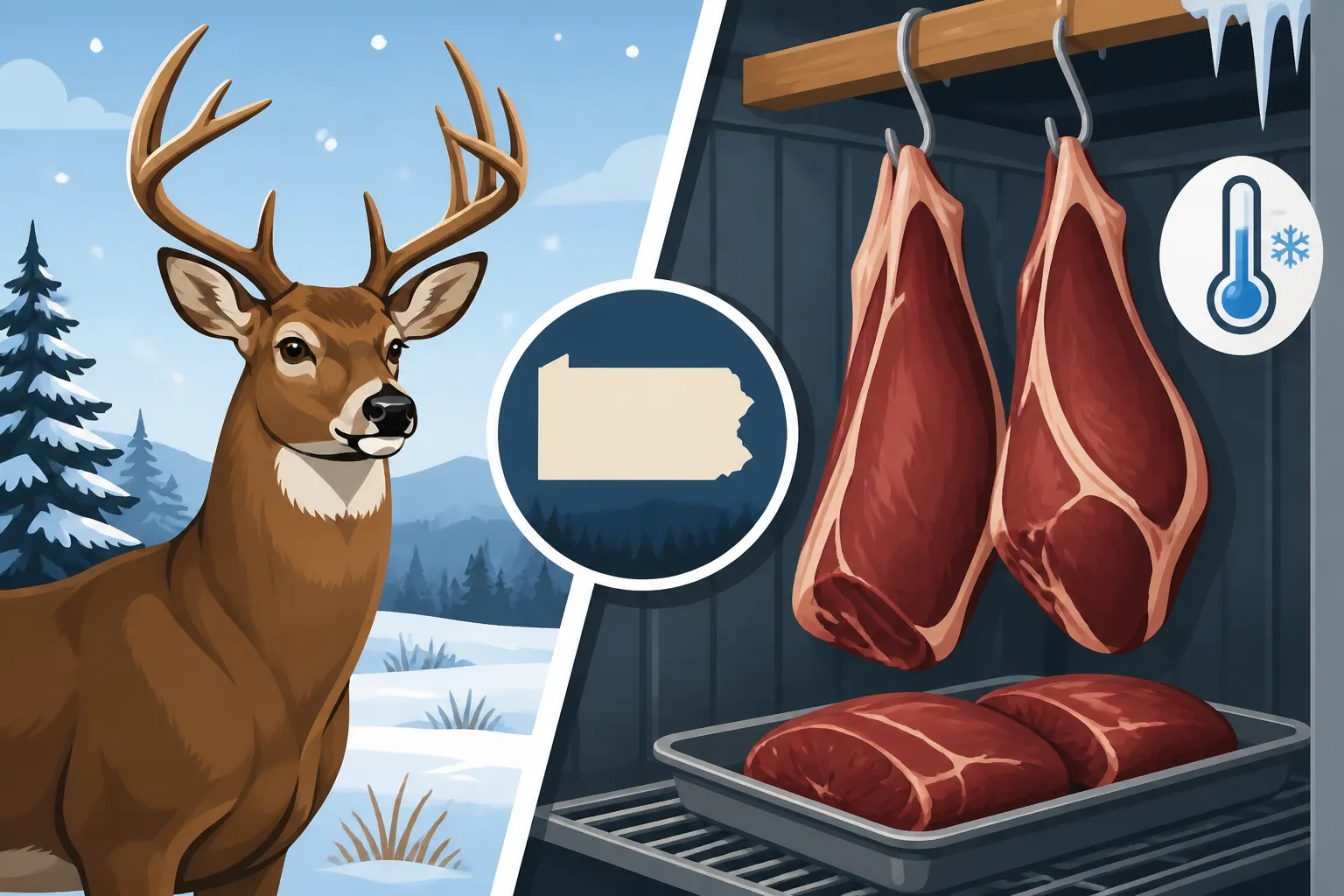
Aging Venison in Cold Weather
There's nothing quite like the feeling of putting a hard-earned Pennsylvania deer on the ground, but for many hunters, the job feels done once the deer is tagged and out of the woods. What many don't realize is that the real magic for culinary quality often begins after the shot. Improper post-harvest care, especially neglecting the art of aging, can turn what should be tender, flavorful venison into tough, gamey meat. This guide will walk you through the essential steps and considerations for properly aging your venison in Pennsylvania's cold weather, ensuring your harvest tastes its absolute best.
The "Why" Behind Aging Venison
Many hunters skip aging altogether, rushing to butcher their deer almost immediately. While this is certainly an option, it often leaves a lot of potential tenderness and flavor on the table. Aging isn't just some old-timer's tradition; it's a proven method to significantly enhance the quality of your wild game meat.
Tenderness: Breaking Down Toughness
Imagine biting into a perfectly cooked steak that melts in your mouth – that's the goal with venison. The natural processes that occur during aging are critical for achieving this tenderness. Immediately after a deer is harvested, its muscles are soft. However, as the animal's life processes cease, the muscles stiffen due to a chemical reaction, a process known as rigor mortis. If you butcher and cook the meat while it's still in full rigor, it will be incredibly tough, regardless of how you prepare it.
Aging allows this rigor mortis to pass. More importantly, it gives natural enzymes within the muscle fibers time to go to work. These enzymes, called proteases, are essentially tiny biological workers that start breaking down the complex proteins and connective tissues within the muscle. Think of it like a natural tenderizer. They loosen up the muscle fibers, making the meat far more palatable and easy to chew. Without this crucial step, even a young, prime deer can yield tough cuts, which is a real shame after all the effort you put into getting it.
Flavor Enhancement: A Deeper Taste Profile
Beyond tenderness, aging also plays a significant role in developing a richer, more complex flavor profile for your venison. While often subtle, this improvement is definitely noticeable to those who appreciate fine game meat. As the enzymes break down proteins, they create smaller, more volatile compounds that contribute to what we perceive as "flavor." It's similar to how a fine wine or aged cheese develops depth over time.
For venison, this often means a less "gamey" taste for some, or a more pronounced, earthy, and satisfying flavor for others. The natural moisture loss that occurs during aging also concentrates the flavors, much like reducing a sauce. This isn't about letting the meat spoil; it's about controlled decomposition that unlocks latent flavors. Many find that properly aged venison boasts a cleaner, richer, and more distinctive taste, elevating the dining experience from a simple meal to something truly gourmet. It really makes all the hard work of scouting, hunting, and Field Dressing a Deer in Cold Weather pay off.
The Science of the Hang: What Happens Post-Harvest
Understanding the "why" of aging is one thing, but knowing the "how" requires a basic grasp of the scientific processes at play. It's not just about hanging a deer and hoping for the best; it's about creating the right conditions for beneficial changes to occur while preventing spoilage.
Understanding Rigor Mortis
Let's dive a little deeper into rigor mortis. This biological process begins shortly after death, usually within a few hours, and can last for 24 to 48 hours, or even longer depending on temperature and the animal's condition. During this time, the muscle fibers contract and lock into place, making the carcass stiff. If you were to butcher a deer during this phase, you'd find the meat incredibly difficult to cut and, as mentioned, unpleasantly tough to eat.
The good news is that rigor mortis is temporary. Over time, the muscle fibers relax, a process known as resolution of rigor. This is the first step towards tenderness. The internal enzymes we talked about earlier begin to degrade the connections between muscle proteins, allowing the fibers to lengthen and soften. The key is to allow the deer to pass through and out of rigor before you start cutting it up. If you butcher and freeze meat while it's still in full rigor, it can suffer from "cold shortening," becoming permanently tough, even after thawing and cooking.
Enzyme Action and Connective Tissue
The real heroes of the aging process are those naturally occurring enzymes within the muscle cells. These aren't external agents you add; they're already there, waiting for the right conditions to get to work. Primarily, these are proteases (calpains and cathepsins being the main players) that target the structural proteins within the muscle fibers and the connective tissue that holds everything together.
Think of connective tissue like a tough, elastic netting surrounding muscle bundles. It's what makes some cuts of meat chewy. During aging, these enzymes slowly start to break down this netting, weakening it and making the entire muscle more yielding. This enzymatic breakdown is a controlled biological process. It doesn't liquefy the meat, but it subtly alters its structure at a molecular level, leading to that desirable tenderness and improved texture. It's a testament to nature's own tenderizing power, working quietly as your deer hangs.
The Critical Role of Temperature Control
This is where "cold weather" becomes not just a convenience, but an absolute necessity for safe and effective aging. Temperature is the single most critical factor in controlling both the enzymatic tenderization process and, crucially, preventing bacterial spoilage.
The ideal temperature range for aging venison is typically between 34°F and 40°F (1°C and 4°C).
- Too Warm (above 40°F/4°C): This is a recipe for disaster. Above this temperature, spoilage bacteria begin to multiply rapidly, leading to off-flavors, odors, and potentially unsafe meat. The enzymes that tenderize also work faster at warmer temperatures, but the bacteria work even faster, winning the race and ruining your meat.
- Too Cold (below 32°F/0°C): If the meat freezes, the enzymatic activity effectively stops. While freezing preserves the meat, it halts the aging process. You can't age frozen meat. Also, rapid freezing can lead to ice crystal formation that damages muscle cells, potentially affecting texture.
- Just Right (34-40°F/1-4°C): In this sweet spot, the beneficial enzymes can slowly and steadily work their magic, breaking down proteins and connective tissue. Simultaneously, the low temperature significantly slows the growth of most spoilage bacteria, keeping your meat safe and fresh.
Humidity also plays a role, though it's often harder to control. Ideally, you want moderate humidity (around 70-80%) to prevent the carcass from drying out too quickly on the surface, which can lead to excessive "bark" or crust. However, too high humidity can encourage mold growth. In most cold Pennsylvania weather scenarios, the natural humidity will be acceptable, especially if you're hanging the deer in a sheltered, airy spot. Remember, successful aging is a delicate balance, and temperature is your primary tool in maintaining it. Hunters who use planning tools for their hunts, like those on GoHunt, often recognize the importance of meticulous preparation, and this extends to post-harvest care as well.
Practical Steps for Aging Venison in Cold Pennsylvania Weather
Now that we understand the principles, let's talk about how to actually get it done when you've harvested a deer in the crisp air of a Pennsylvania autumn or winter. Proper execution is key to maximizing the benefits and avoiding common mishaps.
Initial Field Care and Cleanliness
The aging process truly begins the moment you recover your deer. The cleaner and cooler you get the carcass in the field, the better your chances of successful aging.
- Field Dressing Immediately: This is non-negotiable. Get the guts out as quickly as possible. This removes a massive source of heat and bacteria from the body cavity. Be meticulous; remove all internal organs, including the esophagus and trachea up to the neck. For a truly clean cavity, many hunters will wipe it down with paper towels, though avoid using water unless you can completely dry it afterward. Moisture combined with residual warmth can promote bacterial growth.
- Cool Down Quickly: Once field dressed, get the deer out of the woods and to a cooler environment. If you've been successful on a warmer October day, open the body cavity with a stick or prop to allow air circulation. You might even consider packing bags of ice into the cavity for the journey home, especially if temperatures are above 40°F. For later season hunts, the ambient air often does the job. Remember, the goal is to get the core temperature down to that 34-40°F range as fast as possible.
- Protect the Carcass: During transport and initial handling, keep the carcass as clean as possible. Avoid dragging it through mud or dirt if you can help it. If you plan to hang the deer with the hide on (which is often recommended for aging), this external cleanliness is even more important. Game bags are excellent for protecting the meat from flies, dirt, and even birds while allowing air circulation. You might use something like a quality breathable game bag when you are moving the deer after Getting a Deer Out of a Pennsylvania Hollow.
Finding the Right Spot to Hang Your Deer
Where you hang your deer is almost as important as the temperature. You need a location that offers consistent temperatures, good air circulation, and protection from scavengers and contamination.
- Temperature Consistency: A walk-in cooler is ideal, but for most Pennsylvania hunters, that's not a realistic option. A well-ventilated garage, a shed, or even a sheltered porch can work if the outdoor temperatures cooperate. The key is to find a spot where the temperature will consistently stay within that 34-40°F range. A large cooler packed with ice (changed regularly) can also work for a smaller deer if you can't manage a hanging spot.
- Air Circulation: Good airflow is vital to prevent bacterial growth and allow the surface of the meat to dry slightly, forming a protective "bark." Hang the deer so air can circulate all around it. If you're hanging it in a garage, opening a window or door slightly (if it doesn't compromise temperature) can help. Avoid hanging it in a completely enclosed, stagnant space.
- Protection: You need to protect your deer from flies, birds, rodents, and other scavengers. If hanging outside, a fine-mesh game bag is essential. Even indoors, flies can be a problem. Ensure the area is secure from pets and other animals.
- Hanging Method: Hang the deer by its hind legs, head down. This allows fluids to drain and provides a natural stretch that can also aid in tenderness. Ensure your hanging point is strong enough to support the full weight of the deer.
Monitoring Temperature and Humidity
Once your deer is hanging, your job isn't over. You need to be a diligent caretaker, especially when relying on natural cold weather.
- Thermometer is Your Best Friend: Place a reliable thermometer near the hanging deer, not just outside the building. Check it regularly, especially at night and in the morning, and again in the afternoon. Record the temperatures. If the temperature is creeping up, you need a plan.
- Managing Temperature Swings: Pennsylvania weather can be fickle. A warm spell can quickly ruin your aging efforts. If the temperature is rising above 40°F, you have a few options:
- Open the Hide: If you're aging with the hide on, consider skinning the deer to allow more direct cooling.
- Ice: Pack the body cavity with ice bags. Change them frequently.
- Process Early: If temperatures consistently stay too high, it's safer to butcher your deer and freeze the meat rather than risk spoilage. Better to have slightly less tender meat than spoiled meat.
- Humidity Check: While harder to control, observe the surface of the meat. If it's drying out excessively and forming a thick, hard crust too quickly, your humidity might be too low, or air circulation too strong. If it feels excessively damp or slimy, humidity might be too high or air circulation inadequate.
- Odor and Appearance: Trust your senses. The meat should smell fresh and slightly earthy, not sour or putrid. The surface might develop a dark, dry crust (the "bark"), which is normal and will be trimmed off during Butchering a Deer at Camp. Any green discoloration, slime, or strong, foul odors are clear signs of spoilage, and the meat should be discarded.
How Long to Age Your Venison
This is the million-dollar question, and the answer, frustratingly, is "it depends." Factors include temperature consistency, the deer's age, and your personal preference for tenderness and flavor.
| Deer Age Category | Ideal Aging Temperature | Recommended Aging Duration | Notes |
|---|---|---|---|
| Young Deer | 34-40°F (1-4°C) | 3-7 days | Less connective tissue, ages quicker |
| Mature Doe | 34-40°F (1-4°C) | 7-10 days | Good tenderness with proper aging |
| Mature Buck | 34-40°F (1-4°C) | 10-14 days | More connective tissue, benefits most |
| Old/Large Buck | 34-40°F (1-4°C) | Up to 18 days (with care) | Can be very tough without extended aging |
- Young Deer: A fawn or a yearling might only need 3-5 days. They tend to be tender already, and prolonged aging isn't as critical.
- Mature Deer (Doe or Younger Buck): 7-10 days is a good general guideline for most average-sized deer harvested in Pennsylvania. This allows enough time for rigor to resolve and enzymes to do their work.
- Large, Mature Bucks: These animals often have more connective tissue and muscle mass. They benefit most from extended aging, potentially 10-14 days, or even up to 18 days if conditions are absolutely perfect and you're experienced. This is where you'll really notice a difference in tenderness.
When aging, remember that "too long" is a real thing. Beyond a certain point, particularly in less-than-perfect conditions, the risk of spoilage outweighs any additional tenderization. Always err on the side of caution if you're unsure about your conditions. After the desired aging period, it's time to skin, break down the carcass, and prepare your meat for freezing or immediate consumption. Make sure to have your Meat Care Gear for Pennsylvania Hunters ready.
Avoiding Common Aging Mistakes
Even with the best intentions, it's easy to make mistakes when aging venison, especially if you're new to the practice or if the weather is unpredictable. Knowing what to watch out for can save your valuable game meat.
The Dangers of Contamination and Spoilage
This is the biggest fear when aging, and rightfully so. Spoilage means wasted meat and a potentially sick stomach.
- Bacteria Proliferation: The most common cause of spoilage is uncontrolled bacterial growth. This happens when the temperature is too high, or the carcass is dirty. Always strive for cleanliness from the moment of harvest. Any contact with gut contents, dirt, or even prolonged exposure to insects can introduce spoilage bacteria.
- Bone Sour: This is a particularly insidious form of spoilage that occurs deep within the meat, often around the bone, where air circulation is limited and heat can be trapped. You might not notice it until you start butchering, and by then, the entire muscle might be affected. Rapid and thorough cooling of the deepest parts of the carcass (e.g., the hindquarters around the femur) is the best defense against bone sour. This is another reason why immediate field dressing and effective cooling are so critical. If you're processing in warmer weather, Coolers for an Early Archery Kill might be your best friend for getting internal temperatures down fast.
- Mold vs. Spoilage: A thin layer of white or greenish-white mold on the surface of the hide or meat can sometimes occur during aging. If it's isolated, dry, and has a pleasant, earthy smell, it's usually harmless and can be trimmed off. However, any slimy, foul-smelling, or deeply discolored mold (especially black or iridescent green) is a sign of serious spoilage and indicates the meat is likely ruined. Always be suspicious of any fuzzy, wet, or discolored growth.
Dealing with Fluctuating Temperatures
Pennsylvania's climate can be incredibly variable, especially during the deer seasons. One day it's frosty, the next it's unseasonably warm. These temperature swings are perhaps the biggest challenge for the backyard meat ager.
- Unpredictable Weather: Relying solely on ambient outdoor temperatures can be risky. If a warm front moves in, your carefully aging deer could quickly enter the danger zone above 40°F.
- Proactive Planning: Before you even head out hunting, check the extended forecast. If a warm spell is predicted for the days following your hunt, you need a backup plan. This might mean:
- Skinning Earlier: Removing the hide allows the meat to cool and dry faster, reducing the insulation effect. This can buy you a little time if temperatures start to rise.
- Using Ice: As mentioned, packing the body cavity with ice bags can help.
- Processing Sooner: If conditions simply won't cooperate for a safe aging period, it's always better to process the meat quickly after the initial 24-48 hours of rigor mortis has passed, then freeze it. You might miss out on peak tenderness, but you'll still have safe, edible venison. Consider the total temperature exposure. If the deer was exposed to temperatures above 40°F for more than a few hours total since harvest, aging becomes significantly riskier.
- Monitoring is Key: Your thermometer is your most important tool for managing fluctuations. Regular checks allow you to react quickly if conditions change. Think of it like constantly monitoring your hunting area for deer activity; just as you would use a mapping application for Scouting Pennsylvania Public Land Before Season to understand terrain and bedding, you need to monitor your environment for aging.
When Not to Age: Damaged or Dirty Carcasses
While aging is generally beneficial, there are specific situations where it's best to skip the process entirely and get your deer processed and frozen as quickly as possible.
- Extensive Trauma or Gut Shot: If your deer was extensively damaged by the shot (e.g., a major gut shot that spread bacteria through the abdominal cavity, or a high-velocity impact that pulverized large sections of muscle), aging is usually not a good idea. The risk of spoilage from bacterial contamination is too high. In these cases, focus on salvaging as much clean meat as possible, trim aggressively, and get it into the freezer.
- Contaminated Meat: Any part of the carcass that has come into contact with stomach contents, fecal matter, or other sources of contamination should be trimmed away immediately and thoroughly. If the contamination is widespread, the risk of aging outweighs the benefits.
- Warm Weather Harvest: If you harvest a deer on a particularly warm day (e.g., early archery season in September or even a late-season warm front in December), and you can't guarantee rapid and consistent cooling to that 34-40°F range, it's safer to butcher and freeze without aging. While game bags and ice can help, sometimes the conditions are simply too challenging for safe, effective aging outside of a controlled cooler environment. If you're not confident in your ability to maintain consistent, safe temperatures, don't risk it.
Aging venison is a skill, and like any hunting skill, it takes practice and attention to detail. But with proper care and understanding of the conditions, you can significantly elevate the quality of your wild game, making every meal a testament to your efforts in the Pennsylvania woods.
Disclaimer
This article is for general informational purposes only and does not constitute professional advice. Laws, prices and regulations vary by location and change over time. Consult a qualified professional for guidance on your specific situation.