Pennsylvania Boone and Crockett Whitetails
There’s a special kind of magic that happens when a Pennsylvania hunter hears the words "Boone and Crockett." It’s the stuff of legends, whispered around deer camp fires and dreamed about during long, cold sits on a November morning. For many of us, it represents the pinnacle of deer hunting achievement in the Keystone State – a truly magnificent whitetail buck that exemplifies all the hard work, dedication, and a little bit of luck that goes into our passion. This guide will walk you through what it really means to pursue and potentially harvest a Boone and Crockett caliber whitetail in Pennsylvania, delving into the criteria, the factors that create these giants, and realistic strategies for hunters hoping to tag one.
Understanding the Boone and Crockett Club and Its Standards
When we talk about "Boone and Crockett," we're referring to a highly respected conservation organization that established a standardized system for measuring North American big game trophies, ensuring that records are maintained fairly and consistently. Beyond just the score, the Boone and Crockett Club champions fair chase hunting ethics and wildlife conservation, making any entry into their records a true testament to responsible hunting. It’s not just about the size of the antlers, but also the manner in which the animal was harvested.
Minimum Scores: Typical Versus Non-Typical Categories
The Boone and Crockett scoring system differentiates between "typical" and "non-typical" antlers, recognizing the natural variations found in whitetail deer. Understanding these categories is crucial because the minimum score required for entry into the record book differs significantly between them, reflecting the relative rarity of truly symmetrical typical antlers and the impressive mass of non-typicals.
- Typical Whitetail Minimum: For a typical whitetail to make it into the Boone and Crockett records, it needs to achieve a net score of 170 points. This category emphasizes symmetry, with deductions made for any non-symmetrical points or differences in length between corresponding measurements on each side of the rack. A perfect, clean 5×5 or 6×6 frame with long tines and main beams, and great mass, is the ideal typical whitetail. Hunters often dream of a deer that mirrors itself perfectly from one side to the other.
- Non-Typical Whitetail Minimum: The non-typical category is for those magnificent bucks whose antlers feature irregular points, drop tines, or unusual formations that don't fit the symmetrical ideal. These "freak" racks are scored by taking all the typical measurements and then adding the length of all abnormal points. The minimum net score for a non-typical whitetail to qualify for the Boone and Crockett records is 195 points. Here, asymmetry is celebrated rather than deducted, showcasing the incredible growth potential some bucks possess, sometimes due to injury or unique genetic predispositions.
The Scoring Process: How It Works
The Boone and Crockett scoring process is incredibly detailed and precise, designed to provide an objective measurement of antler size. It’s not just about counting points; it involves numerous measurements taken to the nearest eighth of an inch, all contributing to a gross score before any deductions are made for asymmetry in typical racks.
Measurements include:
- Length of Main Beams: The total length of each antler's main beam, measured from the base to the tip.
- Length of Abnormal Points: For non-typical deer, any points not part of the symmetrical typical frame are measured.
- Circumference Measurements: Four circumference measurements are taken along each main beam between the points, providing a measure of the antler's mass.
- Spread Credit: This includes the greatest spread (widest point between outside edges) and the inside spread (widest point between the main beams).
- Number of Points: All points at least one inch long are counted.
Certified Boone and Crockett scorers meticulously take these measurements. After all positive measurements are totaled for a gross score, specific deductions are applied for typical racks to account for variations between corresponding points on each side. For example, if the G2 tine on the right side is an inch longer than the G2 on the left, that inch is deducted from the typical score. For non-typicals, these differences are not deducted; instead, all abnormal points are added to the typical frame score. It’s a rigorous process that ensures every record book entry meets the highest standards of measurement accuracy.
Where Pennsylvania Stands in B&C Records
Pennsylvania might not be historically known as a top-tier Boone and Crockett state compared to places like Iowa or Wisconsin, but don't let that fool you. The Keystone State has a rich history of producing some truly incredible whitetails, and changes in deer management have certainly helped improve the odds for hunters dreaming of a record-book buck. It's a testament to the diverse habitats and the resilience of our deer herd that such impressive animals roam our woods.
Historical Performance and Trends
For many years, Pennsylvania was known more for its sheer number of hunters and the tradition of the deer drive, often resulting in high harvest numbers but perhaps fewer mature bucks. However, over the past couple of decades, there's been a noticeable shift. The introduction of Pennsylvania Antler Restrictions by WMU was a game-changer. These regulations, which generally require a buck to have at least three points on one side in most Wildlife Management Units (WMUs), have allowed more young bucks to survive their first hunting seasons and mature.
This strategic management has led to an increase in the average age of harvested bucks across the state, and consequently, an uptick in the number of bucks reaching their physical prime, where antler growth potential is maximized. While it's a slow burn, we are seeing more and more impressive deer being taken each year. It's truly exciting to see the positive impact of these regulations on the quality of our deer herd and the trophies it produces. The trend is definitely moving in a promising direction for hunters seeking larger antlers.
Top-Producing Regions and WMUs
When it comes to where the biggest bucks in Pennsylvania typically come from, it's not always the dense, remote Big Woods. While impressive deer certainly emerge from those vast tracts of timber, the majority of the largest antlers tend to come from areas with a particular combination of factors: rich agricultural lands, limited hunting pressure, and excellent nutrition.
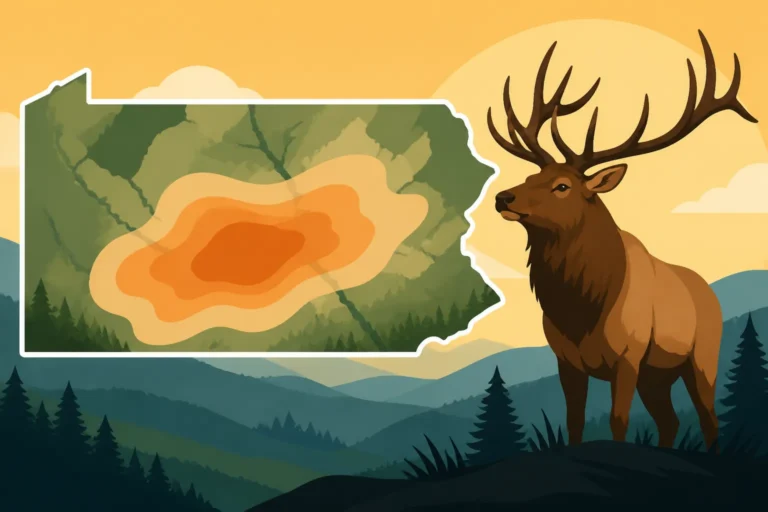
The farm country of southeastern and southwestern Pennsylvania, with its abundant food sources like corn, soybeans, and alfalfa, provides an ideal environment for deer to grow to their maximum potential. These areas often have smaller woodlots, thick fencerows, and creek bottoms that offer cover, allowing bucks to reach older age classes. WMUs in these regions, such as 5C, 5D, and parts of 2B, have historically produced a higher density of mature, heavy-bodied bucks with impressive racks. These areas often benefit from a mix of private lands, which can sometimes reduce overall hunting pressure compared to heavily used public game lands.
Don't count out the "fringe" areas where agricultural lands meet larger timber blocks, either. These transition zones offer both food and sanctuary, creating ideal conditions for mature bucks. While the Big Woods of north-central Pennsylvania present a different challenge and usually yield smaller-racked deer due to lower deer densities and tougher nutrition, every now and then, a true monster emerges from those mountains, making the pursuit even more legendary. Looking into resources like Best Pennsylvania Counties for Big Bucks can give you a better idea of these patterns.
Factors Influencing Antler Growth for B&C Potential
Chasing a Boone and Crockett whitetail isn't just about luck; it's about understanding the biological recipe for growing massive antlers. While you can't control every single variable, knowing what contributes to exceptional antler growth can certainly guide your hunting and scouting efforts, giving you a more realistic perspective on what to look for and where.
Genetics, Nutrition, and Age
These three pillars are inextricably linked when it comes to a buck's antler potential. Think of them as a three-legged stool: if one leg is short, the stool won't stand tall.
- Genetics: While often the least controllable factor for the average hunter on public land, genetics certainly play a role. Some deer simply have the genetic predisposition to grow larger, more impressive antlers. This isn't just about massive racks, but also the potential for wider spreads, longer tines, and more mass. Over time, as management practices like antler restrictions allow more bucks to mature, the genetic potential within a local herd can gradually improve as those better-antlered bucks have more opportunities to breed. However, it's crucial to remember that genetics alone won't create a B&C deer if the other factors aren't present.
- Nutrition: This is arguably the most significant environmental factor a buck needs to express its full genetic potential. Deer are like athletes; they need a constant supply of high-quality protein, minerals (especially calcium and phosphorus), and energy to grow large bodies and impressive antlers. Areas rich in diverse forage, like agricultural fields, mast-producing oaks, and healthy browse, are critical. When the Acorn Crop Fails, for instance, deer rely more heavily on other food sources, and if those aren't abundant, antler growth can suffer. Supplemental feeding is illegal in Pennsylvania and can also contribute to disease spread, so natural, healthy forage is the key.
- Age: This is the absolute king of antler size. A buck won't truly express its genetic and nutritional potential until it reaches maturity, typically between 4.5 and 6.5 years old. Younger bucks, even with great genetics and nutrition, are still dedicating much of their energy to body growth. As they age, their bodies mature, and more resources can be channeled into antler development. This is why What Antler Restrictions Did to Buck Ages has been so beneficial in Pennsylvania; by letting younger bucks walk, we're giving them the chance to grow into the giants we all dream of. Knowing How Many Pennsylvania Bucks Reach Age Three can give you insights into the current health of the buck herd in your preferred WMU.
Habitat Management and Deer Density
Beyond the individual deer, the overall health of the habitat and the density of the deer population in a given area play a huge role in the potential for Boone and Crockett bucks. These are the large-scale factors that create the foundation for trophy growth.
- Diverse and Healthy Habitat: A truly productive deer habitat isn't just a monoculture of mature timber or endless cornfields. It's a patchwork of different cover types: dense security cover for bedding and escaping pressure, open areas for feeding, water sources, and transition zones between them. Areas with ongoing, responsible timber management that creates early successional habitat (young regrowth) provide critical browse and cover. Look for signs of active habitat work on public lands or well-managed private properties. A healthy forest understory with diverse plant life means more consistent, high-quality nutrition for all deer, including the bucks that will grow the biggest antlers. Tools like the Pennsylvania Mapping Center can help you identify these varied habitat types.
- Appropriate Deer Density: This is a delicate balance. Too few deer, and there's less genetic exchange and potentially less competition (which can stimulate antler growth to some extent). Too many deer, and the habitat becomes overbrowsed, leading to poor nutrition for all deer, which drastically reduces antler growth potential. The goal is a deer density that's in harmony with the carrying capacity of the land. In areas with lower deer densities but excellent habitat, individual bucks often have better access to quality food, leading to larger antlers. Conversely, WMUs with very high deer numbers, even if they have some agricultural elements, might produce many deer, but fewer truly large-racked individuals due to the intense competition for food. Understanding Deer Management Assistance Program Permits often gives insight into areas where deer density is a management concern, potentially impacting antler growth.
Strategies for Hunting B&C Potential Deer in PA
Pursuing a truly magnificent, Boone and Crockett caliber whitetail in Pennsylvania requires a different mindset than simply filling the freezer. It’s a game of patience, extensive scouting, and often, passing up good bucks in hopes of encountering a great one. It’s also about deeply understanding deer behavior and how to minimize your impact.
Scouting and Patience
You can't harvest a B&C buck if you don't know where he lives and how he moves. This is where relentless scouting comes into play, year-round, not just weeks before the season.
- Year-Round Reconnaissance: Shed hunting in late winter and early spring can give you tangible evidence of the caliber of bucks in an area. Summer scouting, using optics to glass fields from a distance, helps you identify specific bucks and pattern their feeding habits before velvet sheds. Even after the season closes, scouting helps you understand bedding areas, travel corridors, and sanctuary spots that will remain relevant next year. Many serious hunters use online mapping platforms like GoHunt to pore over aerial photos and topographical maps, identifying potential pinch points, benches, and ridges before ever setting foot in the woods. This virtual scouting helps narrow down areas to investigate on foot.
- Reading the Landscape: Big bucks, especially mature ones, are masters of evasion. They often utilize subtle topographical features, dense cover, and changes in elevation to their advantage. Learning to identify these spots – a secluded bench above a creek bottom, the transition line where a clearcut meets mature timber, or a hidden field edge – is paramount. Understanding Where Big Woods Bucks Bed can be a critical piece of the puzzle. Tools such as GoHunt also offer public and private land boundaries, habitat layers, and historical weather data, all of which are invaluable for virtual scouting and identifying overlooked pockets where a big buck might feel safe.
- Patience is a Virtue: This cannot be stressed enough. You will see many "good" bucks that don't quite meet that B&C threshold. The true trophy hunter must have the discipline to let those bucks walk, trusting that the bigger one is still out there. This often means long hours on stand, sometimes in miserable weather, or multiple seasons pursuing the same individual deer. It's a marathon, not a sprint. Remember, part of the fair chase ethic involves appreciating the animal and the challenge, not just the score.
Understanding Antler Restrictions
Pennsylvania's antler restrictions have profoundly impacted the buck age structure, creating more opportunities for older, larger-racked deer. If you're targeting a B&C deer, you need to know these rules inside and out, not just to stay legal, but to understand the potential of your hunting grounds.
- Specific WMU Rules: Antler restrictions vary slightly by WMU. In most of Pennsylvania, a legal buck must have at least three points on one antler (counting the brow tine). However, in some WMUs, particularly in the northern tier and parts of the Allegheny National Forest, the requirement might be higher or lower depending on the management objectives for that specific area. Always double-check the current regulations for your WMU before heading into the woods. These rules are designed to protect younger bucks, allowing them to reach prime antler-growing age. This directly contributes to the presence of older, larger-racked deer in the population.
- The "Three Up" Rule: The most common antler restriction, "three points on one side," means that a buck must have three points, each at least one inch long, originating from the main beam on at least one antler. The brow tine counts as one of these points. This regulation has been instrumental in increasing the average age of bucks and the overall quality of the deer herd. Hunters often have to learn Judging Antler Points Before the Shot quickly in the field, which can be challenging, but it's part of the ethical responsibility.
- Impact on Herd Quality: While initially controversial for some, the general consensus is that antler restrictions have been positive for Pennsylvania deer hunting. They've shifted the focus from quantity to quality, leading to more mature bucks in the woods. This doesn't guarantee a B&C deer in every woodlot, but it significantly increases the potential for one by ensuring more bucks reach the age where they can grow truly impressive racks. When combined with rigorous scouting and patient hunting during key periods like Hunting the Pennsylvania Rut in November, the chances of encountering that buck of a lifetime improve dramatically.
No matter where you hunt in Pennsylvania, from the dense mountain laurel of the north to the rolling farm fields of the south, the dream of a Boone and Crockett whitetail is alive and well. It takes dedication, skill, and a deep respect for the animals we pursue, but the reward of an ethical harvest and a truly magnificent trophy is unparalleled.
Summary of B&C Whitetail Minimum Scores
To recap, here's a quick reference for the minimum net scores required for a Pennsylvania whitetail to make it into the Boone and Crockett record book, based on typical and non-typical antler configurations.
| Category | Minimum Net Score | Description |
|---|---|---|
| Typical | 170 points | Emphasizes symmetry; deductions for non-symmetrical points and differences between corresponding measurements. |
| Non-Typical | 195 points | Celebrates abnormal points, drop tines, and irregular antler formations; all abnormal points are added to the typical frame score. |
This table serves as a handy guide for understanding the benchmark you're aiming for when evaluating a buck's antler potential in the field or after the harvest.
Disclaimer
This article is for general informational purposes only and does not constitute professional advice. Laws, prices and regulations vary by location and change over time. Consult a qualified professional for guidance on your specific situation.