How Big the Allegheny National Forest Is
For any Pennsylvania hunter, the sheer scale of public land can be a blessing and a curse. You've heard whispers of the Allegheny National Forest, maybe seen it on a map, and wondered just how big it truly is and what that means for your hunting adventures. It can feel overwhelming, a vast sea of green on a satellite image. This guide will dive deep into the Allegheny National Forest's impressive size, what that acreage truly entails for hunters, and how to successfully navigate its expansive woods for deer, bear, and other game.
A Vast Expanse for Pennsylvania Hunters
When we talk about the Allegheny National Forest (ANF), we're discussing a truly immense tract of public land. It's one of the largest continuous blocks of public forest in Pennsylvania, and its sheer size sets it apart from many other hunting grounds in the state. For hunters used to smaller State Game Lands or state forests, the ANF presents a unique challenge and opportunity due to its vastness and character.
Understanding the Allegheny's Scale
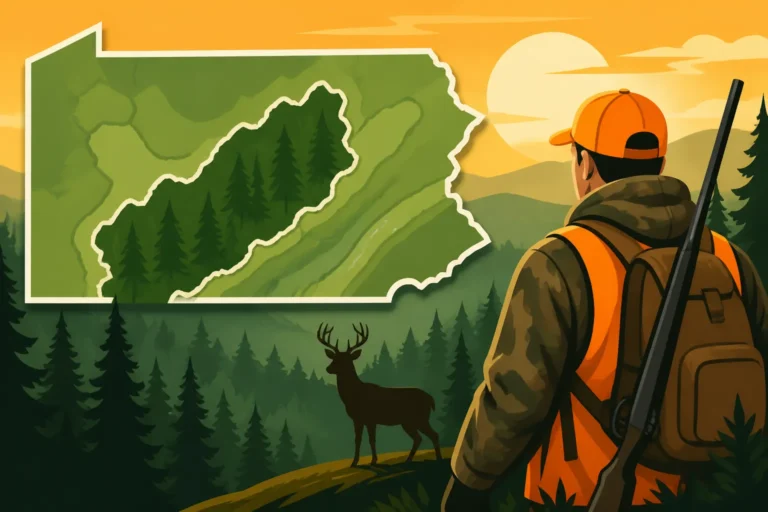
The Allegheny National Forest covers approximately 513,000 acres, primarily located in Warren, McKean, Forest, and Elk counties in northwestern Pennsylvania. To put that into perspective, that's over half a million acres of prime hunting ground, managed by the U.S. Forest Service. It's not just a collection of disconnected parcels; it's a sprawling, contiguous forest ecosystem. This massive scale creates a wilderness feel that is increasingly rare in our heavily populated state. You can literally walk for miles, perhaps even days, without crossing a paved road or seeing signs of dense human habitation, which is a big draw for those seeking a true big woods experience. It’s a place where you can really get away from the crowds that often plague other public hunting areas, especially during opening days.
Think about the implications of half a million acres. It means there are countless ridges, hollows, clearcuts, and mature timber stands that rarely, if ever, see human footsteps. This provides unique opportunities for hunters willing to put in the effort to explore and get off the beaten path. Unlike some State Game Lands, which can often feel like a checkerboard of different habitat projects, the ANF manages its timber and wildlife on a grander scale, often resulting in larger, more uniform blocks of specific cover types. This can make scouting a bit different – you're looking for subtle changes over vast areas rather than distinct edges on small parcels. The management focus often leans towards sustainable forestry, creating diverse age classes of timber over time, which benefits a variety of wildlife, from deer and bear to various bird species.
Fragmentation and Accessibility Challenges
While the ANF is vast, it’s not a perfectly unbroken block of public land. Like many large federal forests, it contains a patchwork of private inholdings scattered throughout its boundaries. These can be old family cabins, timber company lands, or even small private farms. This fragmentation, while sometimes subtle, means that hunters need to be diligent about knowing where they are at all times. You might be deep in the national forest, only to discover you’ve inadvertently stepped onto a private parcel. This isn't usually an issue for the casual walk-in hunter, but for those pushing deep into remote areas, a good map and GPS are absolutely essential.
Accessibility can also be a challenge. While there are numerous forest roads, many are gated or only open seasonally. This adds to the wild feel, but it also means that getting to certain remote sections requires a significant walk. You won't always find a convenient parking lot every half-mile like you might on some smaller State Game Lands. This limitation on vehicular access is a double-edged sword: it keeps hunting pressure lower in certain areas, but it also means you need to be prepared for longer treks, whether you're scouting or dragging a harvested animal out of the woods. Understanding the road network and seasonal closures is paramount for planning a successful hunt. The rugged terrain, with its steep hills and deep hollows, also contributes to the "inaccessibility" in many areas, creating sanctuaries for game that rarely see human disturbance.
What This Means for Deer and Other Game
The immense size and diverse habitat within the Allegheny National Forest translate into fantastic opportunities for a variety of game species. The "big woods" environment supports populations of game that thrive in expansive, relatively undisturbed settings. This isn't farm country hunting; it's a different beast entirely, requiring different tactics and a greater appreciation for solitude.
Deer Hunting in the Allegheny National Forest
Deer hunting in the ANF is a true big woods experience. While deer densities might not be as high as in some agricultural areas of southeastern Pennsylvania, the quality of the hunting experience and the potential for mature bucks can be exceptional. These deer are often pressured less intensely than their farm country counterparts and tend to follow more natural patterns dictated by food sources, cover, and terrain rather than human activity. Hunting Pennsylvania's Big Woods for Deer is a great resource if you're looking to dive into this style of hunting.
You won't find many established food plots here. Instead, deer rely on natural browse, acorns from oak ridges, and the regrowth in timbered areas. Finding these natural food sources is key. During the early archery season, focusing on oak benches and ridge tops where acorns are dropping can be highly productive. As the season progresses and colder weather sets in, deer will often gravitate towards thick thermal cover in the hollows or the dense regrowth of clearcuts. Hunting Pennsylvania Clearcuts and Regrowth is a strategy that works particularly well in areas like the ANF. The deer in the ANF are masters of using the terrain to their advantage, often bedding in locations that give them a view of their backtrail or allow the wind to carry scent to them from approaching predators. Their home ranges can be quite large due to the expansive habitat, making them challenging to pattern.
| Hunting Factor | Allegheny National Forest (Big Woods) | Farm Country (Southern PA) |
|---|---|---|
| Deer Density | Lower, but mature bucks possible | Higher |
| Primary Food | Acorns, natural browse, regrowth | Ag crops (corn, soybeans) |
| Cover Type | Large, continuous timber blocks | Woodlots, hedgerows |
| Hunting Pressure | Variable, can be very low in remote areas | Generally higher |
| Terrain | Often steep, rugged, remote | Gentler, more accessible |
| Tactics | Still-hunting, scouting large areas | Stand hunting, ambush points |
| Avg. Deer Age | Older bucks more common | Younger bucks more common |
Bear and Other Big Game Opportunities
The Allegheny National Forest is arguably one of Pennsylvania's premier black bear hunting destinations. The vast, rugged terrain and extensive cover provide ideal habitat for bears, allowing them to grow large and establish substantial home ranges. Bear sign, such as claw marks on beech trees or torn-apart logs where they've searched for grubs, can be abundant in many parts of the ANF. Pennsylvania Black Bear Hunting in this environment is truly a rewarding challenge.
Hunting bear here requires patience and a willingness to cover ground. Focus on areas with good mast crops in the fall, like stands of oak or beech. Bear will often gorge themselves on these high-energy foods before denning. Thick laurel patches and dense hemlock bottoms also serve as excellent bedding and escape cover for bears. Many hunters choose to still-hunt or participate in bear drives in the ANF, leveraging its size to push bears towards waiting standers. Bear Drives in Pennsylvania can be incredibly effective in these big woods settings.
Beyond deer and bear, the ANF also offers opportunities for small game and furbearers. Squirrels are abundant, especially in the oak and hickory stands, providing a fantastic opportunity for early season hunts or a leisurely walk in the woods. Wild turkeys also roam the ANF, though often in smaller flocks than in more agricultural areas. Their presence here speaks to the healthy forest ecosystem. Hunters seeking predators like coyotes will find endless territory to explore, particularly during the winter months when their tracks are visible in the snow. Predator and Furbearer Hunting in Pennsylvania is a year-round pursuit in this extensive wilderness.
Navigating and Utilizing the ANF for Hunting
Hunting such a massive area as the Allegheny National Forest requires a different approach than hunting smaller, more fragmented parcels. You can't just wander aimlessly and expect consistent success. Effective navigation, thorough scouting, and a solid understanding of the terrain are crucial.
Tools for Exploring the Allegheny's Vastness
When dealing with half a million acres, a simple paper map, while valuable, isn't always enough. This is where modern mapping technology truly shines. Digital mapping apps like onX Hunt and GoHunt are indispensable for navigating the ANF. These apps allow you to:
- See property boundaries: Crucial for avoiding private inholdings within the ANF. You can instantly know if you're on public land, private land, or another designation. This peace of mind is invaluable when you're miles from a road.
- Mark waypoints: You can drop pins for potential stand locations, rub lines, scrapes, water sources, or even your vehicle's parking spot. This helps you keep track of areas of interest and ensure you can find your way back, even in unfamiliar terrain.
- Track your movements: See exactly where you've walked, allowing you to backtrack if needed and understand what ground you've covered. This is incredibly useful for Still-Hunting Pennsylvania Big Woods or exploring new areas.
- Access satellite imagery and topographic maps offline: Signal can be spotty, or non-existent, deep in the ANF. Downloading maps for offline use is a must. These topographical layers are essential for understanding elevation changes, benches, and saddles – key features for deer movement.
- Identify habitat types: Satellite imagery can help distinguish between mature timber, clearcuts, and open areas, helping you identify potential game hot spots even before you step foot in the woods.
Before any hunt, spend significant time studying the ANF on these mapping platforms. Look for remote areas away from main roads, identify potential bedding areas, travel corridors, and feeding zones. Understand the elevation changes and plan your approach and exit routes carefully. Remember, what looks like a small hill on a map can be a brutal climb in person, especially with a deer on your back.
Practical Tips for Hunting Such a Large Area
Hunting the Allegheny National Forest is not for the faint of heart, but it rewards those who prepare adequately and embrace the challenge.
- Prioritize Physical Fitness: Long walks, steep climbs, and dragging game are par for the course. Start a fitness routine well before the season opens. Your legs and lungs will thank you.
- Scout, Scout, Scout: Given the size, you can't just pick a spot. Utilize digital maps to narrow down areas, then put boots on the ground during the off-season. Look for old logging roads, distinct terrain features like benches or saddles, and consistent game sign. Focus on a smaller, manageable section of the ANF rather than trying to cover too much ground. Scouting Pennsylvania Public Land Before Season is even more critical here.
- Learn to Read the Woods: Natural food sources change year to year. Be aware of the mast crop. Are the oaks dropping? Are the beechnuts abundant? Deer and bear will move to where the food is. Also, pay attention to the prevailing winds and thermals, especially in the steep terrain. Wind and Thermals on a Ridge play a huge role in how game moves and where you should position yourself.
- Go Deeper, Get Further: The further you are from a road, the less hunting pressure you're likely to encounter. While this requires more effort, it often leads to less disturbed game and a higher chance of encountering older, wiser animals. Just be prepared for the extraction if you're successful.
- Be Prepared for the Elements: The ANF can be rugged and unpredictable. Weather can change quickly. Carry sufficient water, food, navigation tools, first-aid, and extra layers of clothing. Clothing for a Pennsylvania December for late season hunts, or lighter, breathable layers for early archery, are essential.
- Safety First: Hunting alone in vast wilderness areas carries inherent risks. Always tell someone where you are going and when you expect to return. Consider carrying a satellite communicator for emergencies, especially if you plan to hunt truly remote sections.
- Respect the Resource: The ANF is a precious resource. Pack out everything you pack in. Be mindful of Leave No Trace principles. Leave the forest as you found it, or better.
Hunting the Allegheny National Forest offers an unparalleled opportunity to experience truly wild Pennsylvania. Its immense size is its defining characteristic, providing both daunting challenges and incredible rewards for those willing to embrace the big woods experience. It’s a place where you can create lasting memories and truly test your skills as a hunter.
Disclaimer
This article is for general informational purposes only and does not constitute professional advice. Laws, prices and regulations vary by location and change over time. Consult a qualified professional for guidance on your specific situation.