Sproul State Forest Deer Ground
Venturing into Sproul State Forest to chase whitetails can feel like staring at a blank canvas when you're used to smaller woodlots or farm country. It's a vast, rugged expanse, and figuring out where to even begin looking for deer, let alone how to hunt them effectively, is a challenge many Pennsylvania hunters grapple with. This guide aims to break down the complexities of Sproul's deer ground, offering practical advice and strategies to help you navigate its immense timber and increase your chances of success.
Understanding Sproul's Unique Deer Habitat
Sproul State Forest isn't your typical Pennsylvania deer hunting landscape. Located primarily in Clinton and Centre counties, stretching across thousands of acres, it's the epitome of "big woods" hunting. This isn't where you'll find sprawling agricultural fields or perfectly manicured woodlots. Instead, you're faced with an incredible diversity of rugged terrain, mature timber, and dense regrowth, all of which influence deer movement and behavior in profound ways. Understanding these core elements is the first step to unlocking its secrets.
The Lay of the Land: Steep Ridges and Deep Hollows
When you look at a topographic map of Sproul, or better yet, experience it firsthand, you'll immediately notice the dramatic elevation changes. We're talking about steep, unforgiving ridges dropping into deep, winding hollows, often carved out by pristine mountain streams. These geological features are not just scenic; they are the highways and hideouts for deer in this environment.
Deer use these features for everything. The hollows often offer thermal cover from biting winds in winter and cooler temperatures in early archery season. They provide natural travel corridors, shielding deer from direct observation. The ridges, on the other hand, offer vantage points for deer to survey their surroundings and catch subtle changes in wind direction. Bucks, especially mature ones, will often bed on points or benches just below the ridgetops, using the swirling thermals to detect danger from below and their eyes to spot anything approaching from above. Learning to read these contours, understanding how deer will use a specific bench or saddle, is paramount. Forget flat-land hunting; here, every incline and decline tells a story.
Timber Types and Food Sources
The dominant timber types in Sproul State Forest are critical to understanding deer distribution. You'll find extensive stands of mixed hardwoods, like oak, maple, and cherry, interspersed with hemlock thickets and regenerating clearcuts. Each of these offers different resources for deer at various times of the year.
Oak stands, particularly white oaks, are gold mines when the acorns drop in the fall. Deer will flock to these areas, often abandoning other food sources. However, an inconsistent acorn crop means deer might be scattered, seeking out beechnuts, cherry pits, or other mast. Hemlock and dense conifer stands offer crucial thermal and security cover, especially during harsh winter months or heavy hunting pressure. During the early spring and summer, deer browse on tender new growth in clearcuts or areas of selective timber harvest. The Pennsylvania Game Commission and Department of Conservation and Natural Resources (DCNR) often manage parts of Sproul, and recent timber cuts can create fantastic browse and security cover, attracting deer for years after the logging activity. Always keep an eye out for these areas, as they can concentrate deer. Hunting Pennsylvania Clearcuts and Regrowth is a great resource to learn more about these crucial areas.
Water and Sanctuary Areas
Water is abundant in Sproul, with countless springs, small creeks, and larger streams flowing through the hollows. Deer don't typically "water" in the same way they might at a farm pond, but these water sources dictate much of their travel patterns. They'll often follow creek bottoms as they move between bedding and feeding areas, especially when the terrain is steep.
Sanctuary areas are equally vital. These are often the thickest, most inaccessible parts of the forest – dense laurel slicks, overgrown blowdowns, or particularly steep, cliff-ridden slopes that most hunters avoid. This is Where Big Woods Bucks Bed and find respite from human intrusion. Identifying these pockets of security on a map, and then figuring out how deer might access them or leave them, is a key component of successful big woods hunting. Think about the path of least resistance for a deer, not necessarily for you. These hard-to-reach spots often hold the most mature deer simply because they rarely encounter humans there.
Scouting and Pre-Season Preparation for Sproul
You can't just show up to Sproul State Forest on opening day and expect to stumble into deer. Its sheer size demands meticulous planning and dedicated scouting. This isn't just about finding deer; it's about understanding their habits across a vast, complex landscape. Treating your preparation like a military operation will pay dividends.
Topographic Maps and Aerial Imagery: Your Digital Boots on the Ground
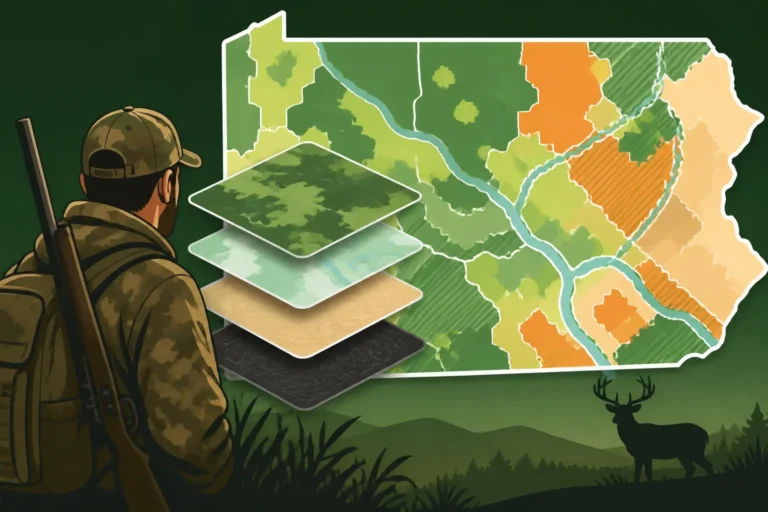
Before you even tie your boots, you should be pouring over topo maps and aerial imagery. Tools like onX Hunt become absolutely indispensable here. You can identify potential bedding areas on steep, south-facing slopes, locate saddles and benches that serve as natural travel corridors, and spot isolated thickets that might hold a mature buck. Look for changes in elevation, pinch points, and areas where different timber types converge.
Similarly, other mapping services offer excellent data. For instance, services like GoHunt provide detailed satellite imagery that allows you to zoom in and differentiate between mature hardwoods, recent clearcuts, or dense conifer stands. Mark potential stand locations, exit and entry routes, and any observed features like old logging roads or springs. This digital scouting saves countless miles of walking and helps you prioritize which areas to physically check. It's about breaking down the massive forest into manageable, promising zones before you ever step foot in it. Scouting With the Pennsylvania Mapping Center and Reading Aerial Photos for Big Woods Deer can offer more insights into maximizing these digital tools.
Boot Leather and Ground Truthing: Confirming Your Intel
Once you've narrowed down some promising areas on your digital maps, it's time to hit the woods. This "ground truthing" phase is critical. What looks like a perfect pinch point on a map might be too open or too disturbed on the ground. You're looking for tangible evidence: old rub lines from previous seasons, fresh scrapes, well-worn deer trails leading between potential bedding and feeding areas, and most importantly, deer droppings that indicate recent activity.
Focus on areas that appear to be natural funnels or obstacles. A steep, rocky bluff might force deer to a specific, easier crossing. A saddle between two ridges will naturally funnel deer moving from one side to the other. Look for sign where these features intersect. Pay attention to the subtle things – a faint deer trail along a bench that only becomes visible when you're right on it, or an old logging road that, while grown over, still offers easier travel for deer. Don't be afraid to walk deep. The deer often retreat to areas less frequented by casual hikers and hunters. When you find good sign, spend time understanding why deer are using that particular spot.
Seasonal Considerations for Scouting
Deer behavior in Sproul changes drastically with the seasons, and your scouting should reflect that. In late summer and early fall, deer are focused on feeding and building fat reserves. Look for areas with abundant soft mast (berries, wild grapes) and early dropping acorns. This is a good time to locate feeding patterns before the pressure starts.
As the rut approaches in late October and November, deer become more active, and buck sign like rubs and scrapes become much more prevalent. Follow these indicators, as they can lead you to prime rutting corridors. During the late season, after leaf fall and especially after snow, deer will often concentrate in dense thermal cover like hemlock bottoms or thick clearcuts, venturing out only to feed on remaining mast or browse. Your scouting should adapt to these shifts, focusing on the current needs of the deer herd.
| Habitat Type | Typical Deer Use | Best Hunting Approach | Key Sign to Look For |
|---|---|---|---|
| Steep Ridges | Travel corridors, bedding on benches/points, escape | Stand on saddles, still-hunt edges, watch draws | Faint trails, beds, rub lines |
| Deep Hollows | Thermal cover, travel between ridge systems, water | Still-hunt slowly, check creek bottoms | Trails along water, old rubs |
| Hardwood Flats | Primary feeding when mast is abundant, travel | Stand over acorn drops, intercept travel | Fresh cuttings, droppings, rubs |
| Conifer Thickets | Security cover, thermal protection, bedding | Staging areas for drives, careful still-hunting | Heavy trails leading in/out, beds |
| Clearcuts/Regrowth | Browse, security cover for young deer | Stand edges, still-hunt interior | Heavy browse, droppings, rubs |
Hunting Strategies for Big Woods Whitetails in Sproul
Hunting Sproul State Forest requires a different mindset than hunting smaller, more fragmented landscapes. You're not just hunting a deer; you're hunting a vast, wild ecosystem. Patience, woodsmanship, and a willingness to adapt are your greatest assets here. Forget the quick sits; this is often an all-day affair.
Still-Hunting and Stand Placement: The Art of the Slow Game
Still-hunting is arguably one of the most effective methods in Sproul's big woods. It involves moving incredibly slowly, stopping often to scan and listen, and covering ground methodically. Think of it as stalking in slow motion. You're not just walking; you're actively hunting every step. This allows you to cover vast areas and find deer in unexpected places. Pay close attention to subtle terrain features – a small rise, a fallen log, or a cluster of thick pines that a deer might be using for cover. Still-Hunting Pennsylvania Big Woods delves into this tactic in detail.
When it comes to stand placement, focus on those natural funnels you identified during scouting. A saddle on a ridge, a bench overlooking a hollow, or a pinch point where a dense thicket meets a more open timber stand are all prime candidates. Remember, deer here are pressured, so your entry and exit routes are just as important as the stand itself. Don't blow out your spot before you even get in position. Consider using a mobile setup like a treestand or a saddle, allowing you to adapt to fresh sign you find on the fly. Treestand Setups in Pennsylvania Hardwoods offers valuable insights for this type of environment.
The Importance of Wind and Thermals
Anyone who's spent a day in Sproul knows how fickle the wind can be in those deep hollows and along the ridgetops. Neglect this, and you're just educating deer. In steep terrain, thermals play a huge role. As the sun rises and warms the earth, air flows uphill. In the evening, as the air cools, it flows downhill. Deer are masters of using these thermals to their advantage, often bedding high and catching scent from below, then moving down to feed, using the evening thermals to protect their backtrail.
Your strategy must account for both prevailing wind and thermals. This might mean setting up on a bench slightly below a ridgetop to catch uphill thermals in the morning, or positioning yourself where the wind carries your scent away from a known bedding area. Sometimes, a midday sit where the thermals are transitioning can be incredibly effective, catching deer as they shift between their morning beds and afternoon feeding spots. Always carry a wind checker, and constantly monitor the air currents. Wind and Thermals on a Ridge is an excellent read if you want to master this crucial aspect of big woods hunting.
Tracking and Recovery in Challenging Terrain
The vastness and ruggedness of Sproul make tracking and recovering a downed deer a significant undertaking. Preparation here is not just about the shot, but about everything that happens after. Even a well-placed shot can result in a short track, but in thick cover or steep terrain, even 50 yards can feel like 500.
Always mark your shot location precisely. Take note of landmarks. Before moving, take a moment to compose yourself and listen. Sometimes you can hear a deer fall. Give the deer ample time, especially if it's a gut shot or marginal hit. When you begin tracking, move slowly and methodically, marking every piece of sign: blood, hair, disturbed leaves, broken twigs. If you lose the trail, grid search in expanding circles. A good headlamp, flagging tape, and a well-charged phone with GPS capabilities are not optional; they are essential. If darkness approaches and you haven't recovered your deer, consider exiting the woods and returning with fresh eyes in the morning, unless weather conditions necessitate an immediate retrieve. Blood Trailing After Dark in Pennsylvania and Recovering a Deer on Steep Ground offer crucial advice for these tough situations. This is where a hunting partner truly becomes invaluable, helping to track and, eventually, drag your hard-earned buck out of a deep hollow. Dragging a Deer Off a Pennsylvania Mountain is a topic many a Sproul hunter has become intimately familiar with.
Disclaimer
This article is for general informational purposes only and does not constitute professional advice. Laws, prices and regulations vary by location and change over time. Consult a qualified professional for guidance on your specific situation.