Bow Draw Weight for Pennsylvania Whitetails
Choosing the right bow draw weight for hunting Pennsylvania whitetails is a decision that can truly make or break your season. Many archers, especially those new to the sport or looking to upgrade, grapple with finding that sweet spot where power meets precision. This guide will walk you through everything you need to know to select a draw weight that ensures ethical shots, maximum accuracy, and a more enjoyable experience in the woods.
Understanding Draw Weight Basics
Before we dive into the nuances, let's establish a clear understanding of what draw weight actually is and why it holds so much importance for an ethical hunt. It's more than just a number on your bow; it's a critical factor in your ability to hunt effectively and humanely.
What is Draw Weight and Why it Matters?
At its core, draw weight is the amount of force, measured in pounds, required to pull your bowstring back to its full draw length. For a compound bow, this is typically the peak weight achieved before the cams roll over into the "let-off" phase. For traditional bows, it's the full weight held at the shooter's draw length. Why does this matter so much for deer hunting? Simply put, draw weight directly influences the speed and kinetic energy of your arrow. A higher draw weight generally translates to more kinetic energy (KE) and momentum in your arrow, which are vital for achieving proper penetration, especially when using a broadhead designed for hunting.
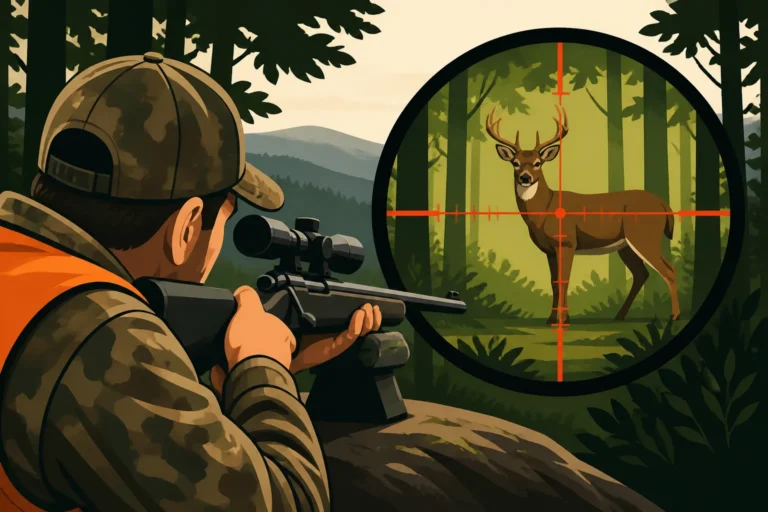
Imagine you've spent countless hours scouting, found the perfect Treestand Setups in Pennsylvania Hardwoods, and a prime buck steps into your shooting lane. You draw back, release, and watch your arrow fly. If your draw weight is too low for your arrow setup, or if you can't consistently achieve a smooth, full draw, that arrow might not have the power needed to pass through a deer's vitals cleanly. This can lead to a wounded animal and a difficult, if not impossible, recovery. An ethical shot demands sufficient power for a quick, humane kill, and that starts with understanding and choosing the right draw weight.
Pennsylvania's Minimum Draw Weight Requirements
The Pennsylvania Game Commission (PGC) sets specific regulations for hunting equipment to ensure fair chase and ethical harvesting. For bows, the minimum draw weight typically mandated for hunting deer and other big game is 35 pounds. This applies to both compound bows and traditional bows like recurves and longbows. However, it's crucial to understand that this 35-pound minimum is just that – a minimum. It's the floor, not necessarily the ideal. While a well-tuned bow with sharp broadheads and a properly placed shot can take a deer at 35 pounds, many experienced archers find that a slightly higher draw weight provides a greater margin of error for less-than-perfect shot angles or hitting bone.
For crossbows, the regulations are slightly different, focusing more on minimum draw weights (often 125 pounds) and minimum bolt lengths. But since we're talking about bow draw weight for compounds and traditional bows here, the 35-pound mark is our key consideration. Don't fall into the trap of thinking "minimum is enough." Think of it more as a baseline. When you're standing in the archery shop, or researching gear online, maybe even checking out reviews on platforms like GoHunt, remember that this regulation exists for a reason, but your personal optimal weight might be much higher. The goal is to maximize your effectiveness, not just meet the bare minimum.
Factors Influencing Your Ideal Draw Weight
Finding your perfect draw weight isn't a "one size fits all" situation. There are several key variables that come into play, from your own physical capabilities to the mechanics of your bow and the overall arrow setup. Ignoring these factors can lead to frustration, poor accuracy, and a less enjoyable hunting season.
Physical Strength and Shooting Form
This is arguably the most critical factor in determining your ideal draw weight. Your personal physical strength and, perhaps even more importantly, your consistent shooting form are paramount. Many hunters make the mistake of trying to pull the heaviest bow they can draw, rather than the heaviest bow they can draw smoothly, repeatedly, and accurately under hunting conditions.
Drawing a bow requires specific muscle groups, and if you're struggling, your form will suffer. You might be compensating by raising your shoulder, torquing the bow, or rushing the shot – all of which destroy accuracy. Imagine trying to draw your bow after a long morning hike, or when you're shivering in a late-season treestand in Pennsylvania's cold. Adrenaline during a close encounter with a big buck can also make a seemingly easy draw feel incredibly heavy. Consistent practice with good form is essential, and that only happens when your draw weight is truly manageable. It's always better to shoot a slightly lower draw weight with perfect form than to fight a heavier bow with sloppy habits.
Bow Type and Mechanics
Different types of bows handle draw weight in unique ways. Compound bows, with their intricate cam systems, offer a significant "let-off" at full draw. This means that while you might be pulling 60 pounds at the peak of the draw cycle, you might only be holding 15-20 pounds at full draw. This let-off is a huge advantage, allowing you to hold steady for longer, which is crucial when a deer is quartering away or behind a sapling. The cam design itself can also affect the "feel" of the draw. Some cams have a very smooth, gradual draw cycle, while others have a more aggressive, "dumpier" feel where the weight drops off quickly.
Traditional bows, like recurves and longbows, operate differently. They typically don't have let-off, meaning you are holding the full draw weight at all times. They also "stack" in weight, meaning the last few inches of the draw require proportionally more effort. If you're shooting a traditional bow, your effective draw weight will be much more directly tied to your strength and endurance, and you'll often find yourself shooting a lower numerical draw weight compared to a compound bow to maintain accuracy and comfort. The specific Bow Setups for Pennsylvania Whitetails will heavily influence what you can comfortably manage.
Arrow Setup and Kinetic Energy Needs
Your arrow setup works hand-in-hand with your draw weight to determine the terminal performance of your shot. Kinetic energy (KE) and momentum (M) are the physics at play. KE is largely about speed, while momentum is more about mass. Both contribute to penetration. For a typical Pennsylvania whitetail, you need sufficient KE and momentum to drive your broadhead through hide, muscle, and potentially bone (like a rib) to reach the vital organs on the far side, ideally resulting in a pass-through shot.
Here's a general guide:
| Arrow Weight (Grains) | Draw Weight (Pounds) | Broadhead Type | General Performance Expectation |
|---|---|---|---|
| 350-400 | 40-50 | Fixed/Small Mechanical | Adequate for clean, broadside shots. |
| 400-450 | 50-60 | Fixed/Mechanical | Good all-around penetration, more forgiving. |
| 450-500+ | 60-70+ | Fixed/Heavy Mechanical | Excellent penetration, ideal for marginal angles or larger game. |
This table provides general guidelines. Individual bow tuning, arrow components, and broadhead quality will significantly impact actual performance.
Heavier arrows carry more momentum, which aids in penetration, especially through tough tissue or bone. Lighter arrows are faster, resulting in more kinetic energy. The key is balance. You don't necessarily need the fastest arrow if it lacks the momentum to push through. Conversely, a heavy, slow arrow might not have enough KE for a quick, clean pass-through. Fixed blade broadheads often require a bit more energy to penetrate than some mechanicals due to their larger cutting surface, but they are also incredibly reliable. When considering your Broadheads for Timber Shots, ensure your bow's draw weight and arrow combination can effectively deploy them. For most whitetail hunting scenarios in Pennsylvania, a draw weight between 45-65 pounds, coupled with a well-matched arrow and a sharp broadhead, will be more than sufficient.
Finding Your Maximum Effective Draw Weight
It's one thing to yank a bowstring back once in a controlled environment; it's quite another to do it consistently, accurately, and under pressure when a deer is standing broadside. Finding your maximum effective draw weight means determining the heaviest weight you can handle while maintaining perfect form and accuracy, even when fatigued or excited.
The "Comfortable" Test and Repetition
Forget about ego. The comfortable test is all about honesty with yourself. To truly gauge your effective draw weight, don't just pull the string back once. You need to be able to:
- Draw smoothly and slowly: Can you draw your bow without excessive shaking, grunting, or heaving your body? It should be a fluid, controlled motion. Any jerky movements indicate the weight is too much.
- Draw from multiple positions: Practice drawing while sitting in your hunting chair, kneeling, and standing. This is especially vital for Saddle Hunting in Pennsylvania Oaks or when hunting from a traditional treestand. If you can't smoothly draw from a seated position, you're setting yourself up for failure.
- Hold at full draw: Once at full draw, can you hold steady for at least 30-60 seconds without your pin wavering excessively? This simulates waiting for a deer to clear an obstruction or turn for a better shot. If you start shaking uncontrollably after 10 seconds, your draw weight is too high.
- Repeat consistently: Can you do this 10-15 times in a row without significant fatigue? On a hunting trip, you might draw your bow multiple times in a single day, or even multiple times on a single deer if it's moving slowly. If your muscles are screaming after a few draws, you won't perform when it counts.
- Practice in hunting clothes: Try this test wearing your full hunting gear, including your heavy jacket for late season. Bulky clothing can restrict movement and make drawing more difficult than in a t-shirt. This is especially important for Hunting the Peak Rut Week in Pennsylvania when temperatures start to drop.
If you struggle with any of these points, reduce your draw weight. Most modern compound bows are highly adjustable, allowing you to fine-tune in 5-10 pound increments. Start lower and gradually increase until you find the sweet spot where you can perform all these actions flawlessly.
Tuning Your Bow for Optimal Performance
Even with the perfect draw weight, your bow won't perform optimally if it's not properly tuned. Think of your bow as a high-performance engine; all its components need to be working in harmony. Draw weight is just one piece of a complex puzzle. Proper tuning ensures that your arrow flies true, consistently, and with maximum energy.
Here are a few key tuning aspects:
- Paper Tuning: This involves shooting an arrow through a piece of paper a few feet from the bow. The tear in the paper indicates how the arrow is leaving the rest. A perfect tear means your arrow is flying straight off the string.
- Broadhead Tuning: Once paper-tuned, you need to ensure your field points and broadheads impact the same spot at various distances. Broadheads, especially fixed-blade types, can sometimes fly differently than field points due to their wind-catching surfaces. Adjustments to your arrow rest or cam timing might be necessary.
- Cam Timing/Synchronization: On compound bows, ensuring both cams are rotating and reaching their full draw stop at the same time is critical for consistent arrow flight and optimal energy transfer.
- Nocking Point and D-Loop: A properly set nocking point ensures consistent arrow placement on the string, and a correctly tied D-loop provides a clean release.
While many archers can handle basic tuning themselves, seeking help from a reputable archery pro shop is often the best course of action. They have the specialized tools and expertise to make sure your Bow Setups for Pennsylvania Whitetails are dialed in perfectly. A well-tuned bow, even at a moderate draw weight, will always outperform a powerful, untuned bow.
Practical Considerations for Pennsylvania Hunting
Pennsylvania's varied terrain and unpredictable weather present unique challenges for bowhunters. Beyond personal strength and bow mechanics, understanding how real-world hunting scenarios impact your draw weight choice is crucial for success.
Treestand and Ground Blind Challenges
Hunting from a treestand is a popular and effective method for deer hunting in Pennsylvania, particularly when Hunting Oak Ridges and Benches or near food sources. However, it introduces specific challenges related to drawing your bow. When seated, your range of motion is significantly reduced compared to standing. Your shoulders and back muscles engage differently, and any extra resistance from too high a draw weight becomes far more pronounced. If you struggle to draw smoothly while sitting, you're going to miss opportunities or make poor shots.
Similarly, hunting from a ground blind presents its own set of spatial constraints. The enclosed space can limit your draw cycle, especially if your blind isn't large enough or if you're wearing bulky cold-weather clothing. Imagine trying to draw a heavy bow while hunched over in a blind, perhaps after a long, cold sit during Hunting the Pre-Rut in Late October. This is why practicing your draw from the exact positions you'll be hunting from – in your actual hunting clothes – is non-negotiable. Many hunters find they need to lower their draw weight a few pounds during the late season simply to accommodate heavier jackets and the stiffness that comes with cold muscles.
Shot Angles and Ethical Kills
The goal of every ethical hunter is a quick, humane kill. This requires an arrow with enough energy and momentum to achieve a pass-through shot, particularly when using Broadheads for Timber Shots. A pass-through means the arrow exits the deer's body on the far side, creating two wound channels instead of one. This is crucial for two reasons:
- Maximum Internal Damage: Two holes allow for more blood loss and a more rapid, humane kill.
- Enhanced Blood Trail: An exit wound significantly improves the blood trail, making tracking and recovery much easier, especially if you're Blood Trailing After Dark in Pennsylvania.
While a perfectly broadside shot might not demand extreme penetration, deer rarely cooperate by offering such ideal angles. Quartering-away shots, where the arrow enters near the last rib and angles forward towards the opposite shoulder, require substantial penetration power to reach the vitals. Hitting a rib on either the entry or exit side also demands more force. If your draw weight is too low, or if your arrow setup is insufficient, you risk a superficial wound or an arrow that gets stuck inside the animal, leading to a much harder recovery. It’s always better to err on the side of slightly more power, within your accurate shooting limits, for the sake of ethical hunting.
Balancing Power and Accuracy
This is the ultimate balancing act for any archer. It's easy to get caught up in the numbers – wanting the highest draw weight, the fastest arrow, the most kinetic energy. However, none of that matters if you can't consistently hit your target. Accuracy is king. A 40-pound bow shot perfectly will always be more effective and ethical than a 70-pound bow shot poorly.
Focus on finding the maximum draw weight that allows you to:
- Shoot tight groups consistently: Practice at various distances you expect to shoot in the field (e.g., 20-40 yards for most whitetail hunting).
- Maintain proper form under pressure: This goes back to the "comfortable" test. If you're straining, your accuracy will suffer when the stakes are high.
- Be confident in your shot: Confidence comes from competence. If you know you can make the shot with your setup, you'll be more relaxed and accurate when a deer steps out.
Many hunters, myself included, have found great success with draw weights in the 50-60 pound range for Pennsylvania whitetails. This range typically provides ample power for ethical kills with a well-placed shot and a good broadhead, while still being manageable enough for consistent accuracy in various hunting scenarios. Remember, the game is not about how much weight you can pull, but how accurately and ethically you can deliver an arrow. Utilize resources like GoHunt to explore gear that balances power and user-friendliness, ensuring your setup supports accurate shot placement.
Disclaimer
This article is for general informational purposes only and does not constitute professional advice. Laws, prices and regulations vary by location and change over time. Consult a qualified professional for guidance on your specific situation.