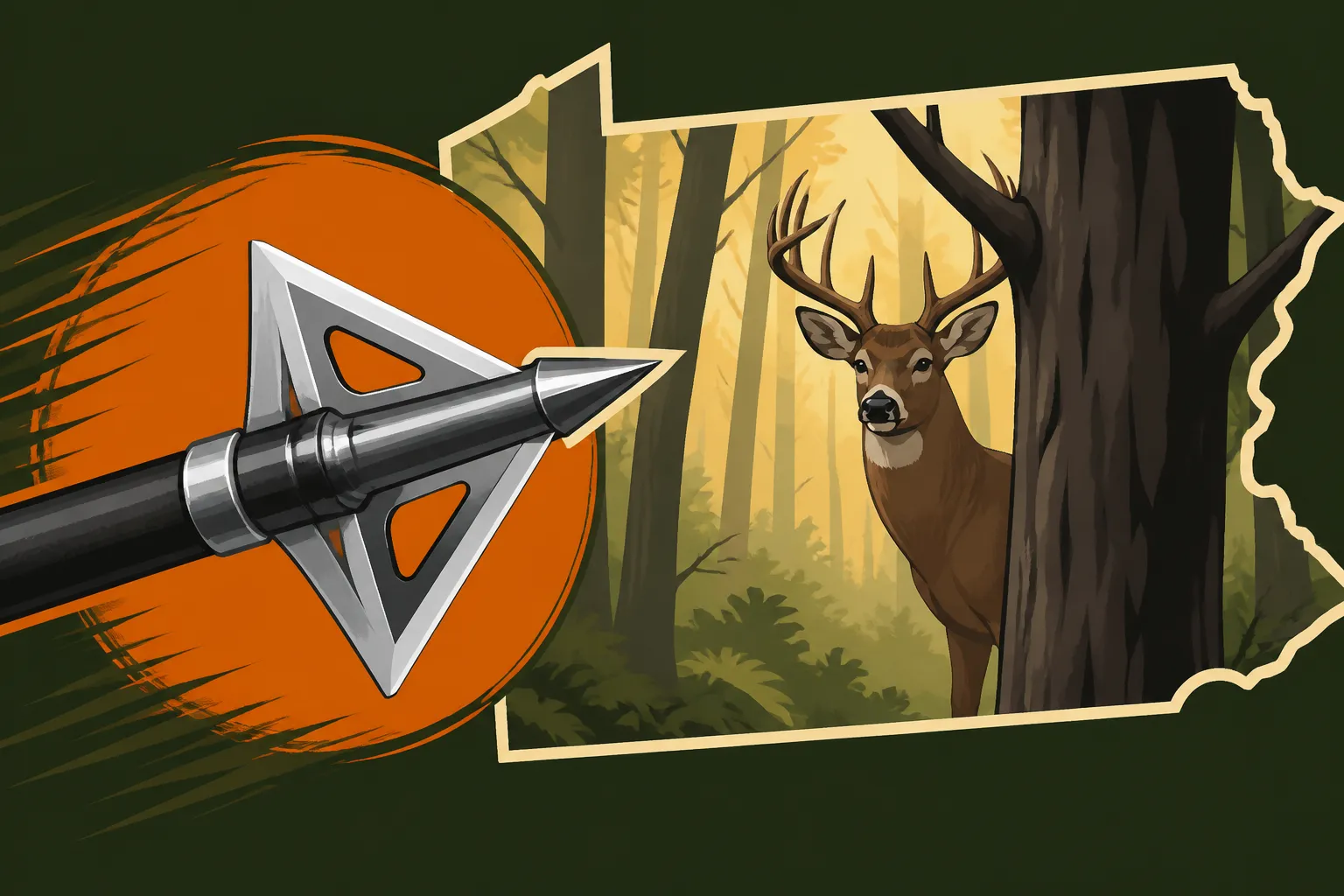
Broadheads for Timber Shots
Bowhunting in Pennsylvania's dense timber presents a unique set of challenges. You’re often dealing with tight shooting lanes, sudden close-range encounters, and the ever-present threat of a tiny twig deflecting your arrow at the most critical moment. This guide will delve deep into selecting and preparing the right broadheads specifically for these common Pennsylvania timber shots, helping you maximize your chances of a clean, ethical harvest when that moment of truth arrives.
The Unique Challenges of Pennsylvania Timber for Broadheads
Hunting the big woods or even thick pockets of regrowth in Pennsylvania means you’re rarely in a wide-open field. The landscape is often a tapestry of hardwoods, mountain laurel thickets, and dense underbrush, all conspiring to make a bowhunter's life a little more complicated. These conditions demand broadheads that can not only fly true but also perform flawlessly when encountering the inevitable obstacles.
Obstructions and Deflection Risks
Picture this: you've been sitting patiently in your stand on a ridge overlooking a natural deer funnel, maybe an old logging road or a bench cut into the hillside. Suddenly, a mature buck materializes, moving silently through the thick maples and ironwoods. He offers a quartering-away shot, but there's a small cluster of saplings, seemingly invisible just moments ago, directly between you and his vitals. This scenario plays out constantly in Pennsylvania.
The reality is that even a small twig can dramatically alter an arrow's flight path. A broadhead's design, particularly its profile and surface area, plays a huge role in how it reacts to these minor deflections. A broadhead with a wider, more aggressive cutting surface or larger blades might catch a twig more easily, causing the arrow to veer off course. This is where the frustration really sets in; you've done everything right—the scouting, the entry, the wait—only to have a tiny piece of wood ruin your shot. Understanding this risk is the first step in choosing a broadhead that minimizes it, giving you peace of mind that your arrow will maintain its trajectory through any small, unavoidable contact.
Shorter Shot Distances and Steep Angles
Unlike hunting vast western plains or large, manicured food plots, most bowhunting encounters in Pennsylvania timber happen at closer ranges. Often, you're looking at shots from 10 to 30 yards, sometimes even closer. This proximity means deer can react incredibly quickly to the shot, and the angle from your treestand might be steeper than you'd expect. A deer might be directly beneath you or moving along a steep slope, requiring a precise, downward trajectory.
These shorter distances also mean the arrow has less time to stabilize, though a well-tuned bow and arrow combination should handle this fine. The real challenge comes with the angle. A steep shot means your arrow needs to penetrate through a potentially different tissue pathway than a flat shot. Furthermore, the broadhead must maintain its integrity and cutting ability even when striking at an acute angle, potentially encountering bone earlier in the shot. You need a broadhead that delivers maximum kinetic energy and creates a devastating wound channel even on these challenging, often steep, close-range presentations. For discussions on optimal placements, check out Treestand Setups in Pennsylvania Hardwoods.
Tough Pennsylvania Whitetails
Pennsylvania whitetails, especially mature bucks, are remarkably resilient animals. They're often lean, muscular, and incredibly tough. Even with a perfectly placed shot, they can travel a significant distance if the broadhead doesn't do its job effectively. The goal isn't just to hit the deer; it's to create a wound that leads to a quick, ethical recovery. This means ensuring your broadhead provides maximum penetration and a generous cutting diameter to sever arteries, lungs, or the heart.
The bone structure of a whitetail, particularly the shoulder blade and ribs, can also be formidable. A broadhead needs to be robust enough to withstand impact with bone without deforming, bending, or breaking. If it hits a rib, you want it to slice through cleanly. If it hits the shoulder blade, you want it to penetrate or at least break the bone, maintaining its integrity for continued penetration. This inherent toughness of our deer population means that broadhead choice isn't just about accuracy; it's about terminal performance and the ability to consistently punch through hide, muscle, and bone to reach the vitals.
Understanding Broadhead Types and Their Mechanics
Navigating the world of broadheads can feel like a maze, with manufacturers constantly introducing new designs and technologies. However, at their core, most broadheads fall into a few primary categories, each with its own strengths and weaknesses when it comes to those tricky timber shots in Pennsylvania. Understanding these fundamental differences is crucial for making an informed decision.
Fixed-Blade Broadheads
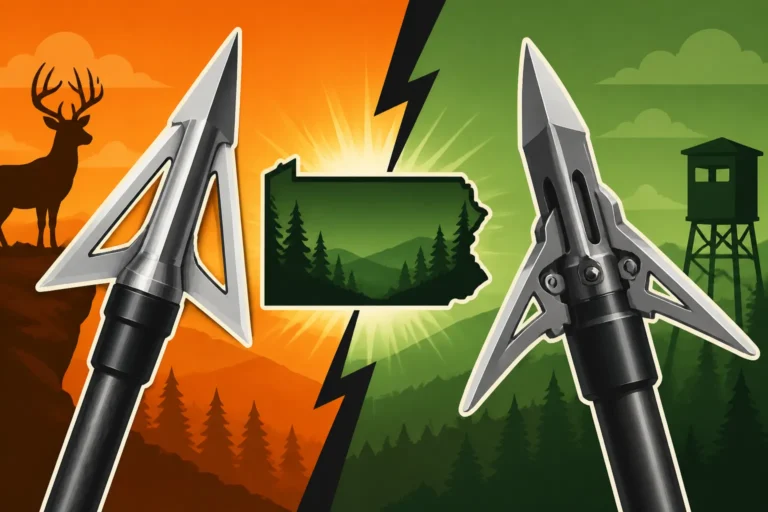
Fixed-blade broadheads are the veterans of the bowhunting world, and for good reason. They feature blades that are rigidly attached to the ferrule, meaning they don't move or deploy upon impact. This design simplicity translates into incredible reliability. When you launch a fixed-blade broadhead, what you see is what you get; the blades are always open and ready to cut.
Pros:
- Durability and Reliability: With no moving parts, there's less to go wrong. They are built tough, often with thicker blades and robust ferrules designed to withstand bone impact. This steadfastness gives many Pennsylvania hunters immense confidence, especially when hunting in rugged terrain where you anticipate potential bone strikes.
- Superior Penetration: Generally, fixed blades excel in penetration. Their solid design means more kinetic energy from your arrow is transferred directly into driving the broadhead through the animal, rather than being used to deploy blades. This can be a huge advantage when you're shooting through thick hide, heavy muscle, or bone, which is often the case with our stout whitetails.
- Less Energy Loss: Because there's no deployment mechanism, there's virtually no energy lost in the initial impact. All the arrow's momentum is focused on driving the sharp blades forward.
- Simple Maintenance: Many fixed blades can be easily resharpened, extending their life and ensuring you always have a razor-sharp edge.
Cons:
- Potential for Tuning Issues: This is often the biggest hurdle for fixed blades. Their fixed blades act like small wings, and if your bow isn't perfectly tuned, they can cause the arrow to plane or steer off course, especially at longer distances. Achieving perfect flight with fixed blades requires meticulous bow tuning.
- Wind Drift: The larger surface area of the fixed blades can make them more susceptible to wind drift, though this is less of an issue at typical timber ranges.
- Smaller Cutting Diameter (often): To minimize tuning issues and maximize penetration, many fixed blades have a slightly smaller cutting diameter compared to mechanicals, meaning the wound channel might be narrower.
For many traditionalists and those who prioritize robust performance in challenging conditions, a well-tuned fixed-blade setup is often the go-to for Bowhunting Pennsylvania's October Archery Season.
Mechanical (Expandable) Broadheads
Mechanical broadheads, also known as expandable broadheads, have gained significant popularity for their accuracy and large cutting diameters. These broadheads feature blades that are tucked away or folded back during flight and then deploy upon impact with the animal.
Pros:
- Field-Point Accuracy: This is arguably their biggest selling point. Because the blades are stowed during flight, mechanicals tend to fly much more like field points, making it easier to achieve pinpoint accuracy without extensive bow tuning. This can be a huge confidence booster, especially for hunters who struggle with fixed-blade tuning or want to simplify their setup.
- Large Cutting Diameter: Once deployed, mechanical broadheads often boast significantly larger cutting diameters than most fixed blades. This creates a massive wound channel, leading to rapid blood loss and improved blood trails, which is crucial for recovery, especially in dense Pennsylvania cover.
- Confidence in Flight: Knowing your hunting arrow will fly identically to your practice arrows can reduce anxiety and improve shot execution.
Cons:
- Potential for Failure to Deploy: While modern mechanicals are incredibly reliable, there's always a small chance of a blade not deploying correctly, particularly on glancing blows or if there's an obstruction. This can result in poor penetration and a non-lethal wound.
- Energy Loss on Deployment: Some of the arrow's kinetic energy is used to deploy the blades, which can slightly reduce penetration, especially on lower-poundage bows or when hitting heavy bone. This is a critical consideration for Minimum Draw Weight for Pennsylvania Deer.
- Durability Concerns: While many designs are tough, blades can sometimes bend or break on heavy bone impacts, compromising the wound channel.
- More Complex Design: With springs, O-rings, and pivot points, there are more components that could potentially fail or need replacement.
Hybrid Broadheads
Hybrid broadheads aim to bridge the gap between fixed and mechanical designs, attempting to offer the best of both worlds. These typically feature a small, always-open fixed blade, combined with one or more expandable blades that deploy on impact.
Design and Intended Use:
The concept behind hybrids is to provide guaranteed cutting from the fixed blades for initial penetration and a blood trail, while the mechanical blades deploy to create a wider wound channel for increased hemorrhage. The fixed blades also help stabilize flight, making them easier to tune than some pure fixed-blade designs.
Pros:
- Guaranteed Cutting: The presence of fixed blades ensures some cutting action even if the mechanical blades don't fully deploy or if the shot is marginal. This means you’ll almost always get some initial wound channel and a blood trail.
- Improved Flight over Traditional Fixed: The smaller fixed blades often make them easier to tune than larger fixed-blade designs.
- Larger Wound Channel than Many Fixed Blades: When the mechanical blades deploy, they typically achieve a wider cutting diameter than a pure fixed blade.
Cons:
- Complexity: More parts mean more potential points of failure, similar to full mechanicals.
- Cost: Often, hybrid broadheads can be more expensive due to their intricate design.
- Compromise: While they aim for the best of both, some argue they don't fully excel at either, potentially sacrificing some penetration of a dedicated fixed blade or the massive cutting diameter of a full mechanical.
For hunters looking for a balance, hybrid broadheads offer an interesting option, but careful selection and testing are still paramount to ensure they perform reliably in Pennsylvania's diverse hunting environments.
Key Considerations for Timber Shots
When you're threading an arrow through tight timber in Pennsylvania, every detail matters. The broadhead you choose needs to be an extension of your commitment to ethical hunting, providing maximum effectiveness in a challenging environment. This means thinking beyond just "sharp" and delving into the specifics of design, material, and how it interacts with your entire arrow setup.
Prioritizing Penetration Over Cutting Diameter
This might sound counterintuitive to some, especially with the marketing hype around huge cutting diameters. However, in dense timber, penetration is often king. A broadhead that punches through both sides of a deer, even with a slightly narrower cut, is generally more effective and ethical than one with a massive cutting diameter that only partially penetrates or, worse, gets stuck.
Consider the obstacles: if your arrow clips a branch, or if the deer moves slightly, or if you hit a rib or shoulder blade, a broadhead designed for superior penetration will perform better. Broadheads with a more compact, aerodynamic ferrule and a narrower cutting width tend to slip through tight gaps with less deflection. When they do hit the animal, that focused energy drives them deeper, increasing the likelihood of a pass-through. A pass-through shot allows for two holes—an entry and an exit—which maximizes blood loss and provides a much better blood trail, vital for tracking in thick Pennsylvania woods. While a large wound channel is desirable, a consistent pass-through with a solid wound channel often trumps a wider but shallower cut in dense cover. This is especially true if you are hunting areas like those covered in Hunting Pennsylvania Clearcuts and Regrowth, where tracking can be a nightmare.
Tuning for Accuracy with Fixed Blades
If you opt for fixed-blade broadheads, which many seasoned timber hunters do, the importance of tuning your bow cannot be overstated. Unlike mechanicals that typically fly like field points, fixed blades have a larger, fixed surface area that can act like miniature wings, causing erratic flight if your bow isn't perfectly tuned.
What proper tuning involves:
- Paper Tuning: Shooting through a piece of paper at close range to check for tears, indicating nock high/low or left/right issues. This is your starting point.
- Bare Shaft Tuning: Shooting an arrow without fletchings alongside a fletched arrow to ensure both hit the same spot. This tells you if your arrow is leaving the bow perfectly straight.
- Walk-Back Tuning: Shooting at a single point from progressively further distances to ensure your arrow impact doesn't drift vertically or horizontally.
- Broadhead Tuning: The ultimate test. Your broadhead-tipped arrows must group identically with your field-point-tipped arrows at your effective hunting distances. If they don't, you need to adjust your rest, nocking point, or cam timing until they do.
Neglecting this crucial step is a recipe for frustration and inaccurate shots. A fixed blade that isn't tuned will likely fly inconsistently, making precise shot placement in tight timber nearly impossible. The effort you put into tuning will pay dividends in confidence and accuracy, allowing you to focus on the shot when the moment arrives.
Blade Material and Sharpness
The adage "sharp kills" is never more true than with broadheads. A dull broadhead doesn't cut; it tears and pushes, leading to shallower penetration, less blood, and a longer, more difficult tracking job. The quality of the blade material directly impacts how sharp it can get and how well it retains that edge.
High-Quality Materials: Look for broadheads made from durable, high-carbon steel, often stainless or tool steel. These materials hold an edge better and resist chipping or rolling, especially after impacting bone. Some premium broadheads use specialized alloys or blade coatings to enhance sharpness and durability.
Replaceable vs. Sharpenable:
- Replaceable Blades: Many fixed and mechanical broadheads feature replaceable blades. This is convenient and ensures you always have razor-sharp edges without the need for manual sharpening. However, it can add to the long-term cost. Always carry spare blades in your pack when you're out in the field.
- Sharpenable Blades: Some broadheads, particularly older fixed-blade designs, are designed to be sharpened repeatedly. This requires a good sharpening system (like diamond stones or ceramic rods) and practice, but it's a cost-effective way to maintain a keen edge.
Regardless of whether you sharpen or replace, your broadheads must be absolutely surgically sharp before heading into the woods. Test them – not on your finger, but by lightly touching a sharp blade to a rubber band or piece of paper. If it shaves hair or slices cleanly with minimal pressure, you're good to go. This initial sharpness is paramount for clean entry and creating those vital cutting channels.
Matching Broadhead Design to Timber Conditions
Choosing the perfect broadhead for timber shots isn't about finding the "best" broadhead overall; it's about finding the best broadhead for your specific bow setup, hunting style, and the dense Pennsylvania terrain you'll be navigating. It's a highly personal decision, but there are certain design characteristics that tend to perform better when you're shooting through those tight windows.
Low-Profile Fixed Blades for Confidence
When you're dealing with the unpredictable nature of timber, minimizing variables is key. Low-profile fixed blades shine here because of their inherent stability and resistance to deflection. A broadhead with a smaller overall cutting diameter and a compact ferrule design is less likely to be caught by a stray twig or small branch.
Think of it this way: a broadhead with a 1-inch cutting diameter, whether it's two-blade or three-blade, presents a much smaller profile during flight than one with a 1.5-inch cutting diameter or the wide-open blades of a mechanical. This compact design dramatically reduces the chance of the broadhead "planing" or being knocked off course by light contact. You get a straighter, more predictable flight path through small openings.
Two-blade vs. Three-blade:
- Two-blade: Often considered the ultimate in penetration. With only two blades, there's less surface area to cause friction, allowing the broadhead to slip through bone and tissue more efficiently. They also tend to be the easiest fixed blades to tune for consistent flight.
- Three-blade: Offers a slightly larger cutting surface and three entry points for a more robust wound channel, while still maintaining excellent penetration. Some hunters find three-blade designs can be a bit more finicky to tune than two-blades, but modern designs are often very forgiving.
Regardless of blade count, the overall design and minimal cutting width (often around 1 inch to 1 1/8 inches) are what truly make these broadheads a top choice for busting through the thick stuff. Brands like G5 Outdoors, QAD, and Iron Will are popular among bowhunters who demand precision and penetration in demanding environments. This confidence in your arrow's flight is especially important when you're taking a shot from your stand on an oak bench, where a clear shot might be fleeting. For more on selecting your archery setup, delve into Bow Setups for Pennsylvania Whitetails.
Robust Mechanicals for Wider Wounds (with caveats)
While fixed blades often get the nod for ultimate timber performance, some hunters prefer the wider wound channels offered by mechanical broadheads. If you choose to go this route in dense Pennsylvania timber, you must prioritize robustness and reliability above all else. Not all mechanicals are created equal.
What to look for in a timber-worthy mechanical:
- Rear-Deploying or Over-the-Top Design: These designs tend to be more reliable in tough conditions because the blades are less likely to prematurely deploy or get hung up on hide or bone during entry. Front-deploying designs, while effective in open country, can sometimes struggle with tough hide or glancing blows.
- Heavy-Duty Blades and Ferrule: Seek out mechanicals with thicker, stronger blades and a solid, durable ferrule. This ensures the broadhead won't deform or break if it encounters a rib or the shoulder blade. You want a mechanical that is built like a tank, not a delicate instrument.
- Minimal Energy for Deployment: Look for designs that require minimal energy to deploy their blades. This preserves more of your arrow's kinetic energy for penetration, which is vital for getting a pass-through.
- Testing and Confidence: Before taking any mechanical into the timber, you absolutely must test it extensively. Shoot it into dense foam, layered cardboard, and even some actual animal hide (if ethically sourced and legal) to ensure consistent, reliable deployment and penetration.
A quality mechanical broadhead can certainly create an impressive wound channel, leading to quick recoveries. However, the risk of non-deployment or blade failure is amplified in a timber environment where arrows might glance off objects or encounter unexpected resistance. If you're going to use mechanicals in the thick stuff, choose wisely and test thoroughly. You might want to use a resource like GoHunt to compare different mechanical broadhead designs and read reviews from other hunters on their experiences with reliability in varied conditions.
Arrow FOC and Total Weight
The broadhead is only one part of the equation; your entire arrow setup contributes to its performance, especially penetration. Two key factors are arrow FOC (Front of Center) and total arrow weight. These elements work in conjunction with your chosen broadhead to dictate how efficiently your arrow will drive through an animal.
Front of Center (FOC): This refers to the percentage of an arrow's total weight that is located in the front half of the arrow. A higher FOC (generally 12-19%) means more weight is concentrated towards the broadhead end.
- Benefits of High FOC in Timber: A higher FOC makes an arrow more stable in flight, much like how a dart flies. This stability helps the arrow recover faster from any fletching-induced wobble and makes it less susceptible to wind drift or minor deflections. Critically for timber, a higher FOC also drives the broadhead forward with more momentum, enhancing penetration. When the heavy front end hits, it carries more force to push the rest of the arrow through. This can mean the difference between burying the broadhead in a shoulder and getting a complete pass-through.
Total Arrow Weight: This is the combined weight of your arrow shaft, fletchings, nock, insert, and broadhead, measured in grains.
- Benefits of Heavier Arrows: While super-light arrows fly fast and flat, a heavier arrow carries more kinetic energy and momentum, which translates directly to greater penetration. For timber hunting, where shots are typically shorter and penetration through thick hide, muscle, and bone is paramount, a heavier arrow (often in the 450-550+ grain range for compound bows) is often a better choice. The slight drop in speed is usually negligible at 20-30 yard shots, and the increased penetration vastly outweighs it.
Combining a robust broadhead with an arrow that has a high FOC and a substantial total weight creates a devastatingly effective timber-piercing projectile. This setup not only ensures better penetration but also often leads to more stable and accurate flight, even if your bow isn't perfectly tuned, further reducing the risk of a deflected shot. This is a critical factor often overlooked but essential for ensuring your Arrow Weight for Short Shots is optimized for maximum impact.
Practice, Preparation, and Ethical Considerations
Having the right broadhead is crucial, but it's only half the battle. Your success in Pennsylvania's timber ultimately hinges on your preparation, your discipline, and your commitment to making an ethical shot. No broadhead, no matter how advanced, can compensate for poor shooting form or impatience.
Practicing Through Obstacles (Simulated)
Shooting at a flat target in an open field is great for form, but it doesn't prepare you for the reality of timber hunting. To truly gain confidence in your broadhead's performance and your ability to place a shot, you need to simulate timber conditions in your practice routine.
Setting up realistic scenarios:
- Tight Lanes: Create a "shooting lane" by placing thin PVC pipes, sections of dowel rods, or even small branches vertically in front of your target. Practice threading your arrow through these narrow gaps at various distances. Start with wider gaps and gradually narrow them as your accuracy improves. The goal isn't to hit the obstacles, but to learn how to pick your spot precisely.
- Elevated Shots: Practice shooting from an elevated position, like a short ladder or a platform. This helps you get comfortable with the angles and aiming adjustments required from a treestand or when hunting steep ground.
- Odd Angles and Stances: Don't just shoot from a perfect standing position. Practice kneeling, sitting, or twisting to shoot around a simulated tree trunk. Deer rarely cooperate by standing perfectly broadside in an open lane.
- Varying Light: If it's safe to do so, practice at dawn or dusk, mimicking actual hunting conditions. This helps you see how your sight pins and target clarity change in low light.
Remember, practice with your actual broadhead-tipped arrows, or broadhead-tuned practice points that match the weight and flight characteristics of your hunting heads. This ensures your confidence is built on realistic performance.
Field Sharpening and Pre-Hunt Checks
Your broadheads should be razor-sharp every time you enter the woods. Even if they come new from the package, a quick touch-up often makes them even sharper. This meticulous attention to detail can make all the difference in penetration and hemorrhage.
Before each hunt:
- Inspect every broadhead: Check for any nicks, dull spots, or burrs on the blades. Ensure all screws are tight, and any mechanical blades are functioning smoothly and securely.
- Sharpen or Replace: If a blade isn't absolutely razor-sharp, sharpen it or replace it. Carry a small, portable broadhead sharpener (like a DMT Eze-Fold or similar ceramic/diamond sharpener) in your pack for quick touch-ups in the field, just in case.
- Arrow Inspection: Also inspect your arrows. Check shafts for cracks, fletchings for damage, and nocks for integrity. A damaged arrow can also lead to an inaccurate or unsafe shot.
These checks only take a few minutes, but they are critical. An investment in a high-quality broadhead is wasted if its edge isn't maintained. The cleaner the cut, the better the penetration and the more effective the wound.
Shot Placement and Patience
Ultimately, the most important "gear" you bring into the timber is your brain and your discipline. Even with the best broadhead, a poorly placed shot is rarely ethical.
The Golden Rules of Shot Placement in Timber:
- Wait for a Clear Lane: No matter how big the buck or how rare the opportunity, if there's any doubt about a clear shooting lane to the vitals, do not shoot. A twig or small branch, even if it looks minor, can deflect your arrow just enough to result in a painful wound and a lost animal. Patience is incredibly hard when adrenaline is pumping, but it's paramount. Sometimes, the most ethical shot is the one you don't take.
- Visualize the Exit: Before you draw, visualize not just where your arrow will enter, but where it will exit. This helps ensure you're aiming for a pass-through shot, which again, is crucial for two holes and a good blood trail.
- Study Anatomy: Have a solid understanding of deer anatomy. Know where the heart, lungs, and major arteries are located. These vitals are your target, and every effort should be made to hit them.
- Know Your Limitations: Understand your own effective range and what constitutes a clear shot for you. Don't let buck fever push you beyond your skill level or comfort zone.
Hunting in Pennsylvania's timber can be incredibly rewarding, but it demands respect for the animal and a commitment to ethical hunting practices. Choosing the right broadhead, combined with diligent practice and unwavering patience, will dramatically increase your chances of a successful and humane harvest. When you connect, knowing how to handle the animal responsibly is also key, so consider practices like those detailed in Field Dressing a Deer in Cold Weather.
| Broadhead Type | Primary Advantage | Best for Timber Shots? | Key Consideration |
|---|---|---|---|
| Fixed-Blade | Reliability & Penetration | Often preferred; less deflection, maximum energy transfer. | Requires meticulous bow tuning for accurate flight. |
| Mechanical (Expandable) | Field-point accuracy & Large wound | Potentially, if robustly designed; risk of non-deployment or blade failure on impact. | Choose heavy-duty, rear-deploying models; test extensively. |
| Hybrid | Blend of fixed & mechanical | Good compromise; fixed blades ensure initial cut, mechanicals expand for wider wound. | Complexity increases potential points of failure; test thoroughly. |
Disclaimer
This article is for general informational purposes only and does not constitute professional advice. Laws, prices and regulations vary by location and change over time. Consult a qualified professional for guidance on your specific situation.