Ground Blinds on Farm Field Edges
Hunting along the edges of farm fields in Pennsylvania can be incredibly productive, but many hunters struggle with consistent success because deer in these areas are often highly visible and educated. The open nature of farm country makes traditional stand hunting challenging, leading to busted stalks and missed opportunities. This guide will walk you through everything you need to know about effectively using ground blinds on farm field edges, turning those challenges into triumphs by offering unparalleled concealment and comfort.
Why Ground Blinds on Farm Field Edges?
Farm country deer, especially in areas like southeastern Pennsylvania, operate on a different schedule and awareness level than their big woods counterparts. They've grown accustomed to human activity, but they're also hyper-alert to anything out of place. Ground blinds provide a unique advantage in these environments, allowing you to blend seamlessly into the landscape where natural cover might be sparse.
The Undeniable Appeal of Farm Country Edges
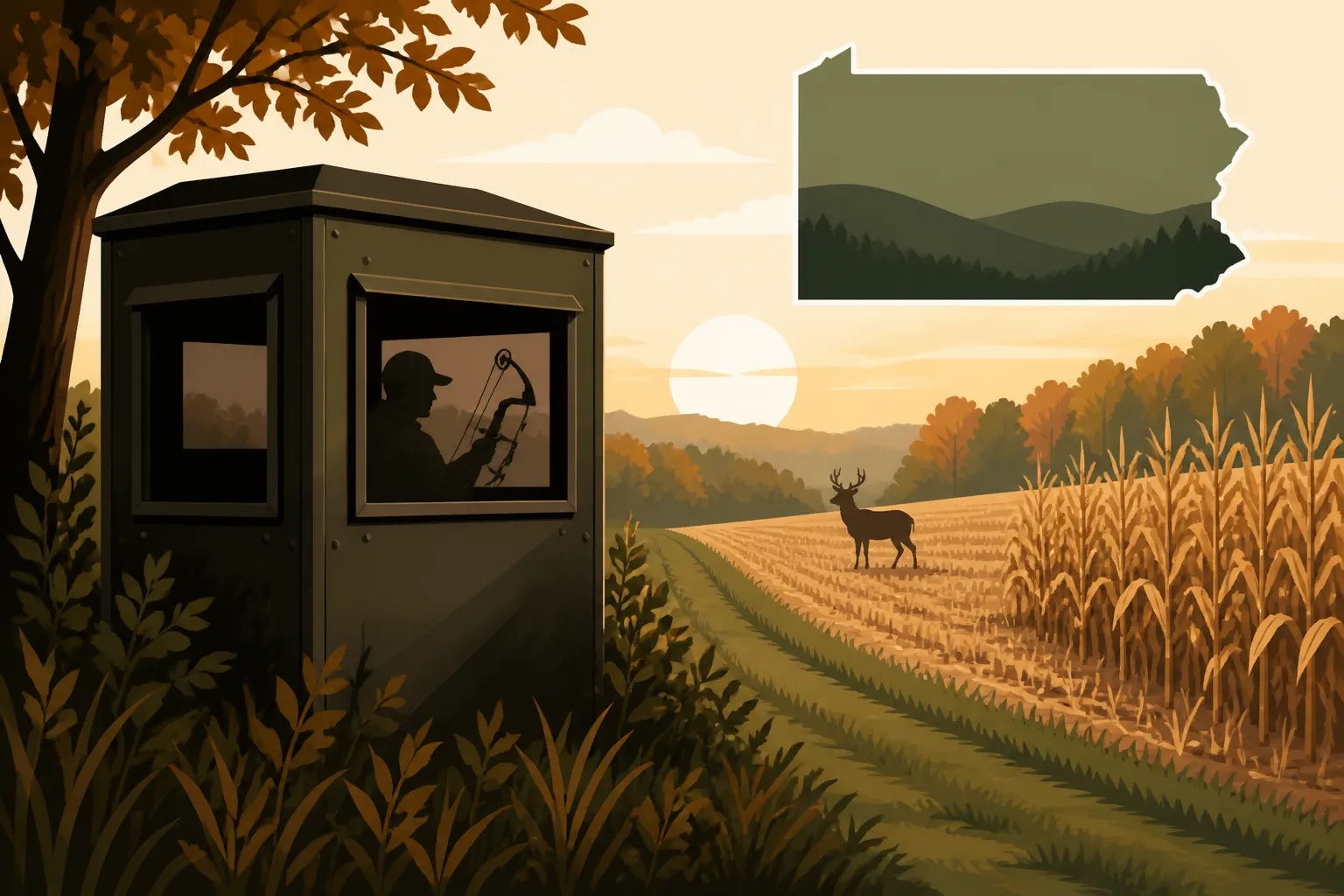
Pennsylvania's agricultural lands are a magnet for deer, offering a consistent smorgasbord of high-energy food sources throughout the seasons. From lush alfalfa fields in spring, to standing corn in fall, and waste grain through winter, deer don't have to travel far to find what they need. The edges of these fields—where timber, thickets, or hedgerows meet open agriculture—serve as natural transition zones. Deer move along these edges, staging before entering fields to feed, or using them as travel corridors between bedding areas and food. Placing a ground blind precisely in one of these transition zones puts you right in the deer's highway. It’s about being where they want to be, rather than trying to call them to you. This is prime territory for tactics like Hunting Pennsylvania Farm Country Edges.
Think about a crisp October evening. Deer are going to filter out of the wood line and into that standing corn or soybean field. If you’re tucked 20 yards inside the timber, they might walk right by you on the field edge, or if you're exposed on the field itself, they’ll see you a mile away. A well-placed ground blind, brushed in properly, becomes an extension of that natural edge, allowing you to intercept them without being detected. This is especially true when deer are hitting a specific food source hard, like when Hunting a Standing Cornfield in Farm Country.
Comfort and Concealment for Long Sits
Let's be honest, hunting can be cold, wet, and downright miserable sometimes. Climbing into a flimsy treestand on a blustery November afternoon when the rain starts to turn to sleet isn't everyone's idea of a good time. Ground blinds offer a level of comfort and protection that treestands simply can't match. You're sheltered from the wind, often drier during rain or snow, and generally warmer. This means you can stay on stand longer, increasing your odds of seeing deer.
The concealment factor is also huge. With a good ground blind, you can make small movements, check your phone, or even stretch a bit without spooking every deer within a quarter-mile. This is a game-changer, especially when targeting mature deer that have seen it all. Imagine you've been sitting for three hours, and that big buck finally steps out. Being able to slowly reach for your grunt tube or adjust your bow without a flicker of movement giving you away is invaluable. The dark interior of a blind masks your form, making you virtually invisible if you use the right precautions.
Overcoming Pressured Deer Behavior
Deer that live near farm fields, particularly those close to populated areas or state game lands, are often highly pressured. They know the sound of a truck door closing, the sight of a hunter walking, and they've developed keen senses to avoid detection. They'll often feed under the cover of darkness, or stick to the densest cover during daylight hours. A ground blind allows you to set up in these high-traffic, high-pressure areas and blend in with the environment, acting as just another lump in the landscape.
For example, I remember hunting a small field bordered by a busy road and a thick hedgerow. Every hunter drove by, looking into the field. If I had been in a treestand, I would have been silhouetted against the sky. But with a properly brushed-in blind, placed deep in the hedgerow, I was able to observe deer feeding calmly at last light, completely unaware of my presence. It’s about creating a safe zone for both you and the deer, allowing you to hunt effectively without adding to their existing pressure. This approach can be particularly useful in areas with high human activity, like Suburban Deer Hunting in Southeast Pennsylvania.
Choosing the Right Ground Blind for Field Edge Hunting
Not all ground blinds are created equal, and selecting the right one for farm field edges involves considering a few key factors. You need something durable, camouflaged correctly, and practical for your specific hunting style.
Blind Types and Their Best Use Cases
When it comes to ground blinds, you'll generally encounter pop-up hub-style blinds, panel blinds, and ghillie-style blinds. Each has its strengths and weaknesses, making certain types better suited for particular field edge scenarios.
- Pop-Up Hub Blinds: These are perhaps the most common and versatile. They deploy quickly, offer full enclosure, and provide excellent concealment. They're great for situations where you need to move the blind occasionally or set up rapidly. Look for models with a dark interior coating to prevent silhouetting and window configurations that offer good visibility without compromising concealment. They can be a bit bulky to carry long distances, but for a short walk into a field edge, they're ideal. These are often the go-to when Using a Ground Blind on Pennsylvania Game Lands.
- Panel Blinds: These are essentially foldable screens that provide a barrier of concealment. They're lighter and more portable than hub blinds, making them perfect for mobile hunters or situations where you only need a visual break, not full enclosure. However, they offer no overhead cover and less scent containment. They excel when you're setting up against existing natural cover like a downed tree or a thick brush line, where you just need to extend the natural concealment.
- Ghillie-Style Blinds: These are more akin to large ghillie blankets or netting that you drape over yourself or a frame. They offer superior natural blending, often incorporating actual vegetation. They are excellent for ultimate concealment, especially when combined with natural elements. The downside is they offer minimal protection from the elements and often require more time to set up and brush in effectively. These are for the hunter prioritizing absolute stealth over comfort.
Consider the specific field edge you'll be hunting. Is it a dense woodline or a sparse hedgerow? How often will you move the blind? These questions will guide your choice.
Camouflage and Concealment Patterns
The camouflage pattern on your blind is crucial, but it's not just about matching the specific tree bark. For field edges, you want patterns that break up the blind's outline and blend into the overall environment. Darker, more muted patterns tend to work better than highly detailed ones, especially at dawn and dusk. Pennsylvania farm fields feature a lot of browns, grays, and dead vegetation through much of the hunting season, so patterns with those color palettes are a good starting point.
What's often more important than the specific pattern, however, is the texture and three-dimensionality of the blind. Many blinds now come with "leafy" netting or fabric strips that give them a more natural, irregular appearance, helping them disappear into the surroundings. A flat, two-dimensional camo pattern, no matter how realistic, can still look like a solid block to a wary deer if it's not brushed in properly. Always prioritize a pattern that disrupts shape and blends with the general color scheme of the field edge during the season you'll be hunting.
Size Considerations and Portability
Blind size matters, not just for your comfort, but for concealment and ease of transport. A blind that's too large will be harder to brush in naturally and may stick out more on a subtle field edge. A blind that's too small might leave you cramped, leading to uncomfortable movements that could spook game.
- Solo Hunter: A blind designed for one or two hunters is often sufficient. It offers enough space for you, your gear, and a comfortable chair, while remaining relatively compact and easy to carry.
- Buddy/Youth Hunter: If you plan on hunting with a friend, a child, or a mentor (perhaps through a Pennsylvania Mentored Youth Permit Rules program), a larger three-person blind might be necessary. This allows enough room for two hunters to sit comfortably and make a shot, or for one hunter with extra camera gear or cold-weather supplies.
Portability is also key. How far do you need to carry this blind? Will you be setting it up once for the season, or moving it every few days based on deer activity? If you're often walking a half-mile or more to your spot, a lighter, more compact blind or even a panel blind might be a better choice than a heavy, bulky hub blind. Think about how the blind folds down, its packed dimensions, and its overall weight. Even a relatively short walk with a heavy blind can feel like a marathon if you're carrying other gear.
Strategic Placement: Reading the Field Edge and Deer Movement
Putting a ground blind anywhere along a field edge is better than being exposed, but strategic placement is what turns a good spot into a great one. You need to think like a deer, consider the elements, and leverage natural features.
Understanding Wind Direction and Thermals
This is arguably the most critical factor in ground blind placement, especially on open field edges. Deer have an incredible sense of smell, and a single whiff of human scent will send them scattering. You absolutely must position your blind so that your scent cone is carried away from where you expect deer to approach or feed. This means paying close attention to the prevailing wind direction for the day you plan to hunt.
In farm country, fields often act as funnels for wind, and open spaces can cause unpredictable swirling. Always consult a reliable weather forecast for wind direction, and then visualize how your scent will drift. If deer typically enter a field from the west, you want your blind positioned to the east, with the wind blowing from your blind into the field, away from their approach. Conversely, if deer approach from the north, you need to be south, with the wind blowing south. Even a slight shift in wind can ruin a hunt, so having backup blind locations for different wind directions is smart. Wind and Thermals on a Ridge might seem specific to mountains, but the principles of how air moves and carries scent apply universally, even on flatter farm ground, where subtle elevation changes can create mini-thermals.
Identifying Key Entry and Exit Routes
Deer don't just randomly pop out of the woods. They use established paths, much like we do. These routes are often dictated by the easiest path of travel, the densest cover, or specific features like drainage ditches, creek bottoms, or fence lines. Your job is to scout these entry and exit points and position your blind accordingly.
Spend time observing the field edge, both physically and using tools like GoHunt's mapping layers (or similar, free resources from the state game commission). Look for tracks, droppings, rub lines, and old trails leading from bedding cover into the feeding area. If you see where deer consistently enter a standing cornfield, or where they cross a logging road to get to a soybean field, that’s your sweet spot. A ground blind placed within 20-30 yards of such a high-traffic intersection is far more likely to yield success than one placed randomly. The goal is to intercept them before they're fully exposed in the open field, or as they skirt the very edge of the cover.
Scouting for Natural Cover and Funnels
Even in farm country, there are always pockets of natural cover that deer favor. These could be small clumps of multiflora rose, a thick fencerow grown up with saplings, a cluster of cedars, or even a deep ditch with overgrown banks. These are prime locations to tuck a ground blind because they offer pre-existing concealment. Instead of making your blind look "natural," you're making it part of what's already natural.
Look for natural funnels too. A narrow strip of woods between two fields, a pinch point where a creek bends, or a bottleneck created by an old barn or structure. Deer are creatures of efficiency, and they will use the path of least resistance or the route that offers the most security. Positioning your blind within these funnels maximizes your chances, as deer are essentially forced past your location. Remember to scout not just for deer sign, but for features that dictate deer movement. This is a critical aspect of Scouting Pennsylvania Public Land Before Season, and applies equally well to private parcels.
Setting Up Your Blind for Success
Once you've chosen your blind and identified the perfect spot, the setup is key. It's not enough to just pop it open; you need to integrate it into the environment and make it disappear.
Brushing In a Blind on a Field Edge for Maximum Concealment
This step cannot be overstated. A ground blind, no matter how well camouflaged, will look like a foreign object if it's simply plopped down in the open. You need to brush it in. This means using natural vegetation from the surrounding area to break up the blind's outline and make it indistinguishable from the background.
- Utilize existing cover: First, position your blind right up against a thicket, a fallen tree, or a dense fencerow. This provides a natural backdrop and reduces the amount of additional brushing you need to do.
- Mimic the environment: Cut branches, tall grasses, cornstalks, or other available foliage and weave them into the loops or mesh of your blind. Pay special attention to the corners and roofline, as these are often the most unnatural-looking parts.
- Create depth: Don't just lay flat material. Stand branches upright around the blind to give it a three-dimensional look. This helps it blend in with standing vegetation.
- Cover the windows: While you need shooting lanes, minimize visible openings. Only open windows that you absolutely need, and consider using shoot-through mesh where possible. Any open window can create a visible hole that catches a deer's eye.
- Allow time: Ideally, set up your blind several days or even weeks before you plan to hunt. This allows deer to get accustomed to its presence, letting it become "part of the furniture." This is precisely why a dedicated guide like Brushing In a Blind on a Field Edge is so useful.
Anchoring Your Blind Against Pennsylvania Weather
Pennsylvania weather can be notoriously unpredictable. A calm, sunny morning can quickly turn into a windy, rainy, or even snowy afternoon. An unanchored blind can become a sail in strong winds, flapping loudly or even blowing away entirely, ruining your hunt and potentially damaging your gear.
Most pop-up blinds come with stakes and tie-down ropes. Use them. Stake down all four corners, and if your blind has additional tie-down points, utilize those as well, securing them to sturdy objects like trees, stumps, or heavy rocks. In really high winds, you might even consider running additional rope over the top of the blind, secured to heavy objects on either side. Inside, you can place heavy rocks or sandbags in the corners to add stability. Think about a late-season snowstorm – that snow can add significant weight and wind resistance. A well-anchored blind ensures it stays put and remains quiet, giving you one less thing to worry about when that trophy buck finally appears.
Creating Effective Shooting Lanes
While maximum concealment is paramount, it's useless if you can't make a clean shot. You need to meticulously clear shooting lanes from your blind. This means identifying where deer are most likely to appear and removing any obstacles that would impede your arrow or bullet.
- Pre-cut: If possible, clear your lanes when you first set up your blind. Use loppers or a small saw to remove small branches and saplings that might deflect a shot.
- Angle your shot: Remember that you'll be shooting from a seated position. This changes your angle compared to standing. Practice shooting from your blind or a similar seated height to understand your effective shooting windows.
- Minimize openings: Only clear what's absolutely necessary. Don't create huge, obvious clearings around your blind, as this can draw attention to it. A narrow, well-defined lane is all you need.
- Use existing gaps: Look for natural gaps in the vegetation that you can leverage. Sometimes, a slight adjustment to your blind's position can turn a nearly blocked shot into a perfect one.
- Measure distances: Before you hunt, range various landmarks in front of your blind. Mark distances to a specific tree, a fence post, or a patch of brush. This will help you make quick, accurate range estimates when a deer appears, especially crucial for archers. A rangefinder is an indispensable tool here, allowing you to quickly get a read on a deer that steps into a new opening.
| Blind Setup Consideration | Key Action | Benefit |
|---|---|---|
| Concealment | Brush in heavily with natural vegetation; break up outline. | Deer don't see unnatural shapes; increases confidence. |
| Stability | Anchor firmly with stakes, ropes, or weights. | Prevents flapping in wind; reduces noise; keeps blind in place. |
| Visibility | Clear narrow, specific shooting lanes; minimize open windows. | Ensures clear shot opportunity while maintaining concealment. |
| Deer Acclimation | Set up days/weeks in advance if possible. | Deer get used to the blind, reducing wariness. |
| Scent Control | Use natural cover; manage wind direction. | Minimizes human scent detection by deer. |
Hunting from the Blind: Tactics and Considerations
Now that your blind is perfectly set up, it's time to hunt. Success from a ground blind, especially on field edges, requires discipline, patience, and a keen understanding of deer behavior.
Patience and Minimizing Movement
This is perhaps the hardest part for many hunters. Once you're in the blind, you need to become a statue. Deer, particularly mature does and bucks, are incredibly observant. Even a slight flicker of movement inside a blind can be enough to spook them.
- Move slowly and deliberately: If you absolutely must move, do so at a glacial pace. Turn your head inch by inch, slowly raise your binoculars, or gently reach for your call.
- Use the dark interior: The dark fabric inside your blind is your best friend. It helps hide your silhouette. Wear dark clothing inside the blind to further blend in.
- Pre-position your gear: Before deer arrive, have everything you need within easy reach: your bow or rifle, rangefinder, grunt tube, water bottle, etc. You don't want to be fumbling around when the moment of truth arrives.
- Manage restlessness: If you're someone who struggles with long, still sits, consider bringing a small book or playing quiet games on your phone (on silent, of course) for moments of low activity. Just be ready to put it away instantly when you sense or see deer. Long sits are part of the game, and sometimes the best deer move when you're least expecting them.
Scent Control on Small Pennsylvania Tracts
Scent control is always important in deer hunting, but it becomes absolutely critical on smaller properties or heavily hunted farm country edges. Your scent can linger, alerting deer hours after you've left.
- Shower with scent-free soap: Before heading out, shower and use scent-eliminating soap.
- Wash hunting clothes: Wash your hunting clothes in scent-free detergent and store them in airtight containers or bags until you put them on.
- Dress at the site: If possible, drive close to your blind and put on your outer hunting layers right before you enter. This minimizes the amount of human scent you're depositing during your walk in.
- Utilize natural cover and wind: As mentioned before, strategic placement based on wind is paramount. Even the best scent control regimen won't overcome a direct wind blowing your scent to approaching deer.
- Consider ozone generators (with caution): Some hunters use portable ozone generators inside their blinds. While they can be effective at reducing scent, research their use thoroughly and understand their limitations and potential health implications. A more natural approach is often better and simpler, focusing on careful entry and exit routes. This whole topic is thoroughly covered in Scent Control on Small Pennsylvania Tracts.
Dealing with Deer at Close Range
One of the great joys and challenges of blind hunting is when deer come in really close. They might be just yards away, totally unaware of your presence. This is where your patience and minimal movement really pay off, but it also presents unique situations.
- Don't rush the shot: Just because a deer is close doesn't mean it's a good shot. Wait for the deer to be in a calm, relaxed posture, offering a broadside or slightly quartering-away angle. Don't draw your bow or raise your rifle until its head is down feeding or it's looking away.
- Manage your breathing: Your heart will pound, especially with a big buck at 10 yards. Practice controlled breathing to calm your nerves and steady your aim.
- Be aware of acoustics: Sounds inside a blind can be amplified. Be mindful of rattling gear or shuffling feet. A sudden noise can send a deer bolting.
- Arrow deflection (archery): If using a shoot-through mesh, make sure your broadhead will pass cleanly. Practice shots through the mesh at home to ensure there's no deflection. Some hunters prefer to open a shooting window completely for the shot.
Year-Round Blind Management and Maintenance
A ground blind is an investment, and like any hunting gear, it benefits from proper care and maintenance. Thinking beyond just the hunting season will extend its lifespan and ensure it's ready when you are.
Pre-Season Setup and Scent Elimination
Don't wait until opening day to set up your blind. Pre-season is the perfect time to get it ready and give the deer time to get used to it.
- Early deployment: If possible, deploy your blind several weeks or even a month before the season opens. This gives deer ample time to acclimate to its presence, reducing their wariness come hunting day. It will just become part of the landscape.
- Scent elimination (pre-season): Before deploying, give your blind a thorough cleaning. Hose it down, scrub it with scent-free soap, and let it air dry completely. This removes any manufacturing smells, previous hunting scents, or lingering odors that might alert deer. Some hunters even spray their blinds down with natural attractants or cover scents to further "naturalize" them.
- Check for damage: Look for any tears, broken poles, or malfunctioning zippers that might need repair. It's much easier to fix these issues in your backyard than scrambling to do it in the dark on opening morning.
- Brushing in ahead of time: This is the ideal time to do your initial Brushing In a Blind on a Field Edge. You can take your time, gather plenty of natural materials, and make sure it's perfectly concealed without the pressure of a looming hunt.
Off-Season Storage and Repairs
Once the season is over, don't just toss your blind in the corner of the garage. Proper off-season storage will protect it from damage and prolong its life.
- Clean thoroughly: Before storing, clean your blind inside and out. Remove all dirt, mud, leaves, and debris. This prevents mold and mildew from forming.
- Dry completely: Ensure the blind is bone dry before folding it up. Storing a damp blind is an express ticket to mildew and a ruined investment. Hang it open in a garage or shed for several days if necessary.
- Inspect and repair: This is the time to perform any necessary repairs. Mend tears with blind repair kits, replace broken poles or hubs, and lubricate sticky zippers. Don't put it away with known issues, as you'll only forget them by next season.
- Store in a cool, dry place: Keep your blind in its carry bag in an environment that's protected from extreme temperatures and moisture. Attics can get too hot, and damp basements can encourage mold. A climate-controlled closet or a dry shed is ideal.
Leveraging Technology for Optimal Blind Placement
In today's hunting world, technology can give you a significant edge, even with something as traditional as a ground blind. Tools like the GoHunt app (or other mapping services) can revolutionize how you scout and place your blinds.
- Aerial imagery: Use detailed satellite imagery to identify key features around your chosen field edge. Look for subtle changes in elevation, thick cover, ditches, or pinch points that might not be obvious from the ground. Identify optimal travel corridors and potential bedding areas.
- Property boundaries: Ensure you're staying on legal ground by checking property lines. GoHunt's mapping often includes land ownership overlays, which is invaluable for ensuring you have permission or are on public ground. Knowing exactly where the lines are can prevent trespassing issues, especially when Knocking on Doors in Pennsylvania Farm Country for access.
- Topo maps and wind analysis: Analyze contour lines to understand how deer might use terrain for cover or travel. Many apps now integrate weather forecasts, allowing you to simulate wind direction and how your scent plume might travel from a proposed blind location. This can help you fine-tune your exact setup, ensuring you're always downwind of potential deer approaches.
- Historical data: Some advanced mapping tools can even show historical deer movement data (if available for your area or via user-contributed sightings), helping you predict patterns over time. Even simple observation of food source rotations in farm country can be a form of historical data, informing where deer will be each season.
- Marking waypoints: Use the app to mark your blind location, entry/exit routes to avoid spooking deer, and key landmarks for rangefinding. This ensures you can find your spot easily, even in the dark, and helps you optimize your approach to the blind each hunt.
By treating your ground blind as an integral part of your hunting strategy and giving it the year-round attention it deserves, you'll be consistently more successful when hunting those challenging Pennsylvania farm field edges.
Disclaimer
This article is for general informational purposes only and does not constitute professional advice. Laws, prices and regulations vary by location and change over time. Consult a qualified professional for guidance on your specific situation.