Slug Choices for Special Regulations Areas
Hunting Pennsylvania's Special Regulations Areas can feel like a whole different ballgame compared to the sprawling big woods. Suddenly, your trusty deer rifle might be off-limits, and you're faced with choosing a shotgun slug that can do the job safely and effectively in more populated areas. This guide will walk you through the nuances of slug choices, helping you confidently select the right ammunition and setup for success in these unique hunting environments.
Understanding Pennsylvania's Special Regulations Areas
Pennsylvania's Special Regulations Areas (SRAs) were established to balance hunting opportunities with the safety concerns of more densely populated regions. For many hunters, this means a shift in weaponry and tactics, particularly when it comes to deer. It's a reality check that the same methods used in the state's northern tier simply won't cut it, or rather, aren't allowed, in places like southeastern Pennsylvania.
What Defines an SRA?
Essentially, Special Regulations Areas are specific Wildlife Management Units (WMUs) where hunting rules are modified due to higher population densities and smaller property sizes. You'll find most of these areas clustered around major metropolitan hubs, particularly in the southeastern part of the state, but they can exist in other regions as well. The Pennsylvania Game Commission designates these areas to minimize risk to residents and property while still allowing for necessary deer management. It's about ensuring public safety, which means projectiles with a more limited range are often mandated. Think about the landscape: more houses, roads, and smaller woodlots interspersed with farms. It's a different world from the vast, unbroken forests where a rifle bullet might travel for miles.
Why Shotguns (and Slugs) are Mandated
The primary reason shotguns with slugs are mandated in SRAs is safety. A rifle bullet can travel for a mile or more, maintaining lethal energy over vast distances. In contrast, a shotgun slug, while still powerful, has a significantly shorter maximum range. While still incredibly dangerous at closer distances, its kinetic energy dissipates much faster, reducing the risk of a projectile straying into an unintended area or impacting a dwelling far from the hunting zone. This reduced range is critical in areas where houses are closer together, and public access points are more common. It's a compromise that allows hunters to participate in deer management in these areas while adhering to a higher standard of public safety. This also often extends to a requirement for Where Pennsylvania Requires Shotguns for Deer, making it imperative to understand the specific rules for your chosen WMU.
The Impact on Your Hunting Strategy
Hunting in an SRA with a shotgun and slugs drastically alters your approach. Long-range shots, common with a high-powered rifle in open country, are generally out of the question, not just due to legal requirements but also because of the inherent limitations of slug ballistics. You're typically looking at effective ranges of 50 to 150 yards, sometimes a bit more with a highly optimized setup. This means your hunting strategy needs to focus on closer encounters. Still-hunting through thick cover, setting up on natural funnels, or focusing on field edges where deer move at dawn and dusk become paramount. Understanding Hunting Small Private Tracts in Pennsylvania is crucial, as many opportunities in SRAs come from gaining permission on smaller land parcels. It also emphasizes the importance of knowing your specific hunting area intimately, often relying on detailed mapping tools like those from GoHunt to identify safe shooting lanes and potential deer movements within shorter distances.
Navigating Slug Choices: Key Considerations
Once you understand why you're using a slug gun, the next step is choosing the right slug. This isn't a one-size-fits-all decision, and the array of options on the market can be overwhelming. The choice between different slug types, gauges, and projectile designs will profoundly impact your accuracy, effective range, and terminal performance on a deer.
Sabot Slugs vs. Rifled Slugs
This is often the most critical distinction when choosing a slug. The fundamental difference lies in how the projectile interacts with your shotgun barrel and how it achieves accuracy.
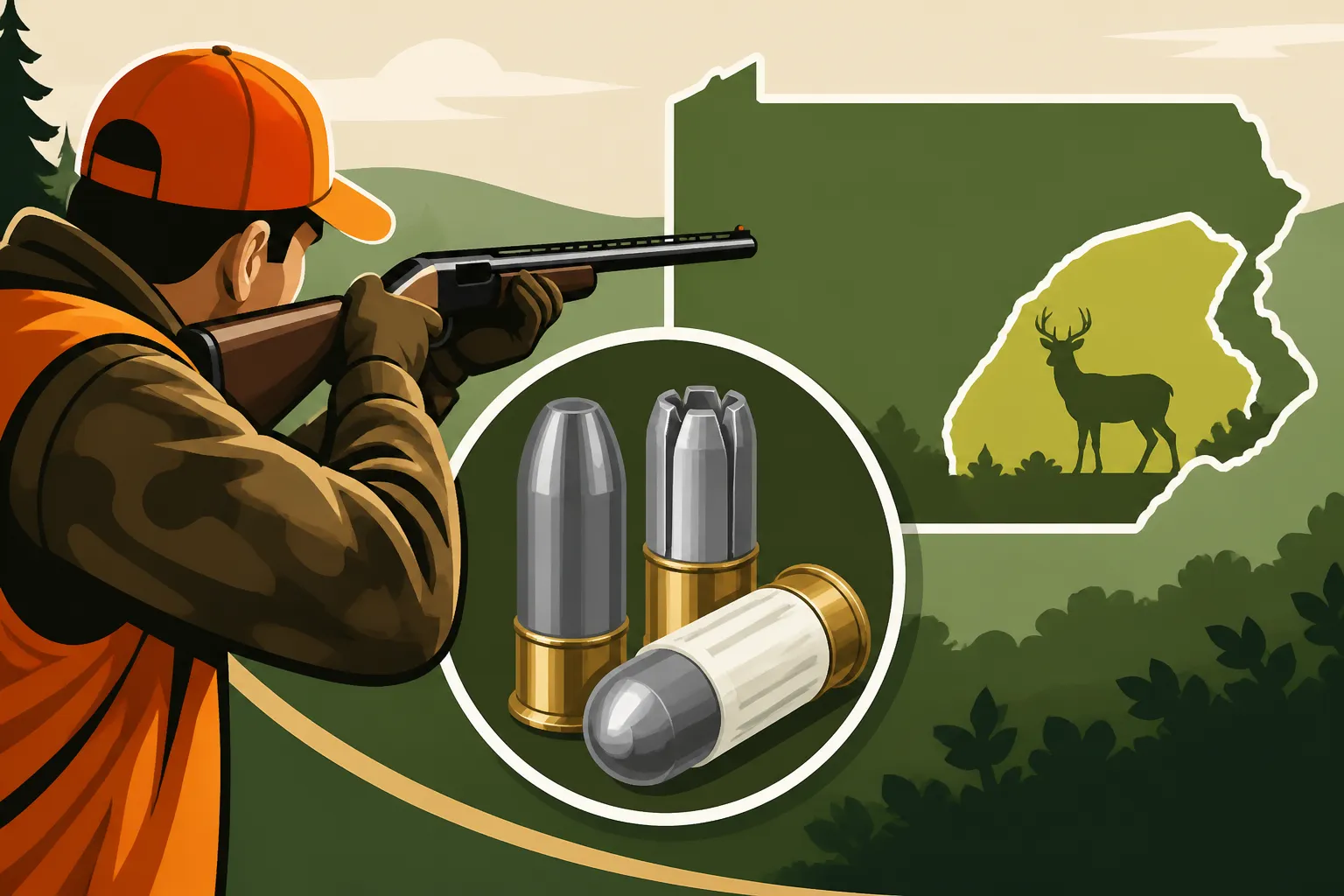
- Rifled Slugs (Foster or Brenneke Type): These are traditionally used in smoothbore shotgun barrels. The "rifling" on the slug itself isn't designed to impart spin for accuracy, but rather to allow the slug to compress and pass through various choke constrictions without damaging the barrel. They are often made of soft lead and rely on their front-heavy design for stability in flight, similar to a shuttlecock.
- Pros: Generally less expensive, readily available, excellent for smoothbore barrels, and perform well at closer ranges (typically under 75-100 yards). They expand well on impact.
- Cons: Less aerodynamic, leading to poorer accuracy and rapid energy loss beyond short distances. Not designed for rifled barrels.
- Best Use: For hunters using older shotguns or those with only smoothbore barrels, particularly in dense cover where shots are expected to be close.
- Sabot Slugs: These are designed specifically for rifled shotgun barrels. A sabot (pronounced "SAY-bow") is a plastic sleeve that encases a smaller, aerodynamic projectile, often made of copper or a hard lead alloy. The sabot engages the rifling in the barrel, imparting a spin to the projectile, which then detaches from the sabot shortly after leaving the muzzle. The spinning projectile flies much more accurately and flatly, much like a rifle bullet.
- Pros: Far superior accuracy and extended effective range (up to 150-200 yards or even more with a premium setup) when used in a rifled barrel. Better ballistic coefficient means less drop and wind drift.
- Cons: Significantly more expensive than rifled slugs. Requires a rifled barrel for optimal performance; using them in a smoothbore barrel will result in poor accuracy.
- Best Use: For hunters who have invested in a dedicated slug gun with a rifled barrel or a rifled slug barrel for their existing shotgun, especially where longer shots across fields or clearings might be possible.
The table below summarizes these key differences:
| Feature | Rifled Slugs (Foster/Brenneke) | Sabot Slugs |
|---|---|---|
| Barrel Type | Smoothbore (often with open choke) | Rifled barrel only (or rifled choke tube) |
| Accuracy | Fair to Good (under 100 yards) | Excellent (150-200+ yards) |
| Range | Limited (max ~100 yards effectively) | Extended (up to 200+ yards effectively) |
| Cost | Lower | Higher |
| Projectile | Large lead, often with internal hollow | Smaller, aerodynamic bullet in plastic sabot |
| Stability | Weight-forward design | Gyroscopic spin from rifling |
| Expansion | Good, often substantial | Varies by projectile design, usually controlled |
Caliber and Gauge Considerations
While we often refer to "caliber" for rifles, with shotguns, we talk about "gauge." The most common gauges for deer hunting with slugs are 12-gauge and 20-gauge. Both are highly effective, but each has its characteristics.
- 12-Gauge Slugs: The most popular choice, offering a larger, heavier projectile.
- Pros: Greater kinetic energy, larger wound channel, and a broader range of slug options available from manufacturers. Many hunters already own a 12-gauge shotgun.
- Cons: More recoil, which can be a factor for some shooters, especially with magnum loads. The larger diameter means slightly more drag for rifled slugs.
- Performance: A well-placed 12-gauge slug is incredibly effective on deer, delivering devastating knockdown power.
- 20-Gauge Slugs: Gaining significant popularity, especially with the advancements in sabot slug technology.
- Pros: Significantly less recoil than a 12-gauge, making them more pleasant to shoot and allowing for quicker follow-up shots. Modern 20-gauge sabot slugs deliver excellent accuracy and sufficient energy for deer at respectable ranges. They are often perceived as more "user-friendly."
- Cons: Slightly less kinetic energy than a 12-gauge, though still more than adequate for whitetails. The range of specialized slug options might be slightly smaller.
- Performance: With a rifled barrel and sabot slugs, a 20-gauge can perform surprisingly close to a 12-gauge in terms of effective range and terminal ballistics on deer. Many hunters find the reduced recoil leads to better accuracy overall.
Ultimately, both gauges are perfectly capable of taking deer ethically in an SRA. Your personal comfort with recoil and your ability to shoot accurately with a particular gauge should be the deciding factor.
Understanding Different Projectile Designs
Beyond the sabot vs. rifled distinction, slugs come in various material and tip designs, each engineered for slightly different performance characteristics.
- Lead Slugs: Most traditional rifled slugs are made of soft lead. They offer excellent expansion upon impact, creating a significant wound channel. The downside is that lead can deform in flight if not properly stabilized, and it might lose integrity on heavy bone.
- Copper Solid Slugs: Many premium sabot slugs feature an all-copper construction.
- Pros: Exceptional weight retention, deep penetration, and consistent expansion. They are often more aerodynamic than lead slugs, contributing to better long-range accuracy. They are also non-toxic, which might become a consideration in some areas.
- Cons: Typically more expensive than lead slugs. Their extreme penetration can sometimes lead to less energy transfer within the animal if they pass through too quickly without significant expansion, though this is rare on deer-sized game.
- Bonded Core Slugs: Some manufacturers produce slugs with a lead core bonded to a copper jacket. This design aims to combine the best attributes of both materials: controlled expansion of lead with the structural integrity and penetration of a copper jacket. These are often found in high-performance sabot offerings from brands like Hornady and Federal.
- Expanding Tips/Polymer Tips: Similar to rifle bullets, some sabot slugs feature polymer tips or hollow-point designs to initiate rapid and controlled expansion. This ensures maximum energy transfer and tissue damage, especially critical for larger or tougher game. These designs are a staple of modern slug ammunition, aiming to deliver rifle-like performance.
When selecting, consider the typical range of your shots and the thickness of the cover you'll be hunting. A slug designed for rapid, devastating expansion might be ideal for close-range timber hunting, while a more aerodynamic, deeper-penetrating slug could be preferred for open-field shots up to 150 yards.
Optimizing Your Setup for SRA Success
Choosing the right slug is only half the battle. To maximize your effectiveness and ensure ethical shots in Pennsylvania's Special Regulations Areas, your entire shotgun setup needs to be optimized for accuracy and reliability. This means paying attention to your barrel, optics, and, most importantly, your own shooting skills.
Rifled vs. Smoothbore Barrels
This is perhaps the single most critical factor influencing slug performance and your choice between rifled and sabot slugs.
- Rifled Barrels: These barrels have spiral grooves inside that impart spin to the projectile, just like a rifle barrel. They are essential for achieving the accuracy and extended range that sabot slugs are designed for. Without rifling, a sabot slug will tumble and be wildly inaccurate.
- Options: You can often purchase a dedicated rifled slug barrel for your existing pump-action or semi-automatic shotgun, or you can invest in a purpose-built slug gun that comes with a rifled barrel. Many modern slug barrels also come drilled and tapped for optics mounts, which is a huge advantage.
- Performance: With a rifled barrel and quality sabot slugs, you can expect groups capable of hitting a deer's vital zone reliably out to 150-200 yards, transforming your shotgun into a highly effective deer weapon.
- Smoothbore Barrels: These are your standard shotgun barrels, typically used for birdshot or buckshot. They lack rifling.
- Options: If you're using a smoothbore barrel, you must use rifled (Foster or Brenneke) slugs. Trying to shoot sabot slugs through a smoothbore will yield terrible accuracy. For best results with rifled slugs, an improved cylinder or cylinder choke is generally recommended. Tighter chokes can deform the soft lead rifled slug and degrade accuracy.
- Performance: Smoothbore barrels with rifled slugs are generally limited to around 75-100 yards for ethical shots on deer. While sufficient for many SRA situations, especially in dense brush, they won't offer the precision or reach of a rifled barrel setup.
For serious SRA deer hunting where longer shots might present themselves, investing in a rifled barrel and good sabot slugs is highly recommended. It genuinely elevates the shotgun's capabilities to a much higher level.
Optics and Sighting for Slug Guns
Accurate slug placement, especially with sabot rounds, demands more than just bead sights. You'll need proper optics to make the most of your setup.
- Rifle Scopes: For a dedicated rifled slug barrel, a low-power variable scope (e.g., 1-4x, 2-7x, or 3-9x) is an excellent choice. The lower magnifications are perfect for close-range timber, while the ability to dial up provides precision for those longer shots across fields. Look for scopes designed to withstand recoil, as slug guns can have significant kick. Good light-gathering capabilities are also key, as deer often move during dawn and dusk.
- Red Dot Sights: These are fantastic for quick target acquisition at closer ranges, typically under 100 yards. They are very fast to get on target and excellent in dense cover where you need to snap shoot. While they offer no magnification, the illuminated dot provides a precise aiming point. Many red dots can also handle the heavy recoil of a slug gun.
- Iron Sights/Ghost Ring Sights: Some slug barrels come equipped with adjustable rifle-style iron sights or ghost ring sights. These are a significant improvement over a simple bead sight for a smoothbore and can be very effective out to 75-100 yards. They are rugged and reliable, making them a good option if you prefer a simpler setup or hunt in truly close quarters.
Regardless of your choice, ensure your optics are securely mounted and properly zeroed. Due to the ballistic curve of slugs, you'll want to zero at a practical distance, perhaps 75 or 100 yards, and then learn your holdovers or holdunders for closer and farther shots. Checking this with your specific ammunition is vital. Tools like the GoHunt app often have ballistic calculators that can help you visualize trajectory.
Practice, Practice, Practice
No matter how high-tech your setup, it's only as good as the shooter behind it. Recoil can be substantial, especially with 12-gauge magnum loads, and it can quickly lead to flinching or poor form if you're not accustomed to it.
- Range Time is Crucial: Take your slug gun to the range and practice shooting from various positions: standing, kneeling, and from a bench rest. Fire multiple shots to ensure your chosen slug performs consistently from your barrel. Don't just shoot once and assume it's good; shoot groups to truly understand your firearm's accuracy.
- Test Different Slugs: Your shotgun, even with a rifled barrel, will likely "like" certain brands and types of slugs more than others. Buy a few different boxes of sabot slugs (or rifled slugs for a smoothbore) from reputable manufacturers and see which ones group best from your firearm. The difference in accuracy can be astounding.
- Simulate Hunting Scenarios: Practice shooting quickly and accurately. If you hunt from a ground blind, practice from a sitting position. If you still-hunt, practice acquiring targets rapidly. The more realistic your practice, the more confident you'll be when a deer steps out. For understanding the terrain you might encounter, a mapping tool like GoHunt can help you visualize potential shooting lanes and distances on public or private ground in your chosen WMU, allowing you to tailor your practice. This is especially useful for understanding Hunting Small Private Tracts in Pennsylvania where shot angles might be limited.
Practical Advice for SRA Hunters
Hunting in Pennsylvania's Special Regulations Areas demands a unique blend of awareness, precision, and adherence to specific rules. Beyond just choosing your slug, it’s about applying that choice effectively and ethically in environments that are often a mix of rural and suburban landscapes.
Matching Slug to Target and Range
The ethical hunter's primary goal is a clean, quick kill. This means selecting a slug that can reliably achieve this at the range you expect to shoot.
- Know Your Maximum Effective Range: This isn't the maximum distance your slug can travel, but the maximum distance at which you can consistently place a slug into a deer's vital zone (about an 8-inch circle). For most smoothbore setups with rifled slugs, this is often 75-100 yards. For a rifled barrel with sabot slugs, it might stretch to 150-200 yards. Never guess. Practice at these distances.
- Consider Shot Placement: Slugs deliver massive energy, but shot placement is still paramount. Aim for the classic shoulder/lung area. Avoid "Texas heart shots" or shots at running deer beyond close range, as the chances of a clean kill decrease dramatically with a slug gun. Remember, even with modern sabot slugs, trajectory isn't as flat as a rifle, so understanding your bullet drop at various distances is critical. Zeroing a Rifle for Woods Distances principles still apply, just with different numbers.
- Terminal Performance: Different slugs are designed to perform differently on impact. Some are engineered for massive expansion, others for deep penetration. For whitetails, a slug that offers a good balance of both is ideal. Most modern deer slugs, whether lead or copper, are designed to expand reliably within the deer's body, creating a substantial wound channel and quick energy transfer.
Dealing with Limited Visibility and Dense Cover
SRAs often feature fragmented woodlots, thick hedgerows, and dense brush. These environments present their own set of challenges, regardless of your slug choice.
- Close Quarters Dominance: This is where a slug gun, especially with a smoothbore and rifled slugs, truly shines. The sheer size and weight of a slug mean it's less likely to be deflected by light brush compared to a small-caliber rifle bullet (though no projectile is truly "brush-proof"). Your focus should be on short, powerful shots.
- Optics for the Woods: While a high-magnification scope might seem appealing for longer shots, in dense cover, it can be a hindrance. A low-power variable scope (1-4x or 2-7x) or a red dot sight allows for fast target acquisition and a wide field of view, which is exactly what you need when a deer bursts out of a thicket at 30 yards. Rifle Scopes for Low-Light Timber principles apply here.
- Patience and Stealth: Still-hunting and patience become even more critical in these tight quarters. Moving slowly, stopping frequently, and using your binoculars or GoHunt's mapping features to glass ahead for openings and deer sign are essential. You need to be ready for a shot to materialize quickly, and your slug gun, with its limited range, keeps you focused on close-in opportunities.
The Importance of Knowing Your WMU's Specifics
Pennsylvania's hunting regulations can vary significantly by WMU, and SRAs are no exception. What's legal in one SRA might be different in another.
- Consult the Digest: Always, always consult the current Pennsylvania Hunting & Trapping Digest. It is the ultimate authority on specific regulations for each WMU, including allowable firearms and ammunition for deer. This includes details on Pennsylvania Firearms Deer Season Structure and Pennsylvania Antlerless Deer Licences Explained, which can also have SRA-specific nuances.
- DMAP Permits: In some SRAs, you might also be able to obtain Deer Management Assistance Program (DMAP) permits, which allow for additional antlerless deer harvest on specific properties. These permits are tied to specific locations and are part of the overall management strategy for high-deer-density areas. Using resources like GoHunt can help you identify DMAP properties and understand the land features where you might use such a permit.
- Safety Zones: Remember the strict safety zones around occupied buildings. In populated SRAs, this means you need to be constantly aware of your surroundings and ensure your backstop is safe before taking any shot. The legal minimum is 150 yards from an occupied dwelling or encampment without permission, and you must have permission to hunt within this zone.
By meticulously choosing your slug, optimizing your setup, and understanding the unique demands and rules of SRA hunting, you'll be well-prepared to responsibly and successfully pursue deer in these challenging, yet rewarding, environments.
Disclaimer
This article is for general informational purposes only and does not constitute professional advice. Laws, prices and regulations vary by location and change over time. Consult a qualified professional for guidance on your specific situation.