Barrel Length for Walking Thick Cover
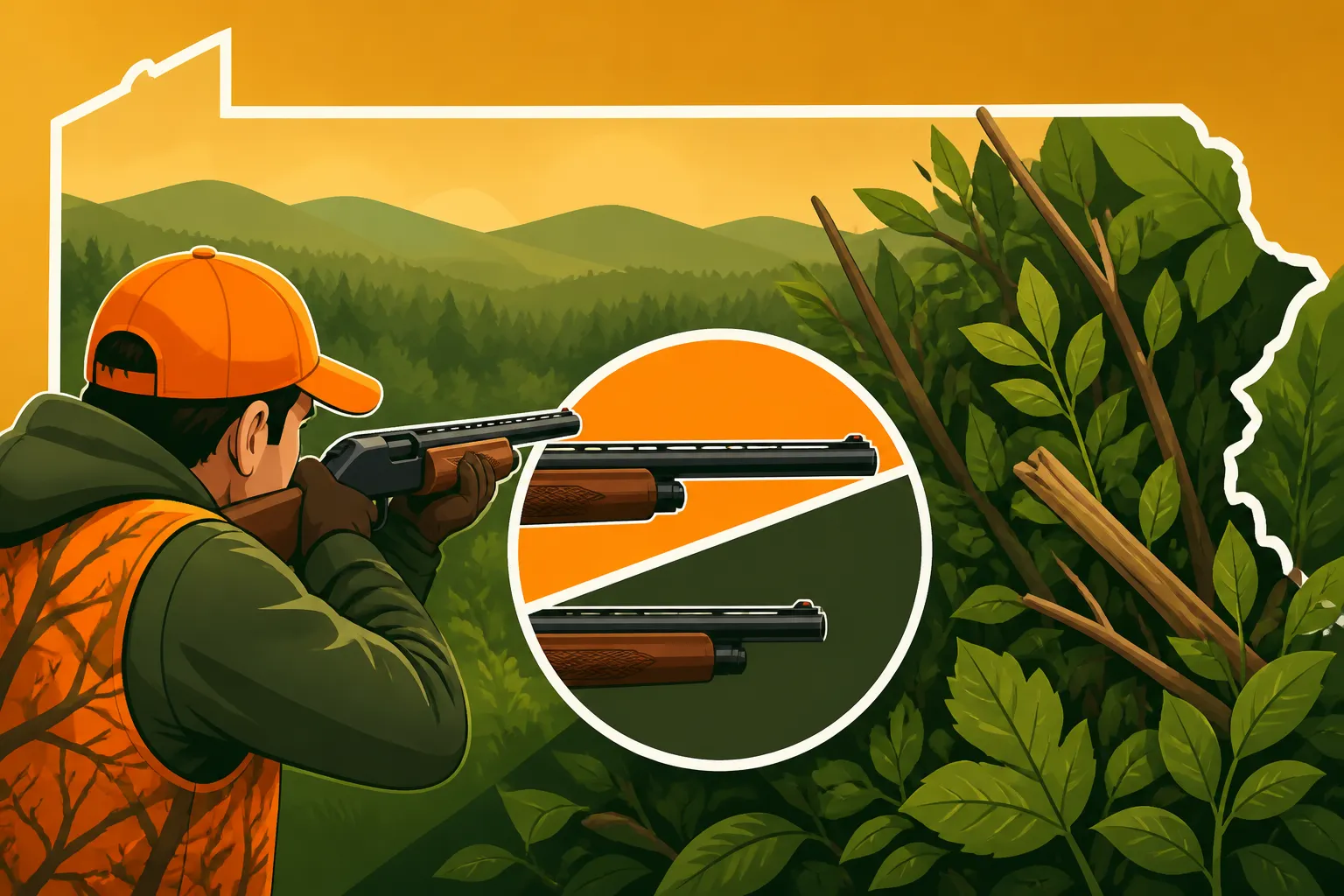
Many Pennsylvania hunters have experienced that familiar frustration: you’re slowly still-hunting through a dense laurel thicket or carefully navigating a thick clearcut, and your rifle barrel snags on every branch, twig, and vine. It's a real battle to stay quiet and move efficiently, often leaving you feeling more like a lumberjack than a hunter. This guide will help you understand how barrel length impacts your ability to move through dense cover, explore the various considerations for different barrel lengths, and ultimately help you decide what's best for your hunting style in the rugged Pennsylvania woods.
The Frustration of Long Barrels in Pennsylvania's Woods
There’s nothing quite like the dense, often impenetrable cover found in many parts of Pennsylvania. From the sprawling State Game Lands to secluded private woodlots, hunters regularly encounter areas where mature timber gives way to thick stands of young hardwoods, briars, and mountain laurel. Trying to maneuver a rifle with a standard 22 or 24-inch barrel through these environments can feel like fighting a losing battle, and it definitely impacts your hunting success.
Navigating Laurel Thickets and Rhododendron Hell
If you’ve spent any time hunting the mountains of Pennsylvania, you know exactly what "rhododendron hell" or a dense laurel thicket feels like. These areas are often prime bedding grounds for deer and bear, offering them excellent security cover. But for a hunter, they can be an absolute nightmare to move through quietly. A long barrel becomes a giant snagging hook, catching on stiff branches, forcing you to constantly stop, untangle, and adjust. This creates noise, breaks your rhythm, and telegraphs your presence to any wary animal within earshot. It can also be incredibly tiring, as you're not just walking, you're constantly wrestling your firearm.
Imagine trying to execute a careful still-hunt when every third step requires you to yank your rifle free from a tangle of greenbriar. Not only is it loud, but it takes your focus away from looking for game sign or movement. You’re more focused on not tripping or making a racket, and that’s when opportunities are often missed. Many hunters find themselves avoiding these prime bedding areas altogether simply because of the difficulty of navigating them with a longer firearm, but a more compact setup could change that entirely.
Stand Hunting and Blind Setups
Even if you’re primarily a stand hunter, barrel length can still be a significant factor, especially when hunting from a ground blind or a smaller treestand. Squeezing into a pop-up ground blind with a 24-inch barreled rifle can be a cramped affair, making it difficult to swing for a shot without hitting the blind’s fabric. The confined space means you often have to hold your rifle at an awkward angle, leading to less stable shooting positions and slower target acquisition.
Similarly, older, more compact treestands might not offer enough clearance for a long barrel, especially if you need to shoot off to the side or behind you. Think about those crucial moments when a buck suddenly appears down a trail you didn't anticipate. If your barrel is constantly bumping into the stand platform or the tree itself, you're wasting precious seconds trying to get into a shooting lane. For hunters who frequently set up in tight spots or use minimalist Treestand Setups in Pennsylvania Hardwoods, a shorter, more maneuverable barrel can make all the difference in comfort and effectiveness.
Understanding Different Barrel Lengths and Their Implications
When we talk about barrel length, we're not just discussing a few inches; we're delving into a design choice that affects everything from ballistic performance to how a rifle handles in the field. For Pennsylvania hunters, understanding these trade-offs is crucial, especially given the varied terrain and cover we often encounter.
Ballistics and Velocity Considerations
The most common concern with shorter barrels is the perceived loss of muzzle velocity. It’s true: a shorter barrel provides less time for the powder charge to accelerate the bullet, resulting in a slight decrease in velocity. However, for the vast majority of deer hunting scenarios in Pennsylvania, this velocity loss is often negligible in practical terms. Most shots are taken within 150 yards, and often much closer, especially when Still-Hunting Pennsylvania Big Woods or Hunting Pennsylvania Clearcuts and Regrowth.
Consider a typical deer cartridge like the .308 Winchester or 6.5 Creedmoor. Reducing the barrel length from 24 inches to 18 or 20 inches might mean a velocity drop of 50-100 feet per second. While this sounds significant on paper, the bullet still retains more than enough energy and velocity for a clean, ethical kill on a whitetail at typical hunting distances. The bullet drop will be marginally increased, but it's often within the margin of error of most hunters' holdover at these ranges. Where it might become a factor is if you're frequently taking shots beyond 250-300 yards, which is less common in Pennsylvania's heavily wooded environments.
| Barrel Length (inches) | Maneuverability in Cover | Practical Velocity Loss (example .308 Win) | Optimal Hunting Scenarios |
|---|---|---|---|
| 24+ | Low | Minimal | Open fields, long-range shots |
| 22 | Moderate | Very low | General purpose, stand hunting |
| 20 | Good | Low (negligible for most PA distances) | Mixed cover, light still-hunting |
| 18 | Excellent | Moderate (still effective for PA deer) | Dense cover, ground blinds, drives |
| <18 (SBRs/Pistols) | Superior | Higher (check legal minimums, ballistics) | Very dense cover, specialized uses |
Handling Characteristics and Balance
Beyond raw ballistics, how a rifle feels and handles in your hands is incredibly important. A shorter barrel shifts the rifle's balance point closer to the receiver, making it feel lighter and much quicker to shoulder and swing. This can be a huge advantage when a buck jumps from its bed unexpectedly, or when you need to make a quick adjustment for a shot in thick timber. The rifle simply feels less cumbersome and easier to control.
This improved handling isn't just about quick shots; it’s about reducing fatigue over a long day of walking. Carrying a well-balanced, shorter rifle makes those miles in steep terrain and dense cover far less arduous. It also reduces the chances of snagging on branches, as there's less leverage for the barrel to get caught. For hunters who value agility and comfort during extended excursions, particularly when navigating tricky terrain like that found while Reading a Pennsylvania Hollow for Deer, the improved handling of a shorter barrel can be a game-changer. It allows you to focus on the hunt, not on fighting your gear.
Muzzle Devices and Overall Length
It’s also crucial to consider how muzzle devices, like muzzle brakes or suppressors (where legal), affect the overall length of your firearm. Adding a 4-6 inch muzzle brake or a 6-10 inch suppressor to a 24-inch barrel can turn an already long rifle into an unwieldy monster, pushing the overall length well over 40-45 inches. This can completely negate any benefits of accuracy or recoil reduction if you're constantly fighting the rifle in tight spaces.
Many hunters who use suppressors (and yes, they are legal for hunting in Pennsylvania with the proper federal paperwork) specifically opt for shorter barrels, often 16 or 18 inches, to keep the overall length of their suppressed rifle manageable. This allows them to enjoy the benefits of reduced noise and recoil without sacrificing the maneuverability that’s so critical in Pennsylvania’s dense woods. Even a compact 18-inch barreled rifle with a suppressor can still be shorter and easier to handle than a 24-inch barreled rifle without one.
Finding Your Sweet Spot: Factors Beyond Just Length
Choosing the right barrel length isn't a one-size-fits-all decision. It's a personal journey that depends heavily on your individual hunting style, the specific terrain you frequent, and even the caliber you choose. There's no single "best" answer, but rather a sweet spot that balances ballistic performance with practical maneuverability in the field. This is where researching gear and setups, sometimes even through platforms like GoHunt, can help you see what other hunters are using in similar situations.
Your Hunting Style and Preferred Terrain
Are you primarily a sit-and-wait hunter who spends most of your time in a permanent box blind or a spacious ladder stand overlooking a field edge? If so, the maneuverability of a shorter barrel might not be as critical. A longer barrel, offering marginally better ballistic performance and a potentially smoother swing for longer shots, could be perfectly suitable. However, if your hunting involves a lot of walking, still-hunting, or participating in Deer Drives With Three or Four Hunters, then a shorter barrel becomes immensely advantageous.
Hunters who spend their time deep in the state forests, navigating thick stands of hemlock or mountain laurel, will quickly appreciate the ease of movement a compact rifle provides. Conversely, someone hunting open farm fields in Southern Pennsylvania might never feel the need for a shorter barrel. It really comes down to an honest assessment of how and where you typically hunt. A versatile hunter, who might hunt open woods on one trip and dense regrowth on another, might even consider owning two different rifle setups to match the conditions.
Caliber Choice and Powder Burn
While we touched on ballistics, it's worth noting that some calibers are more efficient with shorter barrels than others. Faster-burning powders tend to reach their peak pressure and velocity in shorter barrel lengths more efficiently. Cartridges like the .30-30 Winchester, .45-70 Government, or even the .308 Winchester are often considered excellent choices for shorter, carbine-length barrels because they perform very well without a significant velocity penalty. These are often great choices for dense cover and shorter-range encounters that are common in Pennsylvania.
On the other hand, magnum calibers or those designed for maximum velocity, like a .300 Win Mag or .26 Nosler, tend to see a more pronounced velocity drop with shorter barrels because they require more barrel length to fully burn their slower-burning powder. While still perfectly capable of taking a deer, you might be sacrificing more of their intended ballistic performance. For most Pennsylvania deer hunting, sticking with standard, efficient calibers in a shorter barrel configuration is a smart compromise that offers plenty of power and superior handling.
Compromises and Practical Realities
Ultimately, choosing a barrel length is about making compromises. You're trading a minimal amount of ballistic performance (which, again, is often imperceptible in real-world hunting scenarios) for a significant gain in maneuverability, handling, and comfort. For many hunters, especially those who prioritize stealth and agility in thick cover, this is a trade-off they're more than willing to make. The ability to move more quietly, react more quickly, and endure less fatigue can easily translate into more successful hunting trips.
The "ideal" barrel length often hovers around 18-20 inches for many compact hunting rifles, offering a great balance. It’s long enough to maintain excellent ballistics for Pennsylvania deer, yet short enough to be incredibly handy in the woods. When you’re researching different rifle platforms or custom builds, don't be afraid to try out different lengths if you have the opportunity. Sometimes, just shouldering a rifle with an 18-inch barrel compared to a 22-inch one will immediately tell you which feels better in your hands and for your hunting style. Many online resources, like those found through GoHunt, showcase various setups and discuss their field performance, which can be invaluable when making such a decision.
Specialized Considerations for Different Hunting Scenarios
While deer hunting often dominates the conversation, barrel length plays a crucial role in other types of Pennsylvania hunting as well. Different game species and hunting methods demand different characteristics from your firearm, making barrel length a point of careful consideration.
Upland Hunting and Fast Shots
If you're an upland bird hunter chasing ruffed grouse through thick second-growth forests or flushing pheasants from a dense CRP field, the concept of barrel length takes on a slightly different, but equally important, meaning. For shotguns, a shorter barrel (typically 24-26 inches for upland guns, compared to 28-30 inches for waterfowl) allows for quicker swings and faster target acquisition on fast-flushing birds. When a grouse explodes from cover at your feet, you need to get on target instantly, and a long, cumbersome barrel can cost you the shot.
The balance and swing of an upland shotgun are paramount. A shorter barrel reduces inertia, allowing you to stop and start your swing more precisely. This is critical when you're navigating dense Grouse Hunting Pennsylvania Cover with a dog or trying to get a bead on a pheasant streaking across a field. While a longer barrel might offer a slightly smoother, more controlled swing for sustained lead on waterfowl, for the quick, instinctive shots typical of upland hunting, a shorter, more agile barrel is almost always preferred.
Bear Drives and Quick Maneuvering
Bear hunting, particularly participating in organized bear drives, is another scenario where a compact, maneuverable rifle shines. Bear drives often involve pushing dense cover, sometimes through incredibly rugged terrain, with hunters needing to be ready for quick, close-range shots. A long barrel becomes a hindrance when you're trying to move stealthily through thick stands of mountain laurel or dense hemlock, let alone when you need to quickly shoulder your rifle for a shot at a charging bear.
Many experienced bear hunters, especially those who participate in drives, prefer rifles with 18-20 inch barrels. This allows for easier movement, faster target acquisition, and less fatigue during a long day of pushing. The power of common deer calibers like .30-06 or .308 is perfectly adequate for black bear, and the slight velocity loss from a shorter barrel is irrelevant at the typically short distances encountered during a drive. The ability to react quickly and maintain control in a high-pressure situation, especially when Hunting Pennsylvania Bear in the Big Woods, far outweighs any marginal ballistic gains from a longer barrel.
Suburban Deer and Safety Zones
Hunting in more suburban or populated areas of Pennsylvania, often under special regulations or with specific land access, presents unique considerations. Here, shots are almost always at very close range, and often in dense patches of woods or overgrown lots where deer seek refuge. The emphasis shifts from long-range ballistics to precision, quiet movement, and quick, ethical shots in confined spaces.
In these environments, a shorter barrel once again proves its worth. It’s easier to navigate through someone's backyard woods or a small, overlooked woodlot without drawing attention. The compact nature of the rifle makes it less likely to snag on fences, sheds, or thick ornamental bushes. Furthermore, the inherent maneuverability allows for precise shot placement, which is paramount in areas with increased human population and safety concerns. A compact rifle allows a hunter to be more discreet, more agile, and ultimately, safer and more effective in these challenging, often urban-adjacent, hunting grounds. This is often where a Rifle Setups for Pennsylvania Deer article might highlight carbine options.
Disclaimer
This article is for general informational purposes only and does not constitute professional advice. Laws, prices and regulations vary by location and change over time. Consult a qualified professional for guidance on your specific situation.