Field Dressing Knives Worth Carrying
There's nothing quite like the feeling of having a successful hunt here in Pennsylvania, especially when you’ve worked hard for your deer or bear. But that excitement can quickly turn into frustration when it comes time for field dressing, and you find yourself wrestling with a dull, flimsy, or improperly designed knife. This guide is all about helping you avoid that headache, focusing on what makes a field dressing knife truly worth carrying, so you can get the job done efficiently, safely, and without extra stress.
Why Your Field Dressing Knife Matters More Than You Think
Field dressing is a critical step in preserving your harvest, ensuring the meat cools down quickly and stays clean. It's a messy, often cold, and sometimes dark job that demands reliability from your tools. Many hunters often overlook the importance of a quality field dressing knife, treating it as an afterthought, but a good knife can dramatically improve the experience.
The Frustration of a Dull or Improper Tool
Picture this: you've just dropped a buck deep in a hollow after a long still-hunt through the hardwoods. The temperature is dropping, and you know you need to get the animal field dressed quickly to start the cooling process. You pull out your knife, only to find the edge is already compromised from a previous task, or perhaps it’s just a cheap blade that won’t hold an edge. Suddenly, what should be a straightforward task becomes a wrestling match. The blade slips, you have to saw rather than cut, and the whole process is slowed down. This isn't just annoying; it can be dangerous. A dull knife requires more force, increasing the risk of it glancing off bone or hide and cutting you instead of the game. You're working in potentially slippery conditions with blood and fat, and cold, numb hands don't help. The frustration mounts, and what should be a respectful conclusion to a successful hunt turns into a chore.
An improper tool can also make a mess of things. If your blade is too long, too flimsy, or has the wrong profile, you might struggle with precise cuts around internal organs, potentially puncturing something you shouldn't, or making the cleanup harder. No one wants to contaminate good meat because their knife couldn't handle the job. The right knife makes clean, efficient cuts possible, protecting your meat and making the subsequent steps, like Dragging a Deer Off a Pennsylvania Mountain, much easier.
Beyond the Blade: What Makes a Great Field Dressing Knife
While the sharpness and quality of the blade are paramount, a truly great field dressing knife encompasses more than just its cutting edge. The overall design, from the handle to the balance, plays a massive role in its effectiveness and your comfort during use. Think about the ergonomics: when your hands are cold, wet, and tired, a handle that fits securely and comfortably in your grip makes all the difference. Materials that offer a non-slip texture, even when covered in blood, are invaluable.
The balance of the knife is also key. A well-balanced knife feels like an extension of your hand, allowing for controlled and precise movements, which is crucial when navigating around vital organs. It shouldn't feel top-heavy or awkward. Furthermore, the ease of cleaning is a feature often overlooked until you're trying to scrub blood and tissue out of tiny crevices in a folding knife’s mechanism. A knife that can be easily cleaned and sanitized is not only more hygienic but also extends the life of the tool. When you're dealing with big game in places like the Hunting Pennsylvania's Big Woods for Deer, having a knife that performs flawlessly in the field is a non-negotiable part of your Meat Care Gear for Pennsylvania Hunters. Many experienced Pennsylvania hunters consult resources, much like those found on platforms like GoHunt, to refine their gear choices and ensure they're always equipped with reliable tools for the hunt.
Types of Knives for Field Dressing in Pennsylvania
When you head into the woods, especially in Pennsylvania where conditions can vary wildly, having the right tool for the job is essential. Field dressing knives come in a few main categories, each with its own advantages and disadvantages. Knowing these can help you decide which style is best suited for your hunting adventures.
Fixed Blades: The Reliable Workhorses
Fixed blade knives are, for many, the quintessential field dressing tool. These knives consist of a single piece of steel that forms both the blade and the tang (the part of the blade that extends into the handle), often with scales or grips attached. Their primary advantage is their strength and durability. Without any moving parts, there's no hinge to fail, no lock to get sticky, and no weak points to worry about when you're applying pressure for tough cuts or even Bone Saws Versus the Gutless Method. They are incredibly robust, making them ideal for larger game like deer and bear, where you might encounter cartilage or even need to leverage a bit.
Another significant benefit is how easy fixed blades are to clean. A simple rinse under water, a wipe down, and a quick drying is usually all it takes to keep them hygienic. There are no hidden nooks or crannies for blood and tissue to dry and accumulate, which is a major plus for food safety and maintaining your knife. The downside is that they require a sheath for safe carry, and they can be bulkier on your belt or in your pack compared to a folder. However, for a dedicated field dressing knife worth carrying in the Pennsylvania wilderness, a fixed blade offers unparalleled reliability when you're working in cold, demanding conditions, far from the conveniences of home.
Folding Knives: Convenience in Your Pocket
Folding knives offer a level of convenience that fixed blades simply can't match. They're compact, easy to carry in a pocket or a small pouch, and don't require a separate sheath, making them a popular choice for everyday carry or as a backup blade. For smaller game, or for quick, less intensive field dressing tasks, a good quality folding knife can certainly do the trick. Modern folding knives feature robust locking mechanisms, such as liner locks, frame locks, or back locks, which greatly enhance their safety and stability during use.
However, folding knives do come with their own set of compromises when it comes to field dressing. The pivot point and locking mechanism, while strong, can accumulate blood and tissue, making them notoriously harder to clean thoroughly than fixed blades. This can lead to hygiene issues if not meticulous, and over time, dried debris can affect the knife's smooth operation. Additionally, while strong, they generally don't offer the same sheer brute strength for prying or heavy leveraging as a full-tang fixed blade. In a challenging scenario, like field dressing a large animal when you are cold and tired, the peace of mind a fixed blade offers might outweigh the portability of a folder. But for those times when a quick, sharp blade is needed for a specific task, their convenience can be unmatched. Many hunters also find that a folding knife, or even a multi-tool, is a useful secondary tool in their pack.
Specialized Tools: Gut Hooks and Exchangeable Blades
Beyond traditional fixed and folding blades, there are specialized tools designed specifically to make field dressing easier, or at least more efficient for certain tasks.
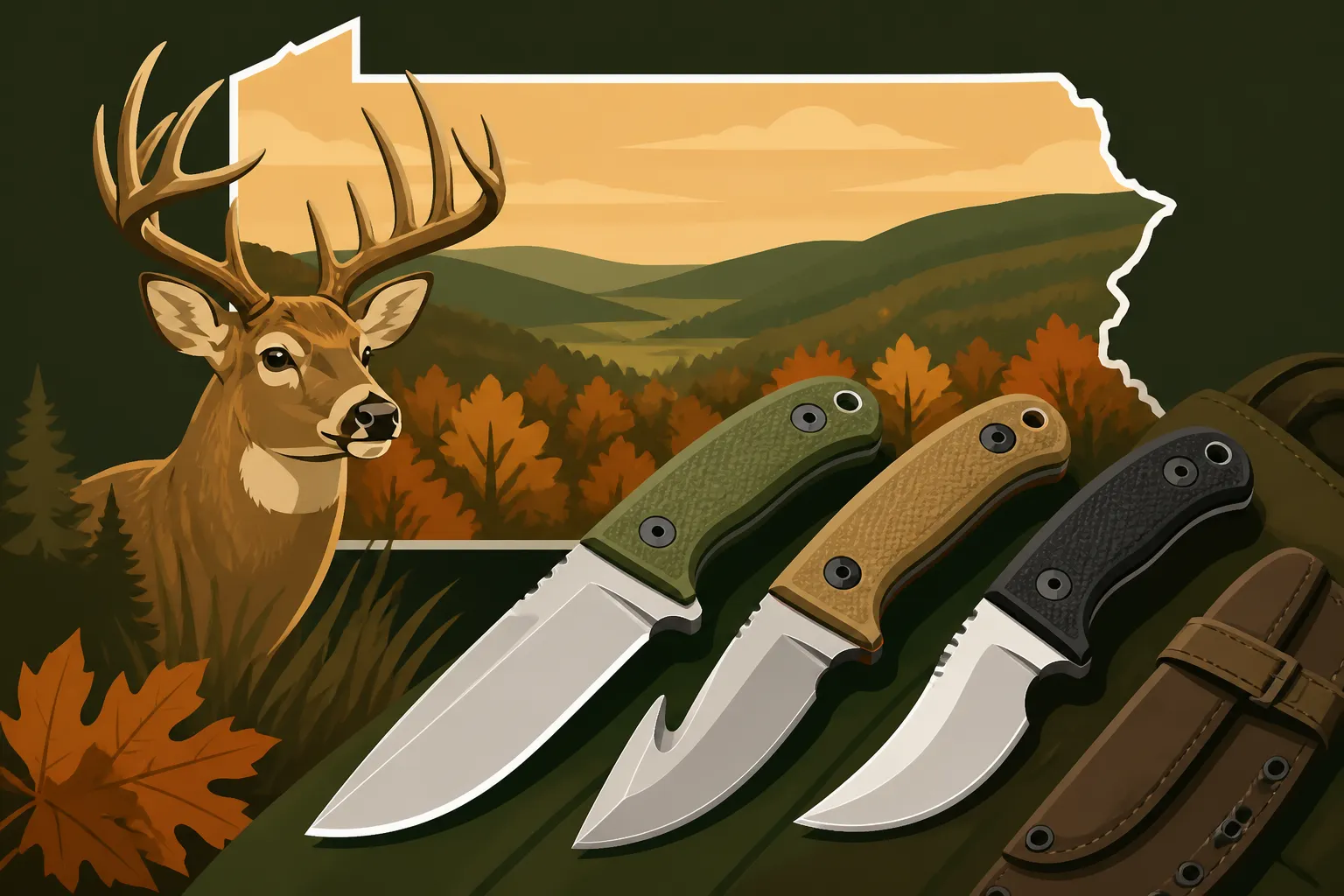
One popular specialization is the gut hook. This is typically a small, curved hook with a sharpened inside edge, often integrated into the spine of a fixed blade knife or as a dedicated standalone tool. Its purpose is to slice open the hide and abdominal wall from the inside out, without piercing the intestines. This significantly reduces the risk of cutting into the stomach or bowels, minimizing contamination and making for a cleaner opening cut. While very effective for this specific job, a gut hook is not a primary cutting tool for the rest of the field dressing process. It's an additive feature, and some hunters swear by them for their efficiency, especially when dealing with a big, heavy deer on the ground.
Another innovative approach is the exchangeable or replaceable blade knife. These knives use razor-sharp, disposable surgical-style blades that can be swapped out once dull or contaminated. The appeal here is constant, effortless sharpness without the need for sharpening skills or tools in the field. When one blade gets dull, you simply pop it out and insert a fresh, hair-shaving sharp blade. This can be a huge advantage when you're in a remote location and need to process an animal quickly. Brands like Outdoor Edge and Havalon are well-known for these systems. The main drawbacks are the ongoing cost of replacement blades and the fact that these thin blades are typically not designed for heavy prying or cutting through bone; they excel at slicing flesh and hide. For precision and continuous sharpness, particularly for careful work like caping or intricate skinning, they are hard to beat. Some Pennsylvania hunters carry one of these alongside a sturdy fixed blade, creating a versatile duo for any field dressing task.
| Knife Type | Pros | Cons | Best Use Cases |
|---|---|---|---|
| Fixed Blade | Extremely durable, strong, easy to clean, reliable lock | Requires sheath, can be bulkier | Large game, tough conditions, primary field dresser |
| Folding Knife | Compact, easy to carry, convenient | Harder to clean, potential for debris in mechanism | Small game, backup, everyday utility, quick tasks |
| Gut Hook Knife | Prevents organ puncture during opening cut | Limited to one specific task, not versatile | Initial abdominal opening |
| Exchangeable Blade | Razor sharp always, no sharpening needed in field | Blades can be fragile, ongoing cost, not for heavy work | Precision cuts, skinning, caping, backup sharp blade |
Key Features to Look for in a Pennsylvania Field Dressing Knife
Choosing the right field dressing knife isn't just about picking a type; it's about understanding the specific features that will make a real difference when you're knee-deep in a successful hunt. The rugged and varied terrain of Pennsylvania, from the dense forests of the Alleghenies to the farm fields of the southeast, presents unique challenges that your knife should be ready to meet.
Blade Steel and Edge Retention
The type of steel used in your knife's blade is arguably the most critical factor, dictating how well it holds an edge (edge retention) and how easy it is to sharpen. Generally, blade steels are categorized by their carbon and alloy content, influencing hardness, corrosion resistance, and toughness. High carbon steels, for instance, often take a very sharp edge and are relatively easy to resharpen, but can be more prone to rust if not meticulously cared for – a consideration in damp, cold Pennsylvania conditions. Stainless steels, on the other hand, offer superior corrosion resistance, which is excellent for blood and moisture exposure, but can sometimes be harder to sharpen to a razor's edge and may not hold that edge quite as long as some premium carbon options.
For field dressing, excellent edge retention means you can process an entire deer, or even multiple animals, without needing to constantly resharpen. Imagine trying to finish opening a deer when your knife starts tearing instead of cutting because the edge is gone. It's frustrating and inefficient. A blade that can slice cleanly through hide, muscle, and around joints without immediately dulling is invaluable. When you’re out on Hunting the Peak Rut Week in Pennsylvania, you might have multiple opportunities, and you want a knife that can keep up. Look for steels known for a good balance of edge retention and ease of sharpening, such as S30V, 440C, or D2. Even the best steel will eventually dull, so having a steel that responds well to a quick touch-up in the field is a feature that truly makes a knife a Field Dressing Knives Worth Carrying.
Handle Design and Grip Security
A sharp blade is useless if you can't hold onto it securely, especially when your hands are cold, wet, or covered in blood. This is where handle design and material become incredibly important. Ergonomics are key: the handle should fit comfortably in your hand, allowing for a secure grip without causing fatigue or hot spots during extended use. Finger grooves, texturing, and a guard to prevent your hand from slipping onto the blade are all vital safety features.
Materials like textured rubber, G10, or Micarta offer excellent grip even when wet or slick. Smooth, polished wood or bone handles, while aesthetically pleasing, can become dangerously slippery in field dressing conditions. The handle should also be substantial enough to fill your hand, providing control, but not so bulky that it interferes with precise movements. In the chilling late seasons of Pennsylvania, when your fingers might be stiff, or you’re working in a light drizzle, a secure grip isn't just about comfort—it's about safety and efficiency. A poorly designed handle can turn a simple cut into a harrowing experience, making a messy job even worse. A well-designed handle gives you confidence and control, even when your hands are cold after sitting in a stand, waiting for that buck to come down from Hunting an Oak Ridge and Benches.
Blade Length and Profile for Versatility
The ideal blade length and profile for a field dressing knife depend largely on the game you're pursuing and your preferred method of processing. For general field dressing of deer in Pennsylvania, a blade length between 3.5 to 5 inches is often considered ideal. A blade shorter than 3 inches can make reaching internal organs awkward, while a blade much longer than 5 inches can be cumbersome for delicate work and increases the risk of accidental punctures.
When it comes to blade profile, several shapes lend themselves well to field dressing:
- Drop Point: This is a very common and versatile profile. The spine of the blade curves downward to meet the edge, creating a strong, controllable point. It's excellent for general cutting, skinning, and gutting, offering a good balance of strength and precision.
- Clip Point: Similar to a drop point, but the back (spine) of the blade near the tip is "clipped" or concave, creating a sharper, more acute point. This can be great for piercing and detailed work but might be slightly more fragile at the very tip than a drop point.
- Skinning Blade: Often characterized by a wider, sweeping belly (the curved portion of the cutting edge), skinning blades excel at separating hide from flesh without piercing the hide. While excellent for skinning, they might not be as versatile for initial gutting cuts.
Many hunters find a general-purpose drop point or a slight clip point in the 4-inch range offers the best versatility for handling a Pennsylvania whitetail. It’s long enough to reach, short enough for control, and robust enough for tough areas. Some hunters even carry a smaller, more specialized caping knife for detailed work around the head, or use their reliable fixed blade for most of the task, then switch to an exchangeable blade knife for intricate skinning cuts. The key is to find a blade that feels right in your hand and allows you to make clean, controlled cuts with confidence, no matter if you are Hunting Pennsylvania Farm Country Edges or deep in the mountains.
Preparing and Maintaining Your Field Dressing Knife for the Season
Having a great knife is only half the battle; knowing how to prepare and maintain it ensures it performs flawlessly when it truly counts. A dull, rusty, or improperly carried knife can quickly turn a successful hunt into a frustrating or even dangerous situation. This attention to detail is part of being a responsible hunter.
Sharpening Techniques and Field Kits
A razor-sharp edge is the single most important feature of any field dressing knife. Trying to field dress an animal with a dull knife is inefficient, dangerous, and can damage the meat. Before the season, dedicate time to sharpening your knife properly. There are many methods, from traditional sharpening stones (whetstones) to guided sharpening systems, ceramic rods, and pull-through sharpeners. Each has its merits, but the goal is always to create a consistent, acute angle on both sides of the blade, resulting in a keen edge that slices with minimal effort.
Even the best knife will eventually lose its razor edge after use. This is where a compact field sharpening kit comes in handy. Many Pennsylvania hunters carry a small ceramic rod, a diamond steel, or a multi-stage pull-through sharpener in their pack. These aren't for major re-profiling, but rather for quickly touching up an edge after field dressing an animal, or even halfway through a particularly large one. Knowing how to quickly restore a working edge in the field means you can finish the job cleanly and effectively, ensuring your knife remains a truly Field Dressing Knives Worth Carrying. You don't need to be a master sharpener, but understanding the basics and practicing regularly will pay dividends.
Cleaning and Storage for Longevity and Hygiene
After field dressing, immediate and thorough cleaning of your knife is crucial. Blood, fat, and tissue are corrosive and can quickly lead to rust, especially on high-carbon blades. For fixed blades, a simple rinse under water (cold water helps prevent blood from "cooking" onto the blade), scrub with dish soap and a brush, and then a thorough drying is usually sufficient. Pay close attention to the area where the blade meets the handle. For folding knives, cleaning is more challenging. Open the blade completely and flush the pivot and locking mechanism with water, using a brush or even a toothpick to dislodge any debris. A blast of compressed air can also help. After cleaning, dry the knife thoroughly, and apply a light coat of food-grade mineral oil to the blade, especially if it’s a carbon steel that’s prone to rust.
Proper storage is also vital. Store your knife clean and dry, preferably in a well-ventilated sheath or a knife block. Avoid storing knives in damp environments or in leather sheaths for extended periods, as leather can hold moisture and cause corrosion. By keeping your knife clean, sharp, and properly stored, you’re not only ensuring its longevity but also maintaining the hygiene necessary for safe meat processing. This commitment to care reflects the respect we have for the animals we harvest. Just as hunters rely on tools like GoHunt for planning and information, they also depend on their gear being in top condition.
Carrying Your Knife Safely and Legally
How you carry your field dressing knife is just as important as the knife itself. Safety should always be your top priority. Fixed blade knives require a sturdy sheath that completely covers the blade and ideally has a retention strap to prevent accidental loss or deployment. Kydex, molded plastic, or high-quality leather sheaths are excellent choices. Carry the knife in a position where it's easily accessible but won't interfere with your movement through thick brush or when climbing. Many hunters prefer to carry it on their belt, slightly behind the hip, or attached to their pack strap.
For folding knives, ensure the locking mechanism is robust and the blade is securely closed when not in use. Carry it in a pocket, or a dedicated pouch on your belt or pack, avoiding loose carry where it could open accidentally. Be mindful of local regulations regarding knife carry, though general hunting knives are typically permitted during hunting activities. When moving through dense cover or over challenging terrain, like when you're Entry Routes on Steep Ground, ensuring your knife is securely stowed prevents accidents and loss. A lost knife in the big woods can be more than an inconvenience; it can be a real problem when it comes time to process your animal. Always prioritize secure and safe carry for a field dressing knife worth carrying in the diverse hunting environments of Pennsylvania.
Disclaimer
This article is for general informational purposes only and does not constitute professional advice. Laws, prices and regulations vary by location and change over time. Consult a qualified professional for guidance on your specific situation.