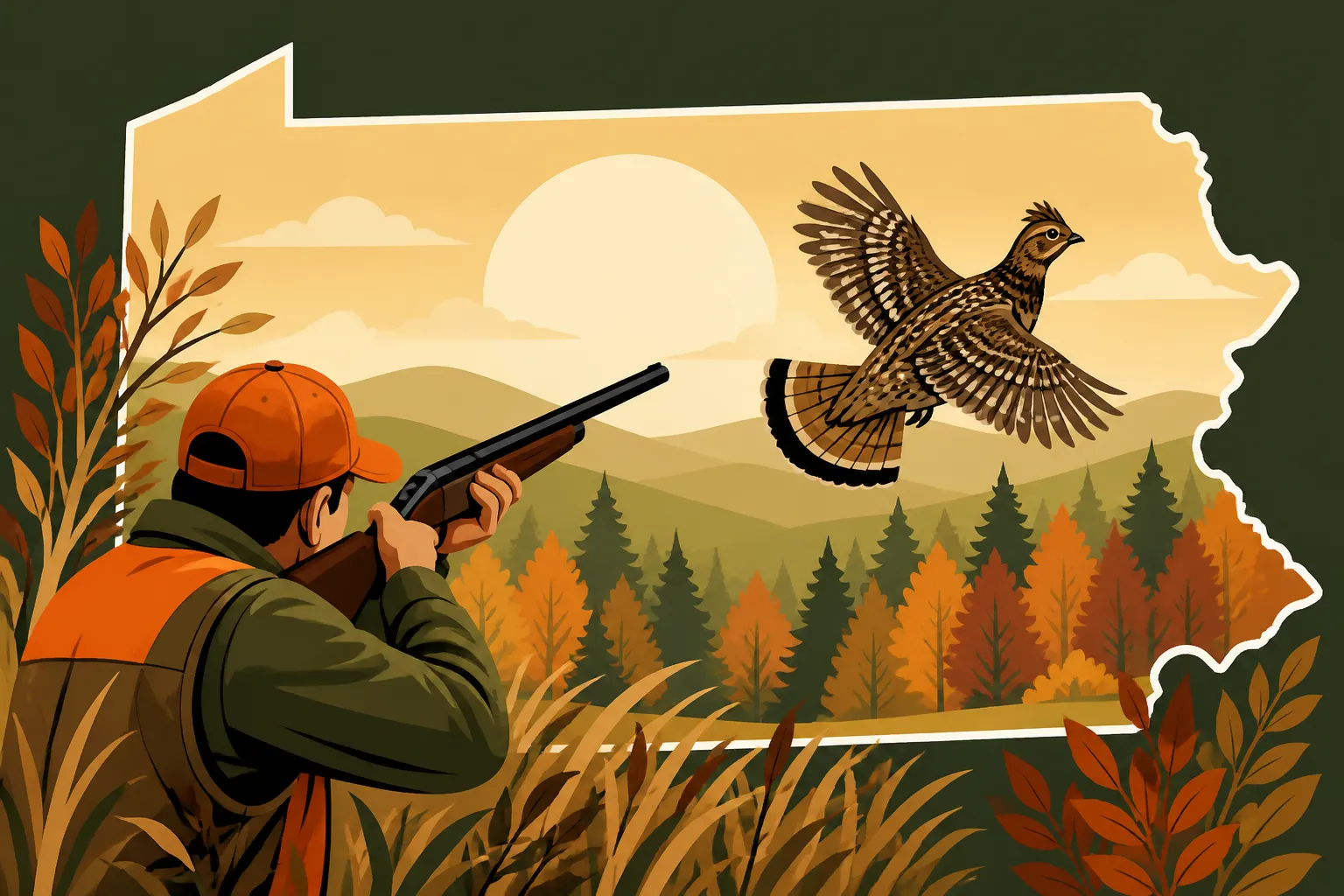
Grouse Hunting Pennsylvania Cover
Few things get a Pennsylvania hunter's heart pounding quite like the explosive flush of a ruffed grouse from dense cover. Yet, finding these "thunder chickens" has become an increasingly difficult challenge over the years, leaving many hunters frustrated and wondering where to even begin. This comprehensive guide is dedicated to breaking down the realities of grouse hunting in Pennsylvania, offering practical advice on identifying prime habitat, choosing the right gear, and employing effective tactics to improve your chances of success.
The Elusive King of the Cover: Understanding Pennsylvania's Ruffed Grouse
For generations of Pennsylvania hunters, the ruffed grouse was synonymous with the state's woodlands. Its drumming call was a familiar sound, and its sudden, startling flight made it a prized game bird. However, if you've been noticing fewer flushes in recent years, you're not imagining things. The population of this iconic bird has faced significant challenges, making every successful hunt a truly special achievement.
The Historical Decline and Current Status
Pennsylvania's ruffed grouse population has been on a downward trend for several decades, a source of real concern and often, heartbreak, for those of us who cherish chasing them. Back in the good old days, it wasn't uncommon to put up dozens of birds in a single outing in certain areas. Now, a handful of flushes can feel like hitting the jackpot. This isn't just anecdotal; scientific data from the Pennsylvania Game Commission (PGC) confirms a significant decline, with long-term trends showing a consistent reduction in harvest numbers and observed flushes. If you've felt like the woods are quieter, you're right. This isn't just a local issue, either, but part of a broader regional trend affecting grouse across much of their eastern range. For a deeper dive into this disheartening trend, check out our article on Ruffed Grouse Decline in Pennsylvania.
Factors Impacting Grouse Numbers in PA
So, what's really happening out there? It's a complex puzzle, but several key factors are largely responsible for the struggles of our grouse. Habitat loss and degradation stand out as primary culprits. Grouse need specific types of dense, early successional forest – think young clearcuts, shrubby thickets, and aspen stands. As forests mature, these vital habitats shrink, becoming less suitable for grouse. Urban sprawl and changing forestry practices have contributed to this, leading to less of the "messy" woods grouse thrive in.
Another major concern, and one that often catches hunters off guard, is West Nile Virus (WNV). Research has shown a strong correlation between the presence of WNV and declines in grouse populations. This mosquito-borne illness can be particularly deadly to grouse, impacting their survival rates, especially for young birds. The fact that an invisible threat like a virus can decimate a population is truly frustrating. Additionally, increased predation from species like coyotes, foxes, and raptors, combined with a lack of dense escape cover, can also put pressure on already struggling populations. Understanding these challenges is the first step in appreciating just how precious every grouse encounter has become. For more on this specific threat, read our piece on West Nile Virus and Pennsylvania Grouse.
Decoding Grouse Habitat: Where to Find Them in Pennsylvania
Finding ruffed grouse in Pennsylvania isn't about aimlessly wandering through the woods anymore; it's about being strategic and knowing exactly what kind of cover to look for. Grouse are creatures of specific habitats, and understanding these preferences is key to increasing your chances of a flush. They need dense cover for protection from predators, food sources, and drumming logs, often all within a relatively small home range.
Young Forest and Regenerating Clearcuts
This is perhaps the holy grail of grouse cover. Young, regenerating forest, typically between 5 and 20 years old, provides the dense overhead and horizontal cover grouse need to escape hawks and owls, while also offering crucial protection from ground predators. These areas are often found after timber harvesting, where sunlight hits the forest floor, spurring a burst of new growth. Think thickets of saplings – oaks, maples, cherries – interwoven with briars and brush. Walking through these areas can be physically demanding, with branches grabbing at your jacket and briars snagging your pants, but that difficulty is exactly why grouse love it.
On State Game Lands and State Forests, look for recent clearcuts or areas that have undergone timber stand improvement. These cuts, even if they're 10-15 years old, can still hold birds, especially on south-facing slopes that get good sunlight. Sometimes, these spots might look like an impenetrable mess, but that's precisely where the "king" holds court. If you want to know more about the importance of these areas, check out Why Young Forest Matters to Grouse. Identifying these areas can be made easier with scouting tools like the GoHunt app, which allows you to overlay public land boundaries and often shows recent timber harvest data, helping you pinpoint likely areas before you even set foot in the woods.
Aspen and Alder Thickets
While less common than they once were, especially in the state's more mature forests, aspen stands and alder thickets remain premier grouse habitat. Aspens are a "pioneer species" that thrive in disturbed soil and grow quickly, creating dense, suckering stands that provide excellent cover and catkins, a preferred food source. You'll often find aspens in pockets, perhaps on an old logging landing or a natural opening in the forest.
Alder thickets, on the other hand, are typically found in low-lying, wet areas, along stream bottoms, or in swamps. These dense, tangled masses of shrubby growth offer incredible protection and are often overlooked by hunters due to their challenging nature. Grouse will dive into these impenetrable areas at the first sign of danger. If you're willing to get your feet wet and push through the thick stuff, these alder bottoms can be incredibly productive, especially during the colder months when other leaves have fallen. When you're scouting with the GoHunt app, look for those wetter, low-lying areas, especially near clear-cuts or mixed hardwoods, as potential alder patches.
Evergreen and Mixed Hardwood Stands
Don't overlook areas with a good mix of evergreen trees, particularly hemlocks, pines, and mountain laurel. While pure evergreen stands might not be ideal, a mix of evergreens interspersed with hardwoods provides year-round cover. During winter, when deciduous trees shed their leaves, the evergreens become critical thermal and security cover, offering refuge from snow and cold winds. Grouse will often roost or feed in these areas.
Furthermore, mature hardwood stands, particularly those with a good understory of laurel or rhododendron, can hold birds. Acorns, beechnuts, and wild grapes are important food sources, and if there's enough dense undergrowth, grouse will utilize these areas. The key is cover. A wide-open mature oak forest, while great for deer, won't typically hold grouse. But if those big oaks transition into a laurel patch or a dense hemlock grove, that's where you need to focus your efforts. These transitional zones, or "edges," are often the most productive, offering both food and escape cover. Learning to recognize these subtle shifts in vegetation is a skill developed over many miles of walking. Our guide on Finding Grouse Cover on Game Lands offers more insights into pinpointing these promising spots.
Essential Gear and Shotgun Setups for Grouse
Chasing grouse through thick Pennsylvania cover is a demanding endeavor, and having the right gear can make all the difference between a frustrating day and a successful one. From your shotgun to your boots, every piece of equipment plays a role in your comfort, safety, and effectiveness in the field. Don't underestimate the importance of being well-prepared for the challenging terrain and sudden flushes.
Shotgun Gauge and Choke Preferences
When it comes to grouse hunting, quick swings and fast shots are the norm, often at close range through a tangle of branches. This means you need a shotgun that's light, responsive, and throws a forgiving pattern. While a 12-gauge is certainly capable, many seasoned grouse hunters prefer lighter gauges like a 20-gauge or even a 28-gauge. A 20-gauge offers a great balance of manageable recoil, a lighter gun, and sufficient stopping power for grouse. A 28-gauge is a joy to carry all day, light as a feather, and perfectly adequate for these relatively small birds.
As for chokes, open patterns are your friend. Improved Cylinder (IC) is a go-to choice, or even Skeet 1 in some instances. These chokes provide a wider pattern at close range, increasing your chances of connecting with a fast-flying bird before it disappears behind a thicket. Many hunters opt for an over-under or side-by-side with an IC/Modified (Mod) choke combination, allowing them to use the more open choke for the first, often closest, shot, and the tighter Mod choke for a potential follow-up if the bird flies further out. Understanding your choke choice is crucial for those split-second decisions. Our detailed article on Best Shotgun Gauge for Pennsylvania Grouse can help you decide which is best for you, and for fine-tuning your pattern, consider our advice on Choke Choice for Fast Flushes.
Ammunition Choices and Loads
Once you've got your shotgun sorted, selecting the right ammunition is the next step. For grouse, you want shot that delivers enough energy to cleanly down the bird without obliterating it. Lead shot, specifically in sizes 7 ½ or 8, is the traditional and most popular choice. These smaller shot sizes create a dense pattern, which is ideal for breaking through light cover and ensuring enough pellets hit the bird.
A standard field load, typically 1 or 1 1/8 ounces for a 12-gauge, or ¾ to 7/8 ounces for a 20-gauge, will work perfectly. You don't need heavy, magnum loads; they just produce more recoil and don't offer any significant advantage for grouse. For ethical and clean kills, pattern your chosen load and choke combination before the season to understand its effective range. This also ensures you’re ready for those quick, close-range opportunities. For a more in-depth look at what to load, read Shot Size for Grouse in Thick Cover.
Upland Apparel and Dog Gear
Beyond the gun, your personal gear significantly impacts your day. Tough, briar-resistant pants are an absolute must. You'll be pushing through thorns, multiflora rose, and dense brush that will shred regular jeans or thinner hunting pants. Brands like Duluth Trading Co. or Filson offer excellent options that stand up to the abuse. A comfortable upland vest with large game pockets and shell loops is also invaluable. This keeps your shells handy and gives you a place to stash a bird, water, or even a packed lunch. Layers are key, as you'll be exerting yourself but also stopping often.
Good, supportive, waterproof boots are non-negotiable, especially if you're hitting those wet alder bottoms. Nobody wants cold, wet feet miles from the truck. And don't forget blaze orange! Pennsylvania regulations require 250 square inches of fluorescent orange on your head, chest, and back during certain seasons, and it's always a good idea when small game hunting. Safety first, always. For those hunting with canine companions, the right dog gear is equally important. A durable tracking collar, a protective vest for your dog (especially in briar patches), and a good leash are essential. Many hunters rely on GPS-enabled tracking collars, which can be invaluable when your dog disappears into a particularly thick tangle, a common occurrence when grouse are involved. Our guide to Upland Vests With Water Capacity might offer some good ideas, and for your four-legged hunting partner, consider Bird Dog Boots and Cut Pads.
Strategies for Success: Hunting Pennsylvania Grouse with and Without Dogs
Grouse hunting is as much an art as it is a science, demanding patience, keen observation, and often, a willingness to endure thick cover. Whether you're hunting with a seasoned bird dog or relying solely on your own two feet, having a solid strategy in place dramatically increases your odds of finding these elusive birds.
Still-Hunting and Flushing Techniques
If you're hunting without a dog, still-hunting becomes your primary tactic, and it requires a different mindset than deer hunting. You're not trying to be utterly silent for extended periods; instead, you're trying to make noise at strategic intervals. Walk slowly, take a few steps, then pause. Wait for a solid 10-15 seconds, sometimes even longer. Grouse often hold incredibly tight, relying on their camouflage, but that sudden silence can make them nervous enough to flush. Many birds are flushed not when you're crashing through the brush, but when you stop moving. Pay attention to every rustle and branch snap.
Focus on working areas with dense cover, walking the edges where different habitat types meet, or zig-zagging through thickets. Don't be afraid to double back or push into areas that look impenetrable; these are exactly where grouse hide. You're looking to put pressure on the bird to make it fly. When it flushes, your reaction time needs to be immediate. The shot opportunity will be fleeting, often just a momentary glimpse through the trees. Mastering the ability to mount your gun quickly and swing through the bird is crucial. It’s a fast, dynamic hunt that demands quick reflexes. Our article on Flushing Grouse Without a Dog goes into even more detail on these techniques.
Hunting with Dogs vs. Without
Hunting with a well-trained bird dog, typically a setter or a pointer, is a classic grouse hunting experience and, for many, the pinnacle of upland bird hunting. A good dog covers much more ground than a human, sniffing out birds that you would walk right past. Their keen sense of smell allows them to pinpoint a bird's location, "point" or "flush" the bird, and ideally, retrieve it after the shot. The dog's ability to hold a bird on point allows the hunter to move into a shooting position, ready for the flush. This makes for a more controlled, often less frantic, shot opportunity.
However, hunting with a dog also comes with its own set of challenges. Dogs can get tangled in briars, need frequent water breaks, and require extensive training to handle wild, elusive grouse. Communication between hunter and dog is paramount. Without a dog, you rely on your eyes and ears, and your own ability to push cover effectively. It’s a more physical, often slower, but still incredibly rewarding experience. Both methods have their merits, and many hunters switch between them depending on the terrain, their mood, or the availability of a canine companion.
Reading the Woods: Sign and Habits
Successful grouse hunting isn't just about walking; it's about learning to "read" the woods. Pay attention to subtle signs that indicate grouse activity. Look for droppings, which are usually small, dark pellets often found around drumming logs or under favored roosting trees. Search for "cuttings"—small bits of buds, catkins, or berries—on the ground, indicating a grouse has been feeding.
Also, try to anticipate where a flushing bird might go. They often fly downhill, along contours, or towards the densest cover available. Understanding how wind and thermals affect wildlife movement, especially in varied Pennsylvania terrain, can also give you an edge. For instance, grouse might favor certain sun-exposed slopes on cold mornings. Being aware of the local food sources, whether it's acorns in an oak flat, or birch catkins in an aspen stand, helps narrow down your search. Tools like the GoHunt app can assist in this by providing topographical maps, showing elevation changes, and helping you visualize how birds might use the landscape. These small details, accumulated over time, are what separate a casual walk in the woods from a truly strategic grouse hunt. Our guide on Scouting Pennsylvania Public Land Before Season offers valuable tips that can be applied to finding grouse habitat.
Seasonality and Best Times to Hunt Grouse
The Pennsylvania grouse season offers a variety of experiences, with distinct characteristics from the crisp days of early autumn to the stark beauty of late winter. Each period presents its own challenges and opportunities, influenced by changing foliage, weather, and the birds' behavior.
Early Season Strategies
Pennsylvania's grouse season typically kicks off in mid-October, often coinciding with the vibrant peak of fall foliage. This early season can be challenging due to the heavy leaf cover, which provides excellent camouflage for grouse and makes spotting flushing birds incredibly difficult. Birds might hold even tighter, knowing they're well hidden. Your effective shooting window is often tiny, literally a fleeting shadow through the leaves.
Despite the visual challenges, the early season can be rewarding. Food sources like acorns, wild grapes, and various berries are still abundant, so focus your efforts on areas where these foods are present, especially in proximity to dense cover. Birds are also often less pressured at this time. Focus on smaller, denser pockets of cover, and be prepared for extremely fast, close-range shots. If you’re hunting without a dog, slow, deliberate still-hunting with frequent pauses is even more critical now. The goal is to move the bird just enough to get a glimpse before it vanishes.
Mid-Season Challenges
As November progresses and especially into early December, the deciduous leaves fall, making visibility much better. This is often considered the prime time for grouse hunting by many. With the leaves down, you can see birds flying further, and you can more easily spot cover changes and potential flush points. However, this also means less camouflage for the grouse, which often makes them a bit more wary and prone to flushing wilder.
Cold snaps can make birds seek out thermal cover, so areas with thick conifers, hemlock bottoms, or dense mountain laurel patches become even more attractive. Food sources shift too, with birds relying more on dormant buds, catkins, and any remaining hard mast. Hunting during the mid-season can be incredibly rewarding, as the woods are quieter, and the feeling of accomplishment when you connect with a bird is immense. You might find success working logging roads or old skid trails that border dense regeneration, as birds sometimes use these for travel or grit.
Late Season Opportunities
The late season, usually running through December and into January (check the current PGC regulations for exact dates), offers a unique and often demanding grouse hunting experience. Snow can be a major factor, which can be both a blessing and a curse. Fresh snow makes tracking easier, allowing you to identify areas with recent grouse activity. It also makes cover more obvious, as deciduous branches are bare.
However, deep snow can make walking incredibly difficult, and extreme cold can push birds into the densest, most inaccessible cover available. Focus on areas with significant evergreen cover – dense hemlock swamps, thick laurel patches, or stands of pine. These areas provide vital thermal protection. Birds may also concentrate near persistent food sources, such as wintergreen berries or persistent buds. Late-season hunting requires robust cold-weather gear and a strong will, but the rewards of a successful hunt in a silent, snow-covered forest are truly unforgettable. The sparse cover often makes for clearer shots, but also makes birds more prone to flushing far ahead of you.
Here's a quick reference for shotgun and load recommendations for grouse:
| Shotgun Gauge | Recommended Choke | Shot Size | Load Weight (ounces) | Notes |
|---|---|---|---|---|
| 12 Gauge | Improved Cylinder | 7.5 or 8 | 1 to 1 1/8 | Versatile, but can be heavier; open choke is critical. |
| 20 Gauge | Improved Cylinder | 7.5 or 8 | 3/4 to 7/8 | Popular choice; lighter, less recoil, excellent for quick shots. |
| 28 Gauge | Skeet 1 / IC | 8 | 3/4 | Very light and fast handling; perfect for close-range work. |
| .410 Bore | Full | 8 or 9 | 1/2 | Challenging; requires excellent shooting skills due to small pattern. |
Conservation Efforts and the Future of Grouse Hunting
The challenges facing Pennsylvania's ruffed grouse are significant, and it’s a topic of deep concern for anyone who loves these birds and the pursuit they offer. While the decline is real, it’s not for lack of effort from dedicated conservationists and the Pennsylvania Game Commission (PGC). Understanding these efforts and the outlook for grouse is crucial for hunters who want to see these populations recover.
The PGC, along with organizations like the Ruffed Grouse Society (RGS), has been working tirelessly to address habitat loss, which is arguably the most controllable factor in grouse recovery. This involves active forest management, specifically creating and maintaining early successional habitat through timber harvests and other methods on public lands like State Game Lands and State Forests. These efforts, such as targeted clearcuts or prescribed burns, are designed to mimic natural disturbances that historically created the dense, young growth grouse depend on. These aren't always pretty to look at immediately after they're done, but the long-term benefits for grouse and other wildlife are undeniable. Projects like these often involve strategic planning, and understanding these habitat initiatives can even help you pinpoint areas where future grouse numbers might rebound, or where current numbers are holding on.
However, the threat of West Nile Virus remains a complex and persistent challenge. While habitat management can create more resilient populations, directly combating WNV in wild bird populations is incredibly difficult. Research continues into the full impact of the virus and potential mitigation strategies, but it's a battle being fought on a biological front that's hard to influence directly.
The future of grouse hunting in Pennsylvania depends on a continued, robust commitment to habitat creation and protection, coupled with ongoing research into diseases and other threats. As hunters, we play a vital role not just through our license fees, which fund PGC projects, but also through our advocacy for sound forest management. Many hunters are actively involved in organizations like the RGS, contributing time and resources to habitat efforts. While we might never see the grouse numbers of our grandfathers, there's hope that dedicated conservation can stabilize populations and perhaps even allow for localized recoveries in areas with prime habitat. It’s about ensuring that the unique thrill of a Pennsylvania grouse flush continues for generations to come.
Disclaimer
The information provided in this guide is for informational purposes only and is not a substitute for official regulations. Always consult the most current Pennsylvania Game Commission hunting and trapping digest for all legal requirements, season dates, and specific Wildlife Management Unit (WMU) rules before heading afield. Hunting regulations can change annually, and it is the hunter's responsibility to be aware of and comply with all applicable laws.