Hanging a Stand on an Oak Bench
There’s nothing quite like the feeling of finding that perfect oak bench, brimming with deer sign, and knowing that with the right stand placement, you’re in for some serious action. But let’s be real, turning that potential into a filled tag isn't always straightforward. Many hunters struggle with exactly where to hang their stand on these sometimes-massive feeding areas, or how to get in and out without blowing out every deer in the county. This guide is here to walk you through the nuances of scouting, strategic placement, and quiet execution for hanging a stand on an oak bench, giving you the edge you need for a successful hunt.
The Irresistible Pull of Oak Benches for Whitetails
Oak benches are truly special places in the Pennsylvania woods, a topographical sweet spot that combines abundant food with critical security features. Deer aren't just passing through these areas; they're often living there, especially during critical feeding periods. Understanding why these spots are so appealing to whitetails is the first step in successful stand placement.
Acorns: The Ultimate Deer Magnet
When those acorns start dropping, it's like a five-star buffet opening up for deer. They absolutely crave them. Acorns are incredibly nutritious, packed with fats, carbohydrates, and protein, making them a prime food source to help deer put on weight for the colder months. Different oak species drop at different times and offer varying palatability. White oaks, for example, tend to drop earlier and are less tannic, meaning deer often hit them first and hard. Red oak acorns, with their higher tannin content, might be saved for later in the season, or deer might gravitate to them once the white oak supply is gone.
The challenge is that acorns don't drop uniformly. One ridge might have a bumper crop while another nearby is barren. Within the same bench, some trees will be dropping heavily, creating a localized feeding frenzy, while others remain untouched. Your job as a hunter is to find those specific trees and areas of heavy drop. This intense focus on hard mast is especially crucial as you get into November and December, making oak benches reliable Late-Season Food Sources for Whitetails when other options dwindle. Deer will literally change their travel patterns to prioritize these areas, sometimes traveling significant distances just to feed on a hot oak bench.
The Bench Advantage: Food, Cover, and Corridors
What sets an oak bench apart from a flat oak bottom or a ridgetop isn't just the acorns; it's the combination of food and topography. A bench is typically a flatter section on a hillside or ridge, often just below the crest. This subtle change in elevation offers whitetails a host of advantages.
Firstly, they provide security. The slight elevation allows deer to see and hear disturbances from below, while the surrounding topography often provides thicker cover on the slope, giving them a quick escape route into denser timber if needed. This makes them feel safe while feeding. Secondly, benches often act as natural travel corridors. Deer will often skirt along these benches rather than expose themselves on a ridgetop or trudge through a steep valley. They become superhighways between bedding areas, water sources, and other feeding zones.
Furthermore, benches can play a significant role in thermal dynamics. On cold mornings, deer might seek out benches that catch the first rays of the sun, warming them up. Conversely, on warmer days, they might use benches that stay shaded longer, providing a cooler retreat. This nuanced understanding of how deer use topography for both security and comfort is key to successfully Hunting Oak Ridges and Benches. They truly are multifaceted habitats that offer deer everything they need: sustenance, security, and efficient travel.
Deciphering Deer Sign on an Oak Bench
Before you even think about hauling a stand up a tree, you need to become a detective. An oak bench might span acres, and while the entire area holds potential, only specific micro-locations are truly red-hot. Learning to read the subtle (and not-so-subtle) clues deer leave behind is how you pinpoint those honey holes.
Reading the Ground for Hot Spots
When you step onto an oak bench, you're looking for evidence of current, heavy deer activity. Fresh droppings are your first and best indicator. Look for clusters of soft, dark pellets, especially if they're still shiny or moist. This tells you deer have been there very recently. Scat that's dried out, faded, or covered in leaves is old news. You're aiming for fresh sign from the last 24-48 hours.
Next, focus on deer trails. You'll likely find several, but distinguish between a faint, seldom-used trail and a well-worn path that looks like a miniature cow path. Heavily used trails, particularly those that converge around specific oak trees or pinch points, are gold. Follow these trails to see where they lead—are they connecting to thicker bedding cover above or below the bench? Are they leading to a water source?
Don't overlook rubs and scrapes. While rubs might be more prevalent on travel routes and bedding area edges, finding fresh rubs on an oak bench tells you a buck is not only feeding there but also asserting his presence. Scrapes, especially those with an active licking branch, are a strong indicator of buck activity during the pre-rut and rut. A scrape line along a logging road or the edge of a bench is a major find, showing consistent buck traffic. Utilizing mapping tools like those from GoHunt can be incredibly helpful here. You can identify the contours of the bench and potential dense cover areas from satellite imagery, giving you a starting point for your boots-on-the-ground scouting.
Identifying Primary and Secondary Foodings
Not all acorns are created equal, and not all oak trees drop their bounty at the same time. This means deer will shift their feeding patterns throughout the season. Your job is to find the currently dropping trees. Look for acorns on the ground that are still plump and fresh, with no signs of insect damage or desiccation. Kick through the leaves under different oak trees to see what's fallen. The ground might be littered with older, dried-out acorns, but if you find a patch of fresh ones, that's where the deer are likely concentrating.
Pay attention to the type of oak. As mentioned, white oaks often draw deer first. Once those are picked clean, deer might move to red oaks, especially if there aren't many other food sources available. This is similar to how deer behavior shifts when What Changes When Beech Nuts Drop; they are opportunists, always seeking the most accessible, nutritious food. Sometimes, you'll find a massive oak that just produces more than its neighbors, becoming a preferred feeding station. These "hot trees" will have the most concentrated sign: disturbed leaf litter, fresh droppings, and perhaps even small tracks from deer pawing for buried acorns. When you identify these specific trees, you've found the heart of the current feeding activity on that bench.
Strategic Treestand Placement on the Bench
Once you've done your homework and identified the hot spots on the oak bench, the real strategy begins: figuring out where to put your stand. This isn't just about picking any tree; it's about anticipating deer movement, managing your scent, and ensuring safe, undetected access.
Entry and Exit Routes are Paramount
This is probably the single most overlooked aspect of stand hunting, and it's absolutely critical when hunting an oak bench. A perfect stand location is useless if you spook deer every time you walk in or out. Your entry route must allow you to get to your stand undetected by sight, sound, or smell.
Consider the prevailing wind and thermals. On a bench, especially one partway up a mountain, thermals will typically drop down the hill in the morning and rise up the hill in the evening. Your approach needs to work with these air currents. If you're hunting an evening sit, you might need an entry route that keeps you above the rising thermals, or one that approaches from the side, with the wind carrying your scent away from the primary feeding area. Conversely, a morning hunt might require an approach from below the bench, allowing your scent to rise behind the deer as they settle into bedding. Ignoring Wind and Thermals on a Ridge is a surefire way to educate your target bucks.
Look for natural features that offer concealment for your approach: a creek bottom, a deep ditch, a logging road (if it's not too noisy), or a thick stand of evergreens. Plan your route to avoid walking through bedding areas or directly across major deer trails. The goal is to be a ghost from the moment you leave your vehicle until you're safely secured in your stand, and again on your way out. Remember, deer remember pressure, and a single bad entrance can sour a prime spot for weeks. When scouting Entry Routes on Steep Ground to a bench, identify those low-impact paths that let you slip in and out silently.
Picking the Right Tree and Angle
Now for the stand tree itself. You need a tree that offers several key advantages. First, consider cover. While you want a clear shot, you also need enough branches or surrounding foliage to break up your outline. A lone tree in an open area might give you a great view, but you'll stick out like a sore thumb. Look for a tree on the edge of a thicker patch or one with good limb structure.
Second, stability and height. You need a tree that's sturdy enough to support your stand and you safely. Aim for a height that gives you a good vantage point, typically 18-25 feet, but also allows for a good shot angle into the primary feeding zone.
Third, shot lanes. Once you've identified the "hot trees" and the main travel corridors on the bench, position your stand to offer clear, ethical shots into those areas. This means clearing shooting lanes before the season, but doing so quietly and minimally to avoid disturbing the area. Don't overdo it; just enough to ensure a clean shot.
Finally, consider the angle relative to deer movement. If deer are typically moving along the bench from left to right, placing your stand to their left will give you more time to draw your bow or raise your rifle as they approach, assuming a right-handed shot. Anticipating their movement and setting up for it can make all the difference. This whole process is more nuanced than a typical Treestand Setups in Pennsylvania Hardwoods where you might be targeting rubs or scrapes directly, as benches are more about feeding and general travel.
Here's a quick comparison of considerations when picking your stand tree:
| Feature | Ideal for Oak Bench Stands | Less Ideal / Considerations |
|---|---|---|
| Cover | Tree with limb structure, nearby thicket, evergreen branches to break silhouette | Lone tree in open, sparse branches |
| Height | 18-25 feet for good vantage and scent control | Too low (easy to be seen), too high (difficult shots, unstable) |
| Stability | Healthy, sturdy tree with minimal sway, good attachment points for sticks/stand | Dead/dying trees, leaning trees, trees with loose bark |
| Shot Lanes | Clear view of hot feeding trees, primary trails, and potential buck sign (rubs/scrapes) | Obstructed view by too many branches, dense undergrowth |
| Wind/Thermal | Positioned to keep scent away from primary deer movement, considers thermals | Directly downwind of feeding area, in a thermal funnel blowing towards deer |
| Bark Type | Rough bark (e.g., oak, hickory) for climbing stick grip, less noisy to ascend | Smooth bark (e.g., beech, some maples) can be slicker, harder to climb quietly |
| Exit Route | Access that allows quiet, undetected departure without spooking deer on the bench | Route that crosses major deer trails, leads through bedding, or is noisy |
The Art of the Quiet and Safe Hang
With your scouting complete and a prime tree identified, it's time to get that stand up. This phase requires patience, precision, and an unwavering commitment to safety. Rushing it or being careless can ruin your efforts and even put you in harm's way.
Essential Gear and Safety First
Before you even touch a climbing stick, prioritize safety. A full-body safety harness is non-negotiable. Wear it from the moment your feet leave the ground until you're back down. Use a lifeline or a lineman's belt when ascending and hanging sticks and the stand. Falls from treestands are a leading cause of hunting accidents, and they are almost entirely preventable with proper safety equipment and usage. Don't ever think "it won't happen to me."
Beyond safety, consider your gear for the hang. Quality climbing sticks are essential for quiet, secure ascent. Many prefer individual sticks over ladder sections because they're easier to maneuver and can adapt to varied tree shapes. Ensure your stand is in good working order, all straps and cables are sound, and you have all necessary tools (wrenches, saw for shooting lanes) secured to a gear hoist rope. Never climb with tools in your hands; hoist them up after you're secured. Also, be mindful of local regulations concerning Treestand Rules on Pennsylvania Public Land if you're hunting Game Lands or State Forests. Some areas have specific rules about leaving stands up overnight or using screw-in steps.
Finally, think about stealth. Use a small, sharp hand saw or pruners for clearing shooting lanes, not loud loppers. Any trimming should be done minimally and quietly. Try to do your hang well in advance of the season, if possible, allowing deer to get used to the slight change in their environment. If you're hanging closer to the season, pick a day with high winds or rain to mask your activity.
The Hanging Process Step-by-Step
Approach your chosen tree as quietly as possible, especially if you're hanging during the season. Minimal talking, slow movements, and a conscious effort to avoid snapping twigs are crucial.
- Clear the Base: Clear any brush around the base of your tree. This prevents noise and offers a clean working area.
- Attach First Stick/Section: Secure your first climbing stick or ladder section. Make sure it's level and tightly strapped. Use your lineman's belt to stay connected to the tree from this point on.
- Ascend and Secure: Climb to the top of your first stick, and while secured, attach the next. Continue this process, always maintaining three points of contact (two feet, one hand, or one foot, two hands) and staying tied in with your harness or lineman's belt. Aim for the desired height.
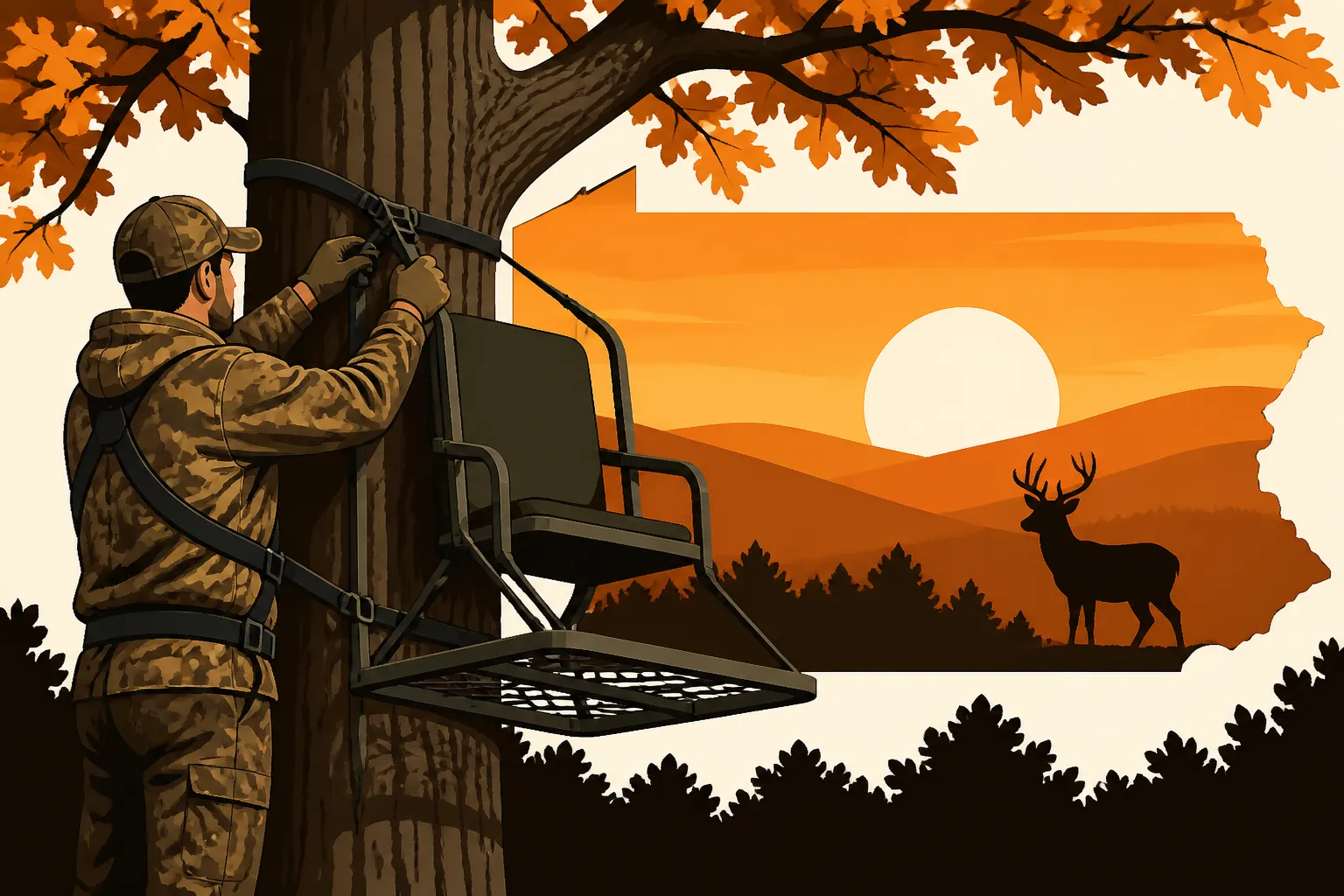
- Attach Stand: Once at your target height, clear any small branches that interfere with the stand's placement. Hoist your stand up using a rope, keeping it under control. Securely attach it to the tree, ensuring it's level. Test its stability gently before fully trusting it.
- Set Up Lifeline (Optional but Recommended): If you're using a full-length lifeline, now is the time to feed it down and secure the bottom. This allows you to stay connected from the ground all the way up to your stand on subsequent hunts.
- Clear Shooting Lanes: Once safely in your stand, using your saw or pruners, quietly clear any necessary shooting lanes. Again, be minimal. Remember the general direction deer will be coming from and where you expect a shot opportunity. Don't clear a runway; just enough to allow your arrow or bullet through.
- Final Checks: Before descending, double-check all straps on your stand and sticks. Make sure everything is tight and secure. Mark your tree subtly if needed (e.g., a small piece of reflective tape at eye level on a branch away from the stand) so you can find it easily in the dark.
- Scent Control on the Way Out: Even after the hang, be mindful of your scent on the walk out. Spray down with a scent eliminator and use your planned, low-impact exit route. Scent control is vital for success, especially on smaller, more pressured parcels, so read up on Scent Control on Small Pennsylvania Tracts.
Remember that Scouting Pennsylvania Public Land Before Season is not just about finding sign, but also identifying potential stand trees and planning these intricate entry/exit routes. Using mapping tools like GoHunt, you can virtually walk the bench, mark specific oak trees, and plan your approach long before you ever step foot in the woods. This detailed preparation, combined with safe and quiet execution, will elevate your hunting success on those coveted oak benches. You can even use Reading Aerial Photos for Big Woods Deer to identify potential bench systems and the thickest cover.
Disclaimer
Hunting is an inherently dangerous activity. Always prioritize safety, follow all local and state regulations, and ensure you are properly trained and equipped for any hunting endeavor. The information provided here is for educational purposes only and should not replace professional guidance or personal judgment.