Entry Routes on Steep Ground
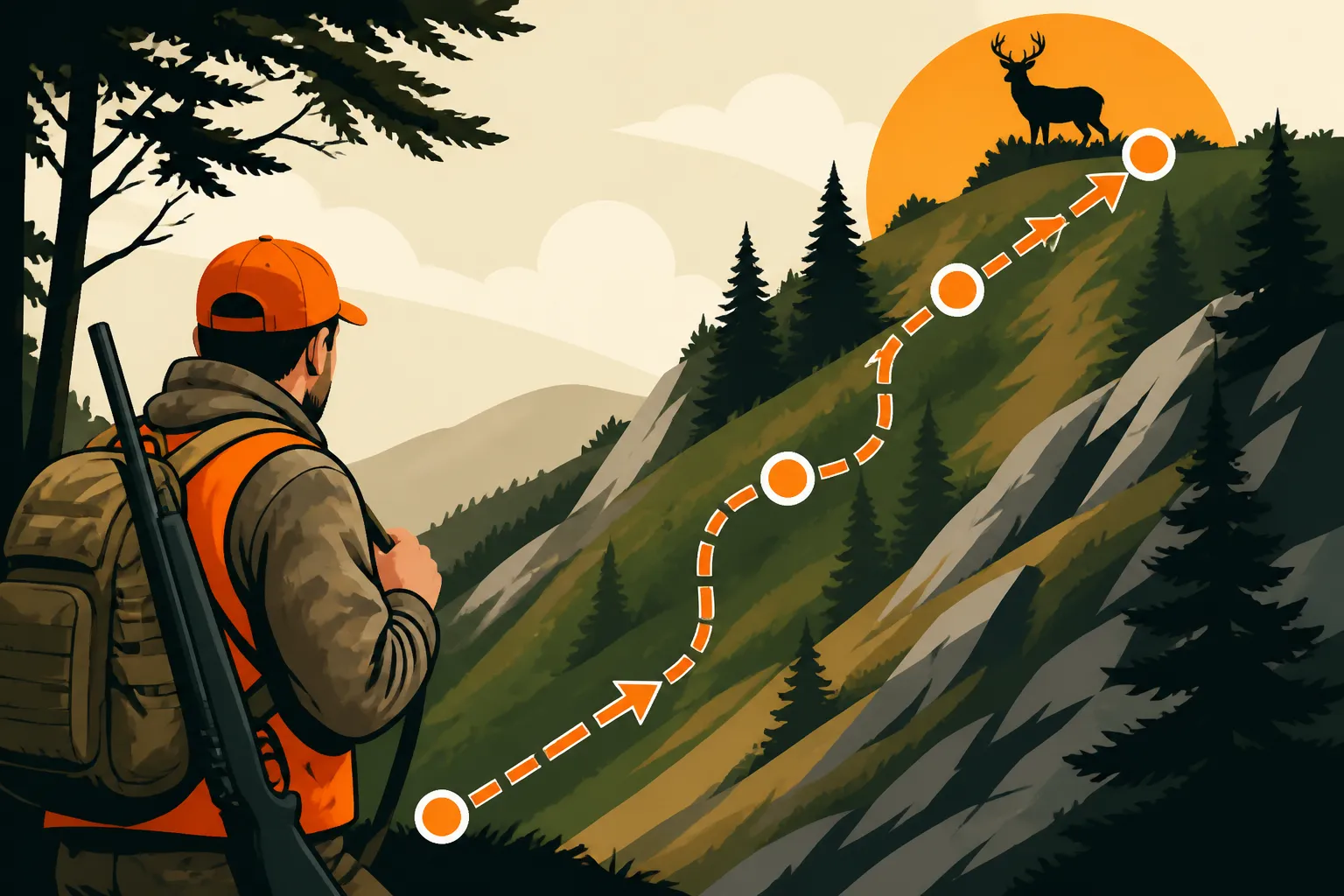
There's nothing quite like the allure of steep, rugged ground in Pennsylvania's hunting country. We've all been there: staring at a topo map, seeing those tightly packed contour lines that scream "remote" and "unpressured," only to realize that getting there is half the battle. Navigating steep terrain isn't just physically demanding; it presents unique challenges for stealth, scent control, and even basic safety. This guide is all about helping you master entry and exit routes on those challenging slopes, ensuring you can reach prime hunting spots effectively and safely, without blowing out every deer in the zip code.
Understanding the Unique Challenges of Steep Terrain
Hunting steep ground in Pennsylvania isn't like walking a flat farm field or a gently rolling woodlot. It demands a different approach, a respect for the land, and a keen understanding of how both gravity and wildlife interact with it. The very features that draw us in—the feeling of remoteness, the potential for undisturbed deer—are often the same ones that make access so difficult and potentially risky.
Why Steep Ground is Different
First off, let's talk about the physical toll. Climbing a significant elevation takes energy, and arriving at your stand or calling spot winded and sweating is a surefire way to spread your scent far and wide. This isn't just about personal fitness; it's about managing your body's output to maintain stealth. Beyond the exertion, steep terrain plays tricks with sound. Rolling rocks, crunching leaves, and snapping twigs echo more dramatically on a quiet hillside than on flat ground. Every misplaced step can sound like an approaching giant to a vigilant deer.
Then there are the thermals, those invisible currents of air that are the bane and blessing of every serious hunter. On steep ground, thermals are incredibly predictable but also incredibly potent. In the mornings, as the sun warms the earth, air begins to rise, carrying your scent up the hillside. In the evenings, as the air cools, it sinks, pulling your scent down into the hollows. Misjudging thermals on steep terrain is perhaps the quickest way to educate every deer in the vicinity, leaving you scratching your head wondering why you didn't see anything. Understanding Wind and Thermals on a Ridge is absolutely critical here. Furthermore, visibility is often limited. Dense undergrowth, rock outcrops, and varied topography create pockets where deer can appear or disappear in an instant, often giving you less time to react than in more open country.
Deer Behavior on Steep Slopes
Deer, especially mature bucks, are masters of steep ground. They use it to their advantage, often bedding in locations that give them a panoramic view of potential threats below and an escape route to the ridge top. These "sanctuaries" are often found on leeward slopes (the side protected from the prevailing wind), just below the crest of a ridge, or on secluded benches. They rely on their senses, especially their nose, and a high vantage point to detect danger before it gets close. When pushed, they typically prefer to travel uphill, using the topography to make their escape.
Travel corridors on steep ground also differ. Instead of straight lines, deer often follow benches, subtle changes in elevation that run horizontally along a hillside. They'll use saddles (low spots in a ridge line) to cross from one drainage to another, and often stick to the thickest cover along the steepest parts of a mountain. Understanding Where Big Woods Bucks Bed is key to intercepting them. During the rut, bucks will often cruise these benches and saddles, checking for does, using the topography to funnel their movements. This makes these features high-value areas, but only if you can get to them without alerting every deer on the mountain.
Scouting for Smart Entry Routes
You wouldn't head into the woods blind, especially not steep country. Smart entry routes are made in the off-season, through careful study and boots-on-the-ground reconnaissance. This preparation is what separates a frustrating, scent-blowing climb from a strategic, stealthy approach to your hunting spot.
Pre-Season Mapping and Aerial Reconnaissance
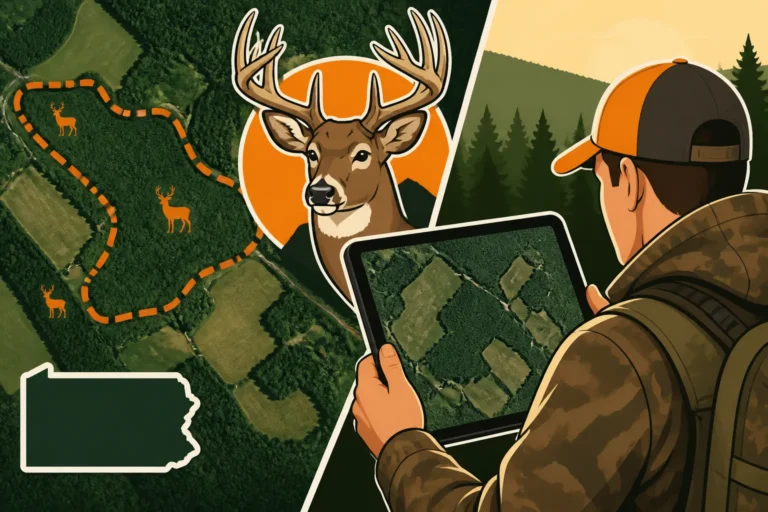
Before you ever set foot on the mountain, you should be pouring over maps. Topographic maps are your best friend here. Look for those contour lines: widely spaced lines indicate a gentler slope, while tightly packed lines mean serious elevation. Identify key features like saddles, benches, natural funnels created by converging draws, and any existing access points like old logging roads or gas lines. Digital mapping tools, like those offered by GoHunt, are invaluable for this. You can overlay aerial imagery with topo maps, mark potential stand locations, plot possible entry and exit routes, and even get an idea of vegetation density.
I often spend hours on GoHunt in the off-season, identifying these subtle features that might not jump out on a paper map. I'm looking for anything that offers a less strenuous path, or one that naturally masks my approach. Think about how deer use these features – if you see a bench that connects two larger ridges, that's likely a travel corridor. If you find a series of steep draws funneling into a wider bottom, that's a natural choke point. The goal isn't just to find a spot, but to find a spot you can get to and from undetected. This kind of detailed planning is a crucial part of Scouting Pennsylvania Public Land Before Season.
Boots-on-the-Ground Scouting
No matter how good your maps are, there’s no substitute for walking the ground. Once you've identified potential routes and stand locations from your armchair scouting, it's time to hit the woods. This is where you confirm what you saw on the map and discover the nuances only visible in person. Look for deer sign: tracks, rubs, scrapes, and droppings. See how the deer are actually using those benches and saddles. Confirm the prevailing wind direction and how thermals might behave at different times of day in those specific spots.
When scouting for entry routes, I'm specifically looking for paths that offer cover, minimize noise, and avoid known deer bedding or travel areas. Are there old logging roads, even overgrown ones, that provide a slightly easier climb? Are there drainage ditches or rock formations that offer concealment? Pay attention to the ground cover – a path over deep moss or soft pine needles is far quieter than one strewn with dry leaves and brittle twigs. Don't be afraid to bushwhack a bit to find the path of least resistance and least disturbance. When you're scouting, you're not just looking for deer; you're looking for the path you will take, ensuring it's as quiet and discreet as possible. Hunting Oak Ridges and Benches often means finding those subtle terrain changes that offer a relatively flat path on a steep slope.
Wind and Thermal Awareness
This is so important on steep ground, it deserves its own emphasis. As mentioned, thermals are king here. If you're hunting an evening stand on a steep hillside, your entry route should ideally keep you above your stand, allowing your scent to rise away from your hunting area as you climb. Conversely, for a morning hunt, you want to be able to approach from below, letting your scent rise above your stand as you ascend in the morning thermals.
Always consider the wind, too. A prevailing west wind might act differently on the eastern slope of a mountain than on the western. Carry a wind checker (a small bottle of powder or a simple piece of string) and use it constantly. Before you even leave the truck, check the wind. As you walk, check it again. When you get to your stand, check it one last time. If the wind or thermals aren't right for your chosen entry, be prepared to scrap your plan and choose an alternative route, or even a different stand. Sometimes, the smart play is to just wait for another day. This meticulous attention to air currents is crucial for Hunting Pennsylvania's Big Woods for Deer effectively.
Tactics for Stealthy Ascent and Descent
Once you’ve done your homework and chosen your route, the actual act of moving through steep terrain demands discipline and a specific set of tactics to ensure you remain undetected. It's about blending in, moving deliberately, and respecting the acute senses of the animals you're pursuing.
Slow and Deliberate Movement
This is perhaps the most fundamental rule for stealthy travel in steep country. Rushing up a mountain will make you tired, noisy, and sweaty – three things you absolutely want to avoid. Instead, take it slow. Really slow. Think "one foot in front of the other," focusing on where each step lands. Use your eyes to pick out soft spots, fallen logs that offer a quieter step, or patches of moss. Avoid dry leaves and brittle sticks whenever possible. When climbing, use the natural rhythm of your breath to pace yourself. If you find yourself panting, stop, rest, and let your heart rate and breathing return to normal before continuing.
Imagine you are Still-Hunting Pennsylvania Big Woods, even when just going to your stand. The goal isn't speed; it's silence and minimal disturbance. This deliberate pace also gives you more time to observe. You might spot a deer ahead of you, hear a distant gobble, or notice fresh sign that wasn't there during scouting. By moving slowly, you can react to these observations without alerting your quarry.
Using Natural Cover
Steep ground often provides excellent natural cover, and it's imperative to use it to your advantage. Ridges, rock outcrops, large trees, and even dense thickets can break up your silhouette and hide your movement. When choosing your path, prioritize routes that keep you out of sight from potential deer bedding areas or feeding zones. Move from cover to cover, pausing behind large trees or boulders to scan ahead before continuing.
When descending, especially if you're Dragging a Deer Off a Pennsylvania Mountain, finding natural ramps or less steep sections is crucial. Don't just follow the fall line straight down unless it's unavoidable. Deer naturally quarter the hillsides, and so should you. Use the topography to your advantage, hugging the backside of small rises or dipping into draws to stay out of sight and potentially mask your sound. If you're on public land, remember that Hunting Pressure on Pennsylvania Game Lands often pushes deer into these thicker, steeper, more remote areas, so blending in is even more important.
Choosing Your Path Wisely
This loops back to scouting but also applies dynamically as you move. Sometimes, a path that looks good on a map proves impossible or too noisy on the ground. Be flexible. If one route is too steep or too noisy, pivot to another. Consider whether it's better to stick to a ridgeline or a hollow. Ridgelines often offer better wind advantage and easier walking, but they can be more exposed. Hollows provide more cover but can be tricky with swirling thermals, and often the ground is softer and muddier, which can be noisy or lead to slips.
When navigating down into a hollow, especially early in the morning, remember that the thermals will be pulling your scent down with you. Plan your route to avoid walking directly through areas where you expect deer to be bedding. Often, it's better to stay slightly above a primary travel corridor or bedding area, only dropping down to your stand once you're directly above it and the thermals are predictable. Conversely, if you're approaching an evening stand in a hollow, you want to be able to approach from below, letting those rising evening thermals carry your scent away from the deer that will be moving down to feed. Familiarity with Reading a Pennsylvania Hollow for Deer will greatly aid in this decision-making.
| Terrain Feature | Pros for Entry/Exit | Cons for Entry/Exit | Best Use |
|---|---|---|---|
| Ridgeline | Good visibility, often clear walking, predictable wind | Exposed, higher risk of skyline detection | Approaching stand from above, long travel |
| Bench | Easier walking horizontally, good travel corridor | Can be well-used by deer, may lead to bedding | Covert movement parallel to deer activity |
| Hollow/Drainage | Excellent cover, can hide movement and sound | Swirling thermals, often muddy/noisy, dense brush | Masking approach, reaching bottomland features |
| Old Logging Road | Easier walking, established path | Often noisy with gravel, can be heavily used by others | Quick access to mid-slope areas, check for sign |
| Rocky Outcrop | Good cover for concealment, breaks up silhouette | Noisy if rocks are loose, can be slow travel | Pausing to scan, moving undetected in short bursts |
Gear and Safety Considerations
Steep country is no place for inadequate gear. The right equipment can make the difference between a successful, safe hunt and a miserable, potentially dangerous ordeal. Prioritizing reliable gear and understanding safety protocols are paramount when venturing into Pennsylvania's steeper hunting grounds.
Essential Footwear and Traction
Your feet are your foundation on steep ground, and proper footwear is non-negotiable. Forget those flimsy hunting boots; you need sturdy, high-ankle boots with excellent traction. Look for boots with aggressive lug patterns on the soles that can grip rock, mud, and loose debris. Waterproofing is also crucial, as you'll often encounter wet leaves, muddy slopes, or small stream crossings. Brands like Lowa, Kenetrek, or even a solid pair of hiking boots from Merrell or Salomon, designed for mountain terrain, are excellent choices. Good ankle support is key to preventing sprains and falls, especially when carrying a pack or a deer. This is covered in more detail when discussing Boots and Packs for Steep Country.
Beyond boots, consider using trekking poles, especially if you're navigating truly steep and uneven ground. They provide extra points of contact, enhance stability, and can significantly reduce fatigue on your knees and hips, both on the ascent and descent. They're invaluable when crossing blowdowns, rocky sections, or slick, muddy slopes.
Packs and Hauling Gear
When you're hunting steep country, every ounce in your pack feels like five. Choose a pack that is comfortable, well-fitting, and capable of carrying everything you need without excess bulk. A good pack should distribute weight evenly across your hips and shoulders, allowing for maximum mobility. When climbing, a properly loaded pack feels like part of your body, rather than something pulling you off balance.
If you are fortunate enough to harvest a deer on steep ground, getting it out can be an epic undertaking. Consider bringing a sturdy game cart if the terrain allows for it, though many steep areas will make a cart impractical. In those situations, a good frame pack for boning out meat, or a heavy-duty deer drag or sled, can be invaluable. The last thing you want is to be unprepared for the physical challenge of removing an animal from a remote, steep hollow. Planning for this eventuality is part of being a responsible and prepared hunter.
Emergency Preparedness
Steep, remote areas mean you are often far from immediate help. Carry a well-stocked first-aid kit that includes bandages, antiseptic wipes, pain relievers, and any personal medications. A headlamp with fresh batteries is absolutely essential, even if you plan to be out before dark. Accidents happen, and walking out in the dark on steep ground without light is a recipe for disaster. A charged cell phone is a must, but understand that service can be spotty or nonexistent in many deep hollows or remote ridges in Pennsylvania.
Therefore, always carry a whistle to signal for help, and consider a satellite communication device like a Garmin inReach or Zoleo, especially if you're hunting alone in truly remote areas. Let someone know where you are going and when you expect to return. Dress in layers to adapt to changing weather conditions, and always carry extra water and some high-energy snacks. Being prepared for the unexpected isn't just about safety; it's about respecting the wild places we hunt.
Disclaimer
Hunting is an inherently risky activity. This guide provides general information and recommendations. Always consult the most current Pennsylvania Game Commission regulations and prioritize your personal safety. Proper training, preparation, and adherence to all laws are essential for a safe and successful hunt.