Pennsylvania’s Once-in-a-Lifetime Elk Draw
If you've ever dreamed of chasing a wild elk through the rugged mountains of Pennsylvania, you're not alone. It's a truly once-in-a-lifetime opportunity for most, an elusive dream that many apply for year after year without success. This guide will walk you through every facet of the Pennsylvania Game Commission's incredibly competitive elk draw, from understanding its mechanics and maximizing your application strategy to preparing for the hunt of a lifetime, should fortune favor you.
Understanding the Rarity: Why Elk Hunting is So Special in PA
Pennsylvania's elk herd is a true testament to conservation, a remarkable success story that few other states can boast. It's a stark contrast to the historical reality, where these majestic animals were completely extirpated from the state by the late 1800s due to unregulated hunting and habitat loss. For many hunters, the mere presence of elk thriving in the commonwealth today is a miracle, and the chance to hunt one is the ultimate prize, fueling the deep desire and persistent effort behind the annual draw.
The History of Pennsylvania Elk
The journey of Pennsylvania's elk from extinction to a thriving population is nothing short of incredible. After disappearing entirely, the first attempts to reintroduce elk began in the early 1900s, primarily with animals brought from Yellowstone National Park. These initial releases were small, but they laid the groundwork for the herd we see today. It wasn't an easy road; early challenges included adapting to the new environment, dealing with poaching, and finding suitable habitat. Over decades, dedicated conservation efforts, land management, and public support slowly but surely allowed the herd to grow and expand its range. This rich history adds a layer of reverence to the draw, connecting modern hunters to a legacy of wildlife restoration.
The history of elk in Pennsylvania is deeply intertwined with the landscape itself, particularly the vast, wild areas of the north-central region. The forests here, while extensively logged in the past, provided the regrowth and remoteness necessary for elk to establish a foothold. Early conservationists recognized the potential of this region, securing critical habitat and managing timber to benefit wildlife. This long-term vision has paid off, allowing the herd to flourish and become a cherished part of Pennsylvania's natural heritage, culminating in the highly sought-after hunting opportunity.
Current Elk Herd Status and Range
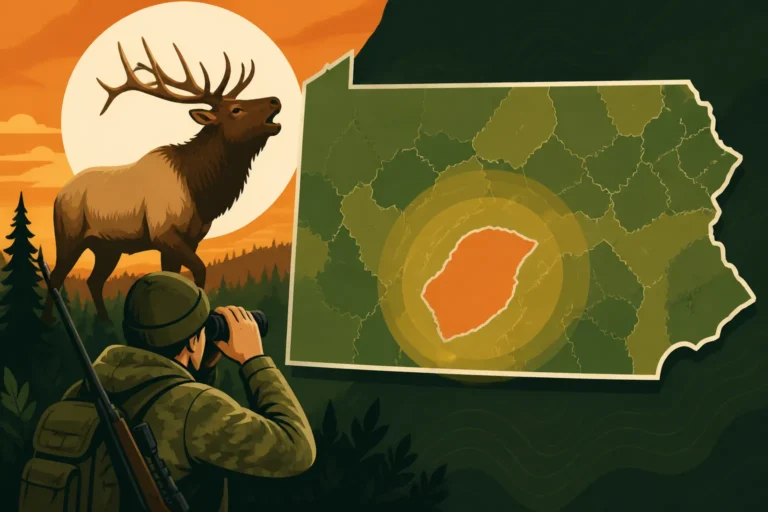
Today, the Pennsylvania elk herd is estimated to be around 1,400 animals, concentrated primarily in the north-central counties, often referred to as the "Pennsylvania Wilds." Counties like Elk, Cameron, Clinton, Clearfield, and Potter form the core of the elk range. These areas are characterized by vast tracts of public land, including state forests and State Game Lands, interspersed with private timber holdings and agricultural fields. This mosaic of habitat provides everything the elk need: secluded bedding areas in dense timber, open clearings for foraging, and reliable water sources. The population is carefully managed to ensure its health and sustainability, balancing herd growth with habitat capacity and human-wildlife conflict.
The Pennsylvania Game Commission (PGC) closely monitors the herd's health and distribution through various surveys and research projects. This ongoing work informs their management decisions, including the number of tags issued each year and the specific boundaries of the elk hunt zones. The herd has shown remarkable resilience, expanding into new areas over time, which sometimes leads to increased interactions with landowners. Hunters contribute significantly to this management through license fees and by providing valuable data during the harvest check-in process. Understanding the health and distribution of the herd is crucial for any aspiring elk hunter, as it directly influences the opportunities available in the draw. You can learn more about the herd's distribution and health in our article about the Pennsylvania Elk Herd Size and Range.
The Pennsylvania Elk Draw: How It Works
The Pennsylvania elk draw is notorious for its low odds, making it one of the most challenging tags to acquire in North America. Unlike some western states with complicated point systems, Pennsylvania's draw is relatively straightforward, but the sheer volume of applicants ensures that luck plays a huge role. It’s a lottery in the truest sense, designed to distribute a very limited number of tags fairly among a massive pool of hopeful hunters. Understanding the mechanics is the first step in entering this high-stakes game.
Eligibility and Licence Requirements
To even throw your hat into the ring for the Pennsylvania elk draw, you need to meet a few fundamental requirements. First and foremost, you must possess a valid Pennsylvania hunting license. This isn't just a suggestion; it's a hard rule. Whether you're a resident or a non-resident, you'll need that general hunting license squared away before you can even think about applying for an elk tag. This ensures that all applicants are legitimate hunters who have completed the necessary hunter education courses and are familiar with the state's hunting regulations.
Beyond the general license, there are no specific experience requirements or minimum age limits beyond what's stipulated for a general hunting license. However, for those under 17, a Mentored Youth Permit or a Junior Hunting License might be necessary depending on their age and specific hunting situation. It’s always best to check the current year’s digest for any updates on these requirements. It's also worth noting that non-residents face a cap on the number of elk licenses they can be awarded, typically 10% of the total, making their odds even steeper. More details on general license costs and options can be found in our guide on Pennsylvania Hunting Licences and What They Cost.
The Application Process: Step-by-Step
The application process for the Pennsylvania elk draw is typically handled online through the Pennsylvania Game Commission's (PGC) website. You'll navigate to the license sales section, where you can purchase your general hunting license and then proceed to the "Special Hunt Permits" or "Draw Applications" area. The application period usually runs from late spring into July. During this window, you'll pay a non-refundable application fee, which usually covers both your entry into the main drawing and the chance to earn a bonus point for future draws if you are unsuccessful. This fee helps fund elk management and research efforts, so even if you don't draw, you're contributing to conservation.
When applying, you'll need to decide whether you're applying for a bull elk license or a cow elk license. These are separate draws with different odds and allocations. You also have the option to apply as a single hunter or as part of a group. Group applications mean that if one person in the group draws, everyone in that group draws a tag, provided there are enough tags available for the entire group. However, applying as a group means you all share the same bonus points, which can be a double-edged sword, potentially reducing the odds for individuals with higher points. It’s a strategic decision that many mull over for weeks. Platforms like GoHunt can be invaluable for researching draw odds and making informed decisions about your application strategy, whether going solo or with a party.
Preference Points and How They Accumulate
Pennsylvania utilizes a bonus point system to acknowledge the dedication of hunters who consistently apply but are unsuccessful. For every year you apply for an elk license and do not draw a tag, you accumulate a bonus point. These points are then multiplied by the number of entries you get in subsequent draws. For example, if you have 5 bonus points, you effectively get 6 entries into the draw (1 for the current year, plus 5 for your accumulated points). This system means that the longer you apply without drawing, the better your mathematical odds become, even if just incrementally.
It's crucial to understand that these bonus points are only for the main elk draw. They do not apply to the special "Antlerless Elk Lottery" or other specific permits. Your points are specific to the bull or cow draw you apply for. If you apply for a bull tag one year and a cow tag the next, your points accumulate separately for each category. However, once you successfully draw any Pennsylvania elk license (bull or cow), all your accumulated bonus points are reset to zero for both categories due to the "once-in-a-lifetime" rule. This is a critical detail for long-time applicants and highlights why every application is so significant. Keep track of your points diligently, and remember that tools found on GoHunt can help you understand how your accumulated points might stack up against the competition.
Elk Hunt Zones: Where You Might Hunt
Once you've decided to enter the elk draw, you'll need to consider the elk hunt zones. Pennsylvania is divided into distinct zones, each with its own allocation of bull and cow tags. These zones are established by the Pennsylvania Game Commission to manage the herd effectively, distribute hunting pressure, and achieve specific management goals within different areas of the elk range. Understanding these zones is paramount, as drawing a tag in a particular zone dictates where your hunt will take place and can significantly influence your hunting strategy.
Overview of Pennsylvania Elk Hunt Zones
The Pennsylvania elk range is not uniform; it's a diverse landscape of dense timber, agricultural valleys, and steep mountains. To account for these variations in habitat, elk density, and landowner considerations, the PGC divides the core elk range into numerous Elk Hunt Zones (EHZ). Each zone is carefully delineated, often following natural boundaries like rivers or roads. When you apply for the draw, you don't pick a specific zone initially; rather, if you are lucky enough to draw a tag, you are then assigned a zone. The PGC works to distribute hunters across these zones to ensure a balanced harvest and to manage localized populations.
These zones are critically important because they define not just where you can hunt, but also the type of terrain you'll encounter and the specific challenges that might arise. Some zones might be characterized by vast, remote public forests, offering a true wilderness experience. Others might encompass more agricultural land, presenting different access and hunting dynamics. Knowing the general characteristics of these zones and the types of hunting they offer can help you mentally prepare and strategize long before the draw results are announced. For detailed information on specific zones, mapping resources are invaluable, and you can find a good overview in our post titled Pennsylvania Elk Hunt Zones.
Factors Influencing Zone Selection
While you don't choose your zone during the initial application, the PGC considers several factors when assigning successful applicants. These factors include the overall elk population within each zone, the success rates from previous years, and specific management objectives like reducing localized crop damage or managing herd health. Bull tags are generally distributed in areas known for older, larger bulls, while cow tags might be allocated to zones where population reduction is a priority. This careful allocation aims to optimize the harvest for both management and hunter opportunity.
For hunters, understanding the implications of different zones is vital. While you can't guarantee a specific zone, doing your research on what each zone offers in terms of terrain, public vs. private land access, and elk behavior can help you prepare. Some zones are known for higher bull-to-cow ratios, while others might offer easier access or more open country. If you're fortunate enough to draw, you'll quickly shift into a research phase, poring over maps and speaking with local experts to understand your assigned zone. Knowing what kind of experience each zone generally offers is part of the extensive homework that dedicated elk hunters undertake.
Bull vs. Cow Tags and Their Distribution
The distinction between bull and cow tags is fundamental to the Pennsylvania elk draw. Bull tags are significantly rarer and thus exponentially harder to draw due to the immense demand and the PGC's management goals to maintain a healthy bull-to-cow ratio in the herd. Drawing a bull tag is truly the "once-in-a-lifetime" dream for most, offering the chance to harvest a magnificent antlered animal. These tags are distributed across zones that have a good population of mature bulls and suitable habitat.
Cow tags, while still incredibly sought-after, are more numerous and therefore have slightly better draw odds. Cow hunts are crucial for population control and managing herd size, especially in areas where elk numbers might exceed habitat capacity or cause significant agricultural damage. While less glamorous to some, a cow tag still offers an incredible opportunity to hunt Pennsylvania elk, experience the wild, and bring home a significant amount of delicious venison. The distribution of both bull and cow tags is meticulously planned by the PGC each year, and the numbers are released annually, giving applicants a clearer picture of the odds.
Here's a simplified look at the general differences:
| Tag Type | Primary Goal | Rarity | Draw Odds | Typical Hunting Experience | Post-Draw Rule |
|---|---|---|---|---|---|
| Bull Elk | Trophy / Population Balance | Extremely Rare | Very Low | Remote, challenging, pursuit of antlers | Once-in-a-Lifetime |
| Cow Elk | Population Management / Crop Damage Mitigation | Rare | Low (better than bull) | Similar challenges, focus on meat harvest | Once-in-a-Lifetime |
Note: The actual number of tags and specific draw odds fluctuate annually based on herd management objectives and applicant numbers.
Maximizing Your Odds: Strategies for Application
Given the incredibly low odds of drawing a Pennsylvania elk tag, many hunters feel it's purely a game of chance. While luck undeniably plays a huge role, there are strategic considerations you can make in your application approach that might, however slightly, improve your chances or, at the very least, ensure you're making the most of every application. This isn't about finding a cheat code, but about understanding the system thoroughly.
The Numbers Game: Understanding Draw Odds
The draw odds for Pennsylvania elk tags are famously slim, often falling into the single-digit percentages, especially for bull tags. In recent years, thousands of applicants vie for a mere handful of bull and cow tags. For instance, in 2023, there were over 30,000 applications for roughly 180 general elk tags, which included 25 bull tags and 155 cow tags. This immediately tells you that the odds are less than 1% for a bull tag. These numbers are publicly available each year from the PGC, and platforms like GoHunt compile and analyze this data, providing valuable insights into historical trends and projected odds for the upcoming draw.
Understanding these odds means managing your expectations. It’s a marathon, not a sprint, for most hunters. The bonus point system is designed to reward persistence, so consistency in applying every year is your best strategy over the long term. While one extra point might seem insignificant, over a decade or two, those accumulated points do provide a mathematical edge, increasing your entries in the lottery. Many hunters view their application fee as an investment in a dream and a contribution to conservation, recognizing that the payout is rare but incredibly rewarding. Details like Pennsylvania Elk Draw Odds further illustrate just how challenging this lottery can be.
Applying as a Group vs. Individually
One of the most debated strategies among Pennsylvania elk applicants is whether to apply as an individual or as part of a group. When you apply as a group, if any member of the group draws, all members of the group draw a tag, provided the total number of tags allocated to the group doesn't exceed the available licenses. The benefit here is obvious: if one lucky friend hits the jackpot, everyone in the group gets to go on the hunt of a lifetime together. This can be a fantastic shared experience.
However, there's a significant drawback: group applications pool their bonus points, and the group's "point total" for the draw is usually the average or the lowest member's points, depending on the specific rules that year (always check the current digest). This means if you've been building up a substantial number of bonus points individually, joining a group with members who have fewer points could effectively lower your personal odds. Conversely, if you have very few points, joining a group with a high-point member could improve your chances. It’s a complex decision that requires open communication and agreement within your potential hunting party. Weigh the individual odds versus the shared experience and the potential impact on your accumulated points.
Nonresident Limitations and Opportunities
Nonresident hunters are absolutely eligible to apply for the Pennsylvania elk draw, but they face additional limitations that make their path to an elk tag even more challenging. By regulation, a maximum of 10% of the total elk licenses issued each year can be awarded to nonresidents. With already low numbers of tags available, this 10% cap significantly reduces the pool of tags accessible to out-of-state hunters, making their draw odds even slimmer than residents'. This is a common practice in many states with limited trophy species, designed to prioritize resident hunters who often contribute more directly to local conservation through a wider range of license purchases.
Despite the steeper odds, nonresidents continue to apply in large numbers, drawn by the allure of hunting a wild elk in the eastern United States. The process for nonresidents is largely the same: purchase a valid Pennsylvania non-resident hunting license, then apply for the elk draw during the designated window. Nonresidents also accumulate bonus points, which function identically to resident points. While the odds are daunting, it's still a possibility, and for many, the dream of a Pennsylvania elk hunt is worth the annual application fee. Details on the Nonresident Limits on Elk Licences are essential for anyone outside the state considering an application.
What Happens If You Draw: Preparation is Key
The moment you get that notification email or see your name on the successful applicants list for the Pennsylvania elk draw is surreal. The excitement is palpable, but it's also quickly followed by the realization: "Okay, now what?" Drawing a tag is just the first step; the real work of planning and preparing for this truly once-in-a-lifetime hunt then begins. This phase is critical, and how well you prepare can make all the difference between a successful, enjoyable hunt and a challenging, frustrating experience.
Post-Draw Requirements and Next Steps
Once you've confirmed you've drawn a Pennsylvania elk tag, the first thing to do is complete any immediate post-draw requirements from the PGC. This often includes paying the full license fee (which is separate from the application fee) within a specified timeframe. Failure to pay this fee promptly will result in forfeiture of your tag, and it will be re-drawn. So, keep a close eye on your email and the PGC website immediately after the draw results are announced. Typically, the elk drawing happens in mid-August, giving you a few months to prepare for the season, which usually opens in early November.
After securing your license, you'll receive your assigned Elk Hunt Zone (EHZ). This is when the serious planning begins. You'll need to immediately dive into researching your specific zone, its terrain, access points, and historical elk movement. Many successful applicants also start lining up accommodations, guides (if they choose to use one), and any necessary equipment upgrades. This isn't a hunt you want to approach lightly, so treat every step of this post-draw process with the seriousness it deserves.
Scouting Pennsylvania Elk Country
Scouting is arguably the most critical component of preparation once you've drawn an elk tag. Pennsylvania elk country, especially the remote sections of the Pennsylvania Elk Country Public Land, can be incredibly rugged and challenging. You simply cannot expect to show up opening day and be successful without extensive pre-season scouting. Start by poring over topographical maps and aerial imagery. Digital mapping tools, like those offered by GoHunt, can be indispensable for identifying potential bedding areas, feeding zones, water sources, and access routes within your assigned EHZ. Look for features like clearcuts, logging roads, creek bottoms, and benches, as these are often prime elk habitat.
If possible, make several trips to your hunt zone well before the season opens. Physical scouting allows you to verify what you see on maps, understand the terrain firsthand, identify fresh sign (tracks, droppings, rubs, wallows), and locate potential ambush points. Pay close attention to prevailing winds and thermals, which are crucial in mountain hunting. During late summer and early fall, you might even hear bulls bugling, which can help you pinpoint their locations. Even if you can only make one scouting trip, it will provide invaluable insight that no map or online forum can fully replicate. Remember, elk are large animals, but they can disappear into the thick cover of Pennsylvania's forests.
Essential Gear and Logistics for an Elk Hunt
An elk hunt in Pennsylvania requires robust gear and meticulous logistical planning. Unlike a whitetail hunt in a familiar woodlot, you'll be covering significant distances over potentially steep, rugged terrain, often in unpredictable November weather that can range from mild to freezing rain or snow. Your gear needs to be up to the task. This includes high-quality, durable boots that are broken in and offer excellent ankle support, layered clothing for variable temperatures (wool or synthetics are preferred over cotton), and reliable rain gear.
For optics, a good pair of binoculars (10×42 or 12×50) is essential for glassing distant clearcuts or timber edges. A rangefinder is also a must-have for accurate shot placement on large animals. Your rifle needs to be chambered in a caliber suitable for elk, such as a .30-06, .300 Win Mag, or similar, and you should be proficient with it out to your maximum ethical range. Practice shooting from various positions you might encounter in the field. Don't forget a sturdy pack capable of carrying your day's essentials, emergency supplies, and potentially the first load of meat. Planning for meat care is also paramount; bring game bags and consider how you'll get the animal out, whether by quartering, using a game cart, or a pack frame. Many hunters will travel some distance for this hunt, so also plan for lodging, food, and transportation to and from your hunting areas.
Life After the Draw: The "Once-in-a-Lifetime" Rule
The phrase "once-in-a-lifetime" isn't just a marketing slogan for the Pennsylvania elk draw; it's a strict regulatory reality that shapes the entire experience. For most hunters, drawing and harvesting a Pennsylvania elk is an achievement that will stand alone in their hunting careers. This rule is in place to ensure that as many unique individuals as possible get the chance to pursue these magnificent animals, spreading the limited opportunity widely across the hunting community.
Understanding the Restriction
The "once-in-a-lifetime" rule in Pennsylvania means exactly what it says: if you are lucky enough to draw and harvest an elk in Pennsylvania, you are no longer eligible to apply for a general elk license again in the future. This applies whether you harvested a bull or a cow. Once your name is in the record books as a successful Pennsylvania elk hunter, your journey through the main lottery draw concludes. All your accumulated bonus points are reset to zero, and you cannot re-enter the general draw. This rule emphasizes the extreme privilege and rarity of the hunt, making every successful draw a truly historic moment for the hunter.
This restriction underscores the PGC's commitment to equitable distribution of a highly coveted resource. It ensures that the excitement and opportunity of drawing an elk tag are shared among a broad spectrum of Pennsylvania hunters (and a small percentage of nonresidents). While some might wish for a second chance, the rule reinforces the unique status of Pennsylvania's elk hunt and preserves the dream for the tens of thousands of other hunters who continue to apply year after year, patiently waiting for their turn.
Exceptions and Other Opportunities
While the general elk license is a once-in-a-lifetime opportunity, there are extremely rare and specific exceptions or alternative avenues to potentially participate in elk management activities, though not necessarily a "hunt" in the traditional sense for a second trophy animal. These often come in the form of special permits or auctions that are entirely separate from the main draw. For instance, the Pennsylvania Game Commission occasionally holds a special elk license auction, where a single tag is auctioned off to the highest bidder, with proceeds going directly to elk conservation efforts. This highly exclusive opportunity is open to anyone, regardless of whether they've harvested an elk before, but it typically commands bids in the tens of thousands of dollars.
Additionally, programs like the Deer Management Assistance Program (DMAP) sometimes offer permits for antlerless deer on specific properties, but DMAP permits for elk are not a common or guaranteed occurrence and would be tied to very specific management needs. Generally, these are not avenues for re-entering a "hunt." It's essential to understand that these are not substitutes for the general elk draw and are exceptional circumstances, if they exist at all for elk. For most hunters, once they punch that elk tag, their "once-in-a-lifetime" journey is complete, and they transition to a different kind of participation in conservation, perhaps mentoring new hunters or supporting habitat projects.
Beyond the Hunt: Conservation and Community Impact
The Pennsylvania elk program is far more than just a hunting opportunity; it's a cornerstone of wildlife conservation in the state and a significant driver for local economies. The success of the elk herd is a point of pride for Pennsylvania, representing decades of dedicated work and sound wildlife management. Understanding this broader impact adds another layer of appreciation for those who participate in the draw or simply visit elk country.
The Role of Elk in Pennsylvania's Ecosystem
Elk are keystone species in the Pennsylvania ecosystem, playing a vital role in shaping the landscape and supporting biodiversity. As large herbivores, their grazing and browsing habits influence forest regeneration and plant diversity. They create openings in dense undergrowth, which can benefit smaller mammals and birds. Their presence signifies a healthy, robust forest ecosystem capable of supporting large wild animals. The conservation efforts for elk have also had positive ripple effects, benefiting other wildlife species that share their habitat, such as deer, bears, and various bird species.
The careful management of the elk herd by the PGC ensures that their population remains in balance with the available habitat. This involves monitoring their health, controlling disease, and managing their numbers to prevent overgrazing or excessive damage to agricultural lands. Hunters, through their license fees and participation in the harvest, are direct contributors to these ongoing conservation efforts. Every application fee and every license purchase contributes to the broader goal of maintaining a healthy and sustainable elk population for future generations to admire and, for a lucky few, to pursue. You can find more information about Elk in the Pennsylvania Wilds and their ecological impact.
Local Economies and Elk Tourism
The return of elk to Pennsylvania has brought significant economic benefits to the rural communities within the elk range. Towns like Benezette, Emporium, and St. Marys have seen a surge in tourism, particularly during the fall rut when thousands of visitors flock to view the bugling bulls. This "elk tourism" generates revenue for local businesses, including hotels, restaurants, gas stations, and gift shops, providing a much-needed economic boost to areas that might otherwise struggle. The Elk Viewing in Pennsylvania experience has become a major draw.
The elk hunt itself also injects money into these local economies. Hunters who draw tags often travel to the area for scouting trips and the actual hunt, purchasing supplies, lodging, and food locally. If they hire a guide, that's another direct economic contribution. This economic impact reinforces the value of wildlife to local communities and provides additional incentive for ongoing conservation efforts. It's a powerful example of how sustainable wildlife management can support both ecological health and human prosperity.
Common Questions and Misconceptions
The Pennsylvania elk draw, being such a unique and highly desired opportunity, naturally generates a lot of questions and, inevitably, some misconceptions. Addressing these can help clarify the process and manage expectations for aspiring elk hunters.
Addressing Popular Myths About the Draw
One common myth is that you need "connections" or an inside track to draw an elk tag. This is absolutely untrue. The Pennsylvania elk draw is a completely random lottery, with the bonus point system providing a mathematical edge, but no amount of influence can guarantee a tag. It's truly about luck and persistence. Another misconception is that applying for a cow tag somehow "wastes" your bonus points or makes you ineligible for a bull tag later. As discussed, while a successful draw resets all points, applying for either category (bull or cow) accumulates points towards that specific draw, and it's a valid strategy if your primary goal is to simply hunt an elk, regardless of sex.
Some also believe that certain WMUs (Wildlife Management Units) or Elk Hunt Zones are "easier" to draw. While some zones might have more tags allocated, you don't pick your zone until after you draw. The draw is state-wide for the tag type (bull or cow), and then zones are assigned. Therefore, there's no strategic advantage in applying based on a perceived "easier" zone. Your best bet is always to apply consistently, understand the true odds, and be prepared for whichever zone you might be assigned, should you be successful.
Changes to Elk Seasons and Regulations
The Pennsylvania Game Commission regularly reviews and, if necessary, adjusts elk seasons and regulations to adapt to herd dynamics, habitat conditions, and public feedback. It's crucial for any applicant, and especially successful tag holders, to stay absolutely current with the latest PGC digest and official announcements. Changes might include minor tweaks to season dates, alterations to specific Elk Hunt Zone boundaries, or adjustments to antler restrictions if new management objectives arise. For example, the number of tags issued for both bulls and cows fluctuates annually based on the previous year's harvest and current herd estimates.
These changes are always implemented with the health and sustainability of the elk herd as the top priority. Before you apply, and certainly before you hunt, make it a habit to check the PGC website for the most up-to-date information regarding Pennsylvania Elk Licence Application deadlines, season dates, and any regulatory shifts. Never rely on outdated information or hearsay. Being informed is not only a responsibility as a hunter but also a key component of a successful and legal hunt.
Disclaimer
The information provided in this guide is for general informational purposes only and is subject to change. Hunting regulations, seasons, and licensing requirements in Pennsylvania are set by the Pennsylvania Game Commission and can be updated annually. It is the responsibility of every hunter to consult the most current Pennsylvania Hunting & Trapping Digest and official PGC resources before applying for any license or heading afield.