Reporting a Sick Animal in Pennsylvania
There's nothing quite as unsettling as seeing a wild animal acting strangely or appearing visibly ill when you're out enjoying Pennsylvania's beautiful outdoors, whether you're hunting, hiking, or just taking a walk. Your first thought might be concern for the animal, closely followed by worry about what it might mean for other wildlife, pets, or even your own safety. This guide will walk you through what to look for when you suspect an animal is sick, why your observations are so important, and the clear steps you can take to report it to the right authorities in Pennsylvania.
Why Reporting a Sick Animal Matters in Pennsylvania
When you come across a sick or unusually behaving animal in Pennsylvania, it's natural to feel a mix of concern and uncertainty. However, your decision to report it can have far-reaching positive impacts. This isn't just about one animal; it's about the health of entire populations and the safety of the public.
Protecting Wildlife Health
Pennsylvania is teeming with diverse wildlife, and maintaining the health of these populations is a huge undertaking. When a wild animal shows signs of illness, it could be an isolated incident, or it could be a symptom of a much larger underlying issue affecting many animals in the area. Diseases like Chronic Wasting Disease (CWD) in deer, or mange in bears and foxes, can spread rapidly if not monitored and managed.
Think about a deer that seems disoriented or unusually unafraid of humans. While it might just be a confused individual, these could also be early signs of CWD. If multiple deer in a specific area exhibit similar symptoms, it could indicate a localized outbreak. Your report helps wildlife agencies track these patterns, implement containment strategies, and understand the overall health trends of our cherished game species. This data is vital for making informed decisions about hunting seasons, population management, and habitat conservation. Your eyes on the ground provide invaluable intelligence that traditional scientific surveys might miss.
Safeguarding Public and Hunter Safety
Beyond the welfare of the animals themselves, reporting sick wildlife is a critical component of public safety. Some wildlife diseases, though rare, can be transmitted to humans (these are called zoonotic diseases). Rabies is the most commonly recognized, and while it primarily affects furbearers like foxes, raccoons, and skunks, it can be passed to any mammal, including deer, bears, pets, and humans. A seemingly docile fox might be suffering from rabies, making it unpredictable and dangerous.
Hunters, in particular, spend a lot of time in close proximity to wildlife and often handle harvested animals. Knowing about potential disease hotspots can inform safe handling practices and remind hunters to take precautions. For instance, if CWD is confirmed in an area, specific guidelines for carcass disposal and meat testing are often issued to reduce risk. Similarly, a bear acting aggressively without provocation could be sick, posing a direct threat to hikers or those living near wild areas. Your report helps authorities assess these risks and take necessary actions, from issuing public warnings to safely removing a dangerous animal.
Common Signs of Sickness in Pennsylvania Wildlife
Knowing what to look for is the first step in identifying a potentially sick animal. Not every odd behavior means an animal is diseased, but certain clusters of symptoms or drastic changes in behavior warrant attention. It's important to observe from a distance and prioritize your safety.
Deer Specific Symptoms
Deer are one of the most commonly encountered species in Pennsylvania, and unfortunately, they are susceptible to several serious diseases. Keep an eye out for these specific signs:
-
Chronic Wasting Disease (CWD) Symptoms: Deer infected with CWD often exhibit progressive weight loss, leading to a "wasted" appearance. They might stand with a wide stance, have a lowered head, and walk with a staggering gait. Other signs include excessive drooling, increased thirst, frequent urination, and difficulty swallowing. They can also appear lethargic, disoriented, and show a loss of fear of humans. You might see them repeatedly bumping into objects. If you're out scouting with a tool like GoHunt, marking the exact location where you observe such behavior can be incredibly helpful when you report it. This information can be critical for Chronic Wasting Disease in Pennsylvania monitoring.
-
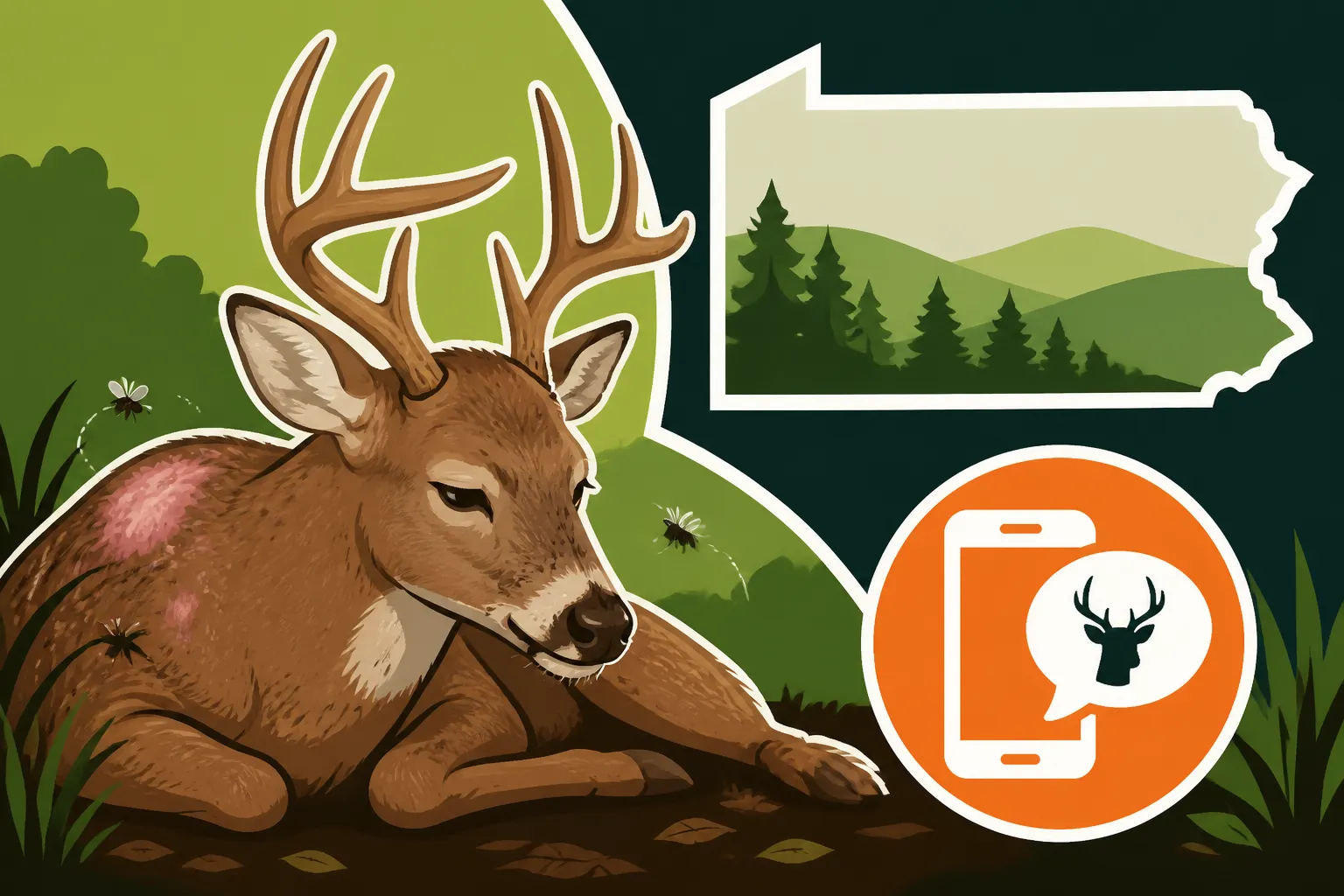
Epizootic Hemorrhagic Disease (EHD) Symptoms: EHD tends to manifest more acutely and often during late summer and early fall. Deer with EHD may appear weak, disoriented, and develop swelling of the head, neck, tongue, and eyelids. They often have a high fever, leading them to seek out water sources, so you might find them near streams or ponds. Bleeding from the mouth, nose, or eyes is another severe symptom. Unlike CWD, EHD typically causes rapid death, so you might more often find carcasses than live, symptomatic animals. This disease can cause significant EHD Die-Offs in Pennsylvania Deer.
-
Other Deer Health Concerns: Deer can also suffer from conditions like deer fibromas (wart-like growths), which, while unsightly, are generally benign and don't require reporting unless they severely impair the animal's vision or eating. However, severe lameness, open wounds that appear infected, or unusual lesions could indicate other bacterial infections or injuries that might lead to secondary health issues.
Symptoms in Other Key Species (Bear, Turkey, Small Game)
While deer often get a lot of attention due to CWD and EHD, other Pennsylvania game species can also fall victim to various illnesses. Your awareness of their typical behavior can help you spot when something is wrong.
-
Black Bear Symptoms: Bears are naturally wary and typically avoid human contact. A bear that appears lethargic, disoriented, or unusually aggressive without provocation is a major red flag. They might exhibit hair loss, which could be a sign of mange, a parasitic skin condition. Bears with mange can look ragged and emaciated. Any bear that struggles to walk, shows neurological issues like head tilting or circling, or has severe open sores needs to be reported. Keep in mind that Mange in Pennsylvania Bears and Foxes is a recurring concern.
-
Wild Turkey Symptoms: Healthy wild turkeys are active, alert, and move with purpose. A turkey that appears sluggish, has ruffled feathers, discharges from the eyes or nose, or struggles to fly or walk should raise suspicion. They might be easily approached, or show signs of lameness. While less common, certain avian diseases can affect turkeys, impacting their ability to forage and escape predators.
-
Small Game Symptoms: For animals like rabbits, squirrels, foxes, and raccoons, look for neurological signs such as circling, staggering, disorientation, or unusual aggression or tameness. Hair loss, especially in foxes or coyotes, could indicate mange, making them look patchy or almost bald. Any small game animal that appears unusually emaciated, has visible tremors, or seems paralyzed should be reported. These symptoms, particularly in furbearers, can sometimes be associated with Rabies in Pennsylvania Furbearers.
General Indicators of Distress
Regardless of the species, several general indicators suggest an animal is in distress and potentially sick. Trust your instincts if an animal just doesn't seem right.
-
Abnormal Behavior: This is often the most noticeable sign. An animal that is typically nocturnal seen during the day, or one that is usually shy acting fearless, is a concern. Excessive drooling, difficulty breathing, limping severely, or repeatedly bumping into objects all fall under abnormal behavior. An animal that is spinning in circles or repeatedly pressing its head against objects can be exhibiting neurological distress.
-
Physical Appearance: Beyond specific disease symptoms, look for a generally unhealthy appearance. This includes extreme emaciation (bones prominent), dull coat, missing patches of fur, open sores, unusual growths, or discharge from the eyes, nose, or mouth. Swelling in specific areas of the body, like joints or the head, is also a warning sign. Sometimes, injured animals might show similar signs of distress, and while an injury isn't a disease, it's still something the Game Commission might want to know about.
-
Lethargy or Unresponsiveness: A sick animal might appear unusually tired, reluctant to move, or unresponsive to its surroundings. If an animal typically flees from humans but remains still as you approach, it could be too ill to react. While not always indicative of sickness, an animal in this state is vulnerable and could be suffering.
How to Report a Sick or Deceased Animal
Reporting a sick or deceased animal is a responsible action that contributes significantly to wildlife management efforts in Pennsylvania. But it's crucial to do it correctly and safely.
Gathering Key Information Before You Call
Before you pick up the phone, the more information you can gather, the more helpful your report will be. Accuracy and detail are paramount for the Pennsylvania Game Commission officers who will investigate.
-
Exact Location: This is perhaps the most critical piece of information. Provide specific details like the nearest road, street address, mile marker, or intersection. If you're on public land, mention the State Game Land number, State Forest District, or specific trail name. GPS coordinates are incredibly helpful. If you use a mapping app like GoHunt for your hunting or scouting, you can easily mark the spot and get precise coordinates. Describing landmarks, such as "near the large oak tree at the bend in the logging road" or "200 yards uphill from the creek crossing," can also be very useful.
-
Species of Animal: Clearly identify the animal if possible. Is it a white-tailed deer, black bear, red fox, wild turkey, or something else? Even if you're unsure of the exact species, provide a description (e.g., "a large brown animal, possibly a bear cub").
-
Number of Animals: Is it just one sick animal, or have you observed multiple animals with similar symptoms in the same area? A cluster of sick animals is a bigger concern than an isolated case.
-
Observed Symptoms/Behavior: Describe what you saw in detail. Was the animal staggering, drooling, or circling? Did it appear emaciated or have visible sores? Was it unresponsive or unusually aggressive? The more specific you can be about the why you think it's sick, the better.
-
Condition of the Animal: Is the animal still alive? Is it deceased? If deceased, how long does it appear to have been there (fresh kill, decaying, etc.)? If it's a deer, note if it has antlers and approximate size. This level of detail aids Pennsylvania Wildlife Disease Monitoring.
Contacting the Pennsylvania Game Commission
The Pennsylvania Game Commission (PGC) is the primary agency responsible for managing the state's wildlife and responding to reports of sick or injured wild animals. They have the expertise and resources to handle these situations appropriately.
-
Who to Call: The best way to report a sick or deceased animal to the PGC is to call their regional office that covers the county where you observed the animal. The PGC website has a clear listing of all regional offices with their contact numbers. It's often helpful to save the number for your local region in your phone. If you can't reach a regional office or if it's an emergency (e.g., a rabid animal acting aggressively near people), you can contact the Pennsylvania State Police, who can then connect you with the appropriate PGC personnel.
-
What to Expect When You Call: When you call, be prepared to provide all the information you gathered. The officer or dispatcher will likely ask follow-up questions to clarify details. They may ask for your contact information in case they need more details or to provide an update. They will assess the situation based on your report and determine the appropriate response, which could range from sending an officer to investigate to simply logging the report for data tracking.
-
Non-Emergency vs. Emergency: It's important to differentiate. A deer that appears somewhat skinny in a field might be a non-emergency report. An aggressive, drooling fox in a suburban backyard, or a bear acting erratically near a school, is an emergency and warrants an immediate call. Use your judgment, but when in doubt, it's better to call.
What to Do (and Not Do) While Waiting
Once you've made your report, what should you do next? The most important thing is to ensure your safety and avoid interfering with the animal.
-
Maintain Distance and Observe Safely: If the animal is still alive, keep a safe distance. Do not approach it, attempt to capture it, or try to help it. Sick or injured wild animals can be unpredictable and dangerous, even small ones. They might bite or scratch out of fear or pain. Use binoculars or a spotting scope if you want to continue observing from afar. If you're using a mapping app to record details like GoHunt, ensure you do so from a safe vantage point.
-
Avoid Contact: Do not touch a sick or deceased animal. If you must handle a deceased animal (e.g., moving it from a road, though this should generally be done by authorities), wear gloves and use tools to avoid direct contact. Always wash your hands thoroughly afterward with soap and water. This is especially important for diseases like rabies, which can be transmitted through contact with saliva or brain tissue.
-
Prevent Your Pets from Contact: If you are with a dog or other pet, ensure they are leashed and kept far away from the sick or deceased animal. Pets can contract diseases from wildlife, and some of these can then be transmitted to humans.
-
Do Not Disperse Carcasses Indiscriminately: If you come across a deceased animal that you suspect died from a disease like CWD or EHD, do not simply drag it into the woods to decompose. Indiscriminate disposal can help spread pathogens. The Game Commission might want to test the animal or instruct you on proper disposal methods. Specific Pennsylvania CWD Carcass Rules are in place for areas affected by chronic wasting disease.
Understanding Wildlife Diseases in Pennsylvania
Pennsylvania wildlife faces various health challenges, and knowing a bit about the most common ones helps put your observations into context. The Pennsylvania Game Commission actively monitors these diseases to protect wildlife populations and public health. This work is part of comprehensive Pennsylvania Wildlife Disease Monitoring.
Chronic Wasting Disease CWD
Chronic Wasting Disease (CWD) is arguably the most significant wildlife disease concern for Pennsylvania deer hunters. It's a neurological disease affecting cervids (deer, elk, moose) that is always fatal.
-
What it is: CWD is caused by abnormal proteins called prions, which slowly damage the brain and nervous system of infected animals. It's not a bacterial or viral infection in the traditional sense. The prions can persist in the environment for a long time, making it challenging to eradicate once established. There is currently no vaccine or cure.
-
How it Spreads: CWD can spread through direct animal-to-animal contact or indirectly through the environment. Infected animals shed prions through saliva, urine, and feces. Other deer can then pick up these prions from contaminated soil, plants, or water. This is why practices like Pennsylvania Deer Feeding and Baiting Rules are often in place, as congregating deer can increase disease transmission.
-
Current Status in Pennsylvania: CWD has been detected in several areas of Pennsylvania, leading to the establishment of Disease Management Areas (DMAs). In these DMAs, specific regulations are often put in place regarding carcass movement, feeding, and sometimes even hunting methods to try and control the spread. Hunters play a vital role in surveillance by reporting sick deer and cooperating with testing efforts.
Epizootic Hemorrhagic Disease EHD
EHD is another serious disease that impacts Pennsylvania's deer population, though it behaves quite differently from CWD.
-
What it is: EHD is a viral disease transmitted by biting midges, often called "no-see-ums." It typically occurs in late summer and early fall, particularly after periods of drought followed by rain, which can create ideal breeding conditions for the midges. It causes fever, internal bleeding, and can be fatal, often rapidly.
-
How it Spreads: Unlike CWD, EHD does not spread directly from deer to deer but through the bites of infected midges. The virus does not survive long outside a host, and it's not known to affect humans or pets. Therefore, finding an EHD-infected deer carcass does not pose a direct transmission risk to humans.
-
Impact on Deer: EHD can lead to significant deer die-offs in localized areas, particularly if the population has not built up immunity. Deer often seek water to cool their fever, so many carcasses are found near streams, ponds, or other water bodies. The severity of EHD outbreaks can vary year to year, depending on weather patterns and midge populations.
Mange, Rabies, and Other Concerns
Beyond CWD and EHD, several other diseases are monitored in Pennsylvania wildlife that can also cause animals to appear sick.
-
Mange: This parasitic skin condition is caused by mites that burrow into the skin, leading to intense itching, hair loss, and skin crusting. While often not immediately fatal, severe cases can lead to secondary infections, emaciation, and death due to exposure or inability to hunt effectively. It's frequently seen in foxes and bears in Pennsylvania.
-
Rabies: This viral disease affects the central nervous system and is always fatal once symptoms appear. It's primarily carried by furbearers like raccoons, skunks, foxes, and bats, but it can infect any mammal. Animals with rabies often display neurological symptoms like disorientation, aggression, paralysis, and excessive drooling. The critical concern with rabies is its transmissibility to humans and pets through bites or contact with saliva.
-
Other Illnesses: Wildlife can also suffer from other bacterial infections, fungal diseases, and even injuries that can make them appear sick or behave unusually. While these might not always pose a widespread threat, they can still cause an animal severe distress. For example, a severe leg injury can leave a deer vulnerable and lead to a slow decline. The PGC also monitors for issues like Avian Influenza in bird populations. Understanding the Pennsylvania Black Bear Hunting season and population can sometimes provide context on local bear health as well.
It's clear that reporting a sick animal in Pennsylvania is more than just a good deed; it's a vital contribution to our state's wildlife management and public safety efforts. By knowing what to look for and how to make a precise report, you become an essential partner in keeping Pennsylvania's wild spaces healthy for generations to come.
Disclaimer
This article is for general informational purposes only and does not constitute professional advice. Laws, prices and regulations vary by location and change over time. Consult a qualified professional for guidance on your specific situation.