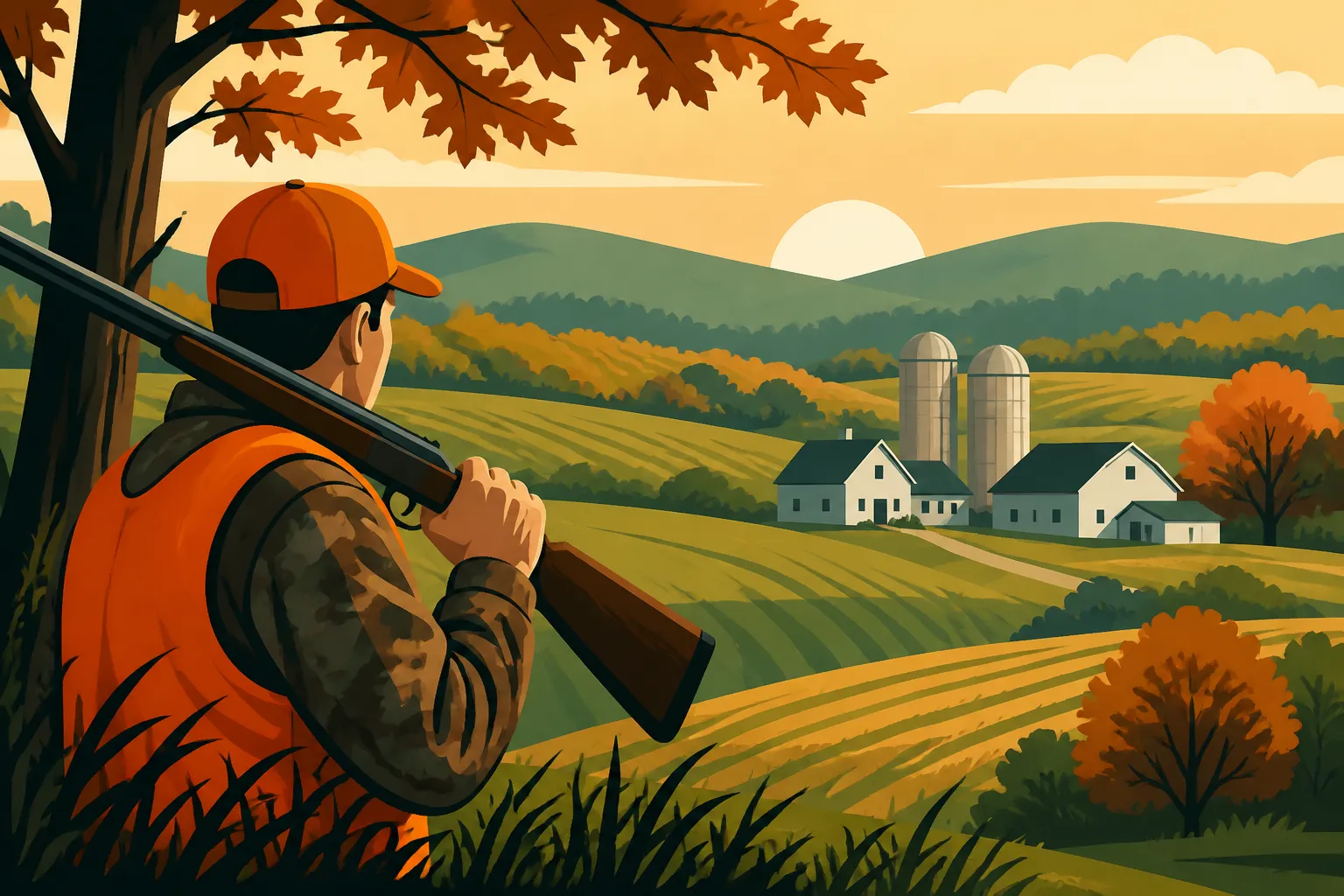
Hunting Southeast Pennsylvania Farm Country
Hunting in Southeast Pennsylvania farm country can feel like a completely different ballgame than chasing whitetails in the big woods of the northcentral region. The biggest frustration many of us face is the sheer lack of contiguous public land, coupled with the pressure of high population density, making finding quality spots a real challenge. This comprehensive guide aims to arm you with the strategies, knowledge, and mindset needed to successfully navigate and hunt the often-overlooked yet incredibly productive agricultural landscapes of southeastern Pennsylvania.
Understanding the Southeast Pennsylvania Hunting Landscape
When you think of Pennsylvania hunting, your mind might conjure images of vast, unbroken forests filled with timber, mountains, and solitude. But head southeast, and that image quickly shifts to a patchwork quilt of cornfields, soybean fields, woodlots, residential areas, and sprawling development. It's a unique environment that presents both significant hurdles and surprising opportunities for the savvy hunter.
The Reality of Land Ownership and Fragmentation
The first thing you'll notice in Southeast Pennsylvania is just how little state game land or state forest there is compared to other regions. What public land does exist is often smaller, more scattered, and surrounded by private property. This fragmentation makes traditional "walk-in-miles-and-find-solitude" hunting nearly impossible. You're constantly dealing with property lines, safety zones, and the close proximity of homes and roads. It can be incredibly disheartening to drive past prime-looking agricultural fields only to see "No Trespassing" signs plastered everywhere. The frustration is real; it often feels like there's nowhere to go. Many hunters simply give up on this region, assuming it's unhuntable, but that's a mistake. The deer are here, often in impressive numbers, and they thrive on this mosaic of food and cover. The key is understanding how to access and navigate this complex ownership puzzle.
Game Species Present in Farm Country
While big woods hunters might dream of elk or vast bear territories, Southeast Pennsylvania's farm country shines brightest for white-tailed deer. The rich agricultural soils produce abundant food, leading to healthier deer, often with impressive body weights and antler growth. It's not uncommon for farm country bucks to carry more mass and larger racks than their mountain counterparts due to superior nutrition. Beyond deer, wild turkeys also thrive in these mixed habitats, using woodlots for roosting and fields for feeding. Small game, like rabbits and squirrels, are abundant in brushy areas and woodlots, offering fantastic opportunities. Pheasants, often stocked by the Pennsylvania Game Commission on certain public access lands, also draw interest. Even coyotes are prevalent, adapting to the fragmented landscape, offering a year-round hunting opportunity for those looking for predator control. It's a diverse ecosystem, even if it doesn't always feel "wild."
Unique Challenges of Hunting These Areas
Hunting in Southeast Pennsylvania farm country demands a different skillset and a high degree of adaptability. The most obvious challenge is access; securing a place to hunt is paramount, whether it's public ground or private permission. Then there's the pressure: these areas are often heavily hunted, especially on smaller public parcels, meaning deer are incredibly wary and nocturnal. Safety zones around buildings become a major consideration, limiting shot angles and movement. Noise from roads, farming operations, and residential areas is a constant companion, requiring hunters to be even more stealthy and patient. Furthermore, understanding deer behavior here means learning how they use small pockets of cover, thick hedgerows, and standing crops to evade detection. You won't be still-hunting vast tracts of timber; instead, you'll be focusing on pinch points, funnels, and transition areas between food and bedding cover. It's a demanding but rewarding challenge that forces you to become a more thoughtful and strategic hunter.
Navigating Public Hunting Opportunities in Southeast Pennsylvania
Despite the prevalent private land, southeastern Pennsylvania does offer some public hunting opportunities. They might not be the sprawling wilderness areas you find further north, but with careful research and smart tactics, they can be incredibly productive. It's all about knowing where to look and how to approach these high-pressure spots differently.
State Game Lands in Southeastern WMUs
The Pennsylvania Game Commission manages State Game Lands (SGLs) across the Commonwealth, and while they are less numerous and often smaller in the southeast, they still provide vital hunting grounds. These SGLs are typically a mix of woodland, brushy areas, and sometimes even small food plots managed for wildlife. Expect competition, especially on opening days and weekends. To succeed, you often need to scout heavily, identify areas that are harder to access, or those that hold dense cover that most hunters walk past. Best Game Lands for Public Land Deer will discuss this further. These smaller tracts can be gems, but they require a willingness to venture beyond the parking areas that get hammered. Don't be afraid to put in the effort to find those less-trodden paths; a hundred yards off a main trail can feel like a mile in terms of hunting pressure. Utilize tools like onX Hunt or other mapping applications to identify internal property lines, topography, and potential access points away from common entryways. This can help you pinpoint those overlooked sanctuaries where a mature buck might feel safe.
Hunter Access Program Lands: A Hidden Gem
One of the most valuable resources for hunters in farm country is the Pennsylvania Game Commission's Hunter Access Program. This initiative partners with private landowners to open up their properties to public hunting, often in exchange for habitat improvements or other assistance. These lands are typically agricultural, meaning you get access to those coveted field edges, woodlots, and thickets that deer frequent. Finding these properties usually involves checking the Game Commission's website or specific county maps, but they are often signed with distinctive yellow "Public Hunting" signs. These areas can sometimes offer less pressure than traditional SGLs simply because fewer hunters are aware of them or know how to find them. They can be golden opportunities for Hunting Pennsylvania Farm Country Edges. Always be sure to check the specific rules for each Hunter Access property, as some might have restrictions on certain types of hunting or vehicles. Respecting the landowner's property is paramount to ensuring these programs continue, so tread lightly and leave no trace.
State Parks and Other Permitted Areas
Believe it or not, some Pennsylvania State Parks also allow hunting in designated areas, often in their undeveloped sections. These are typically managed under specific rules and regulations that can differ from standard statewide hunting laws. You'll need to check the individual park's website or contact the park office directly to understand which areas are open, what species can be hunted, and if any special permits are required. While not extensive, these areas can occasionally provide unpressured opportunities, particularly for archery deer season, close to more populated areas. Beyond state parks, some municipal or county-owned lands might have specific hunting programs, though these are far less common and require hyper-local research. It's always worth a call to local government agencies or a visit to their websites to see if any such opportunities exist. Even railroad rights-of-way, if legally accessible and hunted with strict adherence to safety and regulations, can serve as overlooked travel corridors for deer.
The Art of Gaining Private Land Access
In Southeast Pennsylvania, private land is king. Successfully hunting this region often hinges on your ability to secure permission from landowners. This isn't just about knocking on a door; it's about building relationships, demonstrating respect, and understanding the nuances of Pennsylvania's landowner relations. It can be intimidating, but the rewards are well worth the effort.
Approaching Landowners: Building Trust and Respect
This is arguably the most critical skill for a farm country hunter. Many landowners are wary of hunters, often due to past negative experiences. Your first impression is everything. Dress neatly, approach with a friendly demeanor, and always be respectful of their time and property. Don't just show up with your bow or rifle on your back, ready to hunt. Start by introducing yourself, stating your intentions clearly (e.g., "I'm looking for a place to archery hunt deer, and I respect private property"), and being prepared for a "no." If they say no, thank them anyway and move on; don't argue or badger. If they're open to discussion, offer to help with chores, share your harvest, or assist with nuisance wildlife control. Knocking on Doors in Pennsylvania Farm Country delves deeper into these strategies. Emphasize safety and your commitment to being a responsible visitor. A key strategy is to offer to help control nuisance animals like coyotes or groundhogs, which can often open doors, even if deer hunting isn't initially granted. Showing that you're a valuable asset, not just a taker, makes a huge difference.
Understanding Pennsylvania's Trespass Laws
Before you even think about stepping foot on private land, you must understand Pennsylvania's trespass laws. Simply put, you need permission to hunt private land, and that permission should ideally be in writing. While verbal permission can be valid, having it in writing protects both you and the landowner from misunderstandings or disputes. The law specifies that land must be posted in a certain manner to signify "No Trespassing," but even if it's not explicitly posted, it's still private property, and you cannot hunt without permission. Ignorance of the law is no excuse. Do You Need Written Permission in Pennsylvania? details the legal requirements and best practices. Always carry proof of permission, whether it's a signed note or a specific text message exchange, when hunting private ground. This protects you if questions arise from other landowners, neighbors, or law enforcement. Being able to quickly and clearly show you have permission builds trust and alleviates concerns.
Lease Agreements and Hunting Clubs
For those looking for more consistent or exclusive access, lease agreements or joining hunting clubs are options. Leasing a small parcel of farm country woods or a section of a farm can be a significant investment, but it guarantees access and often means less competition. Lease prices vary wildly depending on the location, size, and game density. It's crucial to have a clear, written agreement that outlines the terms, duration, and responsibilities of both parties. Alternatively, joining a hunting club that manages access to private land can be a more affordable way to gain consistent hunting opportunities. These clubs often have established relationships with landowners and provide communal hunting experiences. While a full lease might be out of reach for many, exploring a shared lease with a few trusted hunting partners can make it more feasible. This provides a more predictable hunting experience and allows for greater habitat management if the landowner agrees. These arrangements are particularly beneficial for consistent Hunting Small Private Tracts in Pennsylvania.
Scouting Strategies for Farm Country Whitetails
Scouting in Southeast Pennsylvania's farm country isn't just about finding tracks; it's about piecing together a puzzle. Deer here live in smaller, more fragmented habitats, making their movements highly predictable if you know what to look for. It's a year-round commitment that pays dividends when the season opens.
Reading the Landscape: Edges, Cover, and Food Sources
Deer in farm country are experts at utilizing the edges of fields, small woodlots, thick hedgerows, and brushy creek bottoms for cover and travel. These aren't vast forests where deer can disappear; they rely on these linear features and dense pockets to move undetected between food sources and bedding areas. Learn to identify key transition zones: where a cornfield meets a woodlot, where a creek meanders through a thicket, or where a hedgerow provides a concealed path between two larger blocks of cover. Look for pinch points where deer are funneled through a narrow strip of woods or brush. Pay close attention to food sources, whether it's standing corn, soybeans, alfalfa, or even suburban gardens and orchards. Deer will adapt their patterns around these resources. Hunting a Standing Cornfield in Farm Country is a prime example of where and how deer will relate to these agricultural crops. Don't overlook the subtle changes in elevation or cover that might serve as bedding areas close to food, offering quick escape routes.
Utilising Technology for Pre-Season Planning
Modern mapping tools are indispensable for farm country scouting. Applications like onX Hunt or GoHunt allow you to overlay property lines, satellite imagery, and topographic maps right on your phone or computer. This is invaluable for identifying potential access points, pinpointing those crucial property boundaries, and understanding the layout of fields, woodlots, and thick cover from a bird's-eye view. You can mark potential stand locations, bedding areas, and travel corridors digitally. Use the aerial photos to find those unpressured pockets of cover nestled against residential areas or hard-to-reach corners of fields. Topo maps help identify subtle draws or benches that deer might use for travel. Scouting With the Pennsylvania Mapping Center provides additional guidance on leveraging these digital tools. These apps also often show public land boundaries clearly, helping you differentiate between State Game Lands, Hunter Access properties, and private tracts. By spending time digitally scouting before you ever set foot in the woods, you can significantly narrow down your search and maximize your time afield.
Identifying Deer Movement Patterns
Understanding deer movement in fragmented landscapes is paramount. They often move nocturnally in open areas but will use daylight hours to travel through dense cover or along hidden corridors. Look for fresh tracks, rub lines, and scrape lines along field edges, within woodlots, and especially in funnel areas. Pay attention to how deer enter and exit fields; they rarely just pop out into the open. Instead, they'll often stage in thick cover just inside the woods before stepping out, or use a specific low spot or hedgerow. Trail cameras are highly effective here, providing intelligence on when and where deer are moving. Place them on established trails, at the edges of fields, or near pinch points. What you learn from your cameras will directly influence your stand placement and hunting times. During the rut, these farm country bucks will travel extensively, often checking scrapes and cruising woodlot edges, making Hunting the Pennsylvania Rut in November particularly exciting. Observing how deer use the cover to their advantage is a crucial step in predicting their behavior.
Effective Hunting Tactics for Fragmented Farmland
Hunting Southeast Pennsylvania farm country demands specific tactics to account for the limited cover, high pressure, and proximity to human activity. You can't just wander in and expect success; you need a plan, adaptability, and an understanding of how deer use this unique landscape.
Stand and Blind Setups for Field Edges and Cover Blocks
Given the open nature of agricultural areas, strategically placed treestands and ground blinds are your best friends. For field edges, consider a treestand that offers a wide view of the field while keeping you concealed against a natural backdrop, like a mature oak or a cluster of evergreens. Aim for locations where deer enter or exit the field, or where two types of cover meet. Ground blinds can be incredibly effective, especially if you can brush them in naturally along a hedgerow, a brushy corner of a field, or a fencerow. They offer excellent concealment and can be placed closer to known travel routes or food sources. Brushing In a Blind on a Field Edge is a tactic that can make your setup virtually invisible. Always set up with the prevailing wind in mind, and consider your entry and exit routes to avoid spooking deer. In smaller woodlots, focus on pinch points, funnels, or areas where dense bedding cover transitions to open feeding areas. The goal is to catch deer moving naturally and confidently through these predictable pathways.
Still-Hunting and Drives in Smaller Woodlots
While treestands and blinds are primary tactics, don't discount the effectiveness of still-hunting or small-scale deer drives in these fragmented areas. Still-hunting—moving slowly and deliberately, taking a few steps then stopping to observe—can be very productive in those smaller, thicker woodlots or along brushy creek bottoms. The key is to move at a snail's pace, pausing for long periods to scan ahead for deer sign or the deer themselves. Use the wind to your advantage and hug any available cover. For Deer Drives With Three or Four Hunters, these smaller blocks of cover are ideal. A small group of hunters can effectively push deer out of a dense thicket or a narrow strip of woods towards waiting standers. Communication is key, as is a thorough understanding of the property boundaries and safety zones. These drives need to be carefully planned to ensure safety and maximize efficiency, using the natural terrain to funnel deer.
Scent Control and Pressure Management
In an environment where deer are constantly exposed to human scent and activity, meticulous scent control is absolutely non-negotiable. Odor-absorbing clothing, scent-eliminating sprays, and careful hygiene are all part of the regimen. Consider rubber boots for walking in, especially through fields, to minimize scent transfer. Play the wind religiously; if the wind isn't right for your chosen stand, don't hunt it. Deer in farm country are incredibly sensitive to pressure. If you hunt a spot too often, or move through it carelessly, you'll quickly turn deer nocturnal or push them to neighboring properties. Implement a strategy of rotating stand locations, using different entry and exit routes, and giving spots time to "rest" between hunts. This is especially true on Hunting Pressure on Pennsylvania Game Lands. The more you can minimize your presence and disturbance, the more comfortable deer will be moving during daylight hours, increasing your chances of success.
Species-Specific Hunting in Southeast Pennsylvania Farm Country
While deer tend to dominate the hunting conversation in farm country, the diverse habitat supports a variety of game species. Each requires a slightly different approach, tailored to their behaviors and the unique challenges of this landscape.
Targeting Deer in Agricultural Settings
Deer in agricultural settings are often well-fed and can grow quite large, making them highly desirable quarry. During the early archery season, deer will heavily utilize standing crops like corn and soybeans, offering excellent cover and food. Setting up on the edges of these fields, or along travel corridors leading to and from them, can be highly effective. As crops are harvested, deer shift their focus to downed grain, exposed greens, and mast crops in the woodlots. The rut provides a fantastic opportunity, as bucks will be cruising woodlot edges and connecting corridors looking for does. Hunting the Peak Rut Week in Pennsylvania in these areas can be incredibly productive. Later in the season, when temperatures drop and natural food sources are depleted, deer will congregate in areas with available food, such as persistent browse, winter wheat fields, or remaining agricultural waste. Adapting your tactics to the seasonal availability of these food sources is crucial for consistent success.
Turkey Hunting in Woodlots and Field Edges
Wild turkeys, especially spring gobblers, are abundant in many Southeast Pennsylvania farm country areas. They use the woodlots for roosting and cover, and the open fields for feeding, dusting, and strutting. Spring turkey hunting often involves locating roosted birds in the morning, then setting up strategically between their roost and a preferred feeding area, often a field edge. Calling can be very effective, but pressured birds might be henned-up or hesitant to commit to a call without visual confirmation. Decoys, particularly a lone hen or a jake and hen, can often draw a wary gobbler across an open field. Turkey Tactics for Farm Country Edges emphasizes patience and good concealment. Fall turkey hunting offers different challenges, with hunters often trying to locate flocks, break them up, and call them back in. These flocks will also utilize the same mix of woods and fields for foraging throughout the day.
Small Game and Pheasants on Farm Land
Don't overlook the incredible small game opportunities in farm country. Rabbits thrive in briar patches, brush piles, fencerows, and thick cover along field edges. Hunting with beagles can be incredibly exciting and effective for flushing out cottontails from dense cover. Squirrels are abundant in mature woodlots, especially those with oak and hickory trees. Look for cuttings under nut trees as evidence of their feeding activity. Pheasants, while not native to the same degree as grouse, are regularly stocked by the Game Commission on various public access properties, including some SGLs and Hunter Access lands in the southeast. These release sites offer fantastic opportunities for pheasant hunters, often with dogs, but checking the specific stocking schedules and locations is essential. Hunting Stocked Pheasant Release Sites can be an excellent way to introduce new hunters to the sport. Hunting small game often means walking, so be prepared for briars and thick brush, and always wear sufficient hunter orange.
Overcoming Common Obstacles and Ethical Considerations
Hunting in Southeast Pennsylvania farm country isn't without its challenges, many of which stem from the close proximity of human populations. Addressing these obstacles head-on and maintaining the highest ethical standards are crucial for continued access and positive public perception of hunting.
Dealing with Hunting Pressure and Property Lines
High hunting pressure is a reality in many accessible farm country areas. Deer quickly learn to avoid human activity, becoming more nocturnal and using the densest cover available. To mitigate this, consider hunting during weekdays when pressure is often lower, or targeting mid-day periods when many hunters have left. Seek out spots that require a bit more effort to access, even if it's just a slightly longer walk from the road. These overlooked pockets often hold pressured deer. Finding Ground Others Walk Past is a key strategy. Meticulously understand property lines, especially when hunting small parcels or near public/private interfaces. Use your mapping apps to know exactly where you stand and where a deer might cross into non-huntable land. This avoids accidental trespassing or, worse, shooting a deer that runs onto a property where you don't have retrieval rights. Respecting these boundaries is not just legal, it's critical for maintaining good landowner relations.
Safety Zones and Respecting Local Communities
Pennsylvania law mandates specific safety zones around occupied buildings, schools, and playgrounds where it is unlawful to discharge a firearm or bow. In populated farm country, these safety zones are ubiquitous and often dictate where and how you can hunt. For firearms, it's generally 150 yards around an occupied building; for archery, it's 50 yards around occupied buildings, and no safety zone for hunting structures not occupied. Always know these distances and factor them into your stand placement and shot opportunities. Beyond the law, respect for local communities is paramount. Be discreet, park courteously, and avoid drawing undue attention to your hunting activities. Your actions reflect on all hunters. If you're granted private land access, be a good neighbor, and consider building a rapport with other adjacent landowners as well. This positive engagement can help counteract negative stereotypes about hunters and secure future access.
Carcass Handling and Reporting in Populated Areas
Successfully harvesting a deer in farm country can present unique challenges for carcass handling. You might not have the luxury of a remote processing station or an easy extraction route. Be prepared to field dress your deer quickly and efficiently, especially on warmer early season days, to preserve the meat. Consider using a deer cart or sled for extraction, particularly if you're on a smaller private parcel or a public tract with decent trails. Using a Deer Cart on Game Lands can save your back and make the process much smoother. If you need to transport the deer through populated areas, be mindful of how it's presented; covering it with a tarp or placing it discreetly in your truck bed shows respect to non-hunting residents. Finally, ensure you understand and adhere to all Pennsylvania Game Commission regulations regarding deer tagging, harvest reporting, and any specific CWD (Chronic Wasting Disease) carcass movement restrictions, especially if hunting in or near a Disease Management Area (DMA). Pennsylvania Deer Tagging Requirements and Pennsylvania CWD Carcass Rules are vital pieces of information to know before you head afield.
| Access Type | Characteristics | Pros | Cons | Ideal Use Case |
|---|---|---|---|---|
| State Game Lands | Designated public hunting areas, often smaller in SE PA. | Always accessible to licensed hunters. | High pressure, fragmented, smaller tracts. | Dedicated scouting, remote walk-ins, weekday hunts. |
| Hunter Access Program | Private lands opened to public hunting via PGC program. | Access to prime farm country habitat. | Rules vary by property, less widely known. | Targeted scouting, seeking less pressured farm areas. |
| State Parks (Designated Areas) | Specific sections of state parks allowing hunting. | Often less pressured, close to urban centers. | Limited acreage, strict rules, specific permits. | Archery hunting, small game, very localized opportunities. |
| Private Land (Permission) | Access granted directly by landowners. | Exclusive access, low pressure, prime habitat. | Requires relationship building, can be hard to secure. | Consistent deer hunting, long-term strategy, building trust. |
Disclaimer
This article is for general informational purposes only and does not constitute professional advice. Laws, prices and regulations vary by location and change over time. Consult a qualified professional for guidance on your specific situation.