Checking a Pennsylvania Bear
After the sheer adrenaline rush of harvesting a Pennsylvania black bear, the last thing many hunters want to think about is paperwork and logistics. You've put in the scouting, the time on stand, maybe braved some truly miserable weather, and finally, your persistence paid off. But before you can truly celebrate and start thinking about those delicious bear steaks, there are crucial legal steps you must take to properly "check" your bear with the Pennsylvania Game Commission (PGC). This guide will walk you through everything you need to know, from tagging at the kill site to visiting a bear check station, ensuring you comply with all regulations and contribute to vital wildlife management efforts.
The Immediate Steps After the Shot: Tagging Your Bear
That moment when a magnificent black bear hits the ground is unforgettable. It's a mix of excitement, relief, and perhaps a touch of awe. But in that post-shot euphoria, it's absolutely critical to remember your legal obligations. Pennsylvania law is very clear: your bear must be properly tagged immediately after it's harvested, before it's moved from the kill site. This isn't just a suggestion; it's a non-negotiable step to avoid potential legal trouble.
Understanding Your Tagging Responsibilities
Once you've confirmed your bear is down and secure, the first thing to do is retrieve your big game kill tag from your hunting license. This tag, which comes with your general hunting license, is specific to deer and bear. You need to fill out all the required information accurately and legibly, including the date, time, and location (WMU) of the kill. Don't rush this part; use a pen that won't smudge or bleed in the elements, as this tag needs to remain intact until the bear is processed or arrives at a check station.
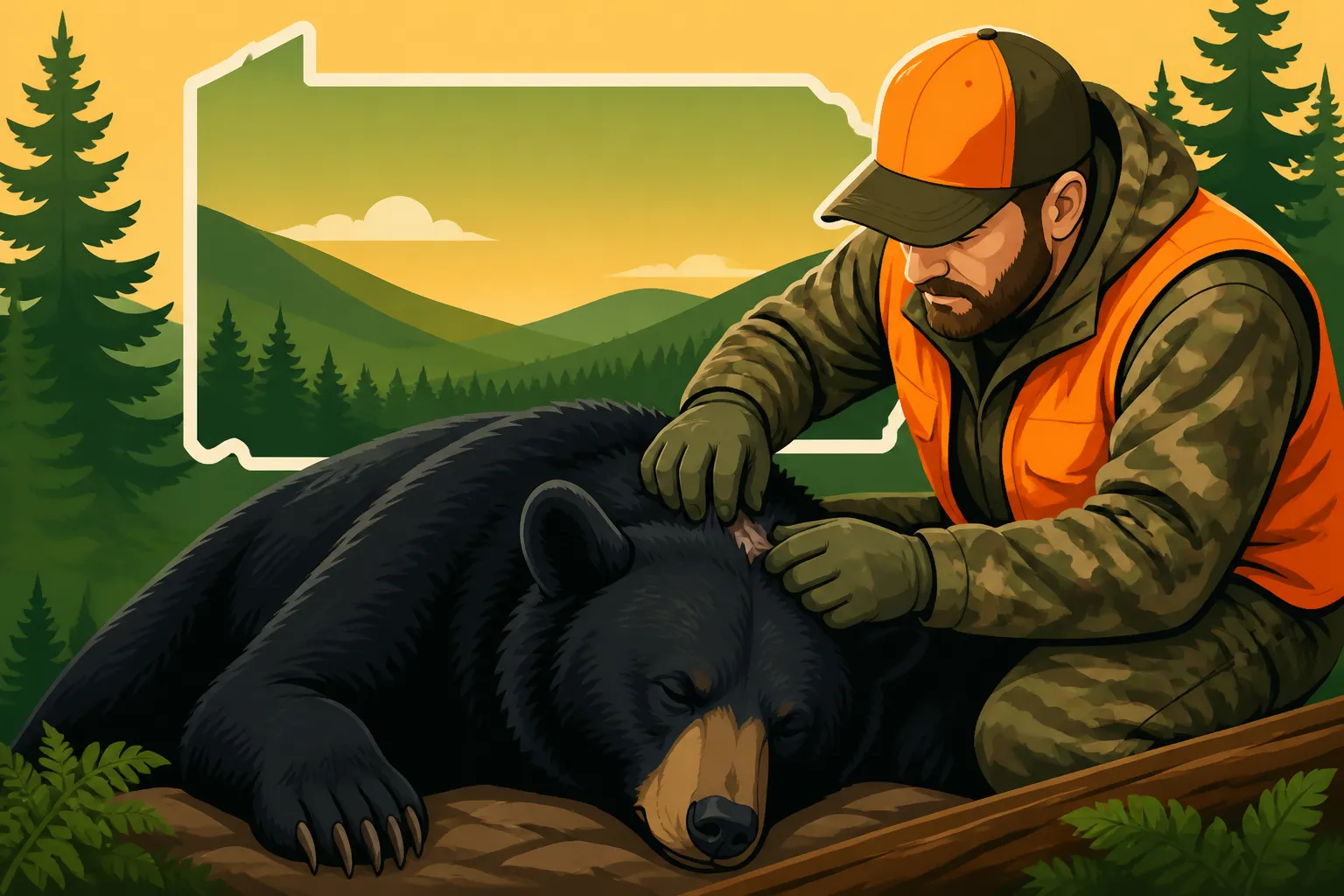
The method of attachment is just as important as filling out the tag. The tag must be securely affixed to the ear of the bear. The PGC specifies attaching it "so that it remains securely attached." Many hunters use a zip tie or a sturdy piece of wire through the designated hole on the tag and through the bear's ear. The key is to make it impossible for the tag to accidentally fall off during field dressing, dragging, or transport. Imagine getting pulled over or encountering a Wildlife Conservation Officer (WCO) with an untagged bear – it's a headache you absolutely want to avoid, and it can carry significant penalties.
Field Dressing and Preparing for Transport
With the tag securely in place, you can then focus on field dressing your bear. This is an essential step, especially if you're hunting in warmer weather, to ensure the meat cools down quickly and properly. Bear meat is delicious when handled correctly, but it can spoil fast if left unaddressed. Carefully remove the entrails, taking care to keep the tag attached and the hide clean if you plan on having it tanned or mounted. Be mindful of your surroundings and any local regulations regarding gut piles, especially if you're on public land.
Once field dressed, consider how you'll move your bear. Depending on the size of the animal and your location, this can be quite a challenge. Bear can be surprisingly heavy, often exceeding 200-300 pounds. Some hunters choose to skin and quarter their bear in the woods, making the pack-out much more manageable, especially when deep in the Pennsylvania Black Bear Hunting territory of the big woods. If you opt for this, ensure you still keep the head and hide together with the tag, as these components are crucial for the check station process. The goal is to get the bear cooled and to a check station or processing facility as efficiently and respectfully as possible. Don't forget to review guidelines on Handling Bear Meat Safely as soon as you're able to begin processing.
Reporting Your Harvest to the Pennsylvania Game Commission
After you've tagged your bear, the next critical step is to report your harvest to the Pennsylvania Game Commission. This isn't just a courtesy; it's a mandatory legal requirement for every successful bear hunter. Reporting helps the PGC gather crucial data on harvest numbers, which directly informs their management strategies for Pennsylvania's black bear population. Without accurate reporting, the PGC would be flying blind, making it harder to maintain healthy bear populations for future generations of hunters.
Online Reporting Through GoHunt
The easiest and most common way to report your bear harvest is online through the PGC's website, often accessed via their convenient GoHunt platform. Once you're home and have a stable internet connection, you can log in using your Customer ID and date of birth. The system will guide you through a series of questions about your harvest, such as the date, time, WMU, and sex of the bear. It’s a straightforward process designed to be user-friendly, and it immediately registers your harvest in the PGC's system.
Online reporting typically gives you an immediate confirmation number, which you should keep for your records. This method is preferred by many because it can be done at any time, day or night, within the reporting window, eliminating the need to wait for a phone line or specific office hours. It's a quick, efficient way to fulfill your legal obligation and lets you get back to relishing your successful hunt. Make sure to double-check all the information before submitting, as accuracy is paramount for wildlife management.
Phone Reporting and Deadlines
For those who prefer not to use the internet or don't have access, phone reporting is also an option. You can call the PGC's dedicated harvest reporting hotline. This method is just as valid as online reporting, but you might encounter wait times, especially during peak hunting seasons. Have all your license and harvest information ready before you call to make the process as smooth as possible. A PGC representative will walk you through the questions and provide you with a confirmation number.
Regardless of whether you report online or by phone, understanding the deadline is crucial. For black bear, you must report your harvest within 24 hours of taking the bear. This is a strict deadline, and missing it can result in fines. This quick turnaround is necessary for the PGC to track harvest data effectively, especially given the relatively short Pennsylvania Bear Seasons and Licences. If you find yourself in a remote area without immediate access to service, plan how you'll report your bear as soon as you can reach a signal or a phone line. This proactive approach ensures you stay compliant and avoid unnecessary penalties.
The Physical Check: Bear Check Stations and Their Purpose
Beyond tagging and reporting, one of the most distinctive requirements for bear hunters in Pennsylvania is the mandatory physical check at a designated bear check station. This step is unique and incredibly important for the PGC's comprehensive bear management program. It's not just about verifying your kill; it's a hands-on data collection effort that helps biologists understand the health and dynamics of the state's bear population. Many hunters see it as a tradition, a chance to share their story, and a vital contribution to conservation.
Why Bear Check Stations Exist
Bear check stations serve several critical scientific and management functions. First and foremost, they allow PGC staff to collect biological data directly from harvested bears. This includes recording the bear's sex, weight, and various body measurements. This information helps biologists track the overall health, age structure, and reproductive success of the bear population across different Pennsylvania Bear Harvest Trends. For example, a high percentage of young bears might indicate a growing population, while a shift in average weights could signal changes in habitat or food availability.
Another crucial aspect of the check station process is disease monitoring. PGC personnel often collect tissue samples, especially for diseases like Chronic Wasting Disease (CWD), although CWD is primarily a deer disease, general health screenings are vital. More commonly, a small tooth (a premolar) is extracted from the bear. This tooth is then analyzed in a lab to determine the bear's exact age by counting the annuli (growth rings), much like counting rings on a tree. This age data is invaluable for understanding population dynamics and setting future hunting regulations. Knowing the age structure of the harvest helps the PGC ensure sustainable hunting opportunities.
Finding and Visiting a Bear Check Station
To fulfill this requirement, you need to locate and visit an official PGC bear check station. These stations are usually set up in various locations across the state, particularly in areas with high bear harvest rates, during designated bear hunting seasons. The PGC publishes a list of these stations, including their locations and operating hours, on their official website. You can also often find this information through the GoHunt platform or by contacting your regional PGC office. It's wise to scout out the nearest check station before you even head into the woods for bear season, so you have a plan ready.
When you arrive at a check station, you'll be greeted by PGC staff, often including Wildlife Conservation Officers (WCOs) and other biologists or volunteers. They're usually just as excited to see your bear as you are! Be prepared to present your hunting license and bear harvest tag. They will record all the necessary information, take measurements, and, if necessary, remove the tooth sample. This process can take some time, especially if multiple hunters are checking in their bears simultaneously, but it's a great opportunity to talk to wildlife professionals, learn more about bear management, and share your hunting experience with others.
Table: Bear Check Station Essentials
| Item | Purpose | Notes |
|---|---|---|
| Hunting License | Proof of legal hunting privileges | Must be current and include your bear harvest tag. |
| Bear Harvest Tag | Legally attached to the bear's ear | Filled out completely, legible, and securely attached. |
| The Bear Itself | Required for physical inspection and data collection | Field-dressed (if possible/necessary), cleanly transported. Head and hide must remain attached if quartered for proper identification and data collection. |
| WMU of Harvest | Required for accurate reporting | Know the specific Wildlife Management Unit where you harvested your bear. |
| Date & Time of Harvest | For accurate reporting | Crucial for meeting the 24-hour reporting deadline. |
| Confirmation Number (Optional) | From initial online/phone report | Good to have on hand, but the physical check confirms compliance. |
| Patience & Good Attitude | Ensures a smooth process and positive interaction | Staff are collecting vital data; your cooperation helps immensely. |
What Happens at the Check Station
Once you're at the check station, the process typically involves several steps. First, your bear will be weighed, often using a hoist and scale, providing accurate data that feeds into the PGC's understanding of bear health and population trends. Then, PGC staff will take various measurements, such as chest girth and overall length. They'll also confirm the sex of the bear. This is a great time to learn about the bear you harvested, as staff can often share insights about its characteristics.
As mentioned, a premolar tooth will be extracted. This is done quickly and efficiently, with minimal impact on the skull, especially if you plan on a skull mount. This tooth is the most reliable way to age a bear. If your bear was harvested in or near one of the Pennsylvania CWD Disease Management Areas, additional samples might be taken to test for CWD or other diseases, although bears are not susceptible to CWD like deer are. This comprehensive approach ensures that the PGC has the most robust data possible, which is why your participation is so vital to their wildlife management efforts. After all the data is collected, you'll receive a metal ear tag, which replaces your paper tag and serves as permanent proof that your bear has been legally checked. This tag must remain with the bear or its hide until it's processed or mounted.
Essential Preparations Before Heading to the Check Station
Success in bear hunting, much like deer hunting in our rugged Pennsylvania landscape, often hinges on careful preparation. The excitement of harvesting a bear can quickly turn into stress if you haven't considered the practicalities of what comes next. Having a clear plan for transportation and knowing what documentation you need will make the post-harvest process much smoother, ensuring you meet all legal requirements without unnecessary hassle.
Transporting Your Bear Safely and Legally
Transporting a bear, especially a large one, presents unique challenges. The most important rule is that the bear, or its hide and head if you've quartered it, must have the harvest tag securely attached during transport. Whether it's in the bed of your truck, on a deer cart, or even on a deer sled you used to Getting a Deer Out of a Pennsylvania Hollow, the tag needs to be visible and firmly affixed. The PGC prefers that the bear remains whole until after it's checked, if at all possible, as this makes the weighing and measuring process more accurate and straightforward for their staff.
Consider the logistics of getting the bear from the woods to your vehicle. Many hunters use ATVs or UTVs where legal and practical on state game lands or private property. If you're deep in the big woods or steep terrain, a good game cart or even skinning and quartering for a backpack haul might be your only option. Just remember, if you quarter it, the head with the attached tag and the hide must stay together and be presented at the check station. Make sure your vehicle is prepared to handle the weight and potential mess. Line your truck bed with a tarp or heavy-duty plastic sheeting for easy cleanup. Remember that the sight of a bear in a truck bed can draw attention, so be prepared for curious onlookers and maintain a respectful demeanor.
Documentation and Professionalism
Before you leave for the check station, double-check that you have all your necessary documentation. This includes your Pennsylvania hunting license, your big game harvest tag (even though it's on the bear, you should still have the license with you), and any other permits you might have, such as a DMAP permit if you were hunting on a specific property with one. While the PGC staff at the check station will guide you, being organized and having everything readily available shows respect for the process and helps everything move along efficiently.
It's also worth remembering that your interaction at the check station is a reflection of the hunting community. Being polite, patient, and cooperative with the PGC staff is essential. They are working hard to collect vital data for wildlife management, often in challenging conditions. Asking questions is encouraged, as it's a fantastic opportunity to learn more about Pennsylvania's Black Bear Population and the conservation efforts underway. Many hunters enjoy the camaraderie at check stations, sharing stories of their hunt and admiring other successful harvests. It's an important part of the post-hunt experience that connects you further to the rich tradition of hunting in Pennsylvania.
Common Questions and Scenarios for Bear Check-Ins
Even with a clear understanding of the rules, real-world hunting scenarios can throw curveballs. What if you're far from a check station, or harvest on a day when stations might have limited hours? Having answers to these common questions can alleviate stress and ensure you navigate the post-harvest process smoothly.
Dealing with Remote Locations and Closed Stations
Pennsylvania is a big state, and bear can be harvested in some truly remote areas, far from the nearest official check station. While the PGC strives to provide adequate coverage, it's possible you might find yourself in a situation where getting to a station within the 24-hour window is difficult. In such cases, the most important thing is communication. Do not delay. Immediately contact your regional Pennsylvania Game Commission office or the PGC dispatch center. Explain your situation clearly. They are usually very understanding and will provide guidance on alternative arrangements, which might include coordinating with a WCO for a field check or directing you to a specific drop-off location.
Another scenario is harvesting a bear just before or on a holiday, or outside of typical operating hours. Again, planning ahead and knowing the published check station hours is your first line of defense. If you find a station closed, or if you harvest late in the day, report your bear online or via phone immediately. Then, make contact with the PGC as soon as possible to arrange the physical check. Remember, the 24-hour reporting rule is strict, and while the physical check is also mandatory, the PGC has mechanisms in place to assist hunters with the logistics when legitimate challenges arise.
Bear Carcasses and CWD Considerations
While Chronic Wasting Disease (CWD) is predominantly a concern for deer, it's always good to be aware of carcass movement regulations, especially if you also hunt deer or process your game in an area with CWD. If you harvest a bear within a Pennsylvania CWD Disease Management Areas (DMA), there may be specific rules regarding the movement of certain parts of the carcass out of that zone. While bears are not currently known to be susceptible to CWD, understanding these rules for deer can prevent accidental violations if you are transporting other game or processing facilities.
Always check the most current PGC regulations, as CWD management zones and rules can change. When at a check station, PGC staff will inform you if any special precautions or testing are needed based on your harvest location. Generally, for bears, the primary concern at check stations is collecting biological data and tooth samples for aging, rather than CWD testing. However, staying informed about all wildlife disease regulations is part of being a responsible hunter and helps protect Pennsylvania's invaluable wildlife resources.
Disclaimer
Please be aware that hunting regulations, seasons, and licensing requirements in Pennsylvania can change. While this guide aims to provide accurate and up-to-date information, it is your responsibility as a hunter to consult the latest Pennsylvania Game Commission digest or their official website before heading afield. Always verify specific dates, rules, and local regulations that may apply to your hunting area.