Climber Stands on Straight Trunks
Navigating the vast and often rugged terrain of Pennsylvania in pursuit of whitetails can be a real challenge, especially when you're trying to find that perfect, strategic vantage point that doesn't scream "hunter was here!" Many of us have lugged heavy fixed-position stands deep into the woods, only to find the ideal tree is either too small, too crooked, or too riddled with limbs for a safe setup. This guide is all about embracing the versatility of climber stands, specifically how to master their use on Pennsylvania's straight-trunked trees to open up a world of new hunting opportunities, offering mobility and stealth where other stands fall short.
Why Climber Stands are Your Go-To for Pennsylvania's Hardwoods
For many hunters, the thought of a climber stand brings to mind images of sprawling pine plantations or perfectly straight Southern hardwoods. But Pennsylvania, with its vast tracts of state game lands and state forests, is actually rife with ideal timber for these incredibly mobile setups. When you’re looking to get away from the crowds and into unpressured deer country, a climber can be your best friend.
The Pennsylvania Landscape Advantage: Finding Straight Trunks
Think about the Big Woods of north-central Pennsylvania or even the more mature timber sections of some state game lands throughout the Ridge and Valley region. Here, you'll often find mature oak, maple, and cherry trees growing tall and straight, reaching for the sunlight. These are the unsung heroes for the climber stand enthusiast. Unlike areas with a lot of young, twisted growth or heavily branched conifers, these mature hardwoods provide the smooth, consistent bark and ample clearance that a climber stand needs to function safely and quietly. It's about understanding your habitat; knowing where to find these pockets of straight timber can unlock immense potential. Imagine scouting a remote ridge, identifying fresh deer sign, and knowing you can quickly and quietly ascend a suitable tree nearby, without having to permanently affix a stand or leave a visible footprint.
Beyond the deep woods, even in some areas bordering farm country or within mixed forest tracts, you'll encounter patches of straight, mature timber. These trees often represent older growth that has survived logging cycles, resulting in long, branch-free trunks. The key is to shift your scouting mindset: instead of just looking for deer sign, start identifying potential "climber trees" – those with minimal lower limbs, consistent diameter, and sound bark. This readiness allows you to quickly adapt to changing deer patterns, whether they're moving through a specific saddle or hitting a new acorn drop. Scouting Pennsylvania Public Land Before Season is absolutely critical for this, as it allows you to identify these areas before the season even begins.
Mobility and Versatility for Scouting and Hunting
One of the biggest frustrations for hunters on public land, or even private land where permanent stands aren't an option, is the sheer lack of mobility. You spend hours meticulously hanging a lock-on stand, only for deer patterns to shift, or the wind to be wrong, and suddenly your perfectly placed stand is useless. This is where the climber stand truly shines. It’s designed for the hunter who wants to be dynamic, adaptable, and stealthy.
With a climber, you can scout a promising area in the morning, find fresh sign or a hot travel corridor, and be set up in a stand ready to hunt that afternoon. This flexibility is invaluable in a state like Pennsylvania, where deer movement can be influenced by everything from acorn crops to hunting pressure. Being able to pack in your entire setup on your back and ascend a tree quietly and efficiently means you’re not committed to a single location for the entire season. You can follow the food, follow the rut, and follow the deer, always ensuring you're in the most advantageous position. This approach directly counters the problem of Hunting Pressure on Pennsylvania Game Lands, allowing you to move to less pressured areas with ease.
This versatility also makes climber stands an excellent choice for hunting during different phases of the season. Early archery might find you targeting specific food sources, while the peak rut might have you overlooking a travel corridor between bedding and feeding. Later in the season, you might focus on thick thermal cover. A climber allows you to adapt to all these scenarios without having to buy or hang multiple stands. You become a more efficient and effective hunter because your gear isn't dictating your strategy; your strategy is dictating where you put your gear.
Choosing and Safely Setting Up Your Climber Stand
The perceived complexity or danger of climber stands often deters new users, but with the right knowledge and commitment to safety, they are incredibly secure and simple to operate. The key is in selecting a stand that fits you and your hunting style, and then meticulously following safety protocols every single time.
Key Features to Look For in a Climber Stand
Not all climber stands are created equal, and what works for one hunter might not be ideal for another. When you're looking to purchase a climber for Pennsylvania hunting, there are a few key features to prioritize:
- Weight: Since you'll be packing this stand in and out, often over rugged terrain, weight is a huge factor. Lightweight aluminum models are generally preferred, but they often come with a higher price tag. Consider your physical conditioning and the typical distances you'll be covering. A lighter stand means less fatigue and more energy for the hunt itself, especially when hiking into some of the deeper woods where Entry Routes on Steep Ground can be challenging.
- Platform Size and Comfort: You'll be spending hours in this stand, so comfort is paramount. A larger platform offers more room to shift, stretch, and get into shooting positions, which is especially important during the late archery season or the firearms season when you're bundled up. Similarly, the seat should be comfortable and quiet. Some stands offer padded seats, while others feature a simple netting or sling design. Test them out if possible!
- Ease of Use/Climbing Mechanism: Different brands have different climbing mechanisms. Some use cables, others use chains, and some have a unique jaw design. Look for one that feels secure and intuitive to you. The design should allow for a smooth, quiet ascent without excessive effort, which is critical when you want to minimize disturbance in the woods. Pay attention to how easily it separates into two pieces for climbing and how securely it re-latches once at hunting height.
- Quietness: Rattling chains, squeaking cables, or noisy platforms will spook deer long before you get a shot. Look for stands with features designed for quiet operation, such as rubber-coated cables, silent pivot points, and a solid, non-creaking platform. Many hunters add their own silencing modifications, like felt tape or rubber washers, but a good stand should be fairly quiet right out of the box.
- Tree Diameter Range: Check the manufacturer's specifications for the minimum and maximum tree diameter the stand can accommodate. While you're targeting straight trunks, tree size can still vary, and you want a stand that offers flexibility.
| Feature | Description | Why It Matters for PA Hunters |
|---|---|---|
| Weight | Overall mass of the stand, typically aluminum or steel. | Less fatigue on long hikes to remote spots; easier to carry on and off public land. |
| Platform Size | Dimensions of the standing area. | More room to maneuver, adjust, and draw a bow or shoulder a rifle, especially when layered up for Cold Weather Sitting Strategy. |
| Seat Comfort | Padding, material, and design of the seat. | Essential for all-day sits; reduces fidgeting and improves focus. |
| Climbing System | Mechanism for ascending/descending (e.g., cables, chains, gripping jaws). | Dictates ease and quietness of climbing; choose one that feels secure and requires minimal effort. |
| Noise Reduction | Features preventing metal-on-metal contact, squeaks, or rattles. | Crucial for stealth; silent operation prevents spooking deer during ascent or while hunting. |
| Tree Diameter Range | Minimum and maximum tree sizes the stand can safely climb. | Ensures versatility for various mature hardwoods found in Pennsylvania forests. |
The Art of a Safe and Silent Ascent
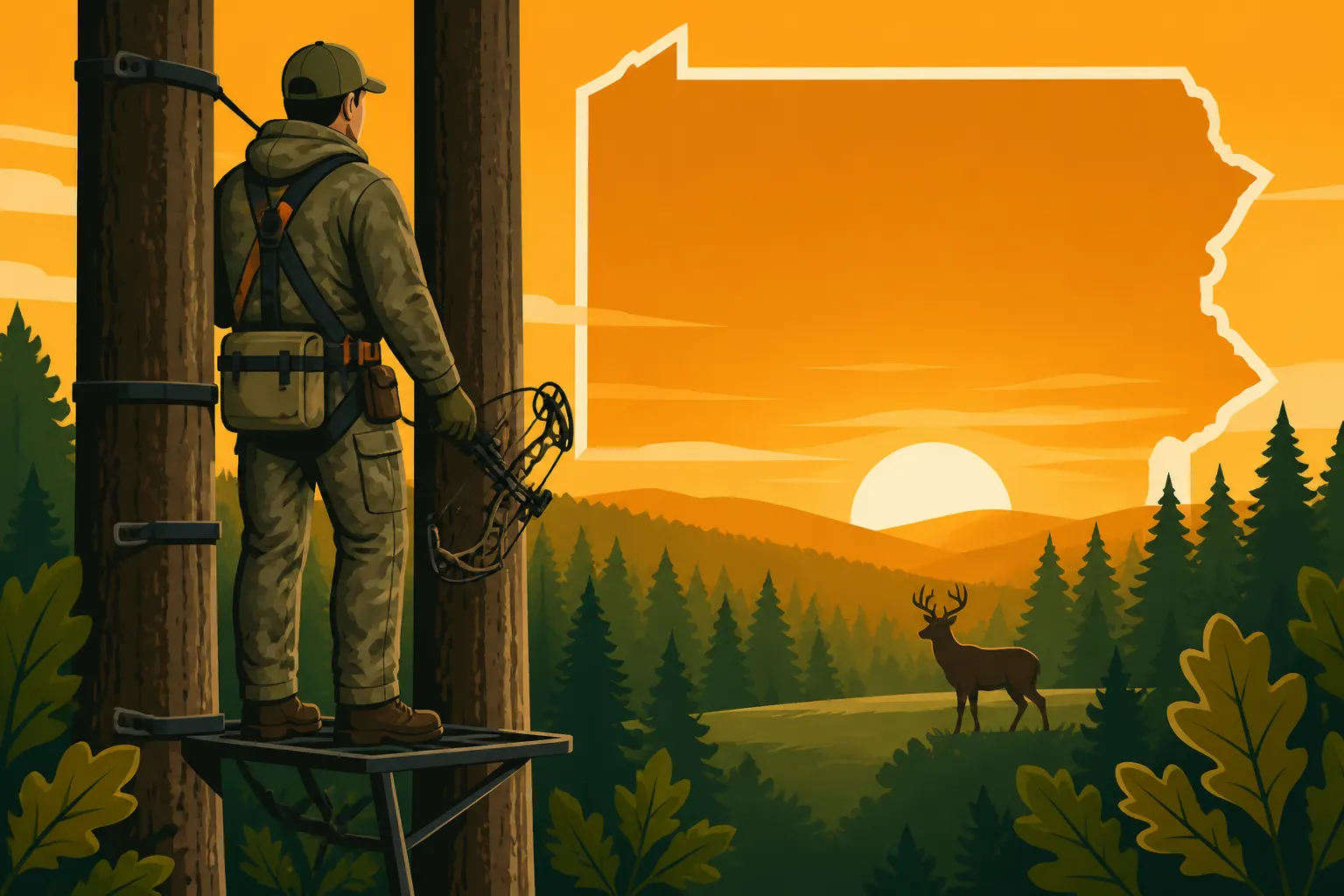
Safety must be your absolute number one priority when using a climber stand. This isn't just good advice; it's non-negotiable. Before you even think about stepping off the ground, always, always put on your full-body safety harness. This harness, along with a lifeline that stays attached to the tree from the moment your feet leave the ground until they touch it again, is your literal lifeline. There's simply no excuse to hunt from any elevation without being tethered. Safety Harnesses and Lifelines are not optional equipment.
Once your harness is on and your lifeline is attached, the actual climbing process needs to be methodical and quiet.
- Inspect the Tree: Before you even start, give the tree a thorough visual inspection from the ground. Are there any dead limbs overhead that could break loose? Is the bark loose or peeling? Is the trunk relatively straight and free of large knots or branches where you intend to climb? An obvious lean or an uneven trunk could cause the stand to slip.
- Clear Your Path: Once you've chosen your tree, clear any brush, sticks, or rocks from around its base. You don't want to trip or make noise while positioning the stand.
- Position the Stand: Place the stand around the tree at a height that allows you to easily step into the bottom platform. Ensure both sections are level and securely gripping the trunk.
- Practice the Climb: The climbing motion is like walking up the tree. You lift the top section a bit, lift your feet, then lift the bottom section by pushing down with your feet, then lift your hands. It's a rhythmic process. Practice at home if you’re new to it, and always do a short practice climb on a safe tree before opening day. The goal is to move smoothly and quietly, avoiding any jerky movements that could cause metal to scrape or bang.
- Look for Landmarks: As you ascend, pay attention to specific knots, bark patterns, or broken branches. These become crucial landmarks for knowing where to stop. It's easy to get disoriented once you're 20 feet up.
- Adjust for Height: Climb to a height that offers good visibility and shooting lanes, but remember that too high can be dangerous in windy conditions or if the tree canopy thins too much. Around 15-20 feet is often a sweet spot for most Pennsylvania timber. Once at height, ensure both sections of the stand are firmly locked in place and you are safely tethered.
Remember, quietness is a product of smooth, controlled movements and proper stand preparation. Lubricate any squeaky joints, use bungee cords to cinch down loose parts, and take your time. A rushed climb is a noisy climb, and it's a dangerous climb.
Practical Considerations for Hunting with a Climber in Pennsylvania
Using a climber stand isn't just about getting up a tree; it's about integrating it into your overall hunting strategy to become a more effective and ethical hunter. Considerations like scent, wind, shooting lanes, and adapting to weather are paramount.
Positioning for Optimal Shot Opportunities
Finding the perfect tree for climbing isn't just about its straightness; it's about its strategic location. Before you even set foot on the ladder, think about what you're trying to achieve. Are you overlooking a rub line, a scrape line, a food plot, or a bedding area transition? Use mapping tools like GoHunt to analyze terrain features – saddles, benches, creek bottoms – that funnel deer. Overlay aerial imagery with topography to pick out potential travel corridors where a good climber tree might offer an ideal ambush. Reading Aerial Photos for Big Woods Deer can save you countless hours of unproductive scouting on the ground.
Once you’ve identified a general area, consider the wind and thermals. This is absolutely critical in Pennsylvania’s varied terrain. On a ridge, thermals will typically rise in the morning and fall in the evening. You need to position yourself so your scent cone blows away from where you expect deer to approach or be moving. This might mean climbing on the downwind side of a trail or placing yourself slightly below a ridge crest so rising thermals carry your scent over the deer. Never compromise on wind direction, even if it means moving to a less-than-perfect tree.
Finally, consider your shooting lanes. While you're climbing, mentally note any branches that might impede a shot. Most climbers allow you to trim small branches on your way up, but don't overdo it or make a mess. The goal is to create just enough opening for a clear shot without advertising your presence. For bowhunting, remember that you’ll need lanes for various angles and distances. For rifle hunting, your lanes might be longer, but still need to be clear of deflection-causing twigs. Getting into an elevated position also allows you to shoot down into thick cover that would be impenetrable from the ground.
Adapting to Pennsylvania Weather and Conditions
Pennsylvania weather is notoriously unpredictable, especially during hunting season. A crisp October morning can turn into a raw, rainy day, and a mild November can quickly become a deep freeze. Your climber stand setup needs to accommodate these shifts.
- Rain and Snow: Wet conditions make everything slicker. Ensure your boots have good traction and your stand's gripping mechanism is clean and working optimally. In rainy or snowy weather, consider bringing a small tarp or umbrella that can be discreetly attached to your stand to provide some shelter, helping you stay dry and comfortable for longer sits. Wet conditions also make quiet movement even harder, so move slowly and deliberately. If hunting during Flintlock Season Tactics in Pennsylvania, keeping your pan dry in wet weather is paramount, and a small umbrella can also help protect your lock.
- Cold Temperatures: Layering is key for staying warm in a climber. Since you’re exposed to the elements, proper insulation is vital. Start with good base layers, add insulating mid-layers, and finish with a waterproof/windproof outer shell. Hand warmers and insulated boots are a must for those long, motionless sits. Remember that heavy clothing can restrict movement, so practice drawing your bow or shouldering your rifle in your full hunting attire before the season.
- Wind: High winds can make climbing a tree more challenging and sitting in a stand uncomfortable and potentially dangerous. If the wind is really howling, especially through a narrow ridge, consider finding a more sheltered spot or hunting from the ground. A swaying tree can feel unnerving at 20 feet up, and the noise of the wind can make it difficult to hear approaching deer. Always assess wind conditions before committing to a climb.
Being prepared for the elements means you can stay on stand longer, increasing your chances of success. It's about enduring the conditions while remaining focused on the hunt.
Maximizing Your Hunting Edge with a Climber
A climber stand is more than just a piece of gear; it’s a tool that enables a specific hunting strategy: mobile and adaptable. Embrace this mobility. Instead of limiting yourself to one or two pre-set stands, use your climber to explore new areas, respond to new sign, and stay one step ahead of pressured deer.
For example, if you scout a fresh acorn drop that wasn't there a week ago, a climber allows you to capitalize on that immediately. If a cold front pushes deer into dense thermal cover in a specific hollow, you can be there the next morning. This is especially useful during the rut, when deer movement is less predictable, and you might need to hunt a different corridor or pinch point each day. Hunting the Peak Rut Week in Pennsylvania demands flexibility, and a climber delivers.
Another advantage is stealthy entry and exit. Since you're carrying your stand with you, there's no visible sign of a permanent stand, which reduces the chance of other hunters finding your spot or spooking deer from your setup. When you hike in before Legal Shooting Hours, you can choose your tree based on current conditions, minimizing your impact. Similarly, when you descend after dark, you leave no trace behind. This ghost-like presence is invaluable on heavily hunted public lands. By using a climber, you can effectively Hunting Small Private Tracts in Pennsylvania without leaving a trace that might concern landowners.
Finally, remember to practice with your climber regularly, not just on climbing but on shooting from it. Develop a routine for setup, ascent, and descent that is both safe and silent. The more comfortable and proficient you become, the more confidence you'll have, and that confidence often translates into success in the deer woods.
Disclaimer
This article is for general informational purposes only and does not constitute professional advice. Laws, prices and regulations vary by location and change over time. Consult a qualified professional for guidance on your specific situation.