Bowhunting Pennsylvania’s October Archery Season
October in Pennsylvania can feel like a bit of a tease for bowhunters. You’ve had the early archery season, maybe even tagged a deer, but now the woods are shifting. The deer patterns you nailed in September or early October are probably out the window, the leaves are changing, and those big bucks seem to have vanished into thin air. It's frustrating to put in the time and feel like you're chasing ghosts. This comprehensive guide is here to demystify bowhunting Pennsylvania's October archery season, helping you understand deer behavior, refine your tactics, and put you in the best possible position for success.
Understanding October Deer Behavior
The Pennsylvania woods in October are a dynamic place, and deer are constantly adapting to changing conditions. What worked in the early days of archery often won't cut it once mid-October rolls around. It’s crucial to shift your mindset and strategies to align with the deer’s evolving habits.
The Post-Early Season Lull and October Patterns
After the initial rush of early archery season, especially in the first few weeks of October, deer often become more scattered and cautious. This isn't a true "lull" in the sense of deer being completely inactive, but rather a period where their patterns are less predictable than they were in late summer or during the very first days of the season. They've likely felt some hunting pressure, which drives them to become more nocturnal and to frequent thicker cover. This makes those wide-open feeding plots they used in September less reliable, as they’ll now stick to edges and only venture out under the cover of darkness.
Many hunters get discouraged during this phase because the easy patterns disappear. You might find fewer deer on your trail cameras, or see less activity during daylight hours. This isn't a sign that all the deer are gone; it just means they've tightened up their movements and are using different parts of their home range. Focus on understanding why they're acting this way – typically a combination of pressure, shifting food sources, and subtle pre-rut activity – and you can start to unlock their movements. They are still out there, just being more evasive.
Shifting Food Sources and Their Impact
Food is always a primary driver for deer, and in October, the menu changes significantly. The lush green browse and agricultural crops of summer begin to dry up or get harvested, and hard mast like acorns become the dominant food source in many areas. If you're hunting an area rich in oak trees, finding those dropping acorns is often the key to locating deer. White oaks tend to drop first, sometimes as early as late September, while red oaks hold their acorns longer and can be a critical late-season food source well into November.
Beyond acorns, don't overlook other mast crops like beechnuts (if you're lucky enough to have them) or remaining soft mast such as wild grapes, apples, or persimmons. These can be powerful draws, especially in specific micro-habitats. In farm country, harvested cornfields can still offer gleaning opportunities, while standing beans or alfalfa fields might still draw deer, particularly after dark. The trick is identifying which food source is currently most appealing and abundant in your specific hunting area, as deer will often shift their entire movement patterns to capitalize on new bounty. This is a great time to be scouting for fresh deer sign around these new food sources.
Weather's Whims: Cold Fronts and Indian Summer
October weather in Pennsylvania is notoriously unpredictable. One week you might be sweating in an "Indian Summer" with temperatures in the 70s, and the next, a sharp cold front rolls through, dropping temperatures into the 30s. These weather fluctuations have a profound impact on deer movement. A crisp, cool morning following a cold front can be pure magic. Deer, especially mature bucks, often become much more active, making up for periods of inactivity during warmer spells. They'll be on their feet, moving to and from feeding areas, or even beginning to cruise for does.
Conversely, a prolonged warm spell can make hunting tough. Deer will often revert to nocturnal patterns, bedding down earlier and moving later in the day. During these warmer periods, focus your efforts on shaded, north-facing slopes, thick thermal cover, or cool creek bottoms where deer might seek refuge from the heat. Don't be afraid to Hunting a Bench Above a Creek Bottom during these warmer days. Always check the forecast and adjust your hunting times and locations accordingly. A high-pressure system following a cold front is typically ideal for increased deer activity, so plan your sits around these windows if possible.
Scouting and Stand Placement Strategies
Successful October bowhunting isn't just about having good gear; it's about being in the right place at the right time. That means diligent scouting and smart stand placement, constantly adapting to the subtle cues the deer leave behind.
Re-evaluating Early Season Spots
It’s tempting to revisit your killer September stand locations, but more often than not, they’ll be less productive by mid-October. The deer you patterned in early archery season, often still on their predictable summer patterns, have now been pressured. That lush clover field or apple tree that was hot just a few weeks ago might be completely abandoned during daylight hours. Deer are masters of avoidance, and if they've had any negative encounters, or even just smelled human scent too many times, they will shift their core areas.
Instead of stubbornly clinging to old spots, use your early season intel as a starting point. Did you see any sign of bigger bucks moving through? Where did the deer exit the property when you spooked them? Think about the escape routes and thicker cover where they might have retreated. Look for new, fresh sign that indicates a change in their preferred bedding or feeding zones. Sometimes, your early season spots can offer clues to where deer used to be, which helps you understand their travel history. This shift in behavior makes it imperative to Hunting the Pre-Rut in Late October by adapting your strategy.
Key October Sign to Look For
October is a fantastic month for finding fresh sign that gives away deer movement. As bucks begin to feel the first stirrings of the rut, they’ll start to leave more aggressive calling cards. Look for fresh rubs, especially those on larger saplings or small trees, indicating a mature buck. The bigger the rub and the fresher the wood, the more recent and significant the buck activity. These aren't just random acts; bucks use rubs to communicate their presence and dominance. Follow a line of fresh rubs, and you might just find a travel corridor.
Scrapes also become more active in October. While September scrapes are often "community" scrapes used by multiple deer, October scrapes often show more focused attention, with bucks pawing the ground, urinating, and working the licking branch above. Look for scrapes in transition areas, along field edges, or at the intersections of deer trails. A hot scrape line can reveal a buck's cruising route. Don't forget the obvious: fresh tracks and droppings around active food sources or along known travel routes. The fresher the sign, the more current the activity, and the better your chances of encountering a deer. Using an app like GoHunt can help you mark and track these fresh signs on a map, providing a detailed history of deer activity in your chosen area.
Optimal Stand Locations for Mid-Season
With deer patterns shifting, your stand locations need to adapt. Instead of focusing solely on food sources, start thinking about pinch points, funnels, and cover transitions. Deer, especially mature bucks, will use terrain features to their advantage, moving along paths of least resistance that also offer security. A saddle between two ridges, a narrow strip of timber connecting two larger woodlots, or a thicket bordering a field edge can be dynamite spots. These natural funnels concentrate deer movement, increasing your odds of an encounter. Consider Hunting Oak Ridges and Benches as prime locations.
Thermal hubs are also key, especially in mountainous or hilly terrain. Deer will often bed on lee sides of ridges or in thick draws where they can catch a thermal current carrying scent up or down, alerting them to danger. Understanding Wind and Thermals on a Ridge is critical for positioning your stand correctly. You want your scent to blow away from where deer are likely to approach. Don't be afraid to set up on the ground with a blind in thick cover, or use a mobile treestand setup that allows you to quickly adjust to fresh sign. The goal is to be between a bedding area and a preferred food source, or along a primary travel corridor.
Adapting Your Hunting Tactics
October bowhunting success often hinges on flexibility and a willingness to adjust your approach. What works one day might not the next, so having a diverse toolkit of tactics is essential.
Mastering the Midday Hunt
While first light and last light are often touted as the "prime" hunting times, October can be incredibly productive during the midday hours, especially for mature bucks. Deer often move from their bedding areas to secondary feeding locations, or simply shift beds, during the late morning and early afternoon. This is particularly true after a cold front or as the pre-rut intensifies. Many hunters pack up by 9 or 10 AM, leaving the woods quieter for those who commit to an all-day sit.
To capitalize on midday movement, you need to be patient, comfortable, and prepared for a long sit. Your approach to your stand should be as quiet and scent-free as possible, minimizing disturbance. Focus your midday stands in transition areas, along ridge tops, or in thick cover where bucks might feel safe traveling between bedding and feeding. Bring snacks, water, and anything else you need to stay alert and comfortable. A lot of big bucks are tagged between 10 AM and 2 PM in October simply because fewer hunters are in the woods at those times, and deer feel more secure moving.
Still-Hunting and Scouting from the Stand
Still-hunting is a highly effective, yet often underutilized, tactic for October bowhunting, especially in areas with varying food sources or where deer patterns are elusive. It involves moving very slowly and deliberately through the woods, taking a few steps, then pausing for several minutes to observe your surroundings. This allows you to cover ground, find fresh sign, and potentially jump a deer that is bedded or feeding, giving you a shot opportunity. When still-hunting, use the wind to your advantage, moving into it or with a quartering wind to keep your scent from spooking deer ahead of you.
Alternatively, scouting from the stand combines the benefits of a stationary ambush with dynamic observation. Once you’re settled in your stand, use your binoculars not just to scan for deer, but to look for new rubs, scrapes, or active feeding areas you might have missed during your initial scout. Pay attention to how deer enter and exit the area, noting any subtle trails or funnels they use. This continuous observation can help you refine future stand placements or identify real-time changes in deer behavior, providing crucial intel for subsequent hunts. Remember, Still-Hunting Pennsylvania Big Woods requires immense patience.
Calling and Decoying in October
As October progresses and the pre-rut phases begin to overlap, calling and decoying can become potent tools. While you won't want to aggressively "rattle" like you might in November, subtle calling can be very effective. Soft grunts, particularly a "contact grunt" or a "tending grunt," can pique a buck's curiosity or even draw him in. Doe bleats, especially those from a can call, can also work to attract does, which in turn can bring a buck along. The key is subtlety and knowing when to use which call. Over-calling can spook deer, so less is often more.
Decoys can also be effective, particularly a single buck or doe decoy placed strategically to catch a passing deer's eye. A quartering-away buck decoy can challenge a dominant buck, while a doe decoy might attract a cruising buck looking for companionship. Placement is everything: ensure your decoy is visible but not in an area that makes deer nervous. Always consider the wind direction relative to your decoy, as an approaching deer will likely circle downwind to scent-check it. Combining a subtle call with a well-placed decoy can create a powerful illusion that draws a deer into bow range. For further guidance on vocalizations, check out Rattling and Grunting in Pennsylvania.
Gear Considerations for October Bowhunting
October in Pennsylvania can throw a lot of different conditions at you, from freezing mornings to surprisingly warm afternoons. Having the right gear, and ensuring it's in top shape, is critical for comfort, safety, and success.
Layering for Fluctuating Temperatures
One of the biggest challenges in October is dressing appropriately. You might start your morning sit with frost on the ground and temperatures in the 30s, only for it to warm up into the 50s or 60s by midday. The key to staying comfortable and scent-controlled is effective layering. Start with a moisture-wicking base layer to pull sweat away from your body. Add a mid-layer for insulation, like a fleece or wool jacket. Finally, your outer layer should be windproof and water-resistant, providing warmth and protection from the elements.
The beauty of layering is its versatility. As the day warms up, you can shed layers to prevent overheating and sweating. If a cold front moves in or you decide to sit longer, you can add layers back on. Always carry a small backpack with extra layers, especially a warm hat, gloves, and perhaps an extra vest. Being able to adapt to temperature swings will keep you in the stand longer and more focused on the hunt, rather than distracted by being too hot or too cold. For tips on managing severe cold, consider strategies from Cold Weather Sitting Strategy even if it's not quite that extreme in October.
Bow Maintenance and Broadhead Confidence
Your bow is your primary tool, so ensuring it's in perfect working order is non-negotiable. Before heading out in October, give your bow a thorough inspection. Check your string and cables for any fraying or wear. Inspect your cams for any nicks or bends. Make sure all your screws are tight, especially on your sight and rest. A loose screw can throw off your shot. Lubing cams and axles can help keep things quiet, which is paramount in the woods.
Broadhead confidence comes from practice. Even if you've been shooting field points all summer, it's crucial to shoot your actual broadheads before the season or regularly throughout it. This ensures they fly true with your arrows and helps you identify any tuning issues. Whether you use fixed blades or mechanicals, knowing how they perform is essential for ethical shot placement. Make sure your broadheads are razor-sharp. A dull broadhead will lead to poor penetration and a difficult, if not impossible, blood trail. Investing in a good broadhead sharpener is a smart move.
Navigating with Mapping Tools
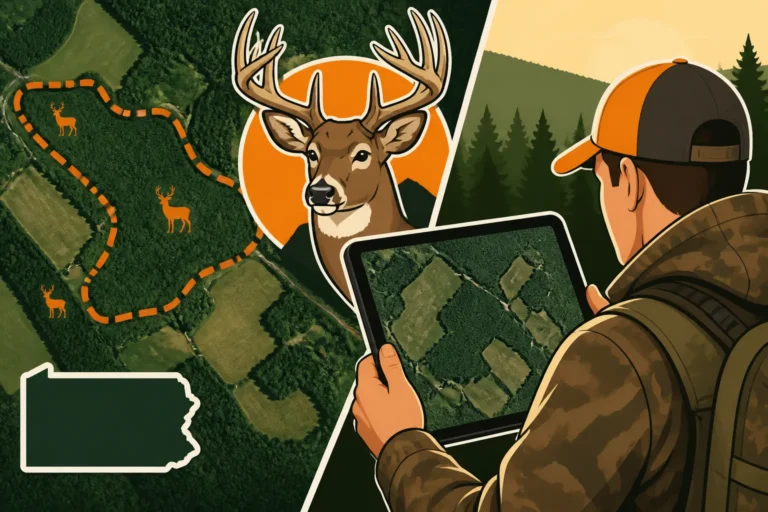
In today's bowhunting world, mapping tools are invaluable, especially when trying to pinpoint those subtle October deer patterns. Apps like GoHunt have revolutionized how hunters scout and navigate, providing detailed satellite imagery, topographic maps, and property boundaries right on your phone. This is critical when you’re trying to understand terrain features, identify potential funnels, or locate bedding areas relative to food sources. Being able to drop pins on fresh sign, stand locations, and even blood trails drastically improves efficiency.
Beyond just navigation, these apps allow you to plan your entry and exit routes to minimize disturbance, crucial for pressured October deer. You can identify private land parcels versus public access, like Pennsylvania State Game Lands, ensuring you stay within legal boundaries. Many apps also offer offline map capabilities, which is a lifesaver in areas with no cell service. Before hitting the woods, download your maps for your specific area. Familiarize yourself with the layers and features to maximize your effectiveness. These digital tools are a true game-changer for serious bowhunters.
Specific Challenges and Solutions
October bowhunting isn't without its unique set of challenges. From dealing with other hunters to navigating the changing landscape, being prepared for these obstacles can make all the difference.
Handling Increased Hunter Pressure
As October progresses, hunter pressure can sometimes increase, especially on popular public lands. This pressure pushes deer into thicker, less accessible areas, making them even more cautious and nocturnal. It's a frustrating reality for many Pennsylvania bowhunters, but it doesn't mean success is impossible. The solution often lies in doing what others aren't willing to do. This might mean Finding Ground Others Walk Past by hiking further than most hunters venture from parking areas. Look for remote pockets of cover, steep ridges, or deep hollows that are difficult to access.
Another strategy is to hunt during weekdays rather than weekends, when pressure tends to be highest. Pay attention to how deer react to pressure; they'll often use specific escape routes or shift their core bedding areas. Identifying these shifts can lead you to overlooked opportunities. Sometimes, it's about finding those small, overlooked private tracts that other hunters dismiss. Being discreet and respectful when seeking permission can open up some fantastic, low-pressure hunting. Understanding how deer react to human presence is key to staying ahead of them.
Dealing with Changing Foliage
The vibrant colors of early October eventually give way to falling leaves, which presents both advantages and disadvantages for bowhunters. On one hand, the thinning canopy can increase visibility, allowing you to see further into the woods. This can be helpful for spotting deer from a distance or identifying distant sign. However, falling leaves also mean that cover for both you and the deer decreases. What was once a thick, concealing background might now be sparse, making it harder to break up your outline.
The crunch of fallen leaves underfoot can also make quiet movement extremely challenging. This is especially true when still-hunting or trying to sneak into a stand location. To mitigate this, consider hunting during or immediately after a rain shower, which can dampen the leaves and reduce noise. If the woods are dry and noisy, move even slower, picking up your feet to minimize sound. Adjust your camouflage to match the new, more open environment. Most importantly, deer are also aware of the sound of leaves, so they'll often stop and listen intently, making quiet movement even more critical for you.
Post-Shot Recovery in Dense October Cover
Every bowhunter's worst nightmare is a poorly placed shot and a lost animal. In October, with changing foliage and sometimes dense undergrowth, post-shot recovery can be particularly challenging. When you make a shot, first and foremost, observe and remember exactly where the deer was standing, its reaction, and the direction it fled. Mark the spot of the shot with a piece of flagging tape or by tying a distinctive branch. This is your most crucial piece of information.
Next, resist the urge to immediately pursue. Give the deer time, at least 30 minutes to an hour for a good shot, and 3-4 hours or even overnight for a questionable shot. This allows the animal to bed down and expire, rather than being pushed further. When you begin tracking, move slowly and methodically. Look for blood, broken twigs, disturbed leaves, and any other sign. If the blood trail is sparse, expand your search. Mark every spot of blood, creating a visual breadcrumb trail. If you lose the trail, back up to the last confirmed sign and re-evaluate. Having a good tracking light is essential for recovering deer after dark. For more detailed advice, refer to Blood Trailing After Dark in Pennsylvania.
Public Land vs. Private Land Strategies
Pennsylvania offers a vast array of hunting opportunities, whether you're targeting sprawling State Game Lands or a permission-based private tract. Understanding the nuances of each can help you tailor your approach for maximum success in October.
Making the Most of Pennsylvania State Game Lands
Pennsylvania boasts an impressive amount of public hunting land, with its State Game Lands being a prime example. While these lands offer incredible access, they also tend to see more hunter pressure, especially during peak seasons like October. To consistently find success on State Game Lands, you need to think differently. First, thorough pre-season scouting is paramount. Use mapping apps to identify terrain features like steep ridges, thick clearcuts, or deep hollows that might deter other hunters but could hold deer. Look for natural funnels and pinch points that concentrate deer movement.
When hunting State Game Lands, be prepared to walk further than most. The deer quickly learn to associate parking areas and well-worn trails with human presence. Don't be afraid to put in the miles to reach less-pressured areas. Sometimes, this means Entry Routes on Steep Ground to get away from the crowds. Focus on bedding areas rather than just feeding areas, as pressured deer will often move only short distances from their beds during daylight. Consider Hunting Pennsylvania Clearcuts and Regrowth, as these areas provide both food and thick cover for deer seeking refuge. Always be mindful of other hunters and practice good hunter ethics.
Navigating Private Land Opportunities
Gaining access to private land can unlock incredible bowhunting opportunities, often with less pressure and more predictable deer patterns. However, securing and maintaining private land permission requires respect, clear communication, and often a bit of legwork. Start by identifying landowners in areas you’re interested in. A simple knock on the door, dressed respectfully, with a polite request, can go a long way. Always offer to help with chores, share venison, or simply be a good steward of their property.
When you secure permission, make sure you understand the exact boundaries of where you're allowed to hunt. Respect any specific requests the landowner might have, such as avoiding certain areas or times. Never assume you have permission for subsequent seasons; always ask again. Building a strong relationship with a landowner is key to long-term access. If you have permission for a small tract, consider strategies like Hunting Small Private Tracts in Pennsylvania, focusing on scent control and low-impact entries and exits to avoid pressuring the deer on that limited acreage. Always leave the property better than you found it, and a thank you note or small gift at the end of the season can reinforce your appreciation.
| Food Source Type | Primary Availability (October) | Deer Preference | Best Hunting Conditions | Stand Placement Focus |
|---|---|---|---|---|
| Hard Mast | Mid-October onwards | High (especially White Oaks) | Cool, crisp days after drops | Downwind of active drop zones, travel corridors to bedding |
| Soft Mast | Early to Mid-October | High (apples, persimmons, grapes) | Anytime, especially after a frost | Near specific trees/bushes, transition routes |
| Agricultural | Harvested fields (corn, beans), standing plots (alfalfa, brassicas) | Moderate to High (post-harvest gleaning, active plots) | Evening, especially on edges of cover | Field edges, pinch points leading to fields |
| Browse | Year-round, but less appealing in Oct | Low (secondary food source) | Anytime, often in thick cover | Bedding areas, travel routes through thickets |
Disclaimer
Hunting is an inherently dangerous activity. This guide provides information for educational purposes only. Always consult the most current Pennsylvania Game Commission regulations before hunting. Adhere to all safety guidelines, understand your equipment, and prioritize ethical hunting practices. Your safety and adherence to laws are your responsibility.