Ground Blind Anchoring in Wind
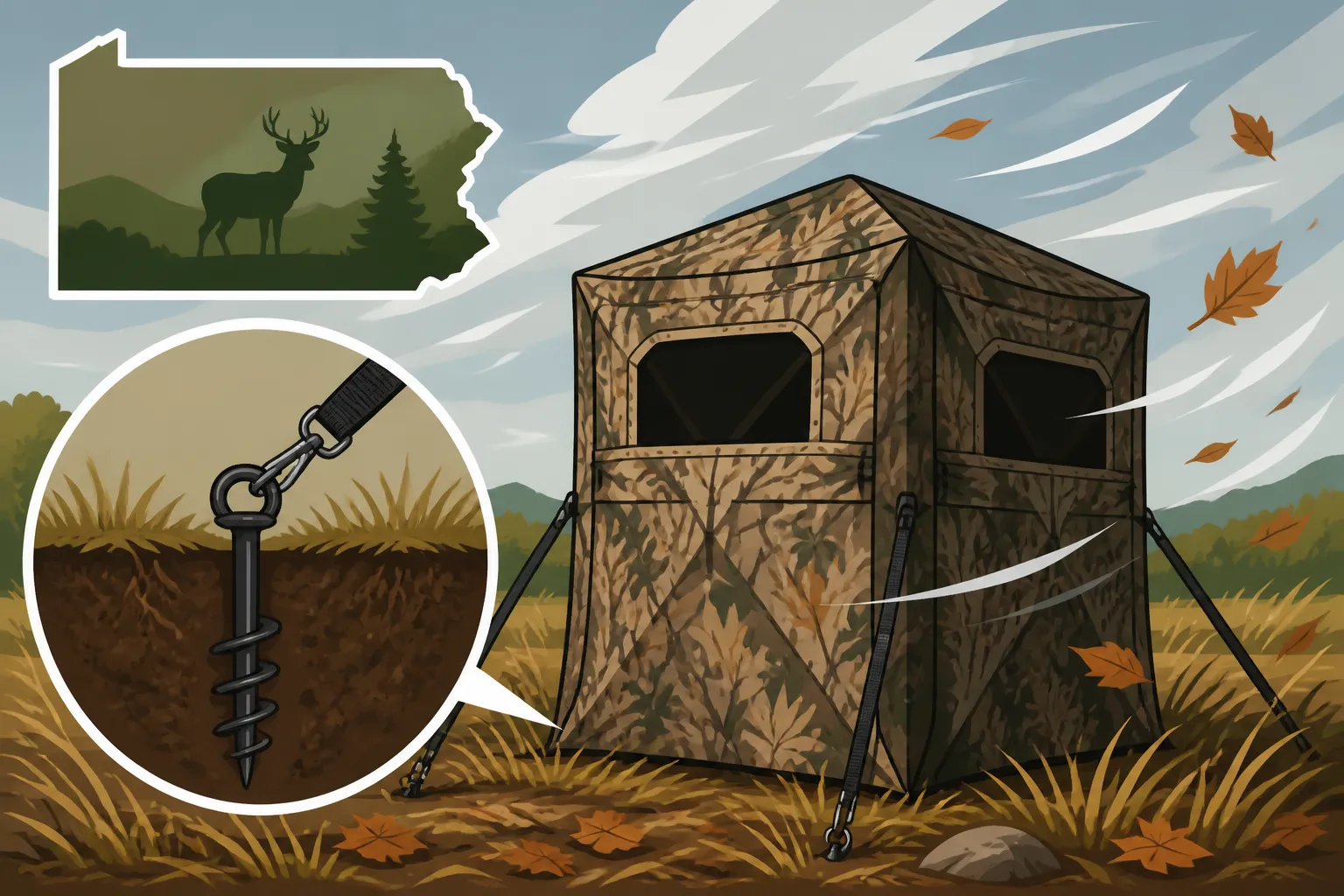
There's nothing quite as frustrating as showing up to your meticulously scouted hunting spot, only to find your ground blind has become a wind-battered, shredded mess, or worse, has simply vanished. Pennsylvania's diverse terrain, from exposed farm fields to mountain ridges, can whip up unpredictable gusts that turn a seemingly sturdy blind into a kite. This guide is here to walk you through robust anchoring techniques and practical tips to ensure your ground blind stays put, providing you with a reliable, concealed hunting position no matter what the weather throws your way.
Why Ground Blind Anchoring Matters in Pennsylvania's Winds
You've spent the time, you've done the scouting, and you've picked the perfect spot. Maybe it's an edge of a vast cut cornfield in southern Pennsylvania, or perhaps a strategic pinch point along a wooded bench in the state's central mountains. A ground blind offers incredible concealment and comfort, but it's only as good as its stability. When those notorious Pennsylvania winds kick up, an improperly anchored blind can quickly become a liability, and understanding the "why" behind good anchoring is the first step to preventing a frustrating mishap.
Understanding Pennsylvania's Wind Patterns
Pennsylvania's geography creates a dynamic and often unpredictable wind environment. In the sprawling, open agriculture lands of the southeast, winds can sweep across large, unobstructed areas, building significant force. Think about sitting in a blind on a wide-open field on a blustery November morning – that wind hits with no mercy. Conversely, in the undulating Ridge and Valley region or the deeper Big Woods, wind can swirl, gust, and change direction rapidly as it navigates valleys, hollows, and ridge lines. You might have a steady breeze on a flat bench, only for it to become a swirling eddy in a nearby draw. Wind and Thermals on a Ridge is a critical concept here, as thermal drafts can combine with prevailing winds to create truly baffling conditions. The wind can funnel through clearcuts or along thick fencerows, intensifying its impact on anything in its path. Ignoring these localized wind dynamics is a surefire way to lose a blind.
The Cost of a Compromised Blind
A ground blind that gives way to the wind isn't just an inconvenience; it can actively sabotage your hunt and even damage your gear. Imagine spending hours Brushing In a Blind on a Field Edge to create the perfect hide, only to have a sudden gust tear it loose. The flapping, tumbling fabric, the clattering poles – it's a cacophony that will send every deer, turkey, or bear within earshot scattering. Your carefully chosen hunting spot for that morning or evening is instantly ruined. Beyond spooking game, there's the very real cost of a damaged blind. Torn fabric, bent poles, and broken hubs are common casualties of a wind-whipped blind, forcing you to repair or replace expensive equipment. And let's not forget the lost opportunity. If your blind is compromised, you can't hunt from it, meaning your time and effort scouting, setting up, and getting to your location have been wasted. It’s a frustrating scenario that proper anchoring techniques are designed to prevent.
Essential Gear for Robust Ground Blind Anchoring
You can have the best ground blind on the market, but without the right anchoring gear, it’s still just a fancy tent waiting for a strong breeze to take it airborne. Don't rely solely on the flimsy stakes that often come packed with your blind. Pennsylvania's varied terrain demands more robust solutions. Investing in quality anchoring components is a small price to pay for peace of mind and a successful hunting season.
Stakes and Tie-Downs Beyond the Basics
The stakes that come with most ground blinds are generally designed for calm conditions and easy pitching, not for enduring a strong Pennsylvania squall. For real holding power, you need to upgrade.
- Heavy-Duty Tent Stakes: Look for stakes that are longer (10-12 inches) and made of sturdy steel or hardened plastic. Those with a hook or a larger head are better for tying off ropes.
- Spiral Stakes: These look like giant corkscrews and are fantastic for soft to medium soil. You twist them into the ground, and they provide incredible resistance to pulling out. They're particularly useful in loamy farm soils or areas with softer topsoil.
- Rebar Stakes: For the ultimate in brute force, you can cut lengths of rebar (about 12-18 inches) with a point on one end and a bent hook on the other. Drive these into the ground with a small sledgehammer. They are incredibly strong but require a bit more effort to install and remove. Just be sure to mark them well so you don't trip over them in the dark.
- Strong Tie-Down Ropes or Straps: Thin cord just won't cut it. Opt for heavy-duty nylon rope (at least 1/4 inch thick) or ratchet straps. Ratchet straps are excellent for securing a blind directly to trees or sturdy posts, offering adjustable tension that can really cinch things down. Remember, the goal is to transfer the wind's force from the blind's fabric to the anchoring points in the ground or surrounding objects.
- Carabiners: These can make attaching and detaching tie-downs quicker and easier, especially in cold weather when your fingers might be stiff.
Here's a quick comparison of common anchoring options:
| Anchoring Method | Ground Type Best Suited For | Pros | Cons |
|---|---|---|---|
| Standard Tent Stakes | Soft, well-drained soil | Lightweight, easy to carry/install | Very low holding power, easily pull out |
| Heavy-Duty Tent Stakes | Soft to medium soil | Better holding, still portable | Can bend in hard ground |
| Spiral Stakes | Soft, sandy, or loose soil | Excellent holding power in right conditions | Difficult in rocky or frozen ground |
| Rebar Stakes | Most soil types (with effort) | Maximum holding power, durable | Heavy, requires tools, can be hard to remove |
| Ratchet Straps (to trees) | Near sturdy trees/posts | Very secure, easy tension adjustment | Requires nearby anchor points, can be bulky |
| Sandbags/Weight Bags | Any surface (supplemental) | Flexible, adds low-profile stability | Heavy to transport when filled, can be bulky |
Adding Weight and Reinforcement
Sometimes, stakes alone aren't enough, especially in areas prone to extreme winds or if the ground is particularly challenging. Adding weight and reinforcement is like giving your blind an extra dose of gravity.
- Sandbags or Weight Bags: These are invaluable. You can buy empty sandbags or specialized weight bags designed for blinds and fill them on-site with dirt, sand, or rocks. Place one in each corner of the blind, both inside and outside. This low-profile weight adds significant stability, helping to prevent the blind from lifting and reducing the strain on your stakes. Even if the stakes start to pull, the weight will keep the blind from becoming airborne.
- Rocks or Logs: If you're hunting in an area with abundant natural materials, large rocks or sections of fallen logs can be strategically placed inside the blind's corners or around its exterior edges. This acts similarly to sandbags, adding mass to resist uplift.
- Reinforcing the Hubs: Many blind failures start at the hub connections. While anchoring gear won't directly reinforce the hubs, a well-anchored blind reduces the stress on these critical connection points. Regularly inspect your blind's hubs and poles for signs of wear or cracking.
Using a combination of these methods is often the most effective strategy. For example, robust stakes at each corner, supplemented by interior sandbags, provides a formidable defense against high winds. When choosing a blind, even a good Ground Blind on Pennsylvania Game Lands needs proper securing.
Step-by-Step Anchoring Techniques for Different Scenarios
The "how-to" of anchoring isn't a one-size-fits-all solution, especially with Pennsylvania's varied terrain. What works perfectly in a soft agricultural field might be utterly useless on a rocky mountain ridge. Understanding how to adapt your anchoring strategy to the ground beneath your feet is key to a truly windproof setup.
Anchoring on Soft Ground or Farm Fields
Hunting the fertile farmlands of Pennsylvania often means dealing with softer, sometimes muddy, ground, particularly in the spring or after a good rain. This is where your basic tent stakes are most likely to fail.
- Preparation: Clear away any crop residue or loose debris from where your blind will sit. This ensures good contact with the soil.
- Positioning: Set up your blind in its desired location, paying attention to your shot angles and cover. Hunting a Standing Cornfield in Farm Country often means setting up at the edge of the field, which can be particularly exposed to wind.
- Initial Staking: Use the longest, most robust tent stakes or spiral stakes you have. Drive them deeply into the ground at a 45-degree angle, leaning away from the blind. This angle increases the holding power significantly compared to driving them straight down. Aim for at least one stake at each corner, and ideally, mid-panel stakes on larger blinds.
- Tie-Down Points: Securely attach heavy-duty rope or ratchet straps to the blind's corner loops or frame. Run these ropes to your driven stakes. Make sure there's firm tension, but don't over-tighten so much that you distort the blind's frame.
- Adding Weight (Crucial for Soft Ground): This is where sandbags or rocks become indispensable. Place heavy bags inside each corner of the blind, resting against the frame. For extra measure, you can place additional weight bags outside the blind, over the bottom skirt or fabric flaps, to pin them down and prevent wind from getting underneath.
- Securing Doors and Windows: Even when closed, loose doors or window flaps can catch the wind like sails. Ensure all zippers are fully closed and any ties or fasteners are secure.
Securing a Blind in Rocky or Frozen Terrain
This is where many hunters get frustrated. You're in prime deer or bear country, but the ground is so full of shale, rock, or frozen solid that no stake will penetrate more than an inch. Traditional staking methods are out.
- Leverage Natural Obstacles: Look for large rocks, boulders, stumps, or even small trees around your blind's perimeter. These are your new anchoring points.
- Ratchet Straps to the Rescue: If there are sturdy trees or substantial stumps nearby, use heavy-duty ratchet straps to secure the blind directly to them. Loop the strap around a tree, through the blind's corner loop, and back to the tree, then ratchet it tight. You might need multiple straps if the blind is particularly exposed. For example, if you're Hunting the Pennsylvania Rut in November and setting up in a transition area in the woods, you'll likely have trees available.
- Rock Piles: If no trees are available, create rock piles over the blind's fabric skirts. Gather as many substantial rocks as you can and place them strategically on the bottom edges of the blind. While this won't prevent uplift completely, it will keep the blind from being blown away entirely and can help shed some wind.
- Improvised Stakes (Last Resort): In some rocky terrain, you might find crevices or cracks where you can wedge short pieces of rebar or stout sticks. These are less reliable but can offer some minimal holding power when combined with other methods.
- Internal Weight: Even more so than on soft ground, internal sandbags or large rocks are vital. They keep the blind's base grounded even if external anchoring is difficult.
Using Natural Features for Added Stability
Beyond just tying off to trees, natural features can be your best friend in creating a truly stable and hidden ground blind. This isn't just about anchoring; it's about integration and protection.
- Placement Against Dense Cover: Whenever possible, position your blind with its back or a side against a thick fencerow, a stand of evergreens, a brush pile, or a dense thicket. This natural barrier will break the force of the wind, reducing the stress on your blind. It's a double win for both concealment and stability.
- Integrating with Brush: Don't just set your blind down; make it part of the landscape. Use zip ties or small bungee cords to secure the blind's frame to nearby saplings or sturdy bushes. Then, take advantage of the blind's brushing loops to attach natural vegetation – branches, corn stalks, tall grasses – to its exterior. This not only camouflages the blind but also adds weight and resistance to the wind. Think of it as creating a natural windbreak and an extra layer of structural support.
- Cornering It: If you can position your blind in a corner formed by two natural lines of cover (e.g., a fencerow meeting a wood line), you gain stability from two directions and naturally reduce exposure to swirling winds. The GoHunt app's satellite imagery can be incredibly useful for identifying these kinds of natural funnels and sheltered corners when you're scouting.
Advanced Tips and Maintenance for Windproof Blinds
Anchoring a ground blind isn't just about the initial setup; it's an ongoing process that benefits from foresight, regular checks, and a healthy respect for Mother Nature. Taking a few extra steps can significantly extend the life of your blind and prevent those dreaded wind-related failures.
Pre-Season Setup and Scouting for Wind
The best time to ensure your blind is windproof is long before hunting season even begins. Pre-season planning makes all the difference.
- Early Deployment: If possible, set up your blind a few weeks or even months before you plan to hunt from it. This allows the blind to "weather in," becoming less conspicuous to game. Crucially, it also gives you an opportunity to observe how it performs in various wind conditions without the pressure of a hunt. You'll quickly see which stakes hold best in your specific location and where additional reinforcement is needed. This ties in with general Scouting Pennsylvania Public Land Before Season practices, allowing you to not only find game sign but also assess potential blind sites for wind exposure.
- Wind Direction Analysis: Use apps like GoHunt or physical wind indicators to study prevailing wind patterns in your chosen hunting area. Pay attention to how terrain features – ridges, valleys, clearings – funnel or block wind. Position your blind in a spot that offers natural wind protection, if available, or at least anticipates the most common strong wind directions. While you always want to hunt with the wind in your favor for scent control, understanding its patterns also helps with blind stability.
- Terrain Assessment: Before you even unpack your blind, thoroughly check the ground. Is it soft and loamy? Rocky and unforgiving? Frozen solid? Knowing this in advance allows you to bring the appropriate anchoring gear – whether that's spiral stakes, rebar, or heavy-duty ratchet straps for nearby trees. Don't wait until you're there to realize you have the wrong tools for the job.
Protecting Your Blind from the Elements
Anchoring isn't just about the wind; it's also about preventing general wear and tear from exposure, which can weaken the blind's structure and make it more susceptible to wind damage over time.
- Drainage: Ensure the blind is not set up in a low spot where water can collect. Pooling water can saturate the ground, making stakes easier to pull out. It can also lead to mold and mildew on the fabric, weakening it over time.
- Sunlight Exposure: Constant exposure to direct sunlight, especially the intense UV rays of summer, can degrade the blind's fabric and elastic components, making them brittle. If you're leaving a blind out for an extended period, consider a UV-resistant cover or repositioning it to maximize shaded hours.
- Regular Checks: If your blind is left out for weeks, make it a point to check on its anchoring periodically. Stakes can loosen from ground saturation, animal activity, or simply consistent wind pressure. Re-tighten ropes, re-drive stakes, and reposition weights as needed. This preventative maintenance is crucial for longevity.
- Storing Your Blind Properly: When the season is over, or if you're moving your blind, clean it thoroughly, ensure it's completely dry to prevent mold, and store it in its bag in a cool, dry place. Proper storage helps maintain the integrity of the fabric and frame, ensuring it's ready to withstand the elements next season. This also applies if you're just taking it down after a hunt to avoid Opening Day Crowds on Pennsylvania Game Lands by using it elsewhere.
When to Pack It Up: Recognizing Unsafe Conditions
Even the most well-anchored ground blind has its limits. There comes a point when the wind conditions are simply too extreme, and discretion becomes the better part of valor.
- Forecast Awareness: Always check the weather forecast before heading out, paying close attention to wind speed and gust predictions. If sustained winds are forecast to be consistently above 25-30 mph, with higher gusts, seriously consider whether it's safe and practical to hunt from a blind, especially in exposed locations.
- Blind Behavior: Pay attention to how your blind is reacting to the wind while you're in it. Is it constantly flapping and groaning? Are the poles flexing alarmingly? Is the blind shifting even with good anchoring? These are all signs that the blind is under significant stress.
- Prioritize Safety: High winds can bring down tree limbs, cause debris to fly, and make accurate shooting extremely difficult. If you feel unsafe or realize your blind is at risk of catastrophic failure, it's always better to pack it up and find an alternative hunting spot or wait for conditions to improve. A hunt isn't worth a damaged blind, or worse, an injury. Sometimes, moving to a naturally sheltered area or simply Still-Hunting Pennsylvania Big Woods might be the better, safer tactic.
Disclaimer
This article is for general informational purposes only and does not constitute professional advice. Laws, prices and regulations vary by location and change over time. Consult a qualified professional for guidance on your specific situation.