How Much Orange Pennsylvania Requires
One of the most common anxieties for any hunter in Pennsylvania, whether you're a seasoned veteran or just starting out, is understanding the ever-important rules surrounding hunter orange. It’s easy to get confused with different seasons, weapon types, and even specific Wildlife Management Units having their own nuances. This guide will cut through the fog, detailing exactly how much hunter orange you need in Pennsylvania, when it's required, and why adhering to these regulations is absolutely critical for a safe and successful hunt.
The Cornerstone of Safety: Pennsylvania's 250 Square Inch Rule
At the heart of Pennsylvania’s hunter orange regulations lies a simple, yet profoundly important, mandate: 250 square inches. This isn't just a random number; it's a carefully determined amount designed to maximize your visibility to other hunters, reducing the risk of a tragic accident. Many states have similar rules, and for good reason—orange stands out against natural backgrounds to the human eye, even for those with certain types of color blindness, in a way that camouflage simply cannot.
What 250 Square Inches Really Looks Like
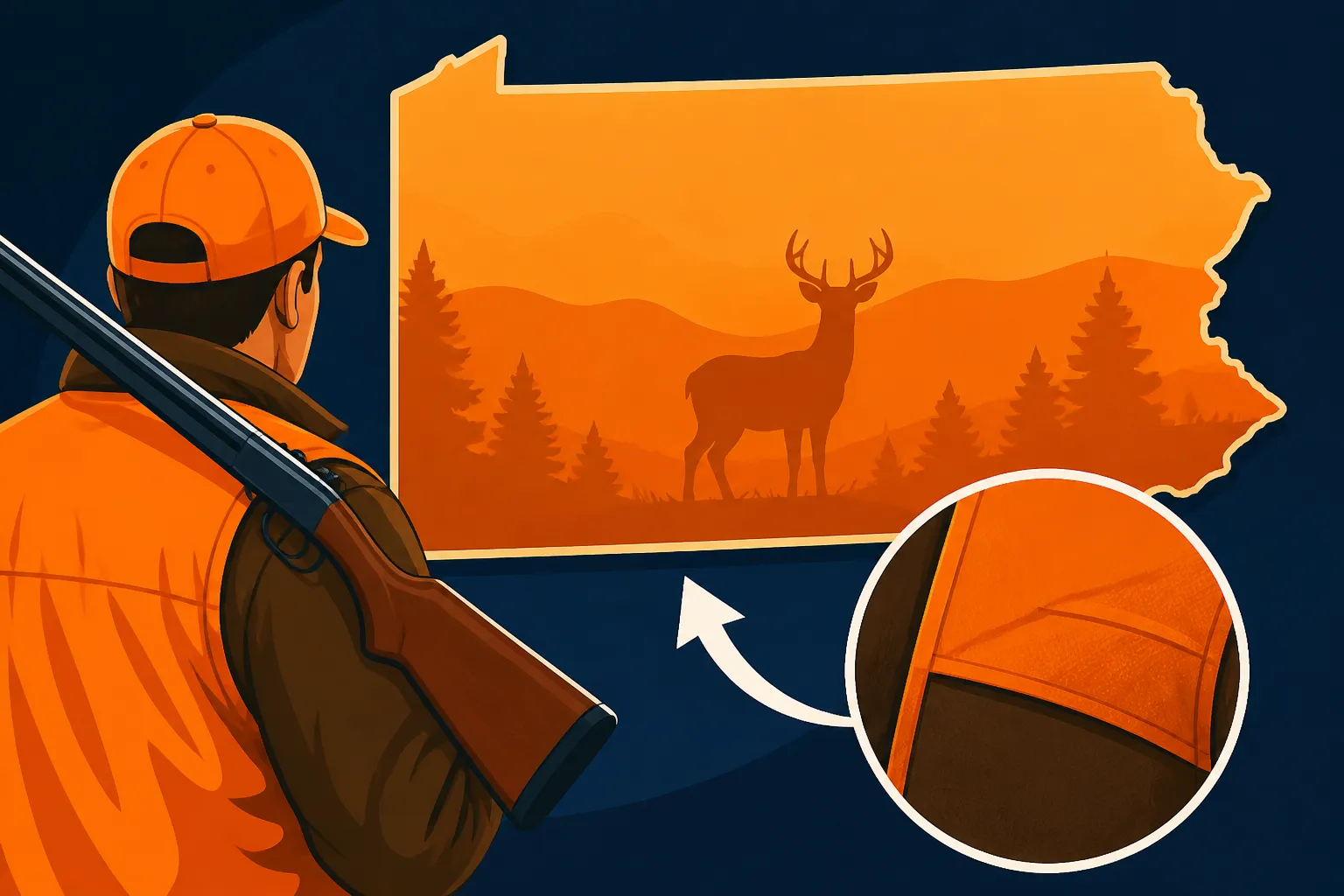
When the Pennsylvania Game Commission states "250 square inches," they're talking about an unbroken, visible amount of fluorescent orange material. This isn't just about throwing on any old orange hat and calling it a day. For most hunters, this typically translates to wearing a hunter orange vest or jacket, often paired with an orange hat. The key is that this orange must be visible 360 degrees around your person. Think about it: if you're wearing an orange vest but your backpack completely covers the orange on your back, you're not meeting the spirit, or often the letter, of the law.
Imagine you're still-hunting slowly through a stand of oaks in the big woods, perhaps looking for deer after the acorn crop has dropped. If another hunter is approaching from behind, and your pack obscures your orange, they might not see you until it's too late. The same goes for when you're traversing thick laurel patches or dense regrowth; every angle needs to present that unmistakable flash of safety. It's about ensuring that from any vantage point an approaching hunter might have, you are clearly identifiable as a human, not a game animal. When you're Dragging a Deer Off a Pennsylvania Mountain, it's easy to forget that your orange might be covered. Always adjust your gear to maintain visibility.
The Life-Saving Purpose Behind the Mandate
It might feel like just another rule to follow, another piece of gear to remember, but the hunter orange requirement is one of the most effective safety measures in hunting. The core purpose is to prevent mistaken identity shootings. In the heat of the moment, or in fading light, or with the quick movement of a game animal, mistakes can happen. That bright orange serves as an immediate visual cue that says, "Human! Do not shoot!" It provides a clear, unmistakable contrast to the natural environment, distinguishing you from the brown, grey, and green hues of the forest.
Consider a classic deer drive scenario, something common on Pennsylvania State Game Lands. When hunters are pushing through cover and others are posted, the rapid movement of deer, coupled with the excitement and limited visibility, can be a recipe for disaster if safety protocols aren't followed. In such situations, the clear and universal signal of hunter orange becomes paramount. Every participant in a drive, especially those pushing brush or those waiting on stands, needs to be acutely aware of their orange placement and the visibility of others. This is why when coordinating Deer Drives With Three or Four Hunters, emphasizing clear visibility of orange for every member is a pre-hunt talk essential.
When and Where Hunter Orange is a Must in Pennsylvania
Navigating the hunter orange requirements means knowing when and where they apply. Pennsylvania's rules aren't universal for all seasons, which can be a source of confusion. However, understanding the key firearms seasons clarifies a lot.
Mandatory During Firearms Deer and Bear Seasons
This is where the 250 square inch rule is non-negotiable and most strictly enforced. During the general Pennsylvania Firearms Deer Season Structure and Pennsylvania Black Bear Hunting seasons, any hunter pursuing any game animal or furbearer (with some specific exceptions like waterfowl) must wear the required amount of fluorescent orange. This includes concurrent small game seasons that overlap with these primary big game firearms seasons.
For instance, if you're out hunting squirrels or rabbits during the two-week firearms deer season, you must wear 250 square inches of visible orange. It doesn't matter that your primary target isn't a deer or a bear; the presence of other firearms hunters in the woods pursuing big game necessitates this universal safety measure. This is a critical point of confusion for many. The rule isn't just about what you're hunting, but about what others might be hunting in the same area. Tools like GoHunt can be invaluable here, offering an easy way to verify season dates and overlap for your specific WMU, ensuring you're always compliant and safe.
Archery, Muzzleloader, and Small Game Season Nuances
The rules for hunter orange become a bit more nuanced in other seasons, often leading to misunderstandings.
During Pennsylvania Archery Deer Season Dates, which often includes an extended season, hunter orange is generally not required on your person while actively hunting deer or bear with a bow or crossbow. However, many seasoned archers still choose to wear some orange, particularly when walking to and from their stand or when tracking a downed animal, especially if they are moving through areas with higher Hunting Pressure on Pennsylvania Game Lands. It's a personal safety choice that often goes beyond the legal minimum.
Flintlock Season Tactics in Pennsylvania, which typically occurs later in the year, often coincides with the late antlerless deer season. If you are hunting during the "all lawful firearms" portion of the late deer season, the 250 square inch orange rule generally applies. However, if you're hunting during a period where only flintlocks are permitted for deer and no other concurrent firearm seasons (like the general firearms deer season) are open, the orange requirement might not be on your person while stationary and hunting. Always double-check the current year's digest for exact specifics, as these overlaps can be tricky. When using GoHunt for scouting, you can often find regulation overlays that clarify these period-specific requirements, helping to eliminate any guesswork.
For Small Game Hunting in Pennsylvania outside of concurrent firearms deer or bear seasons, hunter orange is generally not required on your person. This means if you're Grouse Hunting Pennsylvania Cover in October before rifle season, or Rabbit Hunting With Beagles in Pennsylvania in February, you don't legally need the orange. However, just like with archery, some hunters still opt for a blaze orange hat or vest, especially if they anticipate encountering other hunters, or if they are in areas where visibility might be reduced. It’s always better to be seen than to risk being mistaken for game.
Public Land Versus Private Land
A common question revolves around whether the hunter orange rules change depending on if you're hunting on public land, like State Game Lands or State Forests, or on private property. The answer is straightforward: the hunter orange regulations apply uniformly across all land types when the requirement is active. Whether you have Getting Private Land Permission in Pennsylvania for a farm field or you're deep in the Allegheny National Forest, if it's a season requiring orange, you need to wear it. The safety of all hunters, regardless of land ownership, is the priority.
There are no special exemptions for private land simply because you have permission to be there. The rules are in place to protect anyone who might be in the woods, be it another hunter, a hiker, or even yourself. When planning your hunt, regardless of the property type, your first step should always be to consult the current Pennsylvania Hunting & Trapping Digest or use digital tools like GoHunt to confirm all regulations, including specific orange requirements for your chosen season and WMU. This due diligence ensures you're not only legal but also prioritizing safety.
Choosing and Wearing Your Hunter Orange Effectively
Simply having 250 square inches of orange material isn't enough; how you wear it and the type of gear you choose also play a significant role in its effectiveness.
Gear Up: Vests, Hats, and Beyond
The most common and effective way to meet the 250 square inch requirement is by wearing a hunter orange vest or jacket, often combined with an orange hat. A good vest should be durable, comfortable for layering, and designed to provide that all-important 360-degree visibility. Some vests even come with game bags or extra pockets, making them practical for a day in the field. Hats are an excellent addition because they provide visibility at a higher point, often above brush or small terrain features.
When selecting your gear, think about the conditions you'll be hunting in. If you're going to be busting through thick briars, you'll want something robust that won't tear easily. If it's a cold late-season sit, you'll need a vest that can comfortably fit over your insulated layers without becoming restrictive. For very cold weather, some companies offer insulated hunter orange jackets that serve as both outerwear and your required visibility. Remember, the orange needs to be the outermost layer. If you have a camouflage jacket over your orange vest, you've defeated the purpose.
| Season Type | Hunter Orange Requirement | Practical Advice |
|---|---|---|
| General Firearms Deer | 250 square inches, visible 360 degrees | Mandatory. Wear a vest and hat. Ensure no gear obstructs. |
| General Firearms Bear | 250 square inches, visible 360 degrees | Mandatory. Same as deer season. Crucial due to bear size and potential for multiple hunters. |
| Archery Deer | Not required on person (outside special regs areas) | Highly recommended when moving or in high-pressure areas. Carry some to put on when tracking. |
| Flintlock/Muzzleloader | Varies; check concurrent seasons (often 250 sq inches) | If concurrent with general firearms, it's mandatory. Otherwise, not on person, but still a good idea. |
| Small Game (during firearms deer/bear) | 250 square inches, visible 360 degrees (if carrying a firearm for small game) | Mandatory. Even if targeting squirrels, if firearms deer/bear is open, wear orange. |
| Small Game (outside firearms deer/bear) | Not required | Still wise to wear a bright color or some orange if sharing woods with archery hunters, especially when moving. |
| Fall Turkey | Not required on person (outside special regs areas) | Use caution. Consider orange when moving, especially during a concurrent firearms deer/bear season in your WMU. |
| Spring Gobbler | Not required on person | Never wear red, white, or blue. Be absolutely certain of your target. Orange for walking to and from your setup. |
| Waterfowl | Not required | Not applicable, as it could spook birds. Safety is paramount for blind placement and shoot lanes. |
| Coyote/Furbearer | Varies; check concurrent seasons (often 250 sq inches) | If concurrent with general firearms, it's mandatory. Otherwise, not on person, but still a good idea, especially during drives. |
Avoiding Common Hunter Orange Mistakes
It's easy to inadvertently negate your hunter orange. One of the most common mistakes is covering your orange with a backpack, a fanny pack, or even a harvested animal. When you shoot a deer and begin the drag, the deer itself can easily cover the orange on your back. Always stop and readjust. If necessary, carry an extra orange panel or vest to drape over the deer, or wear a full orange jacket that extends past your pack.
Another common oversight is wearing faded orange. Over time, sunlight and washing can cause the fluorescent dyes to break down, making the orange appear duller and less vibrant. Regularly inspect your orange gear. If it looks more like a muted peach than a brilliant blaze, it's time to replace it. A hunter orange garment that has lost its vibrancy also loses its effectiveness as a safety signal. Similarly, ensuring your orange remains visible when you're perched in a Treestand Setups in Pennsylvania Hardwoods is crucial; make sure branches or your stand itself aren't blocking your visibility.
Finally, relying solely on an orange hat when a vest is required is a mistake. While a hat is an important component of visibility, it rarely meets the 250 square inch minimum on its own. Always prioritize the vest or jacket during mandatory seasons. Utilizing resources like GoHunt can help you visualize the terrain and potential vantage points of other hunters, which might influence your decision to wear even more orange than legally required, especially when Scouting With the Pennsylvania Mapping Center shows dense cover.
Legal Ramifications and Best Practices Beyond the Minimum
Adhering to hunter orange regulations isn't just about avoiding a fine; it's about fostering a culture of safety that benefits everyone in the woods.
Consequences of Non-Compliance
Failing to wear the required hunter orange during mandatory seasons can result in penalties. The Pennsylvania Game Commission takes these safety regulations seriously, and violations can lead to citations, fines, and potentially even loss of hunting privileges. While no hunter wants a fine, the far more significant consequence is the increased risk of an accident. Ignoring hunter orange rules directly jeopardizes your safety and the safety of those around you.
Remember, every hunter has a responsibility to act safely and ethically. This includes being easily identifiable to others. The rules are not arbitrary; they are the result of decades of experience and data aimed at minimizing tragic incidents in the field.
Embracing Safety First: Beyond the Legal Minimum
While there are specific seasons when hunter orange is legally mandated, many experienced hunters choose to wear some form of it even when not required. This "safety first" mindset is a hallmark of responsible hunting. For example, during late archery season, which often falls in colder weather, many hunters will wear a blaze orange hat while walking to and from their stand. When Hunting the Pre-Rut in Late October, or any time other hunters might be in the woods, even if they're also archers, adding a little visible orange when moving through cover just makes good sense.
If you're hiking, dog walking, or otherwise recreating in areas open to hunting, especially during firearms seasons, wearing hunter orange is an intelligent and highly recommended precaution. While you might not be hunting, others are, and your visibility is crucial for their situational awareness. The small inconvenience of wearing a hat or vest pales in comparison to the peace of mind and enhanced safety it provides. Always be aware of your surroundings and make yourself known in the woods. GoHunt can also help hikers identify hunting pressure and open seasons, enabling them to make informed decisions about their clothing choices when recreating in potential hunting areas.
Disclaimer
This article is for general informational purposes only and does not constitute professional advice. Laws, prices and regulations vary by location and change over time. Consult a qualified professional for guidance on your specific situation.