Locator Calls for Pennsylvania Gobblers
There's nothing quite as frustrating as stepping out into a Pennsylvania spring woods, filled with the hope of a thundering gobble, only to be met with dead silence. You know the birds are there, you've scouted, you've seen sign, but they just won't talk. This guide is here to help you break that silence, showing you how to effectively use locator calls to pinpoint those elusive Pennsylvania gobblers and turn a quiet morning into an exciting hunt.
What Are Locator Calls and Why Use Them in Pennsylvania?
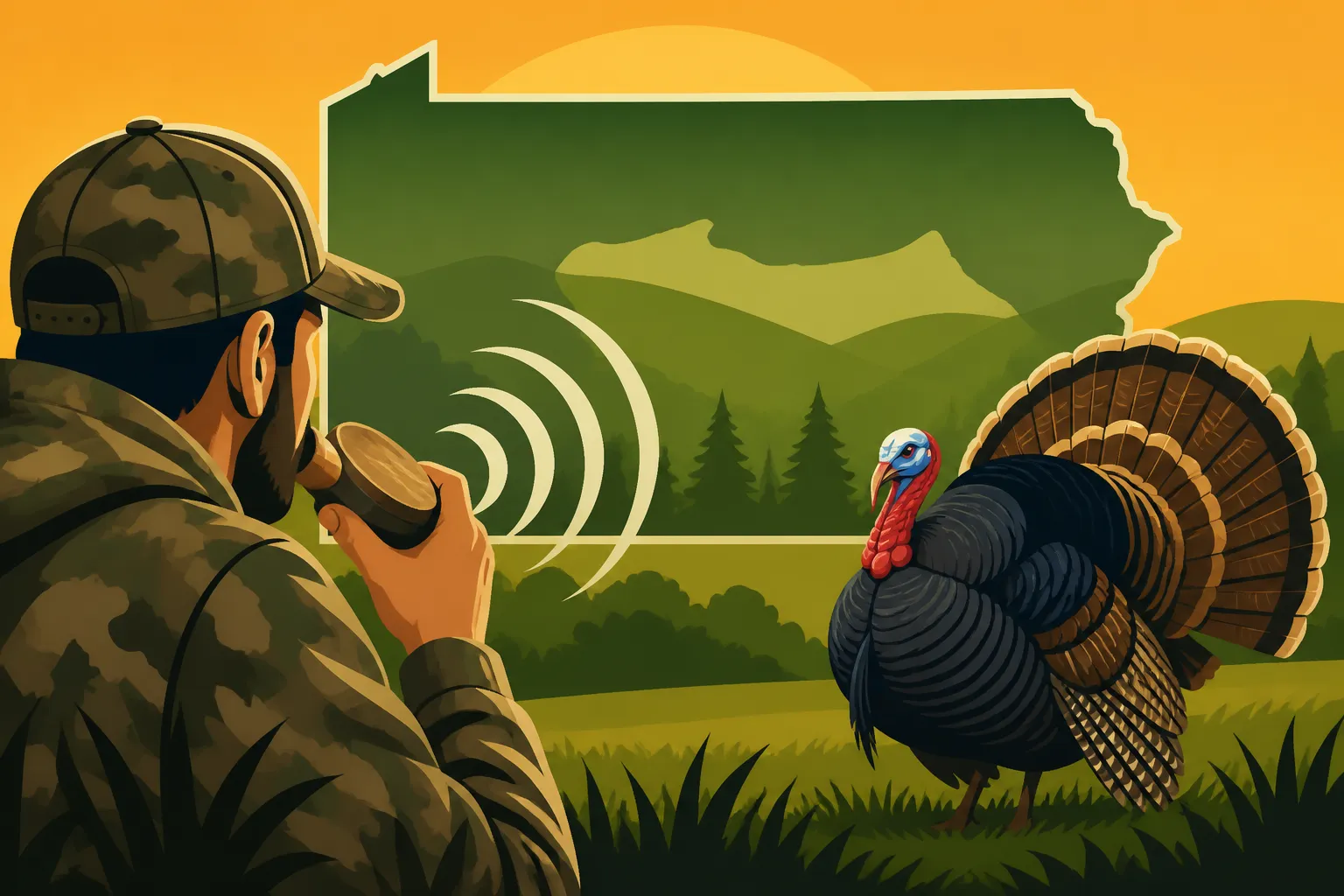
Hunting wild turkeys can feel like a game of hide-and-seek where the "seek" part is often the hardest. Locator calls are designed to make the "seek" a whole lot easier by encouraging a gobbler to reveal his position without directly challenging him with a turkey sound. It’s a subtle art, but a highly effective one, especially in the diverse and often challenging landscapes of Pennsylvania.
The Purpose of a Locator Call
At its core, a locator call is any sound that isn't a turkey call, used with the sole purpose of eliciting a "shock gobble" from a tom. Think of it like this: a gobbler, especially on the roost or when he's feeling quiet and secure, might not respond to a hen yelp or a gobble from another tom. He's been hunted before, he's heard it all, and he's not about to give up his position just because some "hen" sounds a little too close or another "tom" is acting tough.
However, a sudden, unexpected, and often loud non-turkey sound can trigger an involuntary gobble. It's a territorial reflex, almost like an alarm clock going off. The gobbler hears something unusual or out of place, and his first instinct is to gobble, asserting his dominance and announcing his presence. He’s not necessarily responding to the sound, but reacting to it. This distinction is crucial. When you use a hen yelp, you're trying to attract him. When you use a locator, you're trying to make him gobble. This makes locator calls a lower-pressure option than traditional turkey calls, which can sometimes put wary birds on edge if they don't respond immediately. The sheer satisfaction of breaking a silent morning with a perfectly executed locator call, followed by a resounding gobble, is a reward in itself.
Why They're Crucial for Pennsylvania Hunters
Pennsylvania is a state of incredible contrasts when it comes to turkey habitat. We have vast stretches of deep woods and rolling mountains, often referred to as "Big Woods," where birds can be incredibly spread out and terrain can make sound carry in unpredictable ways. Then there are the farm country edges, with smaller woodlots, thick hedgerows, and open fields, where birds might be more concentrated but also far more visible and wary. This varied landscape, coupled with significant hunting pressure, makes locator calls an indispensable tool for turkey hunters.
In the Big Woods, for instance, a gobbler might be a quarter-mile away, silently strutting on a bench or tucked away in a hollow. Without a locator call, you could walk right past him, never knowing he was there. The loud, far-reaching sound of a crow call or a coyote howler can cut through the dense timber and over ridges, reaching those distant birds. In farm country, where turkeys might be extremely sensitive to direct turkey calling, a subtle owl hoot or even a loud goose call can get a response without putting the birds on immediate high alert. Pennsylvania Spring Gobbler Rules allow us to pursue these birds across these diverse areas, but understanding how to effectively find them is paramount. Locator calls help you efficiently cover ground, identify productive areas, and conserve your primary turkey calls for when you've successfully pinpointed a tom and are ready to move in and set up for the shot.
Types of Locator Calls and How to Use Them Effectively
Just like with turkey calls themselves, there's a whole array of locator calls out there, each with its own strengths and ideal uses. Having a few different types in your vest can be a game-changer, allowing you to adapt to various situations and the mood of the birds. No two mornings are exactly alike, and neither are two gobblers, so versatility is key.
Owl Hooters: The Classic Dawn Chorus
The owl hooter is probably the most iconic and widely used locator call, and for good reason. It mimics the distinct "who cooks for you, who cooks for you all" call of the barred owl, a natural sound in Pennsylvania woods that gobblers are accustomed to hearing. The prime time for an owl hooter is during the pre-dawn hours, when gobblers are still on the roost. A well-placed series of hoots can often wake up a sleepy tom and get him to gobble before he even considers flying down.
To use an owl hooter effectively, start with softer hoots right as the sky begins to lighten, then gradually increase your volume. Give each series of hoots a minute or two of silence to allow a gobbler to respond. Sometimes, a distant gobble will be faint, almost indistinguishable from other woods sounds, so deep listening is crucial. You can also use owl hoots just after fly-down, especially if you think birds are moving into an area but haven't started calling themselves. The naturalness of the sound is its biggest pro; it rarely spooks a bird. However, if overused, especially after the sun is high, it can sometimes just elicit responses from actual owls, not turkeys. Remember, you're trying to get a gobbler to shock gobble, not communicate with other nocturnal birds. Knowing how to use an owl call effectively is a great asset for Roost Hunting Pennsylvania Gobblers.
Crow Calls: Loud and Proud
If the owl hooter is the subtle whisper of dawn, the crow call is the loud shout of midday. Crow calls are fantastic for covering large expanses of ground and getting a response from tight-lipped birds, especially once they've hit the ground and are either henned up or just plain quiet. The harsh, sharp caws of a crow call can carry an incredible distance, cutting through wind and dense foliage that might muffle other sounds.
The technique for a crow call is generally more aggressive than an owl hooter. Start with a few loud, sharp caws, varying the cadence like a real crow. Sometimes a series of quick, excited caws, followed by a longer, drawn-out one, does the trick. Again, listen intently after each sequence. Crow calls are excellent for working ridge lines, open fields, or clearcuts. Their main advantage is their volume and ability to elicit a strong shock gobble even from birds that are not actively communicating. A potential downside is that you will often call in real crows, who might then stick around, potentially alerting turkeys to your presence. However, a gobbler will often gobble at a real crow too, so it's not always a bad thing. When you're Run-and-Gun Turkey Tactics on Game Lands, a crow call is an essential tool for covering lots of ground quickly.
Other Effective Locator Sounds
While owl and crow calls are the bread and butter of turkey locator calls, there are several other options that can be surprisingly effective, especially on pressured birds or in specific environments. Adding a few of these to your repertoire can give you an edge when gobblers are being particularly stubborn.
One often-overlooked but highly effective locator is the coyote howler. The piercing howl of a coyote can absolutely electrify a gobbler, especially in the vast, open timber of Pennsylvania's Big Woods. It's a natural predator sound that often elicits a strong, instinctual shock gobble. Try using a series of yips and howls, mimicking a coyote pack. This call tends to work best later in the morning or early evening. Another unique option is the pileated woodpecker call. The loud, rattling cry of a pileated woodpecker is a common sound in mature timber, and its sharp, sudden nature can often surprise a gobbler into a response. These calls are usually a bit more subtle than a crow or coyote, making them good for closer ranges or when you want to be less intrusive. Finally, don't underestimate the power of a Canada goose call, particularly in farm country or near water. The loud honk of a goose is a common sound in agricultural areas, and it can be a fantastic way to get a rise out of gobblers feeding in fields or roosting in nearby woodlots.
When considering which locator call to use, think about your surroundings. If you're scanning maps on an app like GoHunt, looking at open fields near a river, a goose call might be your first choice. If you're deep in the mountains, scouting old timber blocks for Hunting Turkeys in Pennsylvania Big Woods, a coyote or pileated woodpecker call could be more appropriate.
When and Where to Use Locator Calls for Gobblers
Timing and location are everything in turkey hunting, and that holds true for locator calls as well. Knowing when a gobbler is most likely to shock gobble, and which call to use in different scenarios, will significantly increase your odds of success. It's about being strategic, not just making noise.
Pre-Dawn and Fly-Down Strategies
The period just before dawn and during fly-down is arguably the most critical window for using locator calls. Gobblers are often on the roost, feeling relatively safe and secure, and are primed to sound off at any sudden noise. As the first hints of light begin to paint the eastern sky, this is your prime opportunity. You want to be in position, preferably within a reasonable hearing distance of potential roosting areas, before the woods fully wake up.
Start with a softer owl hoot or two as the woods are still in shadow. The goal isn't to blast a loud call right away but to gently probe for a response. If you get a gobble, note the direction and estimated distance. Remain quiet for a bit, then try another series of hoots to see if he'll gobble again from the same spot, confirming his location. As daylight increases and the birds start to stir, the excitement builds. Once a bird flies down, he might go silent, especially if he's with hens. This is when a quick, sharp crow call or even a coyote howl can sometimes get him to gobble on the ground, revealing his new position. This information is invaluable for planning your next move, whether it's setting up immediately or carefully circling to get ahead of his travel path. Being able to locate a bird as he wakes up is key to Calling a Pennsylvania Gobbler Off the Roost.
Mid-Morning and Midday Tactics
Many hunters pack it in by mid-morning if the woods go silent, but this is a mistake. Gobblers often go quiet after fly-down, especially if they've joined a flock of hens. They might be breeding, feeding, or just moving silently through the woods. This is where aggressive mid-morning and midday locator calling can shine. The woods are typically quieter overall, making a loud locator sound stand out even more.
This is prime time for your louder calls, like the crow or coyote howler. Don't be afraid to be loud and persistent, moving through potential turkey habitat and stopping to call every few hundred yards. Think of it as a search pattern. Walk a ridge, stop and call. No response? Move a bit further, call again. Head down into a hollow, call there. The idea is to cover ground and force a bird to gobble, even if he doesn't want to. Sometimes, a gobbler will shock gobble to a loud call even if he's deep in a swamp or tucked away on a secluded bench, areas you might otherwise overlook. GoHunt mapping tools can be a huge asset here, allowing you to identify these remote, overlooked spots, like a small, isolated patch of timber or a hidden bench, where a lone gobbler might be holding up, then use a locator call to see if you can get a response. This technique is a crucial component of effective Run-and-Gun Turkey Tactics on Game Lands.
Evening Roosting Attempts
While most turkey hunting takes place in the morning, locator calls can be incredibly useful in the evening for scouting purposes. Finding a bird on the roost in the evening allows you to plan a precise morning attack, knowing exactly where to set up before first light. As the sun begins to set and the woods settle down, gobblers will start to fly up to their roost trees. This is your opportunity.
Position yourself within hearing distance of known roosting areas or likely spots – often tall, mature trees near water or on ridge lines. As dusk deepens, use soft owl hoots. The goal here is not to make him gobble repeatedly, but just once or twice to confirm his tree and location. You don't want to spook him or make him wary for the next morning. Once you get a response, quietly slip out of the area, making a mental note or marking your GoHunt app with the location. Now you know exactly where to head before dawn. This strategy is vital for successful Where Pennsylvania Gobblers Roost. Remember, be subtle and get out once you've located him; the goal is information, not interaction.
Maximizing Success and Avoiding Mistakes
Locator calls are powerful tools, but like any hunting technique, they require patience, practice, and a good dose of woodsmanship to use effectively. It's not just about making a sound; it's about understanding the response (or lack thereof) and adapting your strategy accordingly.
Listening is Key
This might sound obvious, but it's perhaps the most critical aspect of using locator calls: you have to listen more than you call. It’s a common mistake for hunters to blow a call, hear nothing, and immediately blow it again, louder. Often, a gobbler's response can be faint, distant, or delayed. Wind, terrain, and even the density of the foliage can significantly affect how sound travels. A gobble coming from a deep hollow might sound much further away, or be muffled, compared to one on an open ridge.
After each series of calls, give it at least a full minute, sometimes two, of absolute silence. Focus intently on every sound in the woods. Was that a gobble, or just a branch breaking? Was it an actual crow, or did I hear something faint in response? Sometimes a gobbler might just "half-gobble" or make a softer sound. Your ears are your most important tool. Also, consider how the landscape affects sound. On GoHunt or similar mapping apps, you can study the contours of the land – ridges, valleys, and creek bottoms. This can give you an idea of how sound might carry, helping you interpret faint responses. Wind and Thermals on a Ridge also play a massive role, carrying sound, or muffling it, depending on your position.
Don't Overcall and Stay Mobile
The temptation to keep hitting a call when you're not getting a response is strong, but often counterproductive. Overcalling can make gobblers wary, or even worse, it can habituate them to your specific locator sound, making it less effective. If a bird gobbles once and then goes silent, he might be listening for you to make the next move, not for you to hit the locator again. Let the silence work for you.
Once you get a gobble, the next step isn't usually to call again with the locator. It's to move. Quickly and quietly, try to close the distance and get into a suitable setup location. The goal of a locator call is to find the bird, not to call him in. Once he's located, switch to your traditional turkey calls (like those discussed in Box Calls Versus Mouth Calls or Slate and Glass Calls in Wet Weather) and set up your ambush. Whether you're in Turkey Tactics for Farm Country Edges or deep in the Hunting Turkeys in Pennsylvania Big Woods, being mobile and decisive after a locator response is crucial. Don't linger and keep calling from the same spot; get to the bird.
Practical Tips and Practice
Like any skill, using locator calls effectively gets better with practice. Don't wait until opening day to pull out your calls. Practice your owl hoots, crow caws, and coyote howls at home. Get comfortable with the sounds they make and how to vary their intensity and cadence. This will build your confidence and make you more effective in the field.
Carry a variety of locator calls in your vest. While an owl hooter might work wonders early, a crow call could be better when the sun is high and birds are quiet. Having multiple options allows you to adapt. Also, always be aware of other hunters, especially on public land. A loud locator call can attract attention, and you want to be sure you're hunting safely and ethically. Pay attention to how gobblers in your area respond to different calls throughout the season; sometimes, what worked last week won't work this week. Understanding When Pennsylvania Gobblers Go Quiet can help you determine the best locator call strategy. Sometimes, just sitting quietly against a Setting Up Against a Big Oak and waiting for other natural sounds to elicit a gobble is also an effective strategy, combining passive listening with active calling.
Here’s a quick overview of common locator calls and their typical uses:
| Locator Call Type | Primary Sound Mimicked | Best Use Time | Pros | Cons |
|---|---|---|---|---|
| Owl Hooter | Barred Owl | Pre-dawn, Fly-down | Natural, low-pressure, works well on roost | Less effective midday, can call in real owls |
| Crow Call | Crow | Mid-morning, Midday | Loud, carries far, effective on silent birds | Can call in real crows, less natural sound |
| Coyote Howler | Coyote | Mid-morning, Evening | Very loud, triggers strong shock gobble | Can be overly aggressive for close birds |
| Pileated Woodpecker | Woodpecker | Any time, especially timber | Unique, less common, good for close-mid range | Less volume, might not reach distant birds |
| Canada Goose Call | Canada Goose | Farm country, Near water | Good for open areas, natural sound in fields | Less effective in deep woods, can call in geese |
Ultimately, locator calls are a fantastic tool for any Pennsylvania turkey hunter. They reduce wasted time, help you find birds that are otherwise tight-lipped, and add an exciting dimension to the hunt. Get out there, listen intently, and let those shock gobbles guide you to your next tom!
Disclaimer
This article is for general informational purposes only and does not constitute professional advice. Laws, prices and regulations vary by location and change over time. Consult a qualified professional for guidance on your specific situation.