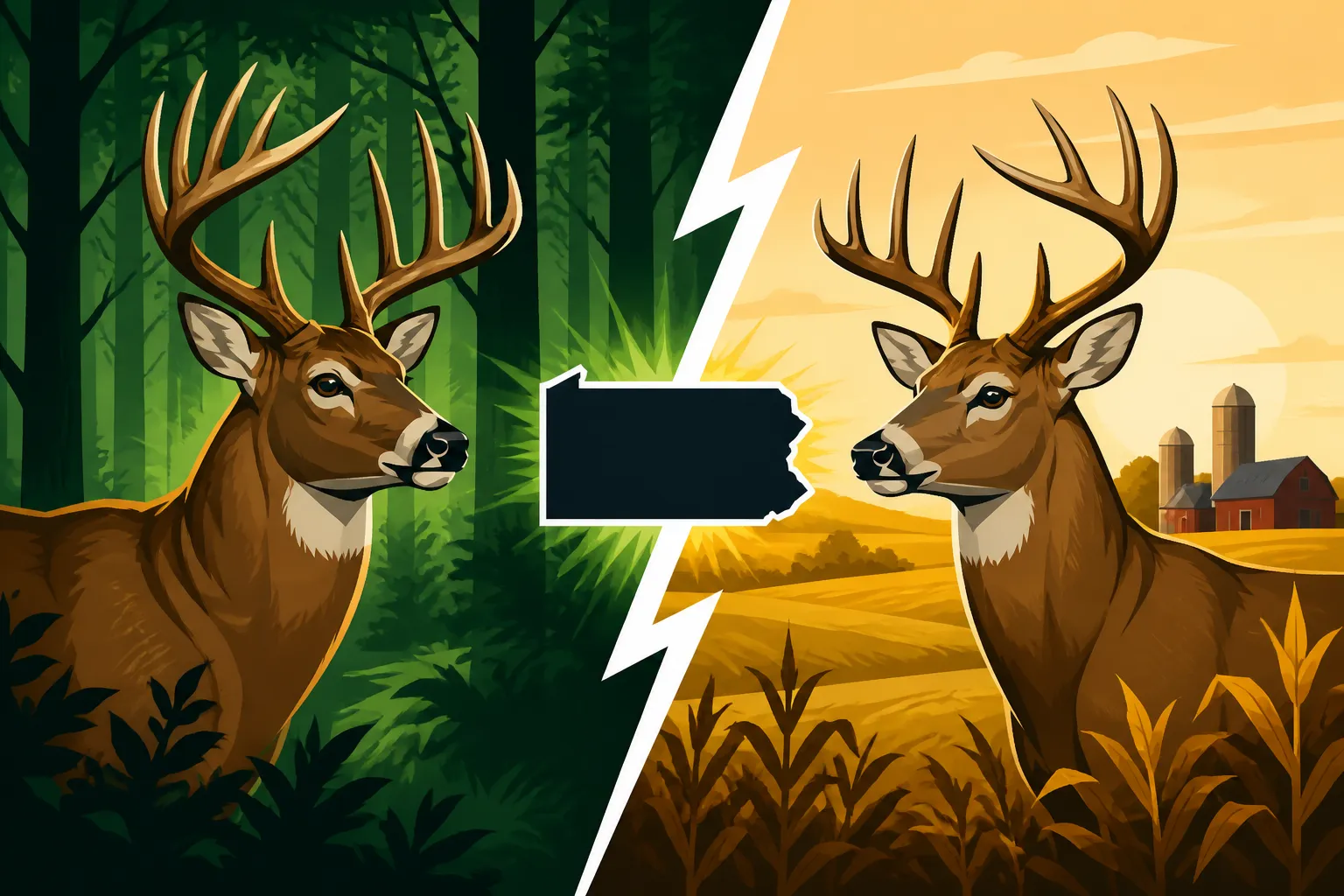
Big Woods Versus Farm Country Deer
Ask any seasoned hunter in Pennsylvania, and they'll tell you there's a world of difference between chasing whitetails in the vast, timbered mountains of the "Big Woods" and pursuing them through the rolling farmlands and woodlots of agricultural country. It's like comparing two entirely different game animals, often leading to immense frustration if you apply the wrong strategies. This comprehensive guide is here to unravel those distinctions, helping you understand the unique challenges and immense rewards that come with hunting deer in Pennsylvania's diverse landscapes, so you can adapt your approach and boost your success.
The Lay of the Land: Defining Pennsylvania's Big Woods and Farm Country
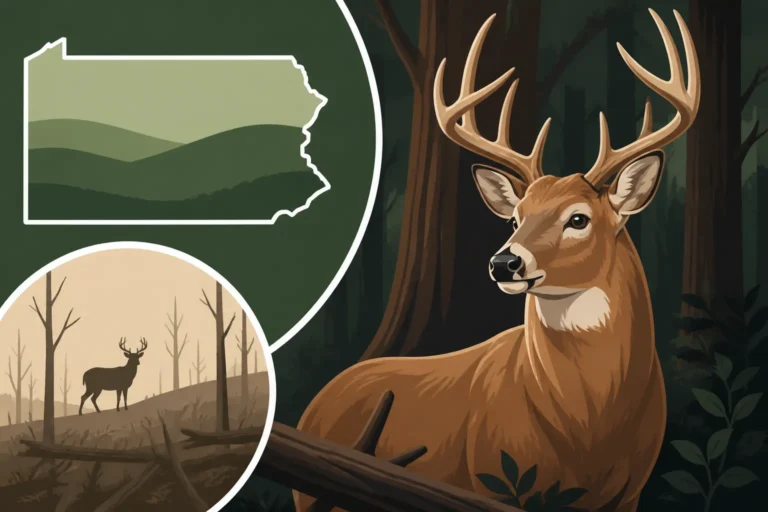
Pennsylvania is a remarkably diverse state, stretching from the temperate rainforest-like conditions of the Allegheny National Forest to the sprawling cornfields of Lancaster County. This geographical variety creates distinctly different ecosystems, each dictating the behavior and huntability of its deer herd. Understanding these foundational differences in habitat is the first step to becoming a more effective hunter, no matter where your boots hit the ground.
What Constitutes "Big Woods" in Pennsylvania?
When we talk about Pennsylvania's Big Woods, we're generally referring to the vast, contiguous tracts of public and private timberland found primarily in the north-central, north-western, and parts of the south-central regions of the state. These are areas dominated by oak, maple, cherry, and hemlock forests, often characterized by steep ridges, deep hollows, and extensive clearcuts from timber operations. Think of places like the Allegheny National Forest, or the massive State Forest blocks such as Sproul, Susquehannock, Elk, and Tioga State Forests.
These areas are frequently remote, with limited road access and immense stretches of undeveloped land. Deer densities here are typically lower compared to farm country, largely due to less abundant, reliable food sources and more intense predator pressure from coyotes and even bears. Hunters who venture into these landscapes are often seeking a more wilderness-like experience, willing to cover miles on foot for a chance at a mature, hard-earned buck. The sheer scale can be daunting, making effective scouting and navigation absolutely critical for success.
Understanding Pennsylvania's Farm Country
In stark contrast, Pennsylvania's farm country encompasses the more developed, agricultural regions, typically found in the southeastern, south-central, and parts of the western and northern tiers of the state. These areas are a patchwork of crop fields (corn, soybeans, alfalfa), pastures, small woodlots, suburban developments, and often dense brushy creek bottoms or hedgerows that provide crucial cover. Some prime examples include WMUs like 5C, 2B, or even areas within 4A and 4B that transition into significant agriculture.
Here, deer thrive on an abundant and consistent food supply provided by agricultural crops. This leads to significantly higher deer densities, often to the point where deer become a nuisance for landowners. While mature timber stands might be smaller, the dense cover provided by thickets, clearcuts on private land, and unharvested fields offers ample bedding and sanctuary. Hunting in these areas often means dealing with smaller hunting parcels, more human activity, and deer that are incredibly adept at avoiding detection during daylight hours.
Deer Dynamics: Population, Density, and Antler Growth
The environmental differences between Pennsylvania's Big Woods and farm country directly translate into significant variations in the deer herds themselves. It's not just about how many deer you see, but what kind of deer you're seeing, and how their physical characteristics are shaped by their surroundings.
Deer in the Big Woods: Scarce but Mature
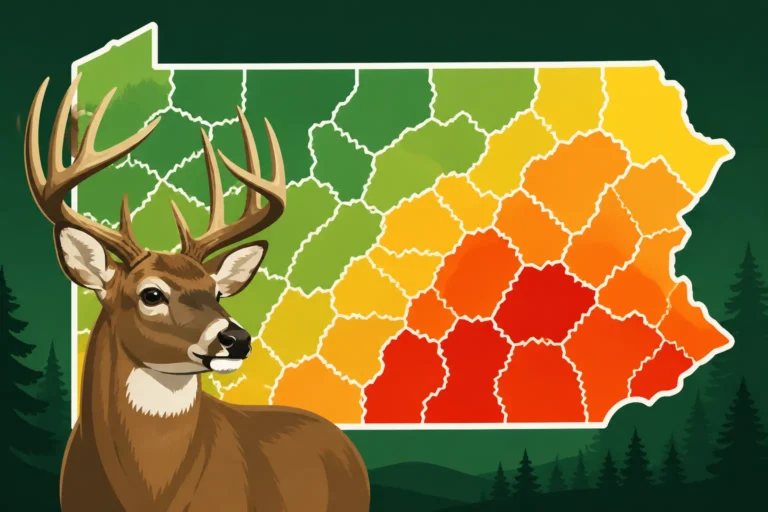
In the expansive timberlands of the Big Woods, deer populations are inherently lower. The landscape, while vast, offers a less consistent and nutrient-rich food supply compared to agricultural areas. Deer primarily rely on mast crops like acorns, browse from young forest growth in clearcuts, and whatever herbaceous plants they can find. This "feast or famine" cycle, combined with the presence of natural predators, means deer densities tend to be lower – often just 10-20 deer per square mile in some of the deeper woods.
However, a lower density doesn't necessarily mean lower quality in terms of buck age. In fact, many hunters argue that the Big Woods produces a higher percentage of older, more mature bucks. These deer survive longer due to vast escape cover and less intense localized hunting pressure. While you might not see dozens of deer in a single sit, the deer you do encounter often have more years under their belt. This leads to a different kind of hunting challenge; you're often looking for a needle in a haystack, but that needle has a better chance of being a trophy. If you want to dive deeper into this, check out our guide on Big Woods Deer Density and Why It Is Low.
Farm Country Deer: Abundant and Well-Fed
Conversely, farm country is a deer paradise. The constant availability of high-energy agricultural crops like corn, soybeans, and alfalfa provides a year-round buffet. This abundant nutrition fuels higher reproductive rates and supports dense deer populations, often exceeding 50 or even 70 deer per square mile in prime agricultural pockets. You can walk into a standing cornfield in September and hear deer crashing through it almost constantly.
While you'll certainly see a lot more deer in farm country, the age structure of the buck herd can sometimes lean younger. The sheer number of hunters drawn to these areas, combined with often smaller huntable parcels, can result in higher harvest rates on younger bucks. However, the superior nutrition means that even younger bucks can sport impressive antler growth for their age. The challenge here isn't necessarily finding deer, but consistently finding mature bucks that have survived multiple hunting seasons and are often entirely nocturnal.
Antler Expectations: Size and Genetics
When it comes to antler growth, it's a fascinating blend of genetics, nutrition, and age. In the Big Woods, while the genetics might be strong, the less reliable food source can limit a buck's potential for truly massive racks, especially in his younger years. However, if a Big Woods buck survives to 4.5, 5.5, or even 6.5 years old, he has the potential to become a true giant simply due to his advanced age and the advantage of carrying those antlers for more seasons. This is where you find those true wilderness monarchs.
In farm country, the abundant nutrition means bucks generally have better access to the minerals and proteins needed for antler development. A 2.5-year-old buck in farm country might have a much larger rack than his Big Woods counterpart of the same age, simply because he's had a steady diet of high-quality food. This means the potential for bigger antlers, faster, exists. The challenge is letting them get to that older age class. Pennsylvania's antler restrictions, which vary by WMU, play a crucial role here, influencing What Antler Restrictions Did to Buck Ages and aiming to allow more bucks to reach maturity. Hunters often analyze buck age structure to understand the potential for Boone and Crockett contenders, which are often found in areas with excellent nutrition and a healthy age class.
| Feature | Pennsylvania Big Woods | Pennsylvania Farm Country |
|---|---|---|
| Habitat Type | Vast, contiguous forests, steep terrain | Crop fields, woodlots, suburban, creek bottoms |
| Deer Density | Lower (10-20 deer/sq mile typical) | Higher (50-70+ deer/sq mile common) |
| Food Sources | Mast (acorns), natural browse, clearcuts | Agricultural crops, food plots, natural browse |
| Buck Age Structure | Often older, more mature bucks | Can be younger, but with good nutrition |
| Antler Potential | Excellent for older bucks due to age | Excellent for all ages due to nutrition, faster growth |
| Hunting Pressure | Widespread, but can find solitude | Localized, intense pressure on small parcels |
| Terrain | Mountains, ridges, hollows, steep | Rolling hills, flat fields, scattered woodlots |
| Challenges | Finding deer, vast areas, difficult recovery | Access, nocturnal deer, navigating small parcels |
Behavioral Differences: How Habitat Shapes Whitetails
Deer are creatures of habit, but their habits are profoundly influenced by their environment. A buck living amongst acres of corn and suburban backyards behaves very differently from one navigating thousands of acres of unbroken timber. Understanding these nuanced behavioral shifts is crucial for putting together a successful hunt plan.
Big Woods Bucks: Elusive and Widely Ranging
Big Woods bucks are, by nature, survivors. Their home ranges are often significantly larger than their farm country cousins, sometimes covering several square miles, especially during the rut. They are conditioned to rely on vast expanses of cover for safety and move through their territory using subtle terrain features like benches, saddles, and drainages that act as natural travel corridors. Their movements are often more deliberate and less predictable, driven by food availability (especially a booming acorn crop), security cover, and breeding opportunities.
These deer are masters of stealth. They tend to move at dawn and dusk, but can be active throughout the day, especially if pressured or during the rut, when they'll cruise ridges searching for does. When alarmed, they don't just run; they often ghost through the timber, using every bit of topography and thicket to disappear without a trace. Hunting them requires patience, keen observation, and an ability to Still-Hunting Pennsylvania Big Woods effectively, covering ground quietly and reading sign that might be days old. Because they're not used to constant human presence, they might tolerate a certain amount of distant noise, but any direct pressure sends them deep into the hardest-to-reach pockets.
Farm Country Deer: Adapting to Agriculture and Pressure
Farm country deer, particularly mature bucks, are arguably some of the most challenging animals to hunt due to their incredible adaptability to human presence and pressure. Their home ranges are often much smaller, sometimes confined to a few hundred acres, as everything they need – food, water, and cover – is readily available within a compact area. However, they are often almost entirely nocturnal, especially outside of the rut. During daylight hours, they seem to vanish, holding tight in the densest thickets, standing cornfields, or even suburban creek bottoms, sometimes just yards from human activity.
These deer learn quickly. They know exactly when and where the farmer drives his tractor, where hunters park, and where the safest cover lies. Their movements are often dictated by the edges of fields, hedgerows, and narrow strips of woods that provide crucial concealment. They are experts at slipping between coverts unseen, using the smallest dips in terrain or the deepest shadows. Successfully hunting these deer often means focusing on ambush points along transition lines, Hunting Pennsylvania Farm Country Edges, or setting up inside dense cover. You might not see a buck until he's already at your location, requiring quick, decisive action.
Food Sources: Feast or Famine
The availability and type of food sources dictate much of a deer's behavior and movement patterns. In the Big Woods, deer are often on a "feast or famine" schedule. When the acorns drop in the fall, deer will gorge on them, concentrating in specific oak flats or along ridges. Once that crop is gone, they disperse to find other browse, often moving to clearcuts or areas with specific regenerating trees. This necessitates extensive scouting to locate current food sources, as deer will follow the food. This unpredictability means you have to be ready to shift your hunting location as the season progresses and food availability changes, a task made easier with tools like GoHunt for identifying different timber types on maps.
Farm country deer, on the other hand, enjoy a consistent abundance of high-quality food. Standing corn, soybean fields, alfalfa, and winter wheat provide a continuous buffet. This steady nutrition allows them to maintain excellent body condition and rapid antler growth. Their movements are often predictable, revolving around bedding areas in dense cover and feeding areas in nearby fields. The challenge here is less about finding food, and more about intercepting deer as they move between these known locations, often in very specific windows of low light. Understanding these patterns is key, and it frequently involves analyzing field usage, trail cameras, and knowing the farmer's harvesting schedule.
Hunting Strategies: Tailoring Your Approach
Given the stark differences in habitat and deer behavior, it’s clear that a one-size-fits-all hunting strategy simply won’t cut it in Pennsylvania. What works beautifully in the vastness of the Big Woods might be utterly ineffective in the confined, pressured environment of farm country.
Tactics for the Big Woods Hunter
Hunting the Big Woods is an exercise in perseverance and understanding the land. You're dealing with vast areas, often public land like State Game Lands, where deer densities are lower and the deer themselves are wilder. Your primary goal is often to cover ground, scouting as you go, looking for fresh sign: rubs, scrapes, and most importantly, deer tracks. Hunting Pennsylvania's Big Woods for Deer is a marathon, not a sprint. You need to be prepared to walk miles, frequently through steep, rugged terrain.
Still-hunting is a highly effective strategy here, allowing you to move slowly and deliberately, stopping frequently to glass and listen. Focus your efforts on subtle terrain features that act as natural funnels or travel corridors: benches along steep mountainsides, saddles connecting ridges, or the edges of clearcuts and recent timber operations. Learning to Read a Pennsylvania Hollow for Deer can be incredibly productive, as deer will use these features for both cover and travel. Using topo maps and aerial imagery, perhaps through an app like GoHunt, is indispensable for identifying these key features before you even set foot in the woods. Pay close attention to wind and thermals on a ridge, as they can shift unexpectedly and betray your presence.
Strategies for Farm Country Whitetails
Hunting farm country requires a different kind of finesse. Here, success often hinges on precision, patience, and impeccable scent control. Deer are abundant, but they're also highly pressured and nocturnal. Stand hunting, whether from a treestand or a well-concealed ground blind, is the dominant tactic. Your focus should be on identifying specific pinch points, funnels, and transition lines that deer use to move between bedding cover and food sources. This might include the corner of a woodlot adjacent to a cornfield, a narrow strip of timber connecting two larger blocks, or a fence line leading to a hidden staging area.
Access routes are paramount. You need to get to and from your stand without alerting deer, often under the cover of darkness. Scent control is also critical; farm country deer are exceptionally wary of human odor. Setting up on a clearcut edge or Brushing In a Blind on a Field Edge can provide excellent concealment. Since much of this land is private, Hunting Small Private Tracts in Pennsylvania often involves knocking on doors and securing permission. GoHunt's mapping capabilities can be incredibly useful for identifying landowner information and property lines, helping you navigate the complexities of fragmented ownership. For more specific insights into stand placement, consider reading Treestand Setups in Pennsylvania Hardwoods.
Dealing with Pressure: Public vs. Private
Hunting pressure is a factor in both environments, but it manifests differently. In the Big Woods, especially on vast State Game Lands, pressure tends to be more diffuse. You might encounter other hunters, particularly near parking areas or popular access points, but it's often possible to Finding Ground Others Walk Past by simply walking further or getting into harder-to-reach areas. The sheer size of the landscape allows deer to retreat into sanctuaries that are simply too difficult for most hunters to access regularly.
In farm country, the pressure is often more localized and intense. Smaller private parcels, surrounded by suburban development or other hunting leases, mean deer have fewer true sanctuaries. This concentrated pressure forces deer to become hyper-vigilant and nocturnal. Finding success often means hunting during adverse weather, targeting mid-week hunts when others are at work, or securing exclusive access to properties where deer feel safe. Opening Day Crowds on Pennsylvania Game Lands are a real phenomenon, but understanding how to manage or avoid them is key to success in any landscape.
Gear and Preparedness for Each Environment
Your gear choices should directly reflect the environment you're hunting. The demands of navigating mountainous, remote terrain are vastly different from the requirements of a quiet sit in a farm field edge. Being properly equipped isn't just about comfort; it's about safety, efficiency, and increasing your chances of success.
Essential Gear for the Backcountry Hunter
When you're heading into the Big Woods, think self-sufficiency and durability. Your footwear is paramount: sturdy, waterproof, broken-in boots that can handle steep climbs, rocky terrain, and potential creek crossings are non-negotiable. A reliable navigation system, whether a dedicated GPS unit or a smartphone app like GoHunt with downloaded offline maps, is crucial, as cell service is often nonexistent. A larger, comfortable day pack or even a multi-day pack is essential to carry extra layers of clothing, sufficient food and water, a robust first-aid kit, and enough space for deboned meat should you be successful deep in the woods.
Layering your clothing is vital to adapt to the wildly fluctuating temperatures of Pennsylvania's mountains. Start with good base layers, add insulating mid-layers like fleece or wool, and top it off with a waterproof/windproof outer shell. Consider a deer drag or a frame pack designed for packing out meat, as getting a deer Getting a Deer Out of a Pennsylvania Hollow is a monumental task. Optics, particularly quality binoculars, are important for spotting deer in distant clearcuts or through thick timber, but focus on brightness and field of view over extreme magnification.
Farm Country Specifics
In farm country, the emphasis shifts slightly. While comfort and reliability are always important, scent control becomes an even higher priority. Rubber boots for the walk in, scent-eliminating sprays, and meticulous attention to wind direction are crucial. Your hunting often involves shorter distances to and from your stand, so a lighter pack might suffice, focusing more on items for a stationary sit.
Quietness is key: gear that doesn't rustle or clank against trees is preferred. If you're using a ground blind, ensure it's well-brushed in and allows for quiet entry and exit. Optics might not need the extreme long-range capabilities of big woods glass, but good low-light performance is still valuable for those critical dawn and dusk moments. Since you might be dealing with closer shots and deer appearing suddenly, having your weapon ready and familiar is paramount. While a deer cart might not be feasible on steep Big Woods slopes, it can be a lifesaver for Using a Deer Cart on Game Lands across relatively flat farm fields, especially on public access properties.
Disclaimer
Please remember that hunting regulations, seasons, and licensing requirements can change. Always consult the official Pennsylvania Game Commission website or the current Pennsylvania Hunting & Trapping Digest for the most up-to-date and accurate information before heading afield.